Herbs aren’t just for cooking! Create your own special herbal tea blend at home with the plants in your garden to enjoy hot or over ice. Herbs are nourishing to the body and tasty when steeped into infusions.
Best Site Selection for an Herbal Tea Garden
Most herbal plants used for tea prefer full sun (6+ hrs.) and well-draining, organic, amended soil.
Some herbs can thrive in pots and raised beds, as well, making an herbal tea garden possible for any growing space.
Plants in the mint family should be planted in their own contained beds or pots, as they tend to take over their growing spaces.
For more information on growing herbs, visit Herbs, HGIC 1311.
How to Plant Herbs in an Herbal Tea Garden
Starting Herbs from Seed
Most herbs can be successfully started by seed (basil, lemon balm, chamomile, stevia).
Seeds can be direct sown after the threat of frost has passed in your area or start indoors under grow lights 4 to 6 weeks before the final frost.
Specific sowing and spacing directions for each plant are on the back of seed packets.
Using Starter Plants for an Herbal Tea Garden
Starter plants from a local nursery or garden center are also an excellent option.
Plants will be a bit further along and ready to plant in the ground after frost threats have passed.
Watering Tips for an Herbal Tea Garden
Keep herbs with similar watering needs planted together.
For example, Chamomile and Basil have different watering requirements.
Chamomile prefers lower, consistent moisture once established, while basil requires high, consistent water for tender leaf growth.
Both plants prefer their soil to be checked 1 to 2 inches deep to confirm it is not dry.
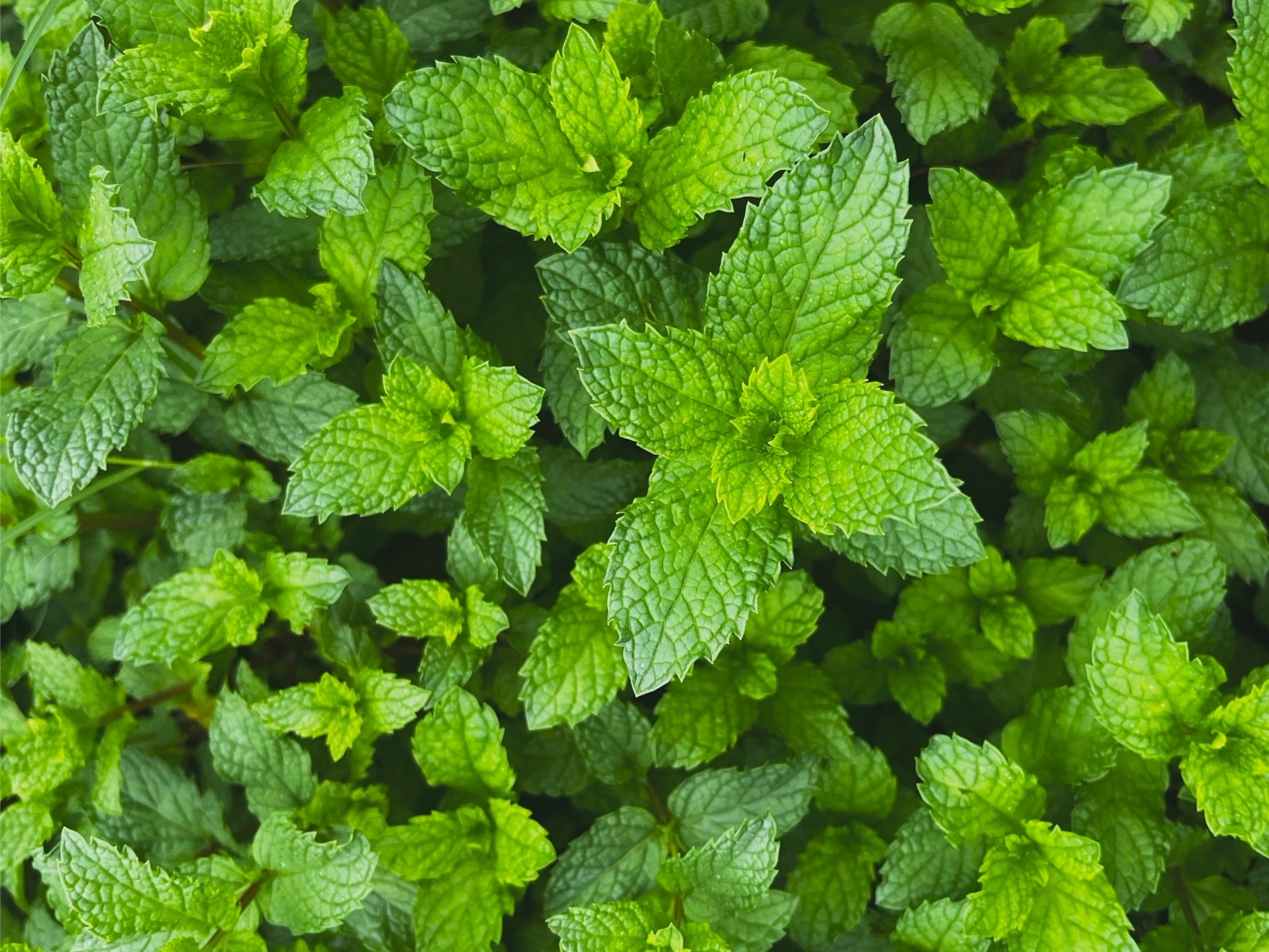
A snapshot of healthy and vibrant spearmint (Mentha spicata) foliage in the garden.
Julia Nichols, ©2026 HGIC, Clemson Extension
Best Herbs to Grow in an Herbal Tea Garden
This is the fun part! You can concoct your own tasty herbal tea blend based on the flavor profiles that you like.
Lavender and lemon balm make an excellent iced tea for the dog days of summer.
Use a little stevia to naturally sweeten your tea blend.
Annuals and Tender Perennials for Herbal Tea Gardens
- Holy basil or tulsi (Ocimum tenuiflorum)
- Stevia (Stevia rebaudiana)
- Borage (Borago officinalis)
- Calendula (Calendula officinalis)
Perennial Herbs for Herbal Tea Gardens
- Rosemary (Salvia rosmarinus)
- English lavender (Lavandula angustifolia)
- Peppermint (Mentha × piperita)
- Spearmint (Mentha spicata)
- Lemon balm (Melissa officinalis)
- German chamomile (Matricaria recutita)
- Lemon verbena (Aloysia citriodora)
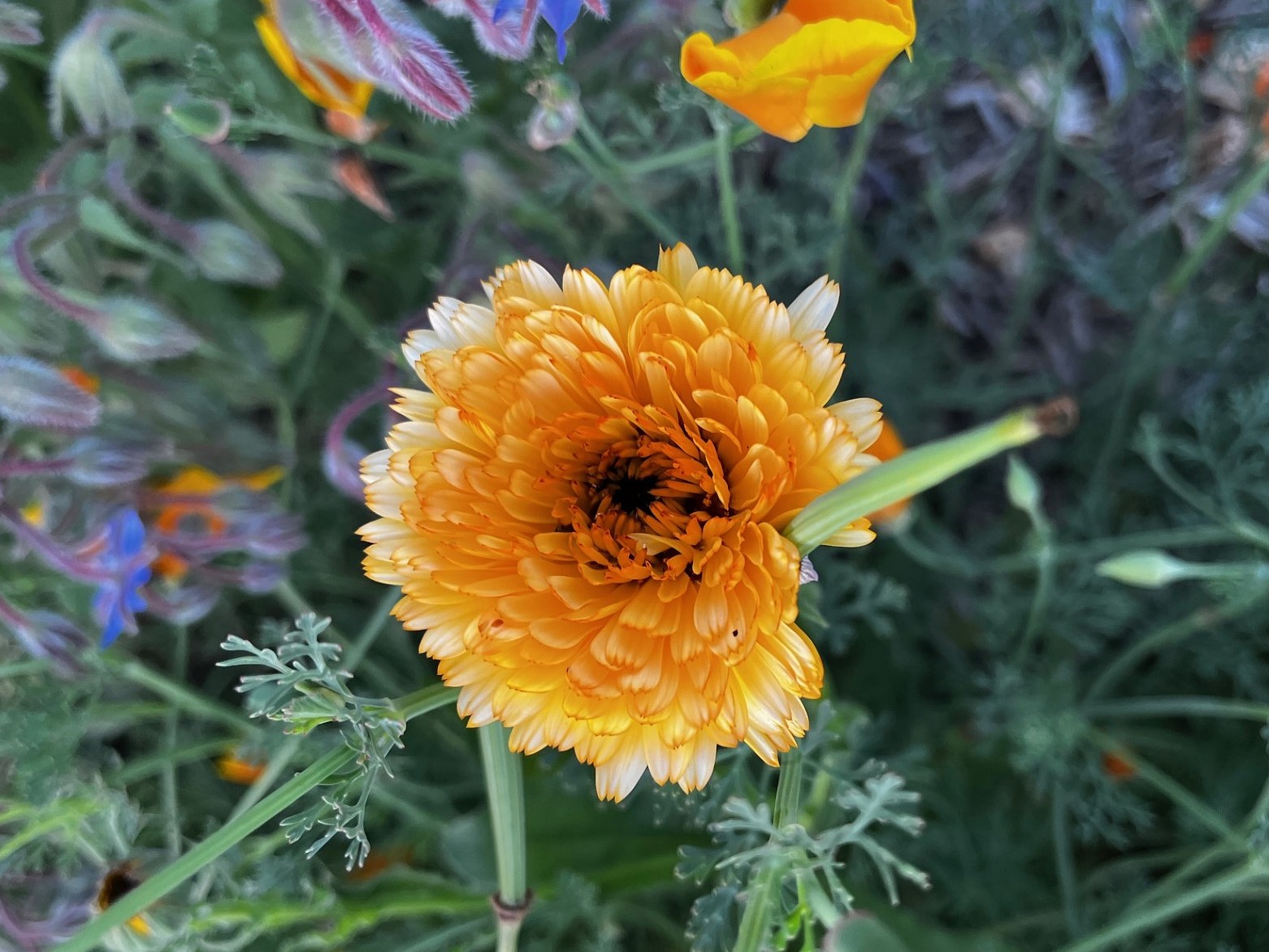
A colorful calendula (Calendula officinalis) blooms amongst borage (Borago officinalis) blooms in the garden.
Julia Nichols, ©2026 HGIC, Clemson Extension
How to Harvest Herbs for Herbal Teas
Regularly prune your herbs to encourage more growth, but never take more than 1/3 of the plant at one time.
Harvested herbs can be used immediately for fresh infusions.
Herbs can also be desiccated in the oven at the lowest temperature setting or in a dehydrator for dried loose-leaf tea, which can be stored in an airtight container.
For more information, please visit HGIC 3086, Drying Herbs, Nuts, and Seeds.
Best Time to Harvest Herbal Tea Herbs
The best time to harvest herbs or flowers is in the early morning, right after the dew has evaporated but before the heat of the day sets in.
Avoid harvesting when plants are overly wet from rain or dew.
This ensures the highest concentration of essential oils, providing maximum flavor.
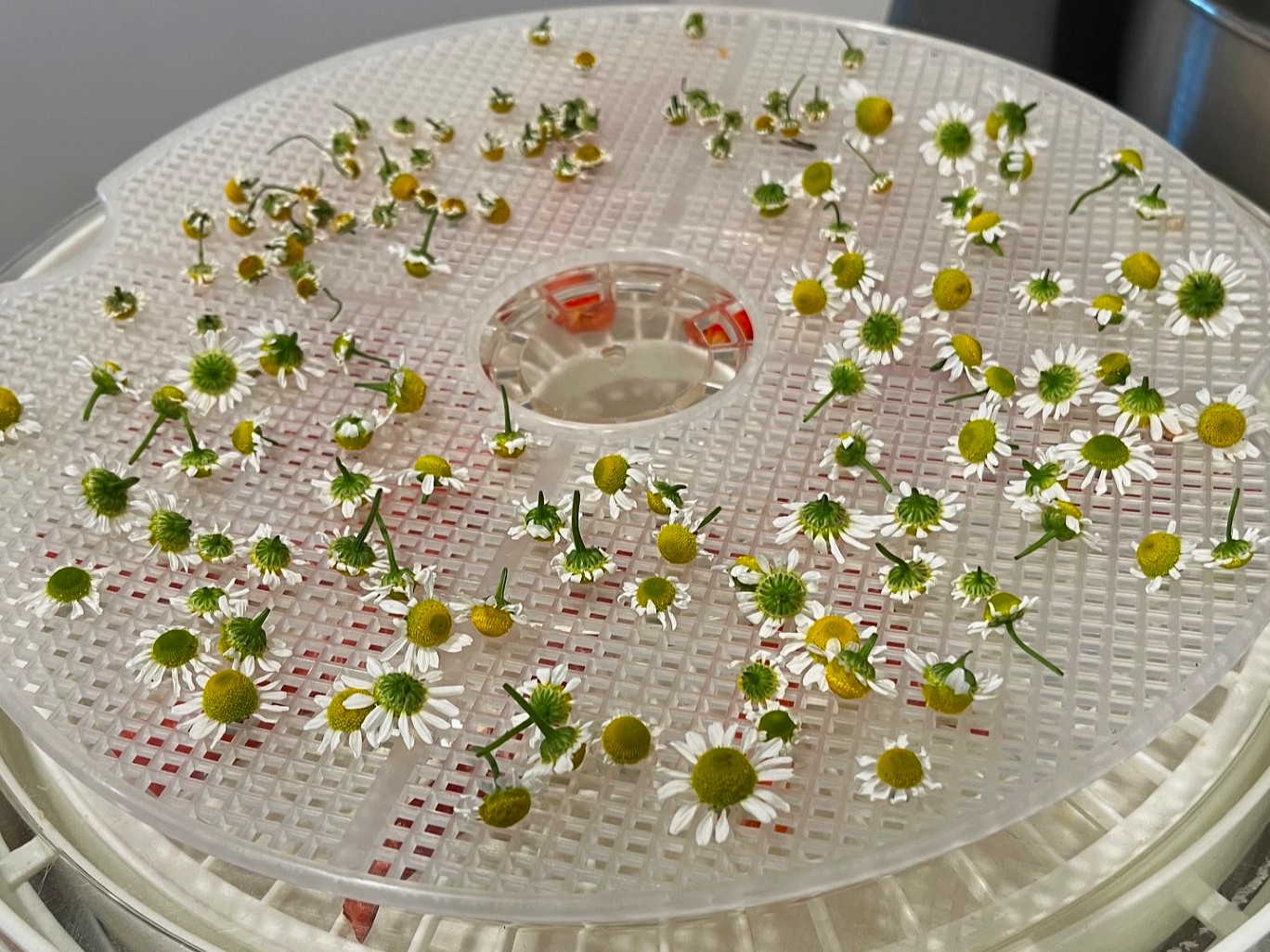
A batch of freshly harvested chamomile (Matricaria recutita) blooms sitting on a dehydrator tray before desiccation.
Julia Nichols, ©2026 HGIC, Clemson Extension
How to Brew Herbal Tea from Garden Herbs
Herbal teas should generally be steeped in boiling water (212 °F) for at least 5 to 10 minutes to extract full flavor.
Unlike tea leaves, most herbs do not become bitter when steeped longer than suggested.
For stronger brews, allow 15+ minutes of steeping.