Thunderstorms brought rain to parts of the state last week, while others had a chance to dry out. Disease pressure has increased due to recent moisture. The two-spotted cotton leafhopper was found in Charleston last week. Keep an eye out for this pest and report any sightings to your local Extension Agent.
South Carolina farmers can receive a $100.00 stipend for completing a short survey on the 2026 Farmers Market Price Reports. Clemson Extension is coordinating a project to collect farmers’ market price data across the state. From April – September of this year, these reports are released biweekly. The newly released reports (as well as last year’s reports) can be found at the Extension webpage here: Farmers Market Price Reports. The survey link can be found here: Farmers Market Reports – Producer Survey
Key Takeaways for Growers This Week
- Two-spotted cotton leafhopper found – report any sightings to Extension
- Disease has increased – especially gummy stem blight and anthracnose in cucurbits
- Fall planting continues – including tomatoes, cucurbits, and brassicas
- Okra is still coming on strong – it’s loving the hot weather
Statewide
Tom Bilbo, Extension Entomologist
- The invasive two-spotted cotton leafhopper (also called cotton jassid) has now been found on okra in South Carolina (see Zack’s update below). This is in addition to a single adult we found in a zucchini field at CREC in Charleston. This timing very closely aligns with our first detections of this new invasive last year, where we reported on 8/11/2025, finding it on numerous farms throughout SC, especially the Lowcountry.
- As a reminder, the vegetable crops at greatest risk are okra and eggplant. See below for pictures of this insect and its characteristic damage symptoms on the foliage of okra and eggplant. Please report suspected cases to Clemson Extension so we can investigate and better understand how and when this insect spreads.
- Later this week (hopefully), I will post a full list of recommended insecticides for this pest, once the Department of Pesticide Regulation clarifies which are permitted for use in SC on okra/eggplant.
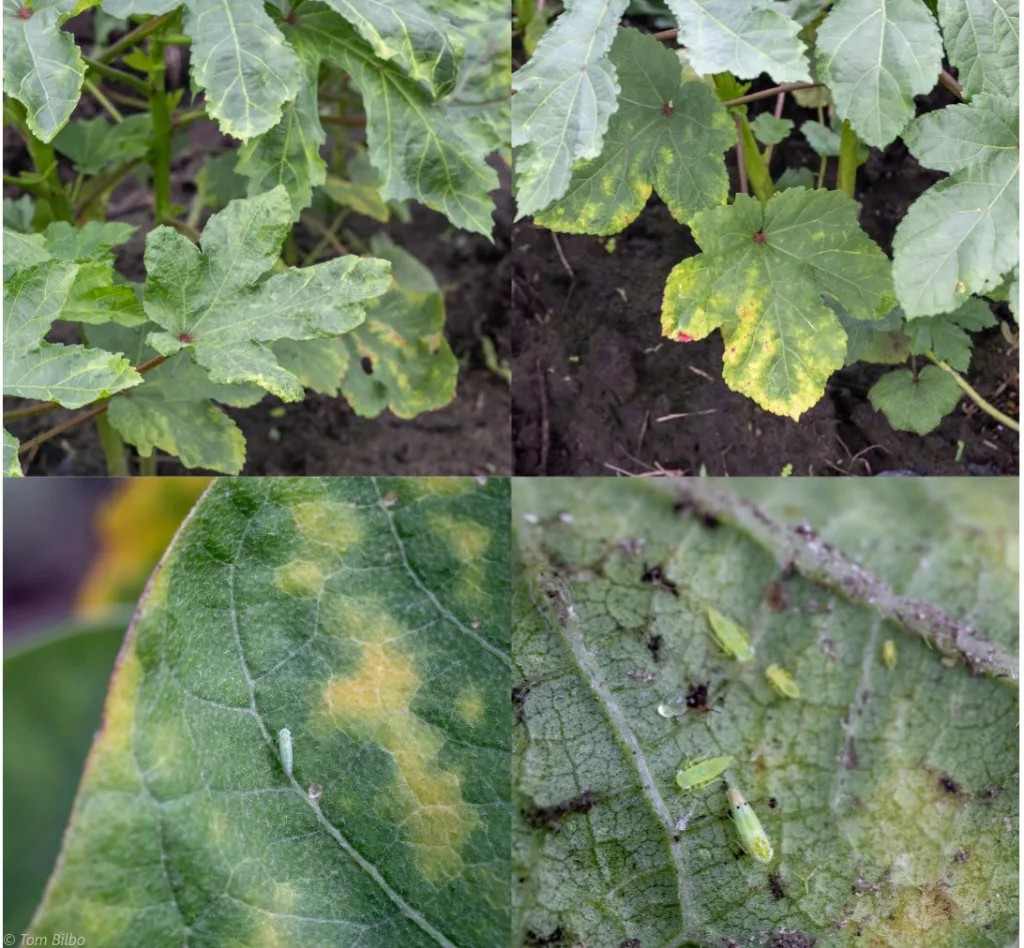
Two-spotted Cotton Leafhoppers and their feeding symptoms on okra.
Tom Bilbo, ©2026, Clemson Extension
Lowcountry Report
Zack Snipes
- Things are steamy in the Lowcountry with the recent spotty thunderstorms. We still could use all the rain, but we have gotten enough lately to work the soil.
- I scouted some okra this past week and found one two-spotted cotton leafhopper. I found lots and lots of leafhoppers, both adults and nymphs, that did NOT have two spots. These are not as concerning as the species with two spots. I collected samples and will send them off for genetic testing to determine whether they are the invasive species we are looking for and to provide more data/pieces of the puzzle about this pest. For growers, continue to look for leafhoppers with two black spots and let your county agent know if and when you find them.
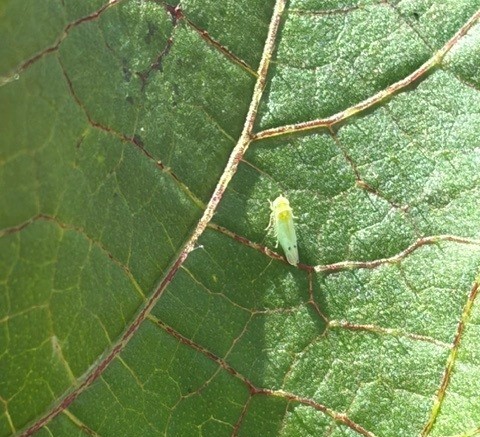
The only two-spotted cotton leafhopper I found last week.
Zack Snipes, ©2026, Clemson Extension
Midlands Report
Daniel Lyon
- Last week was a bit drier than originally expected. This helped dry things out enough for growers to get back in their fields in preparation for fall planting. Rain is not forecast again until the weekend.
- The watermelon season is pretty much wrapped up, with a few exceptions here and there. To my knowledge, there will not be a lot of fall melons planted in my region.
- Some fields have decent pressure from gummy stem blight and anthracnose. If you are nearing the end of your last harvest, treating may not be economical. Remove any residue or till any debris as soon as possible to reduce future pressure. Watermelons should not be planted in the same field for 2 years.
- One of the last crops to be harvested is okra, which is still coming on strong. Okra can be cut back and regrown for a vigorous fall crop. This can be done when summer market prices drop, and growers want to catch a stronger fall price. This is called ratooning.
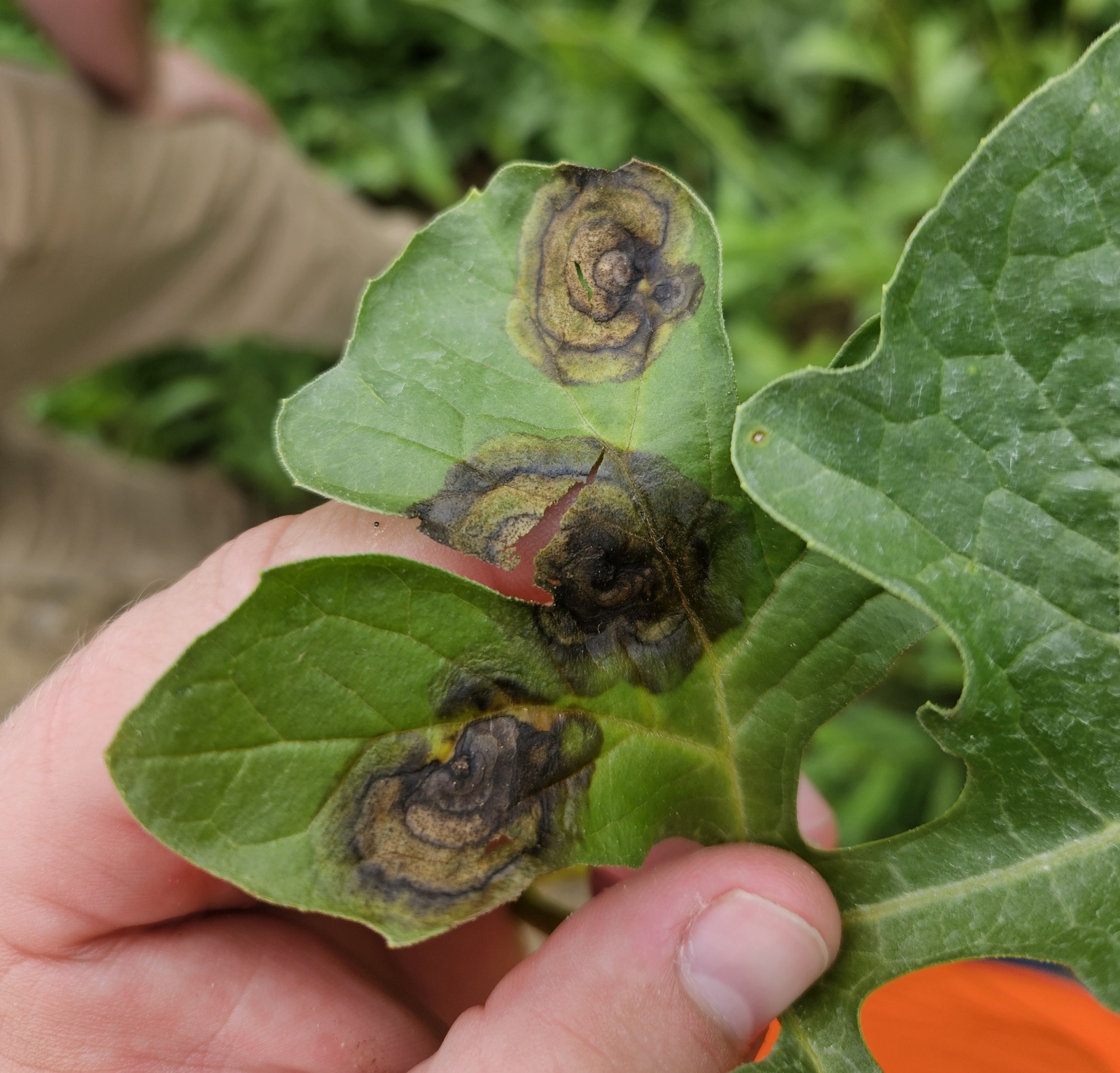
Textbook gummy stem blight on watermelon leaf.
Daniel Lyon, ©2026, Clemson Extension
Pee Dee Report
Brad Fowler
- Watermelons and cantaloupes are still being harvested in decent numbers, but anthracnose and gummy stem blight are causing some issues. Spraying could help keep the vines going a bit longer.
- As of now, there haven’t been any reports of the two-spotted cotton leafhopper on okra in our area, but keep an eye out and contact Extension with any suspected sightings
- I’ve had a few conversations lately about diversifying and growing other crops or even trying some ornamentals. Please reach out with any questions, and we can help you work through the pros and cons of trying something new.
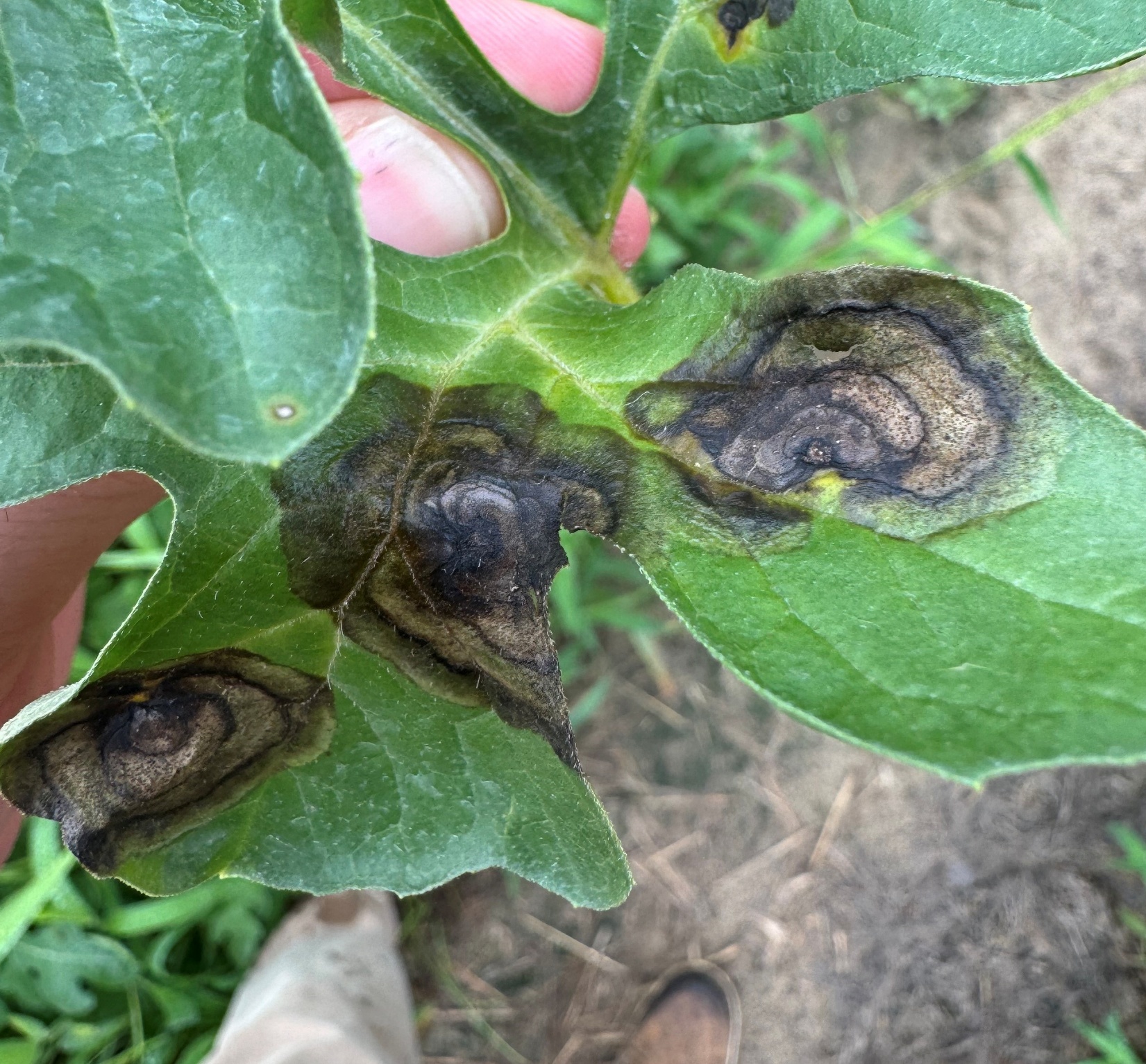
Gummy stem blight lesions on watermelon foliage.
Brad Fowler, ©2026, Clemson Extension
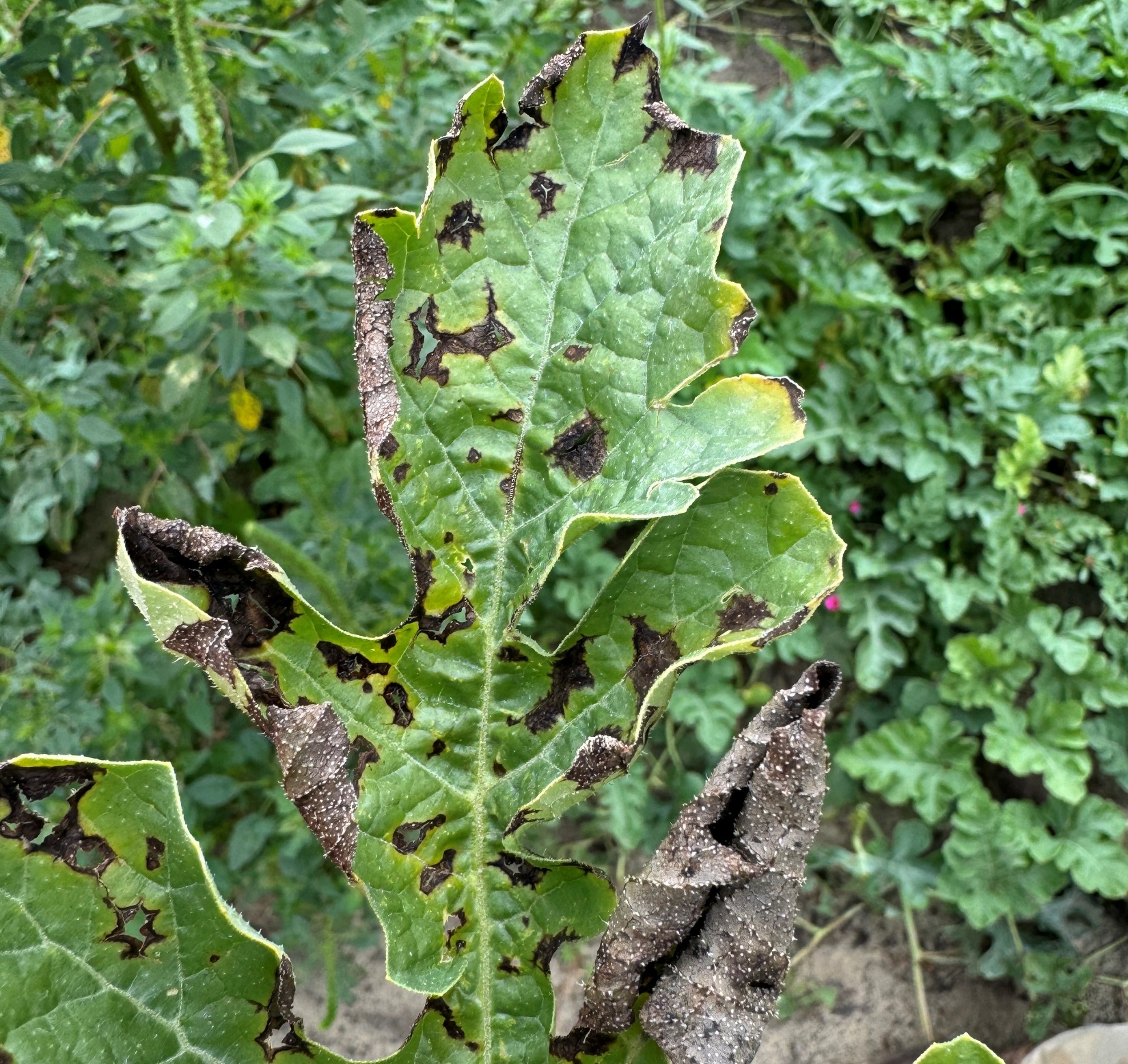
Star-shaped anthracnose lesions on watermelon foliage.
Brad Fowler, ©2026, Clemson Extension