Forsythia Sage Quick Guide
Botanical name: Salvia madrensis
Native range: Sierra Madre mountains in Mexico
Mature size: 5 to 7 feet tall and up to 4 feet wide
Flowers: Yellow flowers on long spikes; blooms in fall
What is Forsythia Sage?
- Forsythia Sage Description: Forsythia sage (Salvia madrensis) is a fall-blooming perennial with yellow flowers. It is a tall plant, reaching 7 feet tall.
- Native Range and Habitat: It is native to the Sierra Madre mountains in Mexico.
- Plant Family: It is a member of the mint family, Lamiaceae. Like other members of the mint family, it has aromatic foliage and square stems.
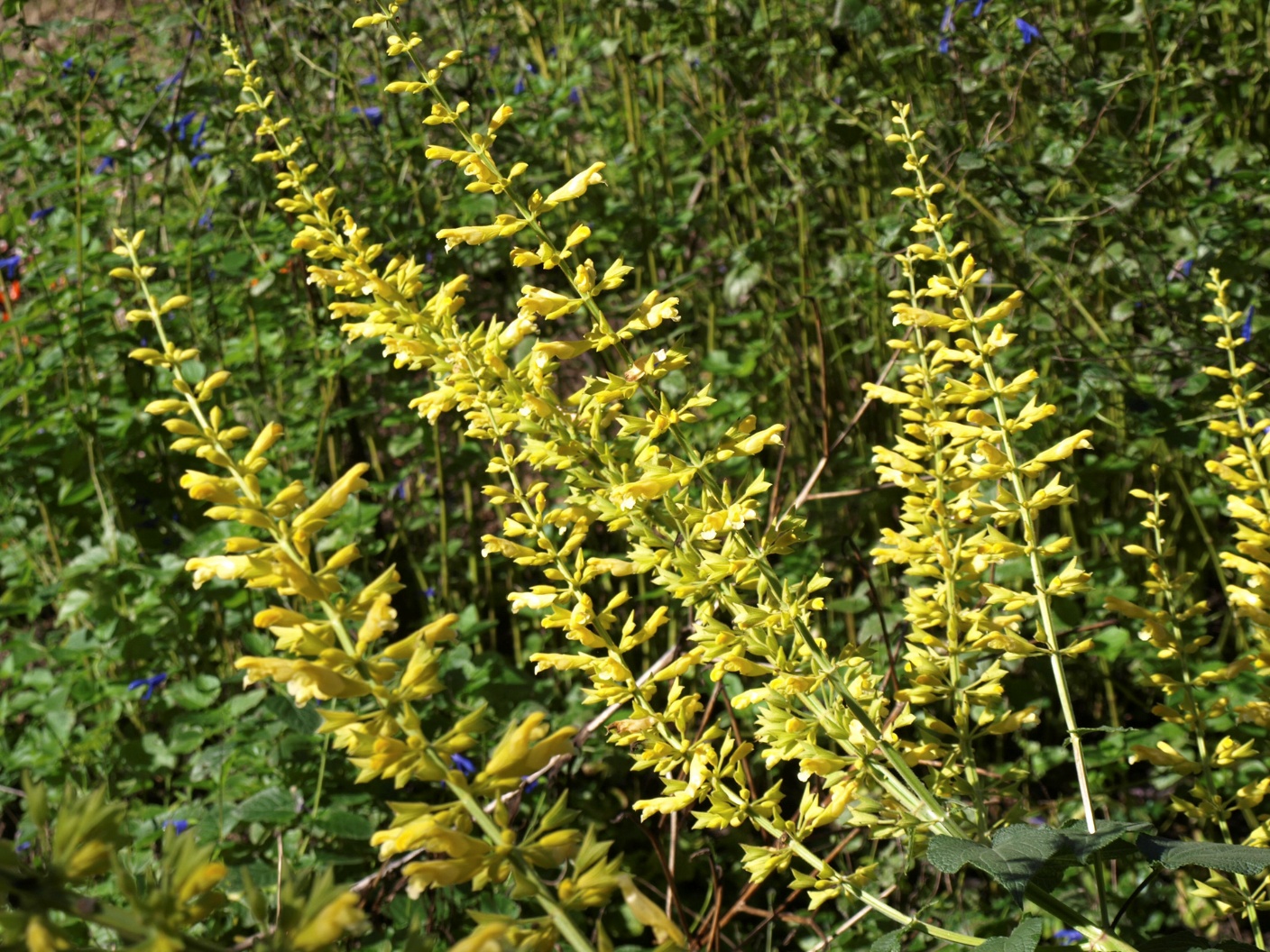
Forsythia sage (Salvia madrensis) has long spikes of yellow flowers in the fall.
Barbara H. Smith ©2020 HGIC, Clemson Extension
Forsythia Sage Flower Colors and Bloom Time
- Flower Color and Size: Flowers are buttery-yellow, borne on spikes 8 inches or longer.
- Bloom Time: Forsythia sage blooms in the fall, starting in October and continuing until frost. In warm coastal climates, forsythia sage may bloom through the winter.
How Big does Forsythia Sage Grow?
- Mature Plant Size: Plants can grow from 5 to 7 feet tall and up to 4 feet wide.
Forsythia Sage Cultivars
Forsythia sage has at least one cultivar available at nurseries and garden centers.
‘Red Neck Girl’
- Stems are reddish purple.
- Flowers bloom earlier than the species.
How to Grow Forsythia Sage Successfully
- USDA Hardiness Zones of Forsythia Sage: Forsythia sage can be planted and established in USDA planting zones 7 through 11. In zones 7 and 8, it is perennial, going dormant in winter.
- Sunlight Requirements of Forsythia Sage: Plant in morning sun or part shade.
- Best Soil for Forsythia Sage: Plant forsythia sage in soil that is well-drained.
- Do not plant where the soil stays wet in the winter.
- Where to plant Forsythia Sage: Plant forsythia sage in the back of a landscape bed so its large size does not dwarf smaller perennials.
- It can be planted in a large container.
- How to Water Forsythia Sage: Water regularly until plants are fully established.
- Once established, water during periods of low rainfall.
- How to Fertilize Forsythia Sage: If needed, fertilize with an all-purpose, slow-release fertilizer in late spring.
How to Maintain Forsythia Sage
- Supporting Tall Plants: Support tall stems with stakes.
- Cutting back: Cut the foliage to the ground in late winter.
How to Propagate Forsythia Sage
- Tip Cuttings: Forsythia sage can be propagated successfully via tip cuttings.
- Underground rhizomes: It also spreads from underground rhizomes.
Forsythia Sage for Pollinators
Forsythia sage flowers are a nectar source for migrating hummingbirds and butterflies, as well as other pollinators.
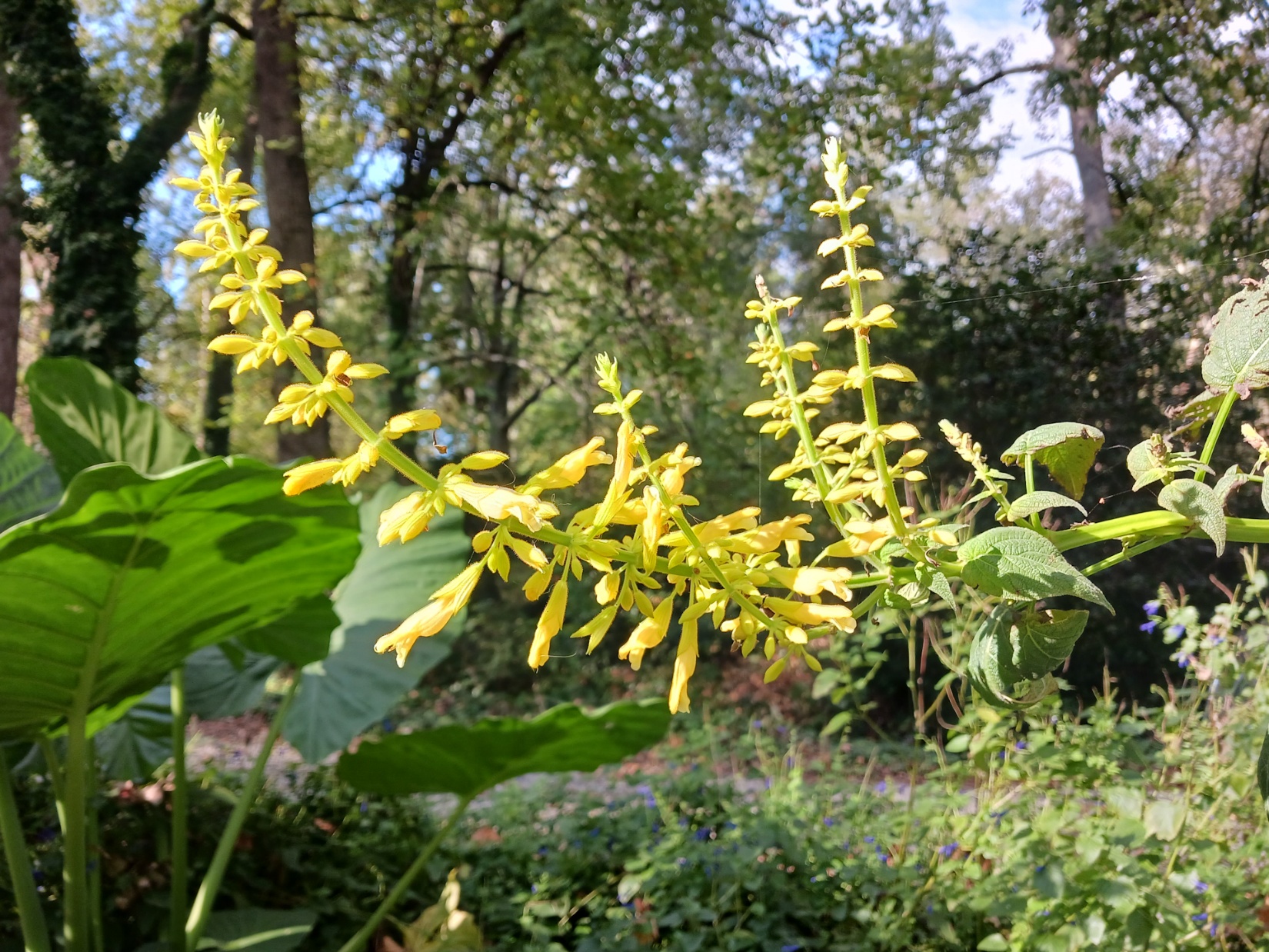
Hummingbirds have long beaks and tongues that can easily reach the nectar in forsythia sage flowers.
Ginger Long ©2024 HGIC, Clemson Extension
Is Forsythia Sage Deer Resistant?
Forsythia sage is moderately deer resistant.
Where Can I Find Forsythia Sage?
Check local nurseries and garden centers, online nurseries, and plant sales for plants.