Quick Guide to Growing Globe Amaranth
Plant Type: Summer to Fall Annual
USDA Hardiness Zones: 9-11
Best Soil: Average, well-drained soil
Sunlight: Full sun to partial shade (6 to 8 hours of direct sunlight)
Watering: Medium, drought-tolerant after establishment
Height: 1 to 2 feet high and 6 inches to 1 foot wide
Uses: Borders; containers; cutting, cottage, or rock gardens
Pollinator Benefits: Attracts hummingbirds, butterflies, bees, and other pollinating insects
Wildlife: Resistant to deer and rabbits
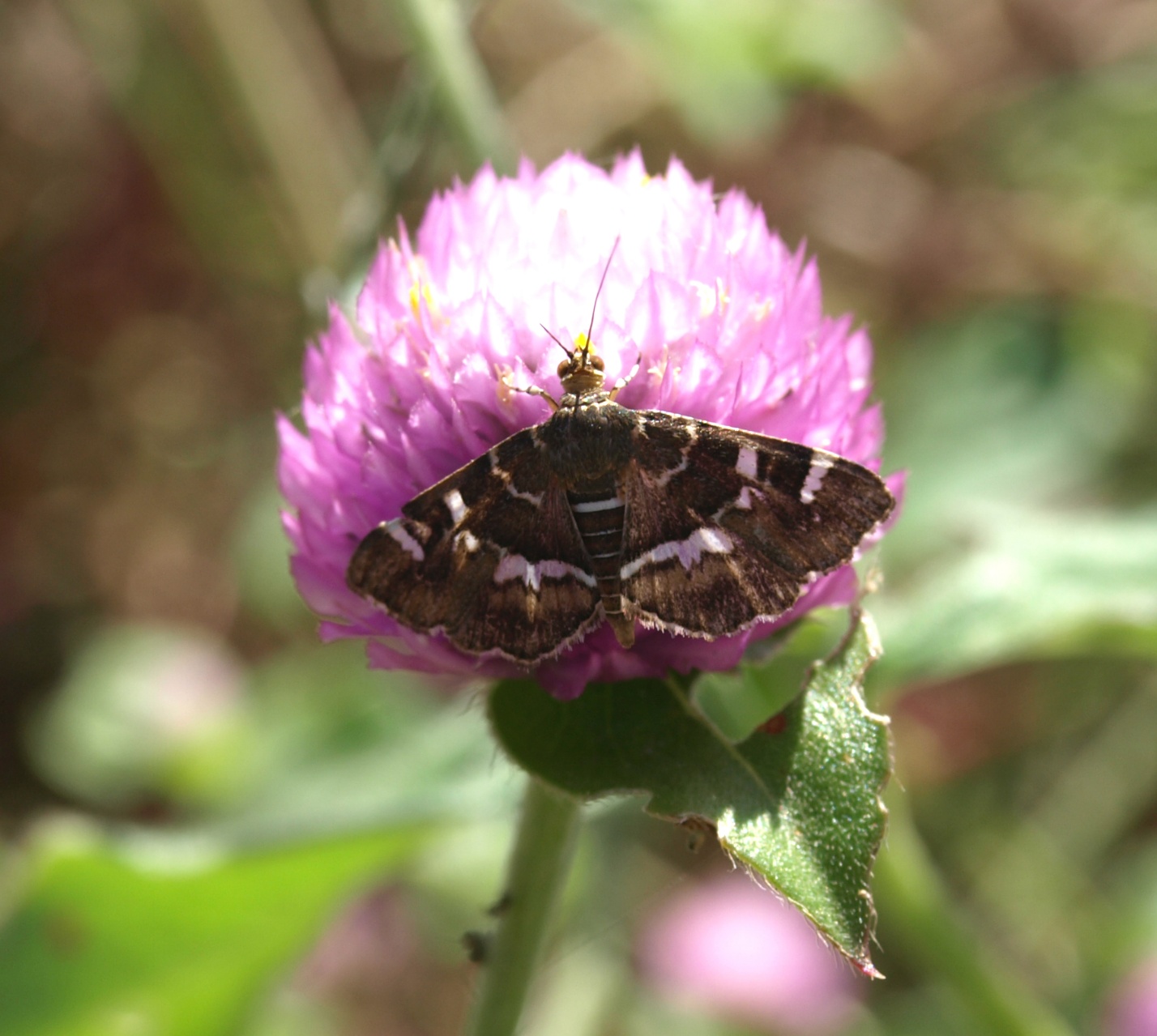
Globe amaranth (Gomphrena globosa) is a warm-season annual that attracts a wide range of pollinating insects.
Barbara H. Smith, ©2025 HGIC, Clemson Extension
Origin and History of Globe Amaranth
Globe amaranth has a long history of cultivation as an ornamental annual valued for its heat tolerance and lasting flower color.
This beautiful annual, originally native to Central and South America, was first introduced to Europe in 1714 and brought to Virginia in 1737.
In the garden records kept by Thomas Jefferson, he planted globe amaranth seeds in 1767. It is still planted in the Monticello gardens for the summer and fall display.
Why Grow Globe Amaranth in South Carolina Gardens
Key Benefits of Globe Amaranth
Globe amaranth (Gomphrena globosa) is a warm-season annual that:
- Long Bloom Period: blooms throughout the summer into fall until frost
- Pollinator Support: attracts bees, butterflies, and other pollinating insects
- Heat Tolerance: provides constant color throughout the hottest months in South Carolina
How to Grow Globe Amaranth: Ideal Growing Conditions
Globe amaranth (Gomphrena globosa) grows best in average, well-drained soils in full sun. It can tolerate some partial shade, but it will need at least 6 to 8 hours of full sun.
The plants have good drought tolerance, but they do benefit from regular watering during the growing season.
Flower Colors and Foliage Characteristics of Globe Amaranth
Globe Amaranth Flower Description
- Flower Head Size: 1- to 2-inch globe-shaped flower heads
- Bract Texture: stiff, papery bracts
- True Flowers: tiny, insignificant white or yellow tubular flowers tucked between the bracts
- Bract Colors: white, pink, lavender, or magenta
- Flower Form Comparison: resembles a clover flower
- Related Species Variation: a different Gomphrena species (Gomphrena haageana), native to New Mexico, Texas, and northeastern Mexico, has bracts that range from red to orange.
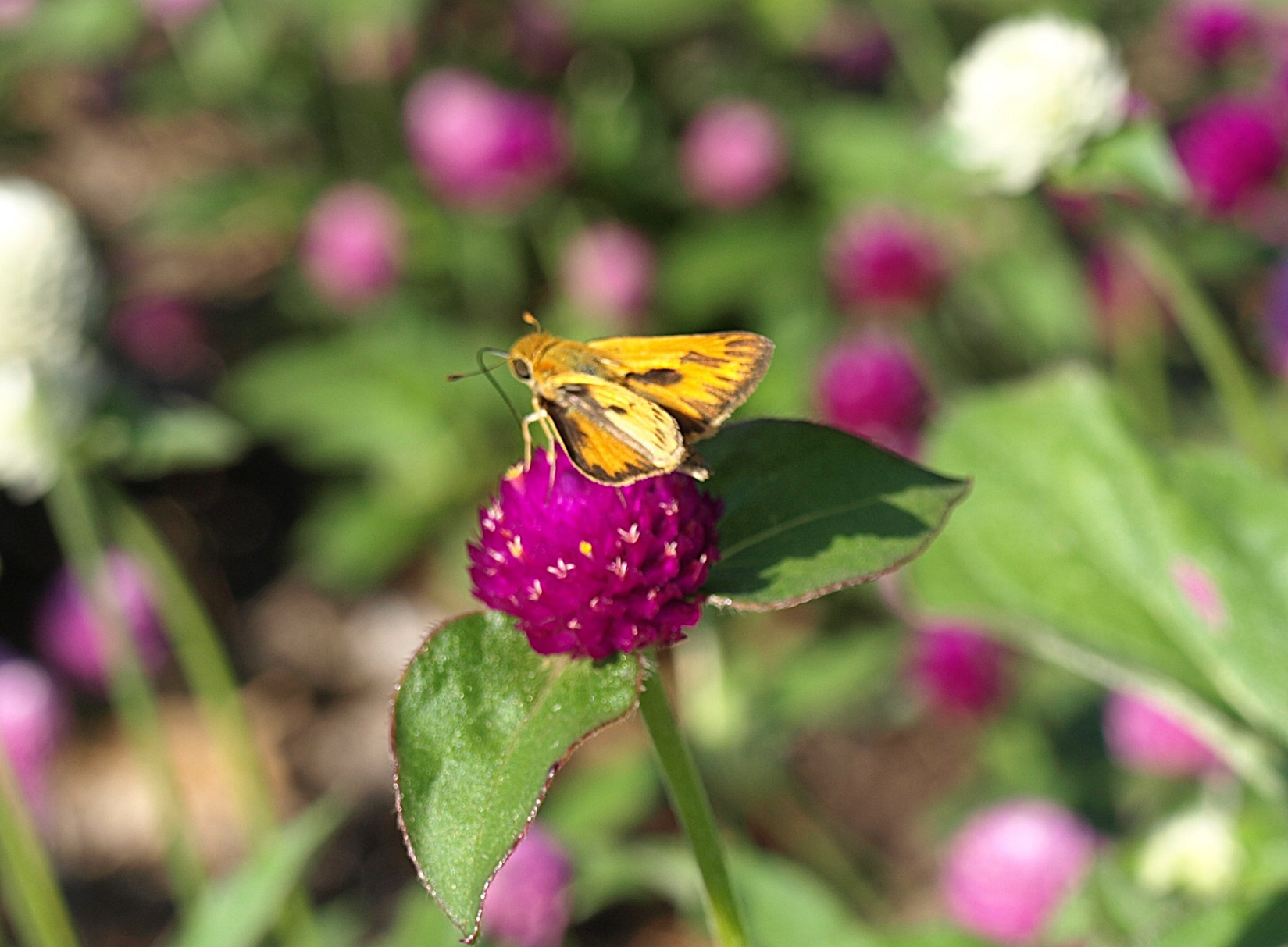
Globe amaranth has tiny, insignificant tubular flowers tucked in between the colorful, papery bracts. A fiery skipper butterfly (Hylephia phyleus) sips nectar from the flowers.
Barbara H. Smith, ©2025 HGIC, Clemson Extension
Globe Amaranth Leaf Characteristics
- Leaf Length: 2 to 4 inches long
- Leaf Arrangement: arranged oppositely on the stem
- Leaf Surface: pubescent (hairy)
- Leaf Shape: narrow
Pollinator Benefits of Globe Amaranth
How Globe Amaranth Supports Pollinators
- Nectar Source: provides a consistent, season-long nectar source
- Bees: supports foraging activity throughout summer and fall
- Butterflies: attracts nectar-feeding butterfly species
- Hummingbirds: provides nectar for hummingbirds during the warm-season bloom period
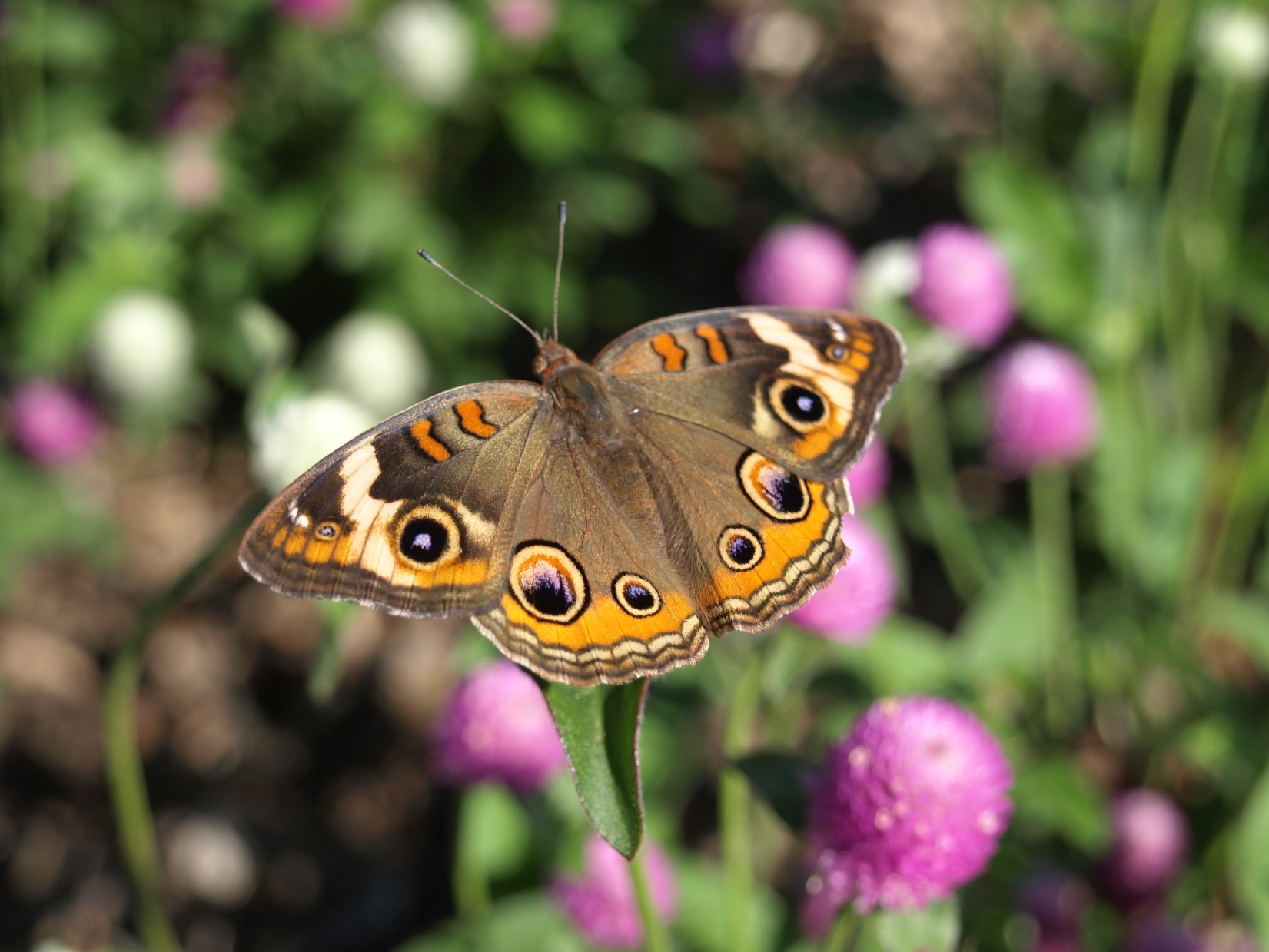
A buckeye butterfly (Junonia coenia) is collecting nectar from a globe amaranth.
Barbara H. Smith, ©2025 HGIC, Clemson Extension
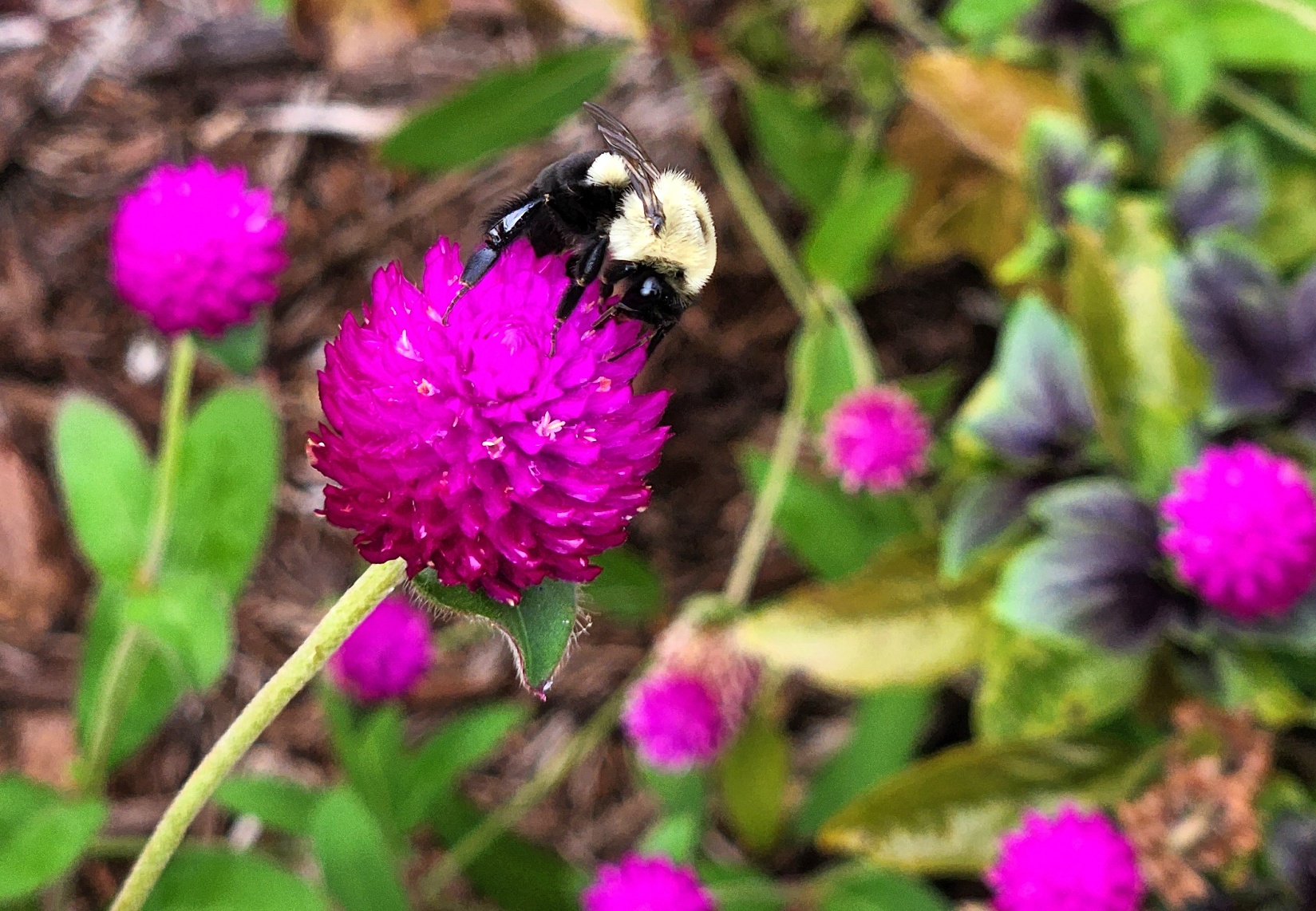
A bumblebee (Bombus sp.) is sipping nectar from a globe amaranth flower.
Barbara H. Smith, ©2025 HGIC, Clemson Extension
How to Grow Globe Amaranth from Seeds or Transplants
Growing Globe Amaranth from Transplants
The easiest and most successful way to grow globe amaranth is by purchasing transplants.
Most nurseries carry them in 4- or 6-cell packs, which helps you get flowering plants in your garden more quickly.
Growing Globe Amaranth from Seed
Steps for Starting Globe Amaranth from Seed
Globe amaranth seeds germinate reliably when provided warm temperatures and proper timing before the last frost.
- Start Indoors: sow seeds indoors 6 to 8 weeks before the last frost date.
- Provide Warm Temperatures: keep seeds at a consistent temperature of 70°F to 75°F to germinate well.
- Expect Germination Timeline: seedlings will emerge in about 2 to 3 weeks.
- Harden Off Seedlings: Harden off the seedlings in a shady area before transplanting them into full sun.
- Bloom Timeline: seedlings will bloom in 12 to 16 weeks after sowing.
Landscape Uses for Globe Amaranth
Globe amaranth is a versatile ornamental annual suitable for a wide range of landscape applications in South Carolina gardens.
Best Landscape Uses for Globe Amaranth
- Annual Beds: provides consistent color throughout summer and fall
- Borders: adds long-lasting seasonal interest
- Containers: performs well in planters and mixed container designs
- Cottage Gardens: complements informal flowering plant combinations
- Cutting Gardens: suitable for fresh or dried flower arrangements
- Rock Gardens: tolerates well-drained soils and warm conditions

Globe amaranth combines well with Wave® petunias (Petunia x hybrida ‘Wave®’) and mallow (Hibiscus sp.)
Barbara H. Smith, ©2025 HGIC, Clemson Extension
How to Dry Globe Amaranth Flowers
Globe amaranth flowers retain their color well, making them excellent for dried floral arrangements.
The flowers are called “everlastings” because they can be easily dried to use in flower arrangements or in potpourri.
Steps for Drying Globe Amaranth Flowers
- Harvest Timing: harvest them when they are totally open, and the flower color is bright.
- Avoid Overmature Flowers: if you wait too long, the flowers will be too old and will fall apart after drying.
- Cut Stems: Cut the stems.
- Bundle Stems: tie them into a bundle.
- Drying Position: hang them upside down to dry.
Common Problems When Growing Globe Amaranth
Potential Issues with Globe Amaranth
- Overall Resistance: These tough plants don’t have any serious insect or disease problems.
- Drought Stress Risk: If the plants are drought-stressed, they may be susceptible to mildew.
- Prevention Strategy: Providing irrigation during drought can help avoid this.
Popular Globe Amaranth Cultivars
Ping Pong Globe Amaranth Series (Gomphrena globosa ‘Ping Pong’)
- Plant Height: 16 to 20 inches
- Plant Width: 8 to 10 inches
- Flower Colors: lavender, purple, and white
- Bloom Period: summer until frost
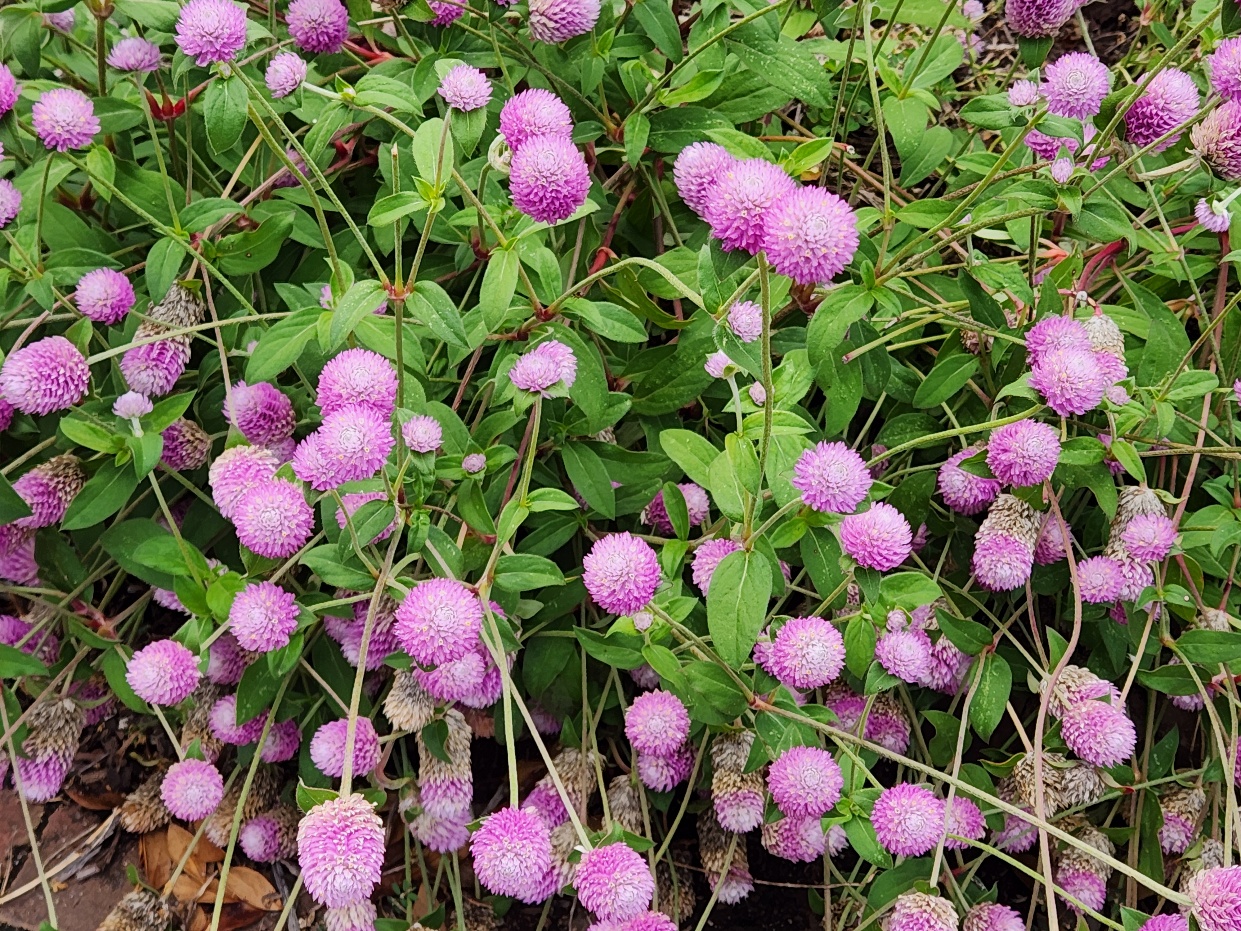
Ping Pong lavender globe amaranth (Gomphrena globosa ‘Ping Pong Lavender’) blooms from summer until frost with light lavender bracts.
Barbara H. Smith, ©2025 HGIC, Clemson Extension
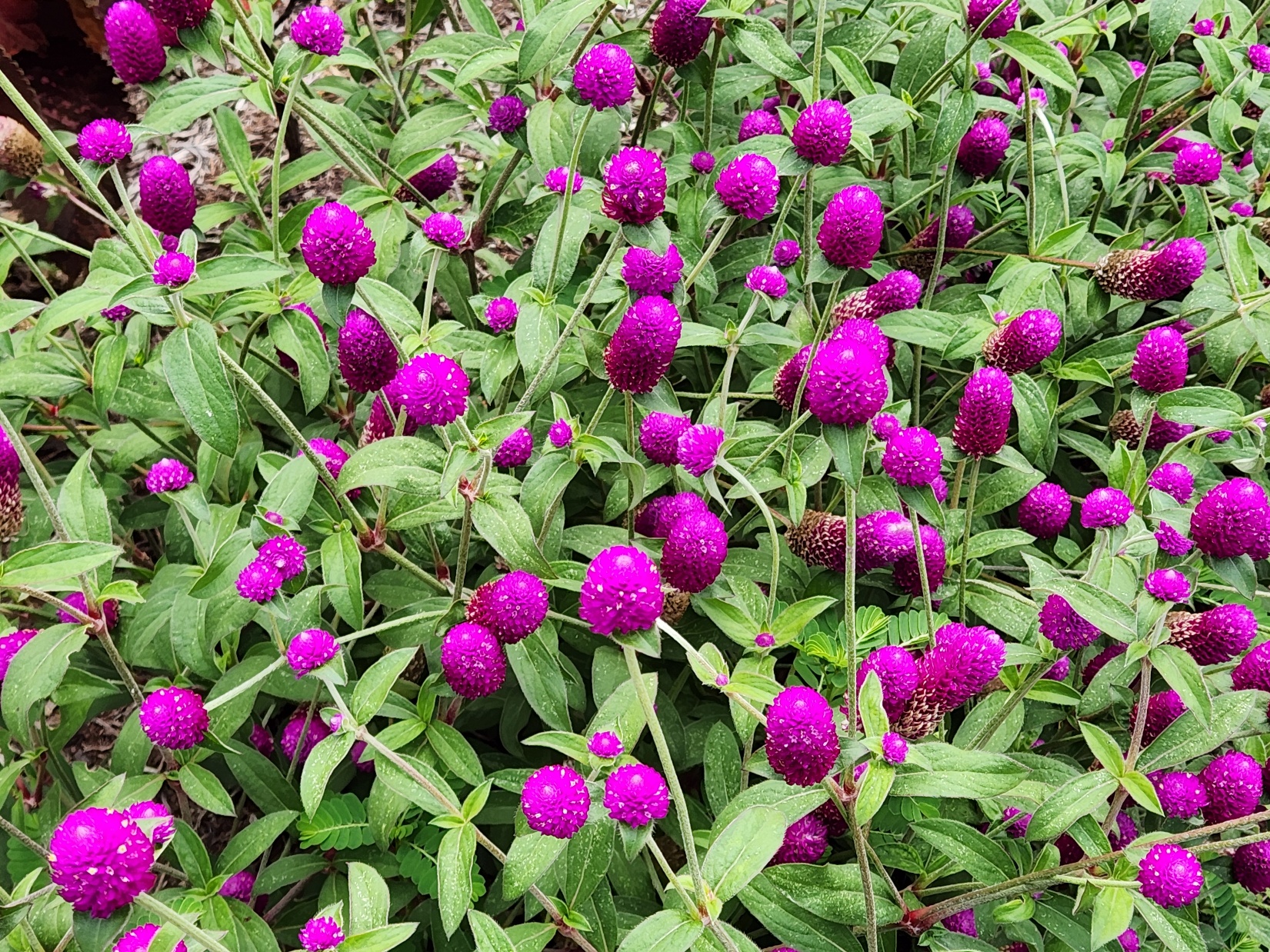
Ping Pong purple globe amaranth (Gomphrena globosa ‘Ping Pong Purple’) has bright, magenta bracts.
Barbara H. Smith, ©2025 HGIC, Clemson Extension
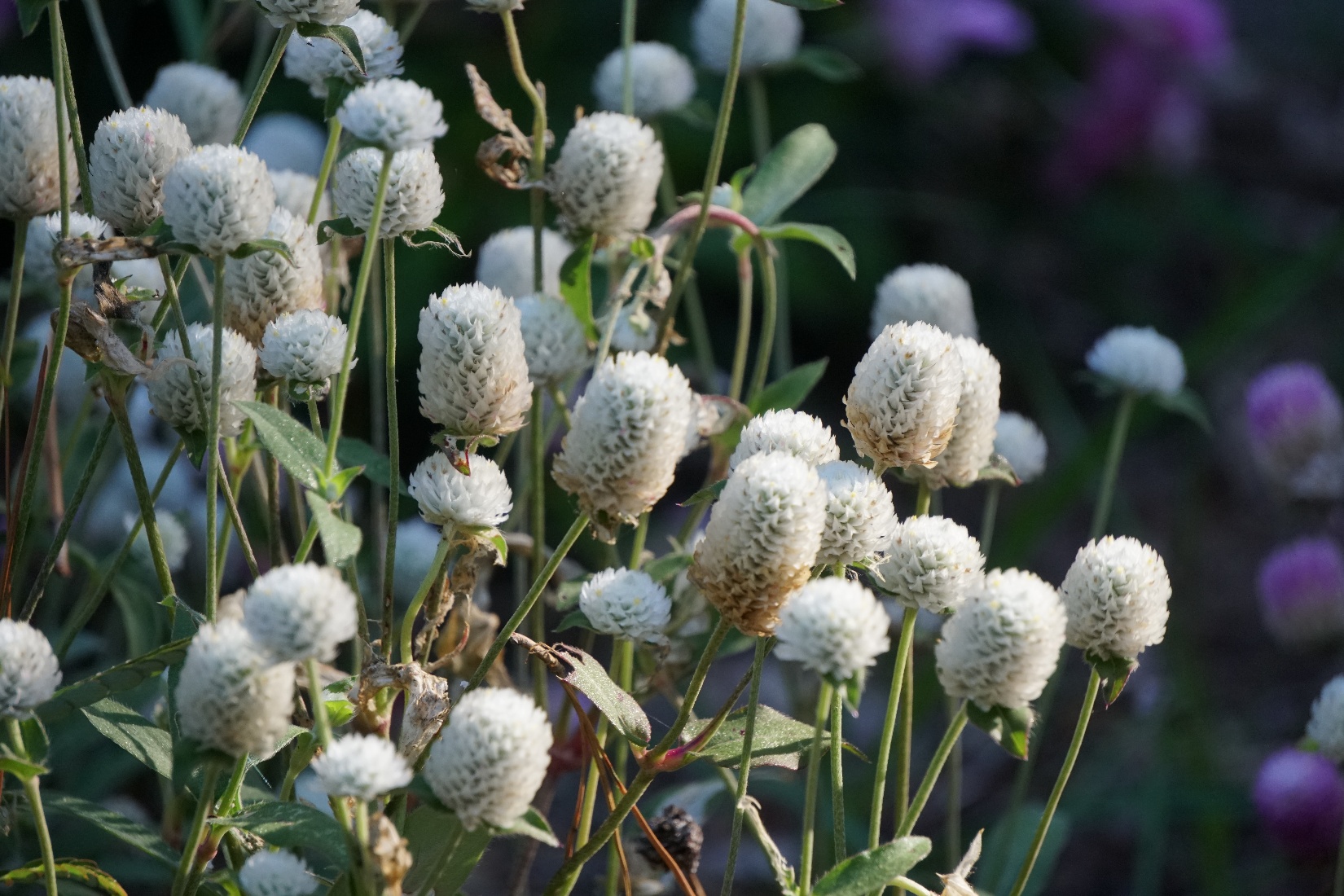
Ping pong white globe amaranth (Gomphrena globosa ‘Ping Pong White’ has showy, white clover-like flower heads.
Barbara H. Smith, ©2025 HGIC, Clemson Extension
Audray™ Globe Amaranth (Gomphrena globosa ‘Audray™’)
- Plant Height: 20 to 24 inches
- Plant Width: 10 to 12 inches
- Flower Colors: bicolor rose, pink, purplish-red, and white
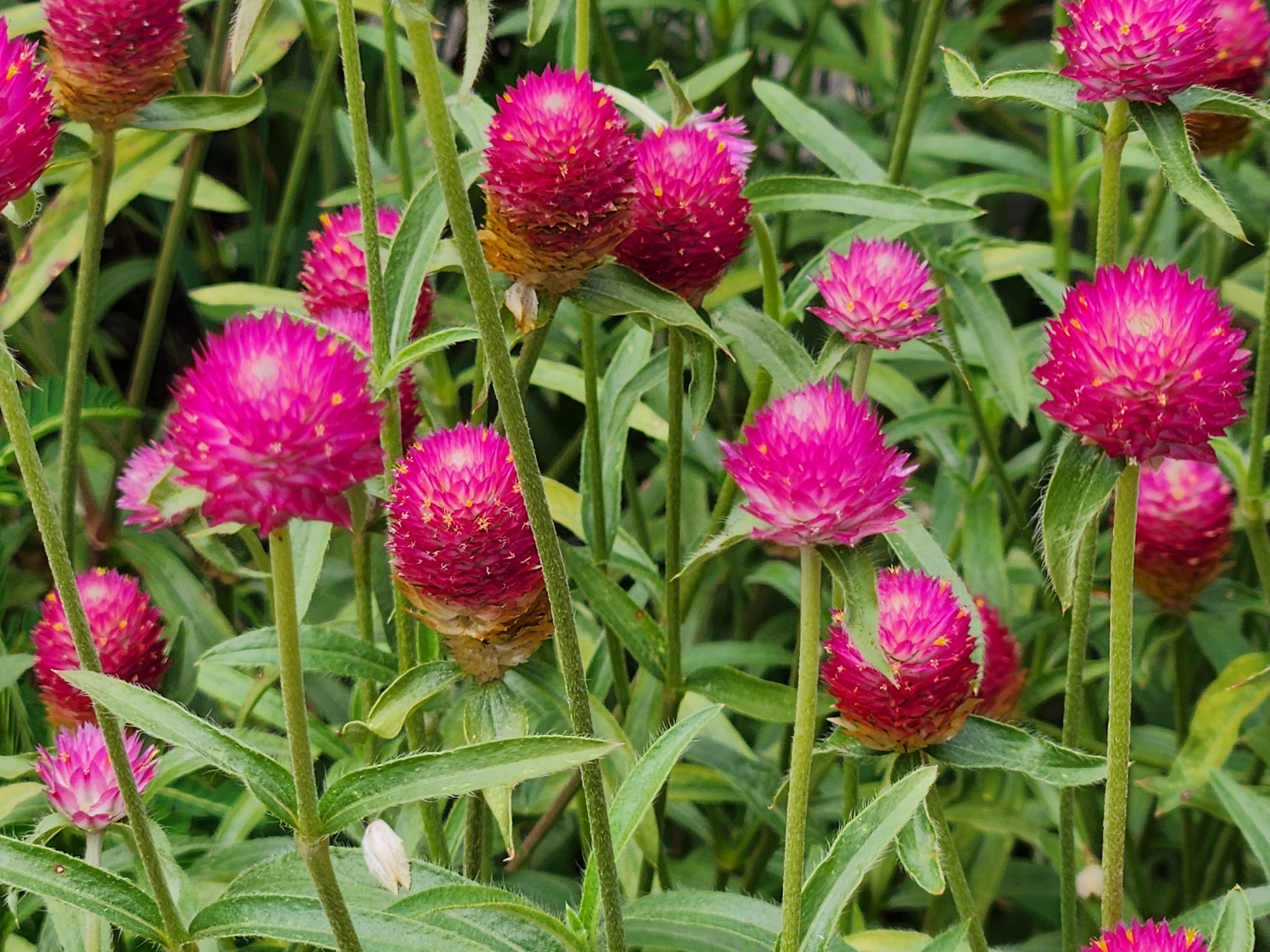
Audray™ bicolor rose globe amaranth (Gomphrena globosa ‘Audray™ Bicolor Rose’) has rose bracts with a white center.
Barbara H. Smith, ©2025 HGIC, Clemson Extension
Strawberry Fields Rio Grande Globe Amaranth (Gomphrena haageana ‘Strawberry Fields’)
- Plant Height: 18 to 24 inches
- Plant Width: 12 inches
- Flower Color: bright red bracts
- Flower Detail: tiny tubular yellow flowers
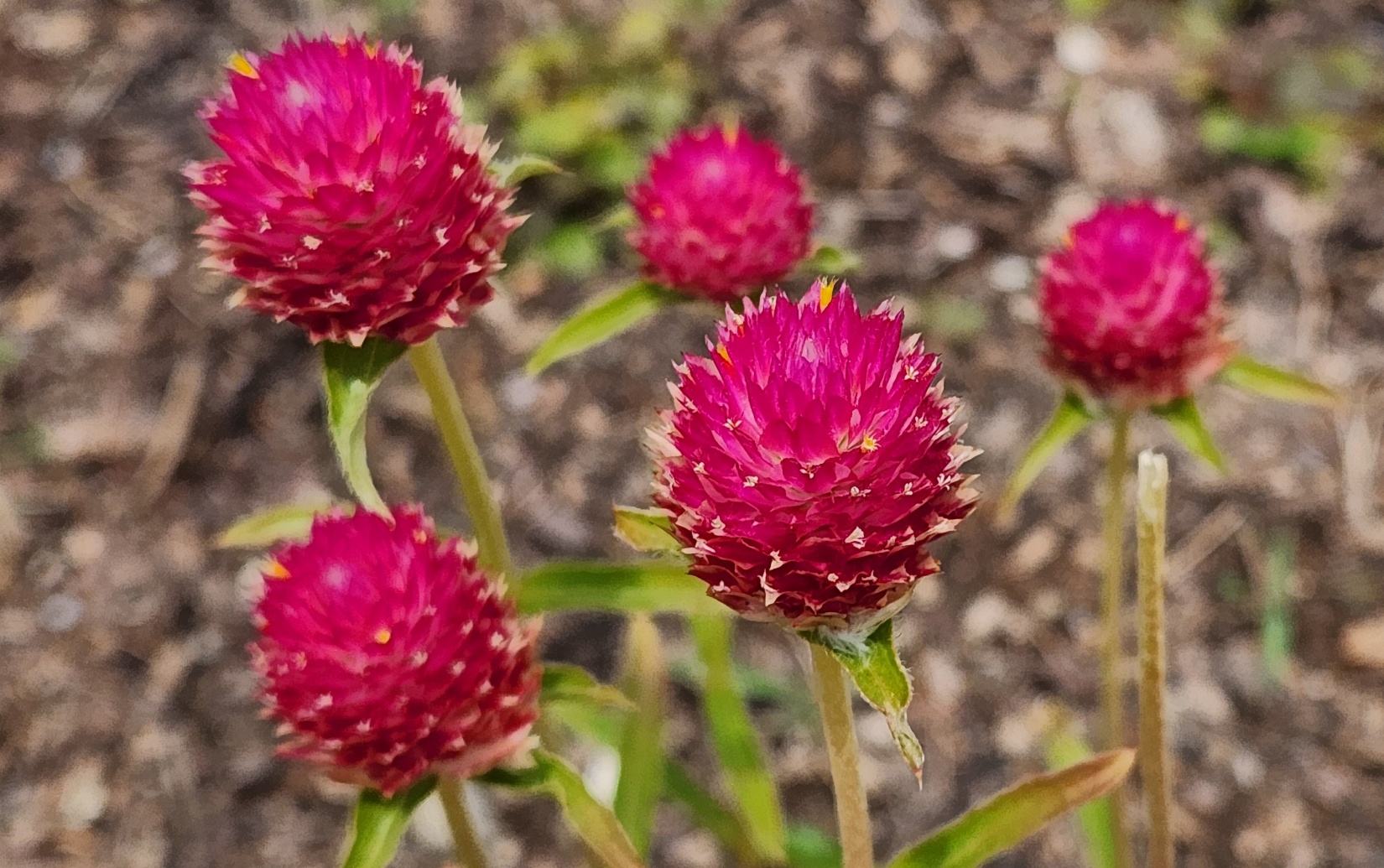
Strawberry Fields Rio Grande globe amaranth (Gomphrena haageana ‘Strawberry Fields’) has bright red bracts with tiny tubular yellow flowers.
Barbara H. Smith, ©2025 HGIC, Clemson Extension