Why Prepare Your Lawn for Winter
As winter is just around the corner, we don’t have to have patchy lawns and a muddy mess. By tackling bare ground before the cold sets in, we can:
- Prevent erosion
- Block those pesky winter weeds
- Build a stronger foundation for your turf’s spring green-up
Here is a list of some great options to help you combat bare ground.
How to Protect Bare Ground in Winter
Use Cool-Season Cover Crops
Using cover crops such as wheat, crimson clover, or vetch can help enhance soil fertility for spring planting.
Apply Mulch for Soil Insulation
Wood chips, pine needles, straw, or even shredded leaves can insulate the soil and prevent erosion.
Stabilize Slopes with Erosion Control
When concerned about bare ground on a slope or disturbed ground, using erosion blankets, straw wattles, or silt fences will help stabilize the soil and prevent runoff.
Improve Drainage to Prevent Turf Loss
In areas with low-lying ground that collect water, consider:
- Regrading the surface
- Installing drains
- Adding swales to help redirect water
These drainage improvements help prevent erosion and turf loss.
Plant Cool-Season Grasses
Annual or perennial ryegrasses germinate quickly and provide temporary stabilization.
NOTE: Ryegrass best germinates with soil temperatures between 50 °F and 70 °F.
- Overseeding Bermuda with ryegrass gives winter color as the Bermuda goes dormant. It can also aid in suppressing winter weeds. It is not recommended to overseed Zoysia, Centipede, or St. Augustine, as it can shade out the existing turf and hinder the process of breaking dormancy. For more information, see HGIC 1206, Overseeding with Rye.
- Fescue can be grown in the upstate of South Carolina and can be a great alternative in shaded to partially shaded areas where warm-season turf struggles. It offers beautiful color throughout the fall, winter, and spring.
Pro Tip: Due to our hot and humid summers, which put a strain on the turf, it is best to overseed in the fall or early spring to achieve a desirable turf.
Lay Sod for Immediate Coverage
- Sod can be laid in the winter months in a milder climate. It will require good root-to-soil contact as well as understanding that it will still need maintenance watering.
Remember, it may not be the heat that dries out the sod, but the wind can also be at fault.
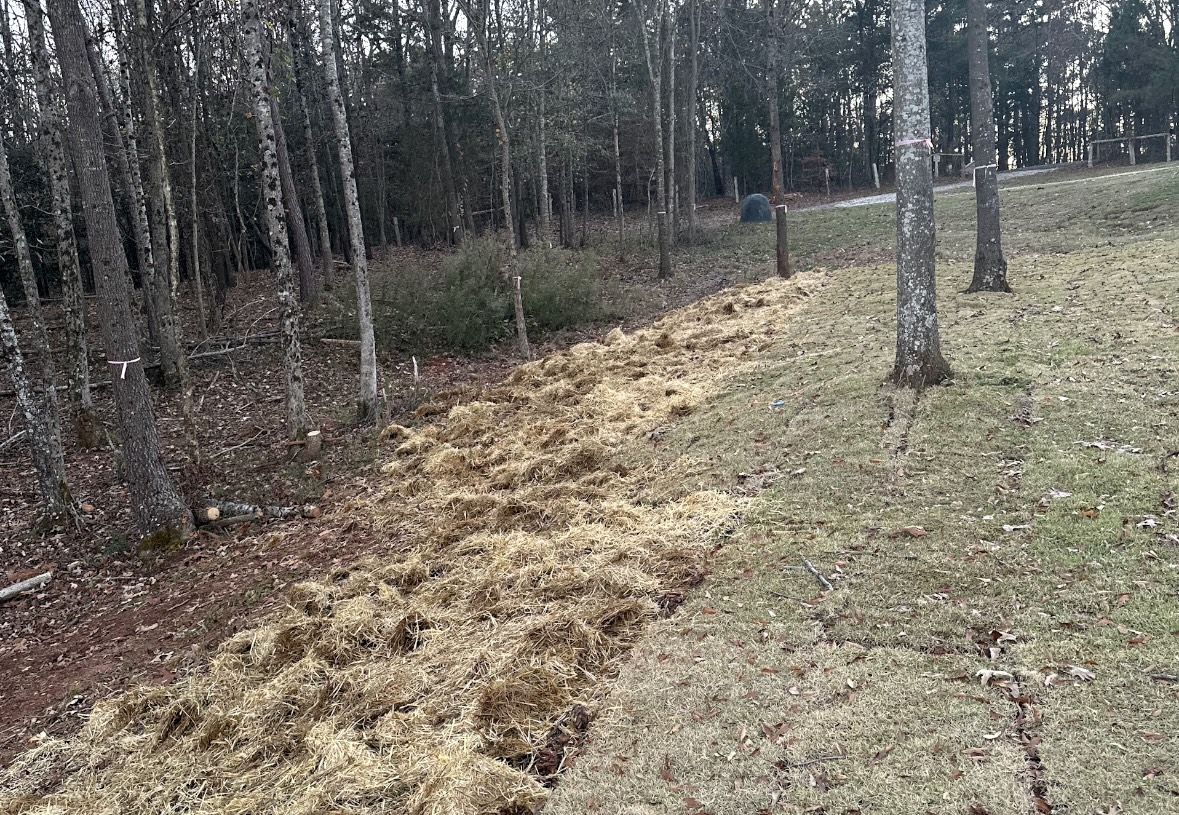
Zoysia sod was laid, and straw was added to help maintain the slope during the winter months, preventing erosion.
Samantha Brown, ©2023, Clemson Extension
How to Keep Your Landscape Healthy All Winter
While wintertime can bring cold and gloomy days, that doesn’t mean your landscape has to look dreary and bare.
By using the methods above, you can protect your soil and give it viability for the springtime. By selecting the right type of grass and planting it at the optimal time, you can establish a yard that is set for success.
Whether that’s overseeding Bermuda, establishing fescue or rye, or allowing zoysia, centipede, or St. Augustine to rest, each grass type needs a different approach for the season.
By keeping the ground covered, your landscape will thank you when the warmer weather returns.