What Are Dragonflies?
If I asked you to describe a dragonfly, you would almost certainly describe a winged creature with a long, slender body.
That is an accurate description of an adult dragonfly, but that is only one, small part of a dragonfly’s life cycle.
Dragonfly Nymphs: The Aquatic Stage of the Life Cycle
Dragonflies spend a significant portion of their life in an aquatic, nymph phase.
They breath with gills and are predators of other aquatic invertebrates, including mosquito larva.
Their specially adapted jaws look more like something from an alien movie than something found in a peaceful, babbling brook.
How Dragonflies Transform Into Adults
When it’s time for a dragonfly nymph to enter the adult phase of its life cycle, it crawls out of the water and sheds its exoskeleton (hard external covering).
If you look closely at tree trunks or logs along streambanks, you can often find the abandoned exoskeletons of dragonflies that have molted and flown away.
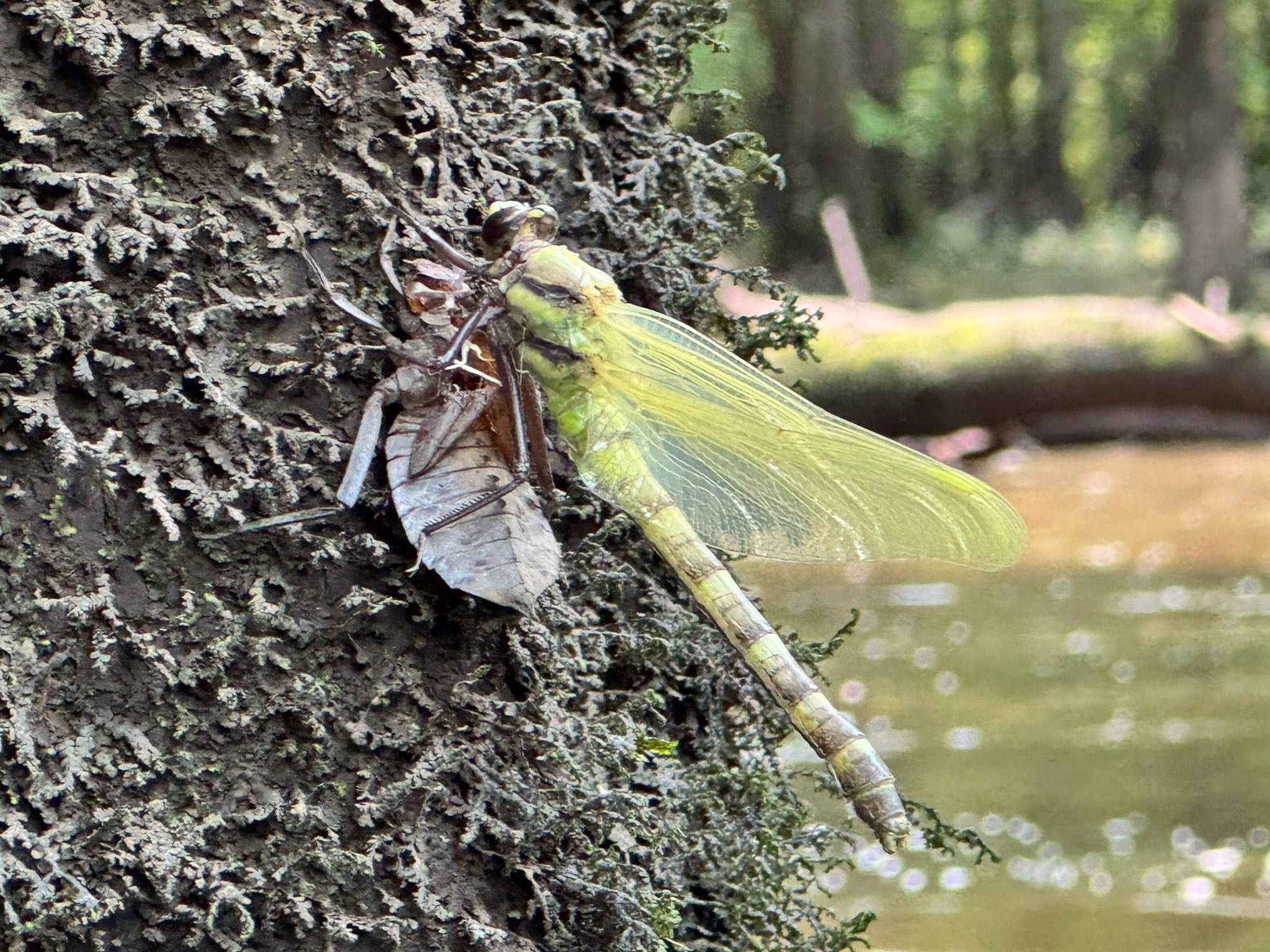
A dragonfly transitions from nymph to adult phase by climbing out of the water, shedding its exoskeleton, and expanding its wings.
Photo credit: Jason Stoddard
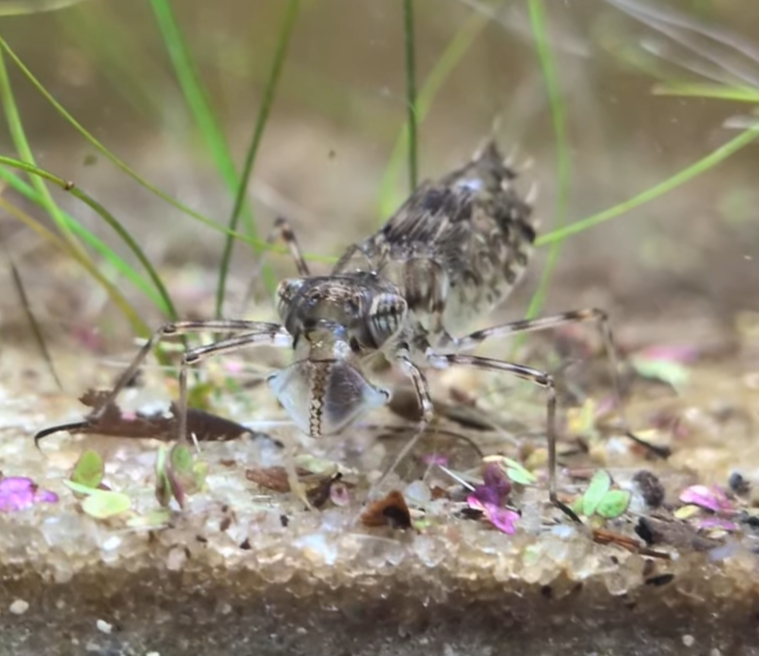
A dragonfly nymph eats an aquatic snail.
Katie Collins, ©2026, Clemson Extension
Why Dragonflies Matter for Stream Health
Dragonflies are just one of many insects that experience an aquatic phase in their life cycle.
These and other aquatic macroinvertebrates are useful indicators for the health of our waterways.
Some macroinvertebrates are sensitive to pollutants, while others are very tolerant of poor water quality.
By collecting and counting the species found in a stream, we can gain insight into the health of the waterway.
If we see only tolerant species, that indicates poor water quality.
If we see more diversity with some sensitive species in the mix, it is likely a healthy ecosystem.
Dragonflies as Water Quality Indicators
Dragonflies are considered somewhat sensitive to pollution, so they won’t be present in heavily impacted streams, but are very commonly found in most streams in South Carolina.
Next time you’re out on the water and see a dragonfly, take a look near the water line. You may find the exoskeleton it left behind when it emerged.