Most houseplants are understory plants from tropical rainforests in their natural environments. They live amongst the rainforest floors and receive the dimmest light levels from the lush canopy above, allowing them to thrive in the lower light levels in our homes and offices. There are exceptions to this case, i.e., succulents and cacti, which need brighter light conditions. All house plants need some light, whether from a window or a supplemental lighting fixture. Plants that don’t receive adequate lighting can become stressed or waterlogged, which can lead to pest problems. For further information on controlling common houseplant insects, see HGIC 2252, Common Houseplant Insects & Related Pests.
Understanding Houseplant Lighting
Lighting Breakdown by Window Orientation
- South-facing window: Highest and brightest amount of light. Typically, bright direct sun all day if no trees or shade are present around the home.
- West-facing window: Medium light levels. Bright indirect light in the late evenings.
- East-facing window: Low-medium light levels. Bright indirect light in the mornings.
- North-facing window: Lowest levels of light. No direct sun is present all day.
Snake Plants (Dracaena trifasciata)
Snake plants, also known as Mother-in-Law’s Tongue, are a fantastic selection for beginners.
Light and Watering Needs
They can tolerate many different lighting settings and don’t require frequent watering or excessive humidity. The ideal lighting for a snake plant is bright, indirect lighting. They can tolerate low light settings but will grow more slowly in this environment and require less water. Avoid direct and hot sunlight on the plant as this can lead to burning of the leaves. These plants like to be watered every 2 to 4 weeks during the growing season. The more light the plant receives in a day, the more frequently it will need to be watered. In the fall and winter, you can cut back to watering every 4 to 6 weeks. It’s best to err on the side of caution when watering snake plants, as they can develop root rot and soggy leaves if watered too frequently.
Common Varieties
Snake plants come in many different varieties, with Dracaena trifasciata being the most common, allowing you to personalize the overall look of your plant. Dracaena trifasciata ‘Laurentii’ has bright yellow leaf margins. In contrast, the Dracaena angolensis has cylindrical leaves that are shaped like pointy fingers, and the Dracaena trifasciata ‘Moonshine’ has silvery-green leaves. Some varieties stand tall and make beautiful statement pieces, while others stay petite and button-like.
Fun Fact: Sansevieria Reclassification
In 2017, botanists reclassified Sansevieria into the genus Dracaena based on DNA analysis.
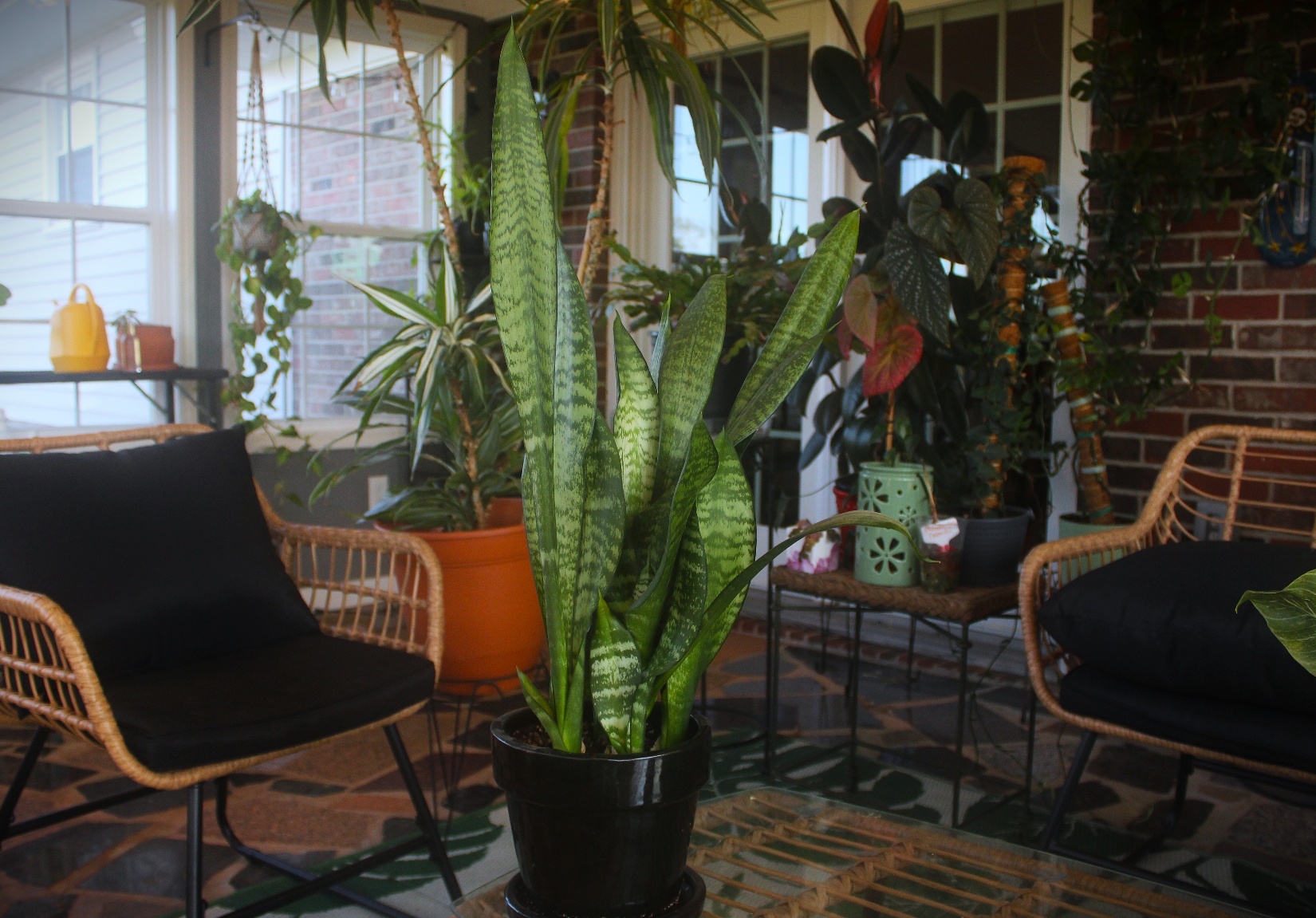
A potted mature snake plant (Dracaena trifasciata) is the most common variety available for purchase.
Julia Nichols, ©2025, Clemson Extension
Pothos (Epipremnum aureum)
Pothos is one of my favorite houseplants because they are durable, its long limbs can be used as decoration, and one plant can produce many plants for you. Your basic Jade pothos (Epipremnum aureum ‘Jade’) is an excellent plant for starting your new hobby, as they are relatively low maintenance.
Light and Watering Needs
The ideal lighting setting is bright, indirect light, but they can tolerate lower light levels. The lower the levels of light present, the smaller the new leaves will be. Water your pothos thoroughly each time and only when the top 1.5 to 2 inches of soil have dried out. Decrease watering frequency in the fall and winter.
Growth Habit and Decor Ideas
This plant’s long, tendril-like stems make it an ideal hanging or draping plant for your space. Stems can also be trained around trellises. With ideal lighting conditions, they can grow quite quickly and reach up to 30 to 40 feet in maturity.
Varieties to Explore
Feeling adventurous? There are many different varieties of pothos plants. Some are variegated (Marble Queen pothos), some have neon green leaves (Neon pothos), and some have silver sections of their leaves (Silver Queen pothos). Once you feel confident taking care of your Jade pothos, try more unique varieties with funkier aesthetics!

A golden (Epipremnum aureum) plant grows well in a hanging basket pot.
Julia Nichols, ©2025, Clemson Extension
Spider Plant (Chlorophytum comosum)
Spider Plants are fun-looking houseplants that can produce many more plants through propagation. Their long, spider-like leaves are green with white stripes. ‘Curly’ varieties have curly leaves.
Light, Soil, and Watering Tips
Spider plants thrive in bright to medium indirect light. They are relatively quick-growing plants, and one plant can produce many ‘pups’ in a growing season. Clipping and repotting the pups help to take the stress off the mother plant and allow you to gift friends or place new plants in other rooms.
Spider plants enjoy well-draining potting soil. Adding perlite to a basic bagged potting soil can help to achieve this. Water your spider plant when the top 1 to 2 inches of soil feel dry to the touch. Avoid overwatering to prevent root rot. Spider plants also prefer a deep and thorough watering each time.
Pet Safety Considerations
Cats tend to be drawn to chewing the leaves of spider plants. The ASPCA lists them as nontoxic to cats; however, excessive consumption can lead to vomiting or diarrhea. Some cats can experience mild hallucinogenic effects from the plant, similar to those of catnip, which can make them more attracted to them. Keeping plants out of reach or hanging can deter cats from this behavior.
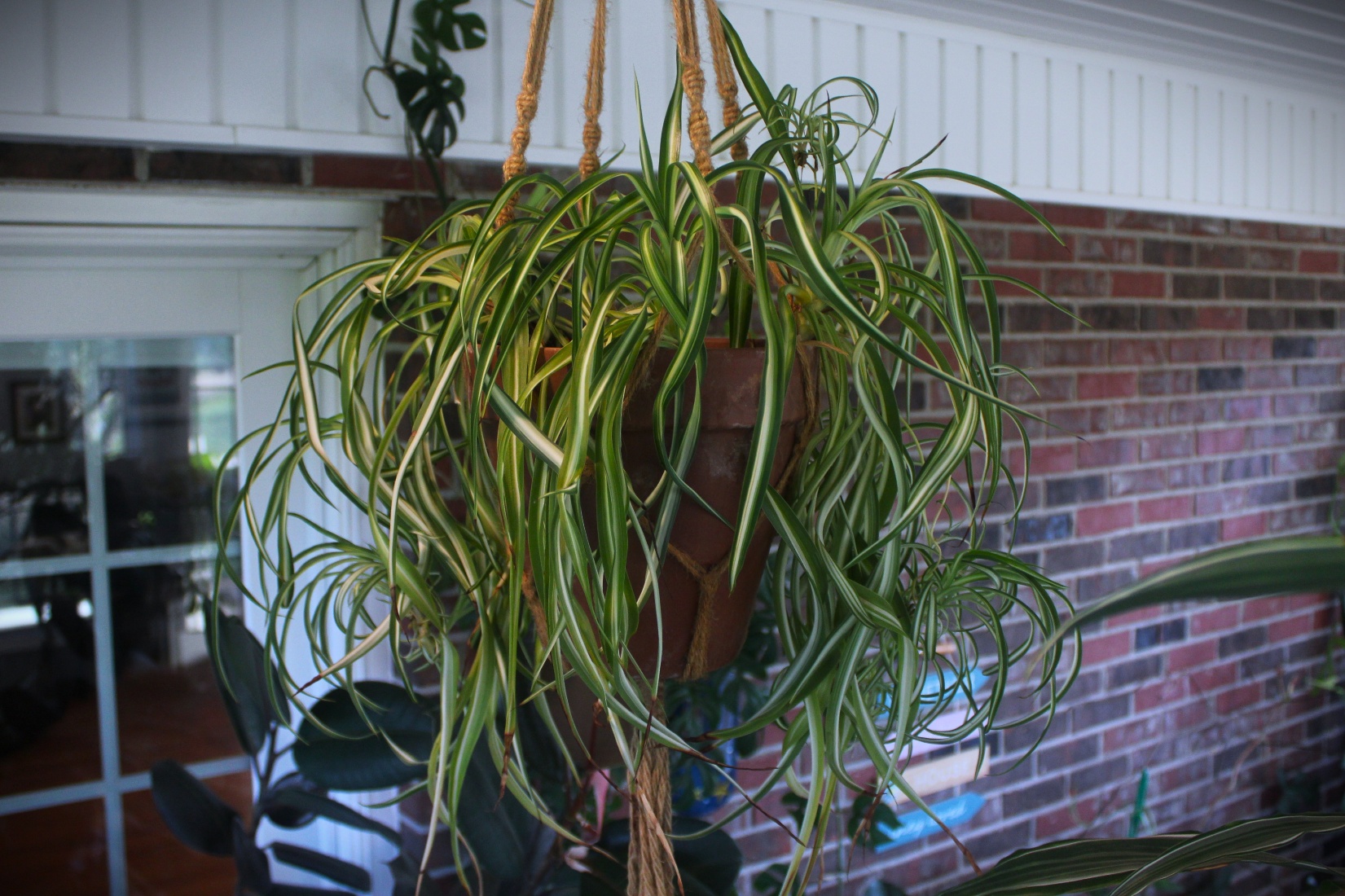
Curly spider plant ‘Bonnie’ (Chlorophytum comosum ‘Bonnie’) in a macrame hanger and terracotta pot hanging from a ceiling hook.
Julia Nichols, ©2025, Clemson Extension
Dragon Tree (Dracaena draco)
Dragon trees are a beautiful statement piece for any houseplant owner. They can reach 6 to 8 feet tall indoors.
Light and Watering Needs
They are drought-tolerant and can handle different levels of humidity. Dragon trees do best in a cactus mix potting soil and like to be watered when the top 2 inches of soil have dried out. Typically, you should water your plant every 2 to 4 weeks, depending on lighting conditions. Cut back on watering in the winter to approximately every 4 to 6 weeks to avoid diseases or pests. They are sensitive to overwatering. Bright indirect light is the ideal setting for a dragon tree. They can even tolerate some direct morning light. If your plant is not getting enough light, its leaves may yellow or droop. In this case, move it closer to a window.
Growth Rate and Maintenance
Removing dead or yellowing lower leaves is typical for this plant and should not raise alarm. Dragon trees are slow-growing and typically grow 3 to 5 inches per year in ideal conditions. They can be purchased in varying heights and stages of growth. The larger the plant, the more expensive it will be due to its age. As the dragon trees mature, their growth rate tends to increase.
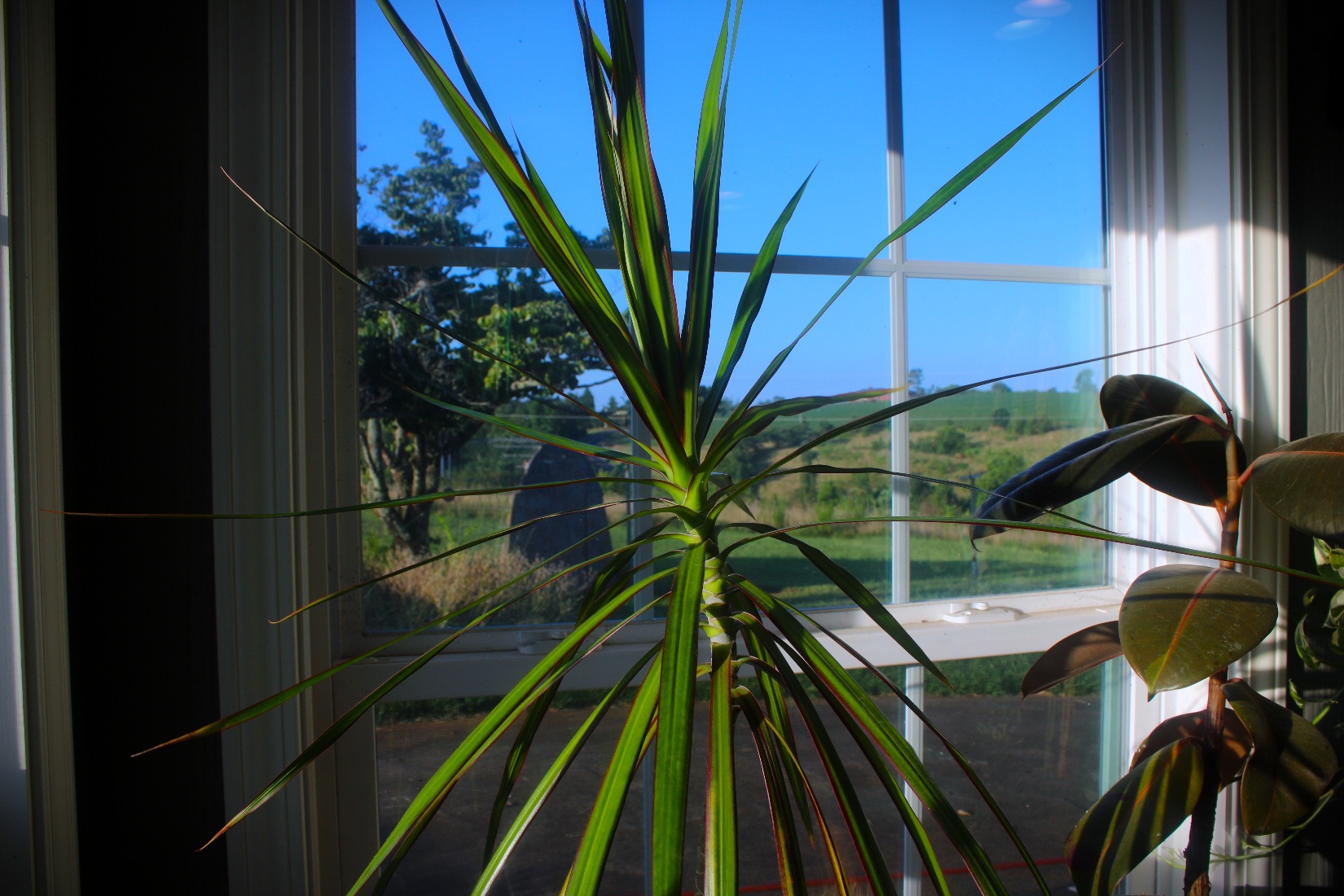
A dragon tree (Dracaena draco) is characterized by its rosette-like clusters of leaves at the branch tips and long, spiky leaves.
Julia Nichols, ©2025, Clemson Extension
Additional Resources:
HGIC 1456, Indoor Plants – Soil Mixes
HGIC 2251, Houseplant Diseases & Disorders
HGIC Holiday Houseplants