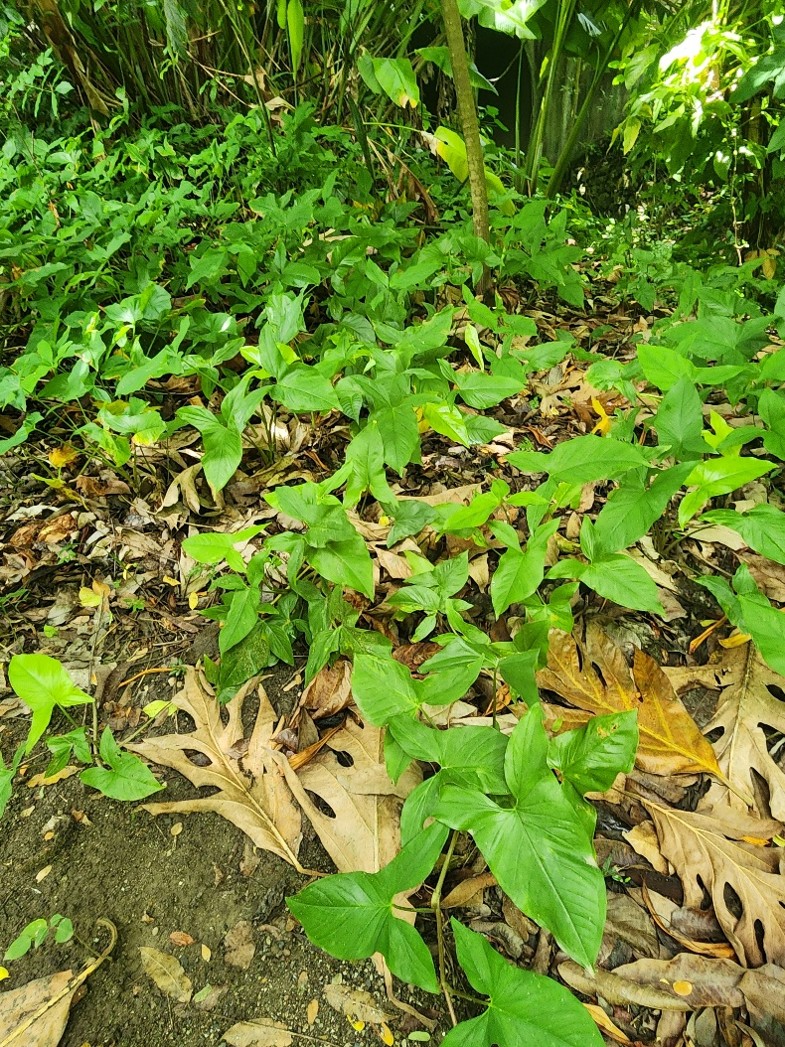
Syngonium sp. growing in its native habitat.
Jackie Jordan, ©2025, Clemson Extension
Arrowhead Vine Quick Grow Guide
Best Soil: Equal parts peat moss or coir, vermiculite, and perlite
Light Level: Medium to bright indirect light; avoid direct sunlight
Water: Allow the potting medium to slightly dry out between waterings
Temperature: 65°F to 75°F with average to high humidity
Size: Dwarf varieties stay under 2 feet tall; common varieties grow 3 to 6 feet tall
Care Tip: Keep variegated varieties in bright light to maintain coloration; leaves will revert to solid green in low light
Common Problems: Aphids, mealybugs, spider mites, bacterial diseases, and stem rot
Pet Safety: Not pet safe
How to Grow Arrowhead Vine Indoors
Arrowhead vine (Syngonium spp.) is a popular tropical houseplant grown for its colorful foliage. The plant is highly adaptable making it a great choice for growing indoors. Learn how to grow, water, fertilize, and troubleshoot arrowhead vine while choosing the best species and cultivars.
Arrowhead Vine Plant Information and Native Habit
Arrowhead vine is a vining plant in the Araceae family. Native to the tropical rainforests of Mexico, the Caribbean, and Central and South America.
In its juvenile form, arrowhead vine grows on the forest floor and produces triangular, heart-shaped, or arrowhead-shaped leaves.
As plants begin to climb trees and receive more light, they produce an intermediate leaf form with 3 leaflets. Mature plants produce highly divided foliage with 5 to 11 leaflets.
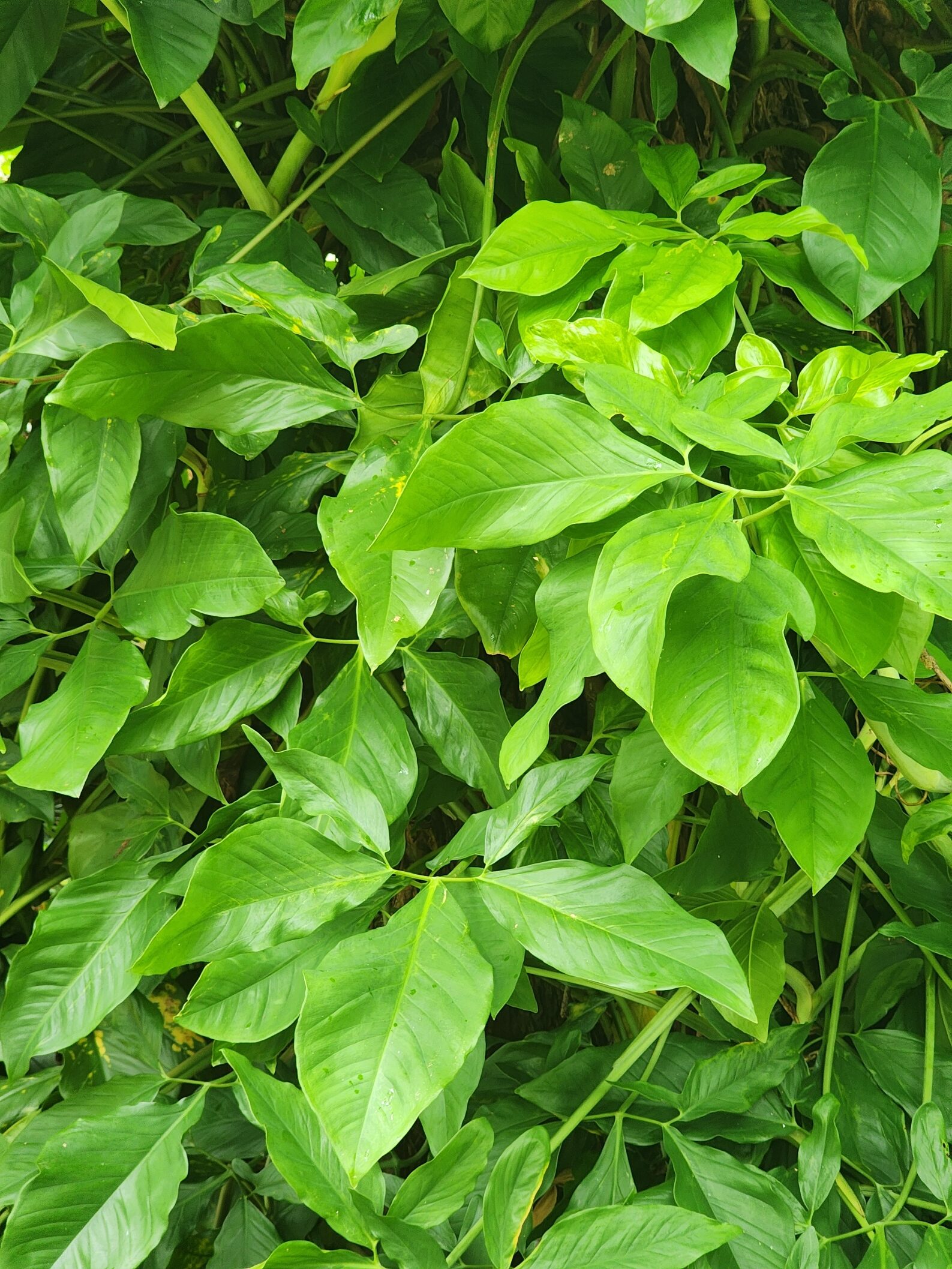
A mature arrowhead vine with highly divided foliage.
Jackie Jordan, ©2025, Clemson Extension
Plants in the juvenile form are fairly compact and grow well in containers and hanging baskets.
As plants mature, their petioles lengthen, and they can be trained on a moss pole, trellis, or bamboo stake.
Arrowhead Vine Size and Spread Indoors
- Dwarf varieties stay under 2 feet tall
- Common varieties can reach 3 to 6 feet tall
- Width is between 1 and 2 feet
Arrowhead Vine Leaf Colors and Ornamental Features
Arrowhead vine leaves come in an array of colors and variegation patterns.
Hybrid varieties sport variegation in combinations of pink, red, yellow, white and various shades of green.
How to Care for Arrowhead Vine Indoors
Best Indoor Light for Arrowhead Vine
Arrowhead vines are tolerant of low light but prefer medium to bright light.
Variegated varieties will maintain their coloration better with brighter light.
Locate plants in an east-facing window or a few feet away from a west-facing window.
North-facing windows also work well, but leaf color may become dull.
How to Water Arrowhead Vine Plants
Allow the potting media to dry out slightly between waterings.
For more information on how to properly water houseplants, see Indoor Plants-Watering (HGIC 1459).
Ideal Temperature and Humidity for Arrowhead Vine
Arrowhead vine tolerates average home temperatures and humidity levels.
They prefer:
- Temperatures between 65°F and 75°F
- Humidity levels at 50% or higher
They will tolerate lower humidity levels.
Best Fertilizer for Arrowhead Vine
Arrowhead vines are not heavy feeders and should not be fertilized often if trying to keep the plant in a juvenile state or growing in low light.
Fertilize with a balanced fertilizer such as:
- 20-20-20
- 10-10-10
Apply at a reduced rate once a month during the spring and summer growing season.
Common Arrowhead Vine Problems and Solutions
Why Arrowhead Vine Leaves Turn Green
Green or reverting leaves indicate that the plant is not receiving enough light.
Moving the plant to a brighter location will encourage the variegation to return on new growth.
Common Insect Pests on Arrowhead Vine
Arrowhead vine is susceptible to:
- Aphids
- Mealybugs
- Spider mites
For more information on these insect pests and how to control them, see Common Houseplant Insects & Related Pests (HGIC 2252).
Common Arrowhead Vine Diseases
The following diseases can be problematic:
- Bacterial blight
- Bacterial leaf spot
- Stem rot
For more information on these diseases and control recommendations, see Houseplant Diseases & Disorders (HGIC Factsheet 2251).
Arrowhead Vine Species and Cultivars for Indoor Growing
Popular Syngonium Species for Indoor Growing
The International Aroid Society lists over 40 species of Syngonium. Most are rare in the nursery trade, but some species are available from specialty growers.
Syngonium chiapense
- Medium-green leaves that can reach two feet long
- Retains its heart-shaped leaves into maturity, unlike other Syngonium species
Syngonium erythrophyllum
- Velvety leaves
- Dark-green upper leaf surface with dark-red undersides
Syngonium macrophyllum
- Large, blue-green leaves
- Develops a leathery texture as the foliage matures
Syngonium podophyllum
- Highly adaptable to various growing conditions
- Many cultivated varieties are available with variegated foliage
Syngonium wendlandii
- Dark-green, velvety leaves
- Prominent white midrib extending into the veins
- Elongated arrowhead-shaped leaves.
Popular Variegated Syngonium podophyllum Cultivars
‘Albo-variegatum’
- Green leaves with mottled white variegation
- Pink-hued petioles
‘Aurea Variegata’
- Green leaves with mottled, lemon-yellow to lime-green variegation
‘Batik’
- Dark-green leaves with white veins
‘Green Splash’
-
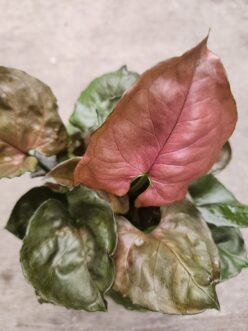
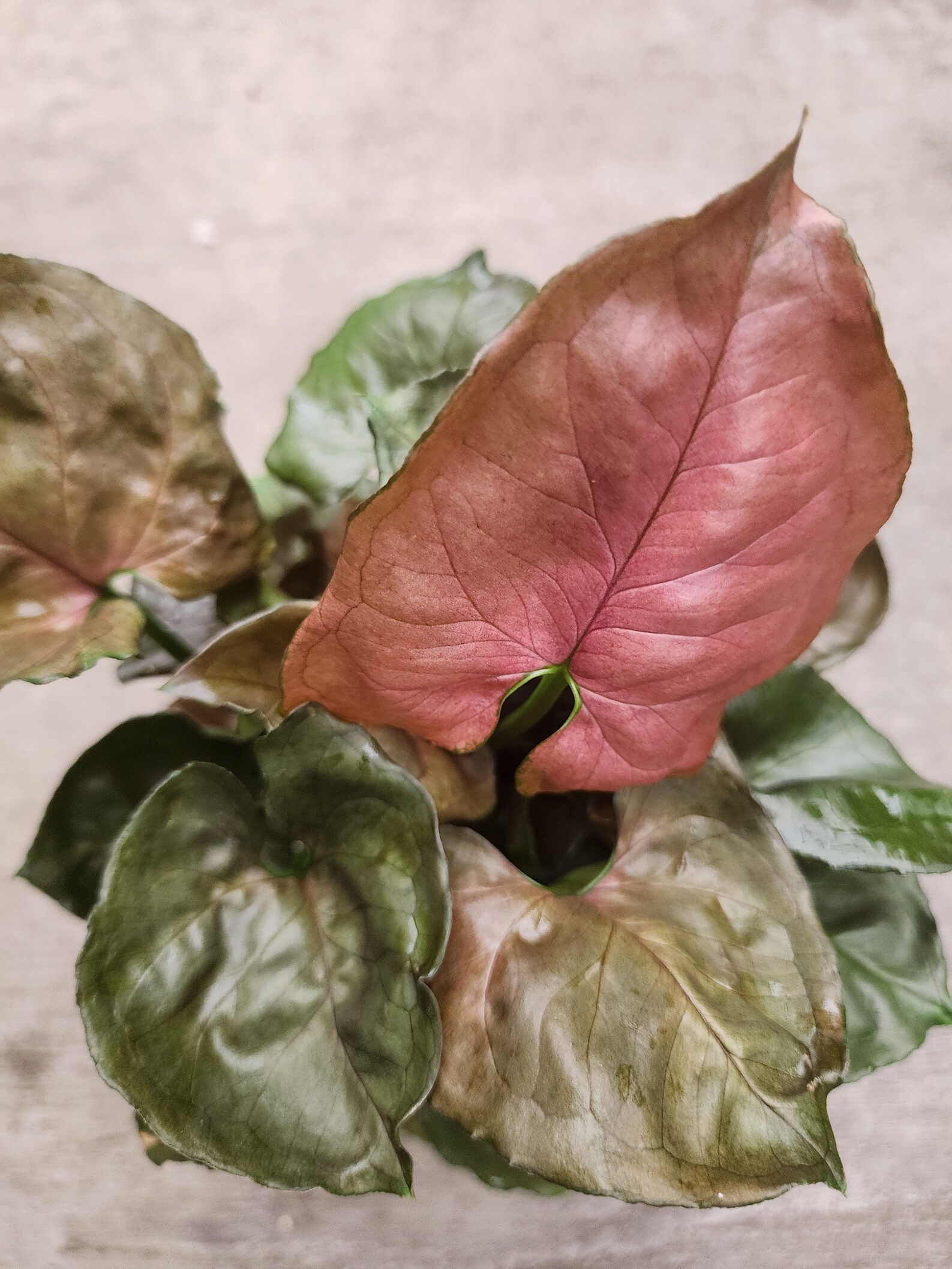
‘Maria Allusion Bronze’ arrowhead vine features new bronze- pink leaves and mature leaves that turn coppery- green.
Jackie Jordan, ©2025, Clemson ExtensionDense growth habit
- Irregular arrowhead-shaped leaves
- Light-green leaves with dark-green spots
- New leaves have a pink blush
‘Holly’
- Very pale, almost white leaves
- Thin green leaf margins
‘Maria Allusion Bronze’
- New growth is reddish bronze.
- Mature leaves darken to a bronze green
‘Milk Confetti’
- Frosted green leaves
- Numerous small pink patches with occasionally large pink variegated blotches
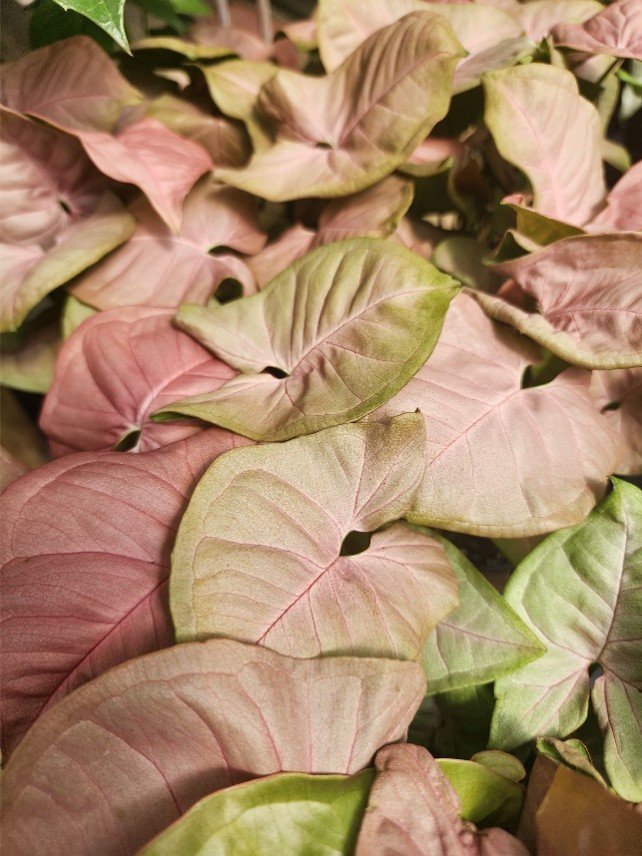
‘Neon Robusta’ arrowhead vine features pink leaves.
Jackie Jordan, ©2025, Clemson Extension
‘Neon Robusta’
- New leaves are pink
- Mature leaves turn green
‘Orm Nak Red’
- Leaves range from vibrant pink to red
- Green speckled leaf margins
- Green petioles
‘Pink Splash’
- Medium-green leaves
- Pink spots of varying sizes
‘Pixie’
- Dwarf cultivar that grows up to 8 inches tall
- Small leaves with white to light-green centers
- Dark-green leaf margins
‘Three Kings’
- Each leaf has a unique pattern of dark-green, light-green, and white variegation
‘White Butterfly’
- Self-heading dwarf variety
- Mostly white to pale green leaves
- Green leaf margins and white veins
Frequently Asked Questions About Arrowhead Vine
Why are my arrowhead vine leaves turning green?
Green or reverting leaves indicate that the plant is not receiving enough light. Moving the plant to a brighter location will encourage the variegation to return on new growth.
How often should I water an arrowhead vine?
Allow the potting medium to dry out slightly between waterings. For more information on watering houseplants, see Indoor Plants-Watering (HGIC 1459).
Does arrowhead vine grow in low light?
Yes. Arrowhead vine tolerates low light but prefers medium to bright indirect light. Variegated varieties maintain their color better in brighter light, while leaf color may dull in lower light.
What fertilizer is best for arrowhead vine?
Arrowhead vine is not a heavy feeder. Fertilize with a balanced fertilizer, such as 20-20-20 or 10-10-10, at a reduced rate once a month during the spring and summer growing season.
Why is my arrowhead vine losing its variegation?
Variegated arrowhead vines require brighter light to maintain their coloration. If a plant receives too little light, the leaves may revert to solid green. Moving the plant to a brighter location will encourage variegation to return on new growth.
Can arrowhead vine be grown as a climbing plant?
Yes. Juvenile plants remain compact and grow well in containers and hanging baskets. As plants mature, their petioles lengthen, and they can be trained to climb a moss pole, trellis, or bamboo stake.