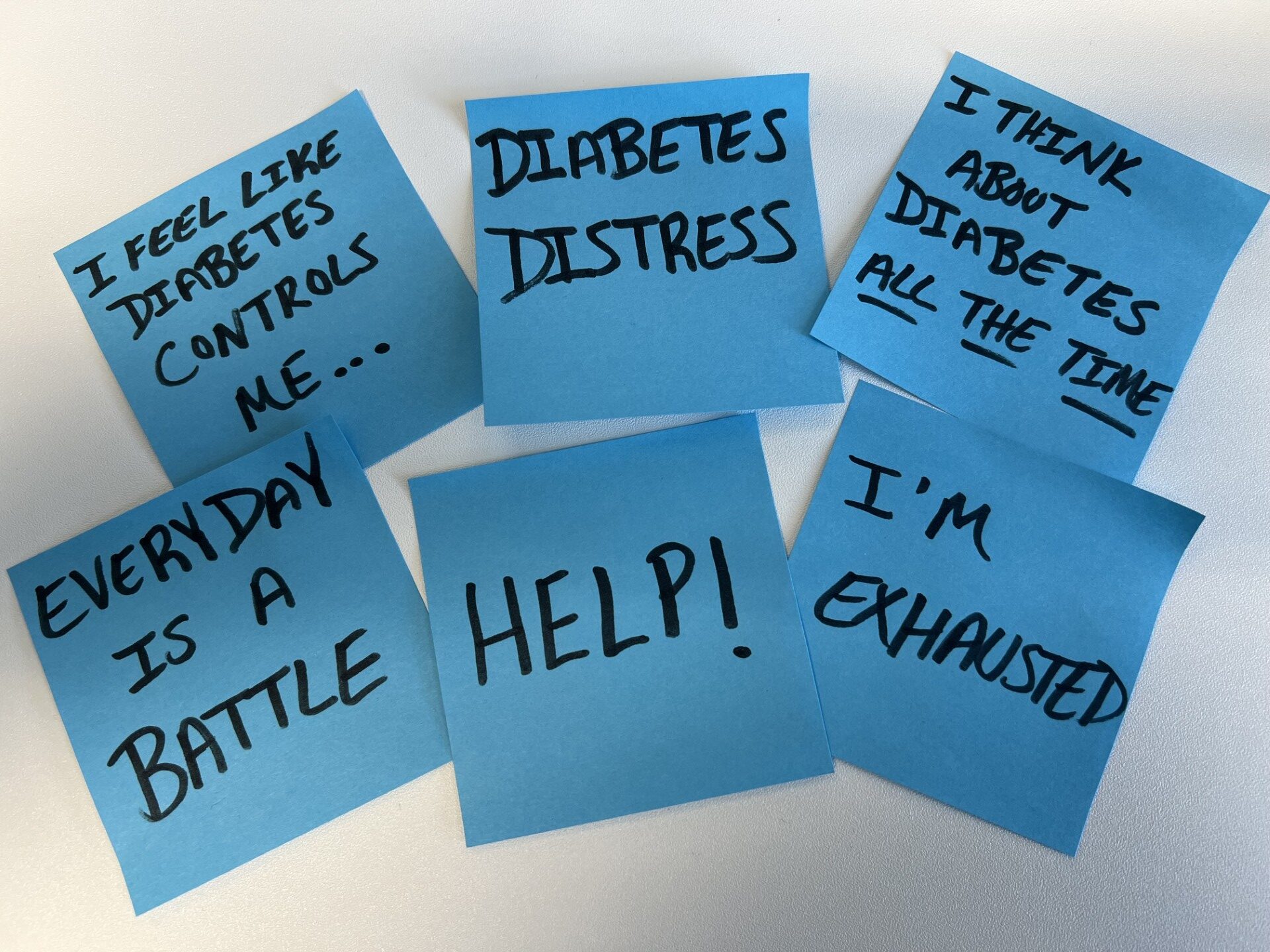
When people living with diabetes become overwhelmed by the stress of daily self-management practices, it is important for them to seek help and support.
Photo credit: RHN Team Picture Bank
What is Diabetes Distress?
People living with diabetes are at risk for developing psychological disorders such as depression and anxiety. The stress associated with managing diabetes can become a significant problem and this stress can contribute to the development of psychological disorders.
In some cases, people living with diabetes may experience what is known as diabetes distress, which is a term that pertains to the negative emotions of living with diabetes and the burden of daily self-management practices.
Living with diabetes is challenging and can be very difficult at times. Diabetes distress can develop because of mounting stress from troubling emotions, constant concern about complications, the need for daily monitoring and treatment, and difficulties that can arise in personal and professional relationships.
Common Signs and Symptoms
- Feeling overwhelmed or burned out by diabetes self-management
- Concern that food choices rule over one’s life
- Constant worry about experiencing low blood sugar
- Feeling unsupported by family and friends
Note: Diabetes distress is not considered a psychological disorder on its own, and it can sometimes be hard to distinguish from clinical depression. Healthcare providers can conduct assessments to help determine if someone is experiencing diabetes distress.
It is important to talk with a healthcare professional if you have any of the signs and symptoms.
Why Seeking Help for Diabetes Distress Matters
Seeking support and intervention is vital as diabetes distress has been shown to have the most substantial effect in causing adverse diabetes outcomes.
Psychological interventions with children, adolescents, and families have been shown to improve mental health, including overall well-being and perceived quality of life, along with reducing symptoms of depression.
Some studies have demonstrated that psychological interventions can increase diabetes treatment adherence, glycemic control, and psychosocial functioning. Psychosocial functioning refers to an individual’s psychological and social interactions in daily life, including the ability to perform everyday tasks and have fulfilling interactions with family, friends, and acquaintances.
Social support and cognitive behavioral therapy, or CBT, are two examples of psychological interventions that can help people experiencing diabetes distress.
How Social Support Helps People with Diabetes
Social support has been found to be one of the most critical components of managing chronic health conditions like type 1 and type 2 diabetes. Social support encompasses personal and professional relationships like patient-provider relationships, familial assistance, and access to community resources.
Social support can help people living with diabetes adhere to specific lifestyle changes and medications, ultimately helping reduce the risk of complications from diabetes and improve psychological well-being and quality of life.
Benefits of Social Support for Diabetes Care
In general, social support can aid in improving health outcomes in people living with diabetes, and this support can be familial, educational, or through improved access to resources. For example, support groups can help those living in rural areas who are physically distant from healthcare providers.
Diabetes support groups allow participants to:
- Share their experiences with diabetes
- Gain knowledge on how to manage their diabetes
- Potentially improve their glycemic control
Individuals with diabetes may feel less isolated and alienated when they feel accepted by family and other social support systems. When family and other key individuals are more involved in diabetes care, medication adherence and diet quality can improve.
How Cognitive Behavioral Therapy (CBT) Supports Diabetes Management
Cognitive behavioral therapy, or CBT, is the most commonly used and investigated type of psychotherapy for the management of diabetes.
What CBT Does for Diabetes Distress
As a structured short-term psychotherapy, CBT is an effective way of treating a variety of mental disorders, particularly depression. This therapy helps individuals reorganize dysfunctional thoughts, beliefs, and negative behaviors and then reconstruct appropriate thinking patterns and behavior, which results in improved mood.
Another way to describe CBT is that it is a kind of psychological therapy that changes any unreasonable components of the patient’s cognition, adjusts their distorted thinking and beliefs, and establishes the correct thinking to eliminate destructive behaviors and emotional reactions.
CBT Benefits for Chronic Disease Management
It has been widely used in emotion management of patients with chronic diseases, such as:
- Coronary heart disease
- Hypertension
- Chronic pain
- Cancer
CBT-based interventions have been shown to significantly reduce:
- Hemoglobin A1c
- Fasting blood glucose
- Diastolic blood pressure
- Symptoms of depression and anxiety
- Improve sleep quality
All of these can improve the management of diabetes and lower the risk of diabetes-related complications.
Overcoming Barriers to Mental Healthcare Access for Diabetes
Knowing and fully understanding some of the barriers to mental healthcare access can potentially make it easier to acquire the help that is needed.
Financial Barriers to Diabetes Mental Health Support
One significant barrier is financial resources, where many individuals cannot afford to seek treatment due to a lack of and/or poor insurance coverage. Lack of financial resources prevents individuals from seeking help or getting consistent or adequate therapy.
Geographic Barriers to Mental Health Services
The lack of mental health services in rural and urban areas is a second barrier. Even when providers are available, some are considered out of network to an individual’s health insurance plan.
Stigma Around Mental Health Treatment for Diabetes
Next, there can be a stigma around seeking mental health treatment. Not seeking proper care for mental health can potentially be fatal, so fighting stigma in our own lives and community needs practice.
Lack of Knowledge About Diabetes Mental Health Resources
Lastly, a lack of knowledge and awareness is a barrier to mental healthcare access. While there is greater awareness of the need to address mental health in the United States, many people still worry about others judging them once they have sought mental health services.
Raising awareness can change how society views and responds to complex issues. Understanding mental health and getting people the help they need is crucial. Education and awareness can help people identify who in their lives may be struggling and help them receive treatment as necessary.
In efforts to better help people living with diabetes, emphasis is needed on the importance of mental health care and the need for social support. Reach out to your primary healthcare provider if you are experiencing signs and symptoms of depression and/or diabetes distress so they can refer you to a mental health professional in your area.
Mental Health Resources for Diabetes Distress Support
Crisis Support Resources (Available 24/7)
- Suicide Prevention Lifeline: Call 988 or 1-888-273-8255
- Crisis Support Text Line: Text HOME to 74174
Mental Health Information and Support
- NAMI (National Alliance on Mental Illness) HelpLine:
Available Monday-Friday, 10 a.m. – 10 p.m. ET.
- Call 1-800-950-6264
- Text “NAMI” to 62640
- Email helpline@nami.org to get support, mental health information, and resources.
Diabetes-Specific Support Programs
- Clemson Cooperative Extension: If you need help with diabetes self-management, consider joining a diabetes support group. Clemson Cooperative Extension’s Rural Health and Nutrition Team offers Health Extension for Diabetes which is a 4-month long support program designed to help people living with diabetes find support to better manage diabetes along with self-management resources and education to help reduce risk of complications. For more information on Health Extension for Diabetes, check out https://www.clemson.edu/extension/health/programs/chronic/heath-extension-for-diabetes.html.
Additional Diabetes Mental Health Resources
- HGIC Factsheet 4374: Mental Health and Diabetes
- The National Institute of Diabetes and Digestive and Kidney Diseases: Diabetes Distress and Depression
- The Centers for Disease Control and Prevention: 10 tips for coping with diabetes distress.
References
- Almubaid, Z., Alhaj, Z., Almosa, O., Marikh, M., & Khan, W. (2024). “The impact of social support on health outcomes of diabetic patients: A systematic review.” Cureus, 16(8), e67842. https://doi.org/10.7759/cureus.67842
- Lacy, K. (2025). Diabetes Distress. The John Hopkins Patient Guide to Diabetes. https://hopkinsdiabetesinfo.org/diabetes-distress/
- Mongelli, F., Georgakopoulos, P., & Pato, M. T. (2020). “Challenges and opportunities to meet the mental health needs of underserved and disenfranchised populations in the United States.” Focus (American Psychiatric Publishing), 18(1), 16-24. https://doi.org/10.1176/appi.focus.20190028
- Robinson, David J., et al. (2018). “Diabetes and mental health.” Canadian Journal of Diabetes, 42, pp. S130–41, https://doi.org/10.1016/j.jcjd.2017.10.031