Ornamental sweetpotato vine (Ipomoea batatas) is a favorite of gardeners for adding colorful foliage to both containers and the landscape. In containers and hanging baskets, it functions as a spiller, cascading down the sides. In landscapes, it can serve as a groundcover while complementing flowers and other foliage.

Margarita and tricolor sweetpotato vines (Ipomoea batatas ‘Margarita’ and ‘Tricolor’) add contrasting color to the coleus and banana plant in this large container in downtown Greenville, SC.
Ginger E. Long, ©2025 HGIC, Clemson Extension
What is Ornamental Sweetpotato Vine?
It is a type of sweetpotato bred for its brightly colored leaves and trailing habit.
It is in the morning glory family (Convolvulaceae).
Ornamental sweetpotatoes are not cold-hardy and are considered to be annuals. Along the coast of SC, in zone 9, it may overwinter.
It is native to Central America and the northern regions of South America.
What Does Ornamental Sweetpotato Vine Look Like?
Ornamental sweetpotatoes have colorful foliage in shades of bright lime green, deep purple (almost black), bronze, multicolored, and burgundy red.
Each cultivar has a distinct leaf shape, including heart-shaped, lobed, or Japanese maple-like.
In summer, the plants will produce small lavender morning glory-like flowers. Plants can produce seeds.
Most cultivars trail, while some new cultivars climb and others mound.

Sweet Caroline Bronze™ sweetpotato vine (Ipomoea batatas ‘Sweet Caroline Bronze’) has pointed, lobed leaves in shades of green to bronze.
Ginger E. Long, ©2024 HGIC, Clemson Extension
Are Ornamental Sweetpotato Tubers Edible?
The tubers are edible. However, they were not bred for flavor but rather foliage. For more information on sweetpotatoes with great flavor, visit our factsheet, HGIC 1322 Sweetpotato.
How to Store the Tubers of Ornamental Sweetpotato Tubers
After the first frost, dig the tubers out for storage. They can be stored in a paper bag or box in a cool place over the winter, such as a garage, where they will not freeze.
The tubers can be planted outside after the danger of frost has passed in spring.
Tubers often start sprouting before they are planted.
How to Grow Ornamental Sweetpotato Vines
Sunlight: full sun to part shade
Soil: potting soil for containers or well-drained soil in the landscape
Water: moderate water needs, foliage will wilt when too dry
Fertilizer: usually not necessary due to the vigor of the plant
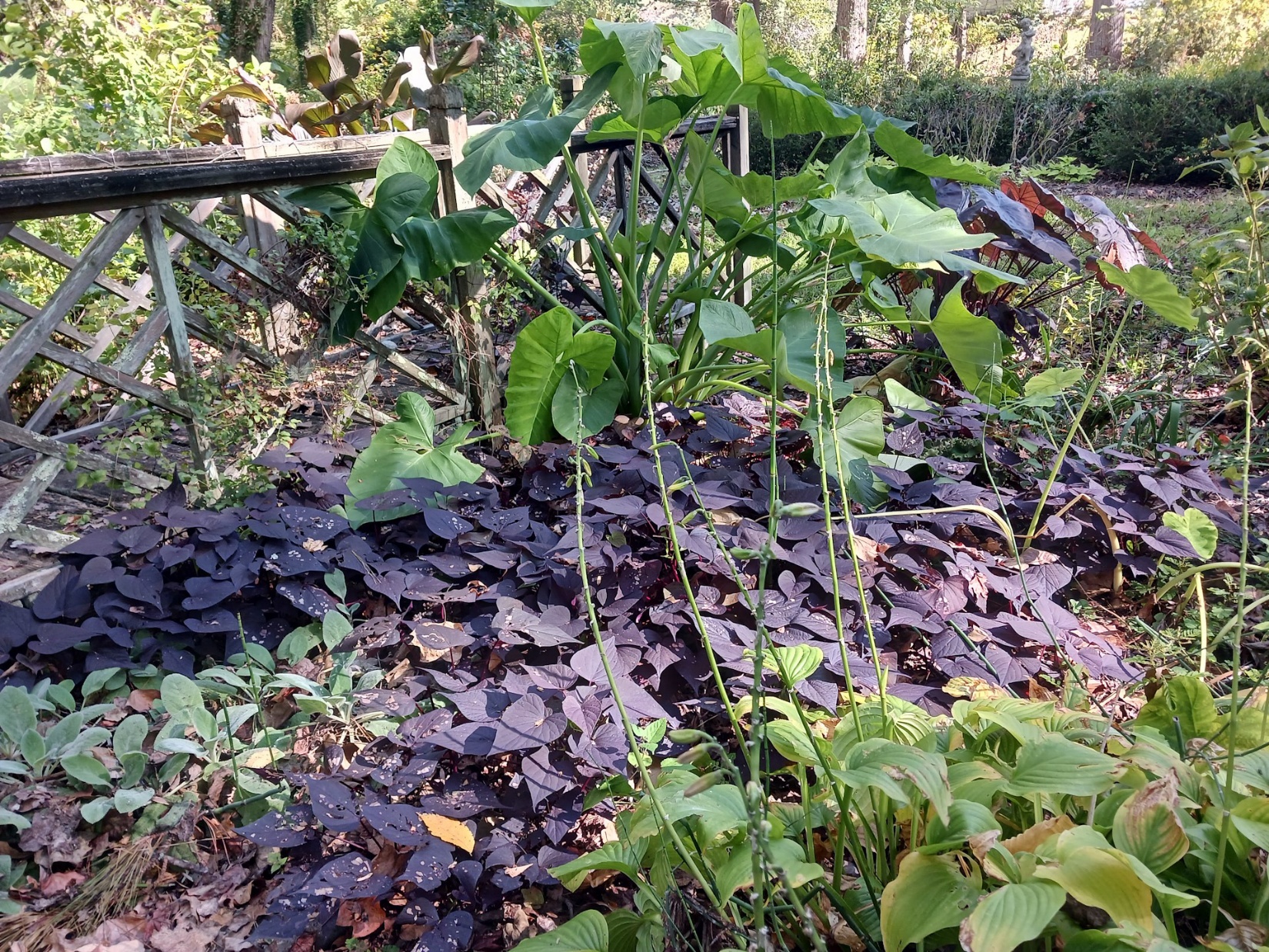
Sweet Caroline Sweetheart Jet Black sweetpotato vine (Ipomoea batatas ‘NCORNSP-021SHJB’) covers a lot of ground in this partly shaded landscape bed.
Ginger E. Long, ©2024 HGIC, Clemson Extension
How to Propagate Ornamental Sweetpotato Vine
Propagation is simple. Cut off a trailing section with multiple leaf nodes, remove the lower 2/3 of leaves, and place in water.
Roots will develop within 10 days, and the rooted cuttings can be planted in two to three weeks.
Is Ornamental Sweetpotato Vine Sap Harmful?
Ornamental sweetpotato plants produce a milky white sap when cut.
The sap can be sticky and may cause dermatitis.
It is not considered to be harmful.
Popular Ornamental Sweetpotato Vine Cultivars
Margarita (Ipomoea batatas ‘Margarita’)
Has bright lime green heart-shaped leaves. It is a vigorous grower.
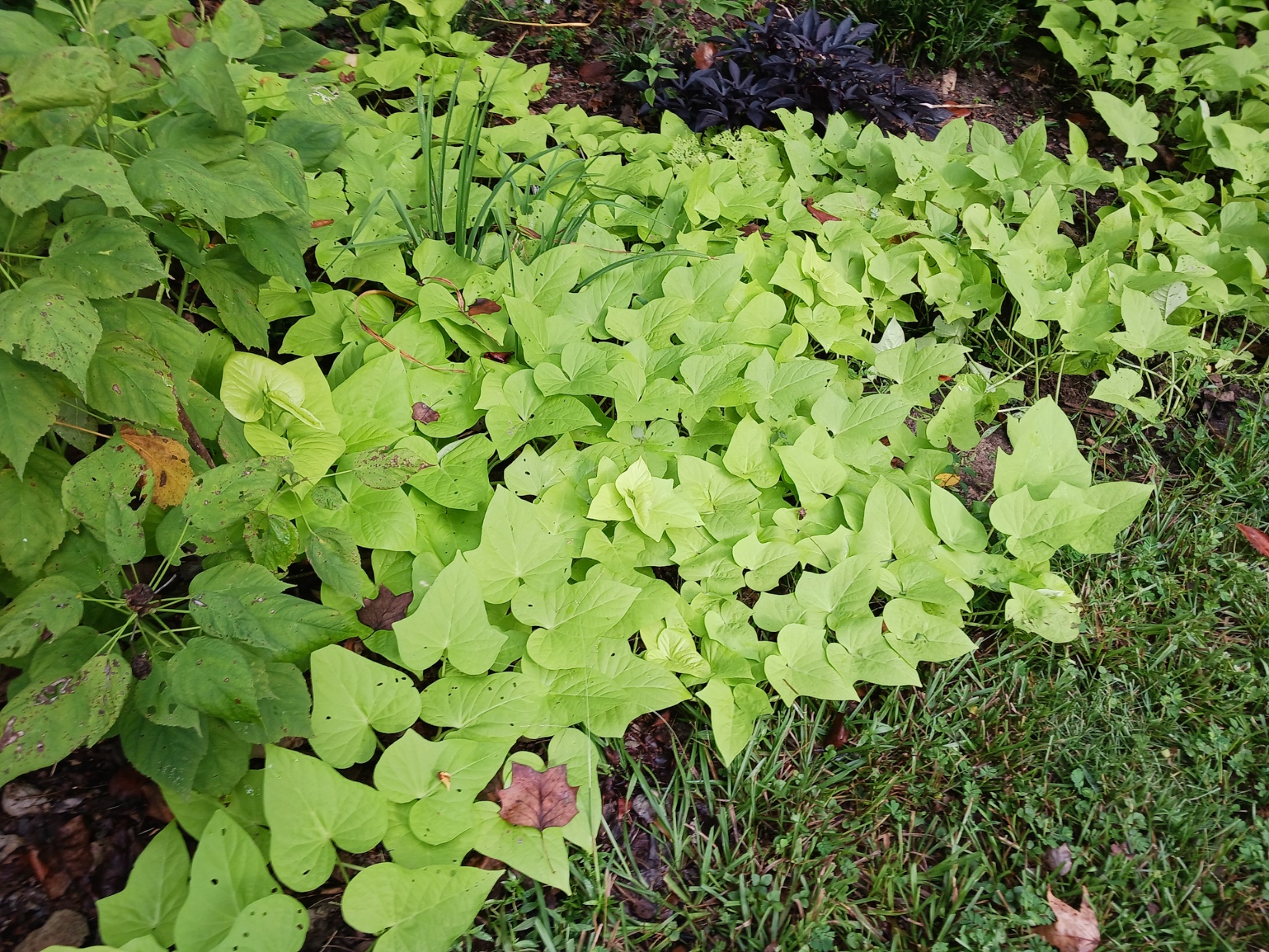
Margarita sweetpotato vine is a fast grower and will fill a landscape bed. The foliage remains colorful through the fall until the first frost.
Ginger E. Long, ©2024 HGIC, Clemson Extension
Blackie (Ipomoea batatas ‘Blackie’)
Has deep purple-black leaves that are lobed. It is a moderate grower.

Blackie (Ipomoea batatas ‘Blackie’) has deep purple leaves that look nearly black.
Ginger E. Long, ©2026 HGIC, Clemson Extension
Tricolor (Ipomoea batatas ‘Tricolor’)
Has colorful light green, white, and pink leaves. It is moderate-to-fast growing.
The Sweet Caroline series has many colors and leaf shapes available; some cultivars remain compact and mounding, while others cascade or climb.