Across South Carolina, shady porches and patios are home to lush tropical ferns in the summer. Ferns are hung in hanging baskets or planted in containers. They are added to landscape beds, too. Since these ferns are native to the tropics, they are not cold-hardy and will not survive outdoors in winter without protection.
Most Popular Porch Ferns for South Carolina Porches
Boston ferns (Nephrolepis exaltata)
- These are very popular for hanging baskets.
- Arching fronds can reach 4 feet long.
- Grow in dappled to full shade. They will burn in the sun.
- Cold hardy in USDA planting zones 9 to 11.
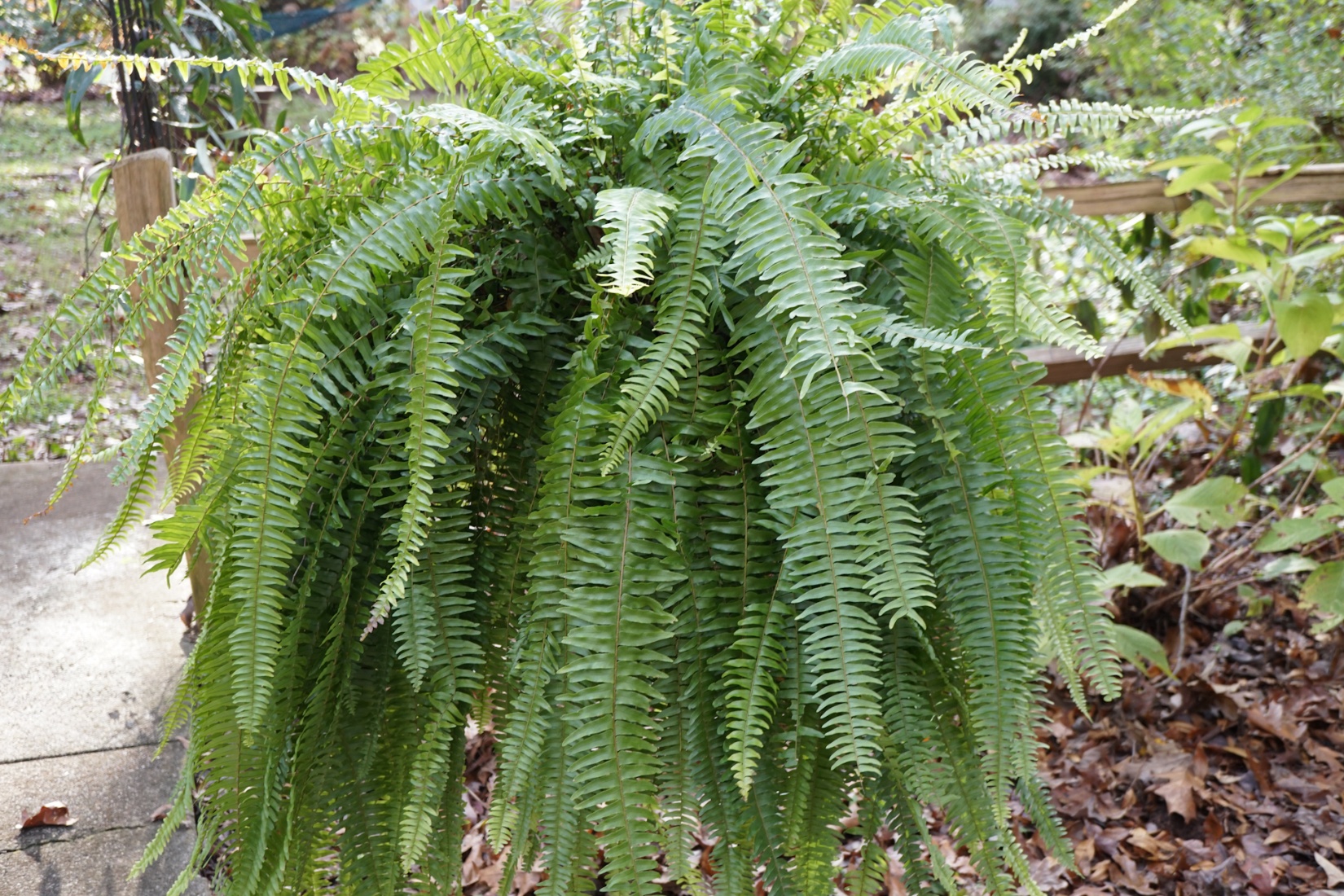
Boston ferns prefer a shady location with indirect light.
Barbara H. Smith, ©2024 HGIC, Clemson Extension
Kimberly Queen Ferns (Nephrolepis cordifolia)
- These large upright ferns are most often planted in containers rather than hanging baskets.
- They are the most sun-tolerant of the porch ferns and thrive in several hours of morning sun.
- Grows upright to 3 feet tall and 2 to 3 feet wide.
- Cold hardy in USDA planting zones 9 to 11.
- If planted in the ground, and the winter is mild, they may come back in zone 8.
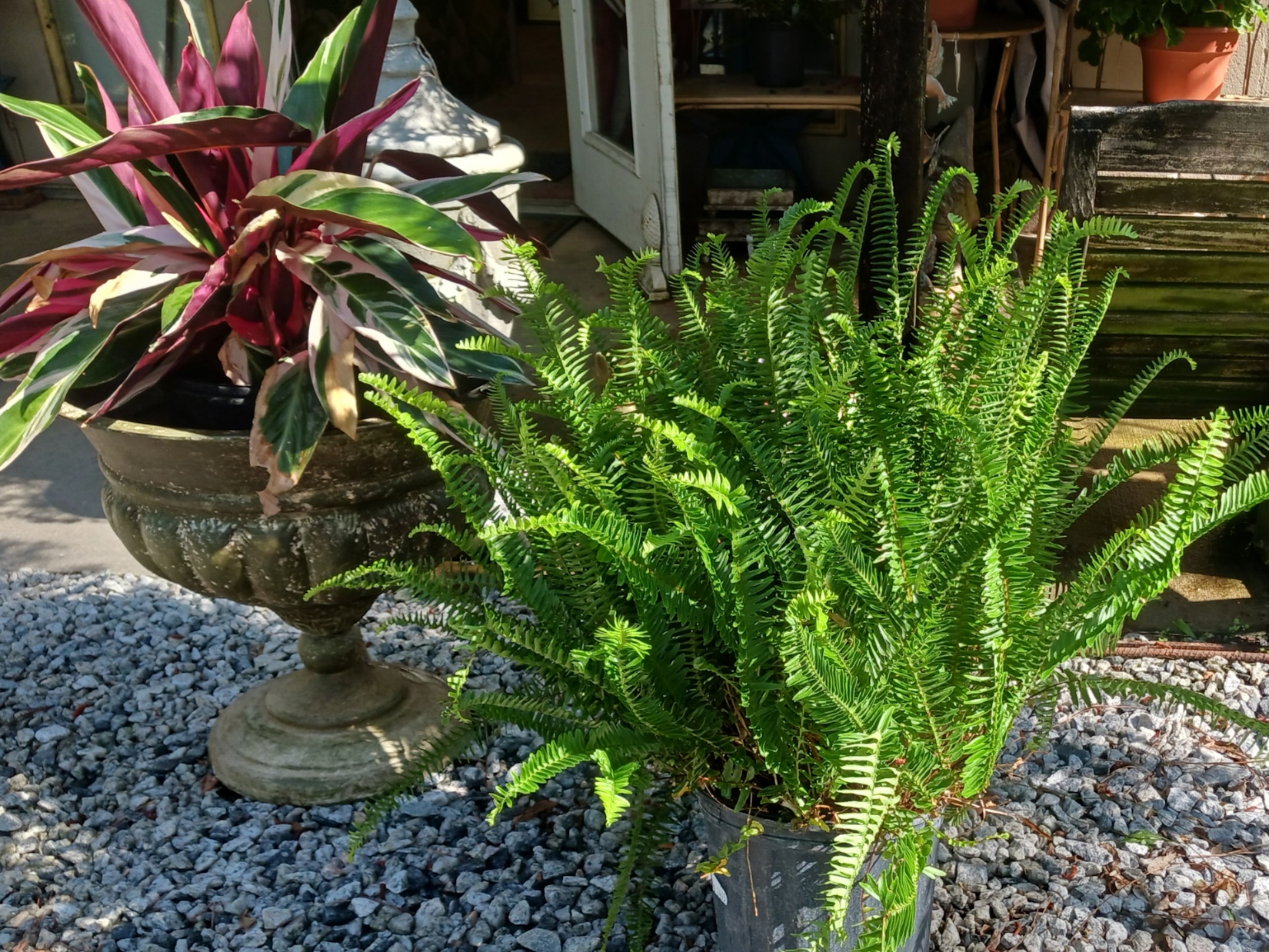
The Kimberly Queen fern (Nephrolepis cordifolia), native to Australia, grows more upright than other porch ferns.
Barbara H. Smith, ©2024 HGIC, Clemson Extension
Macho Ferns (Nephrolepis biserrate)
- These large ferns can be used in hanging baskets or containers.
- The fronds are bold, dramatic, and wider than other porch ferns.
- This fern can take a few hours of morning sun.
- Grows to 3 feet tall and 5 feet wide.
- Cold hardy in USDA planting zones 10 to 11.
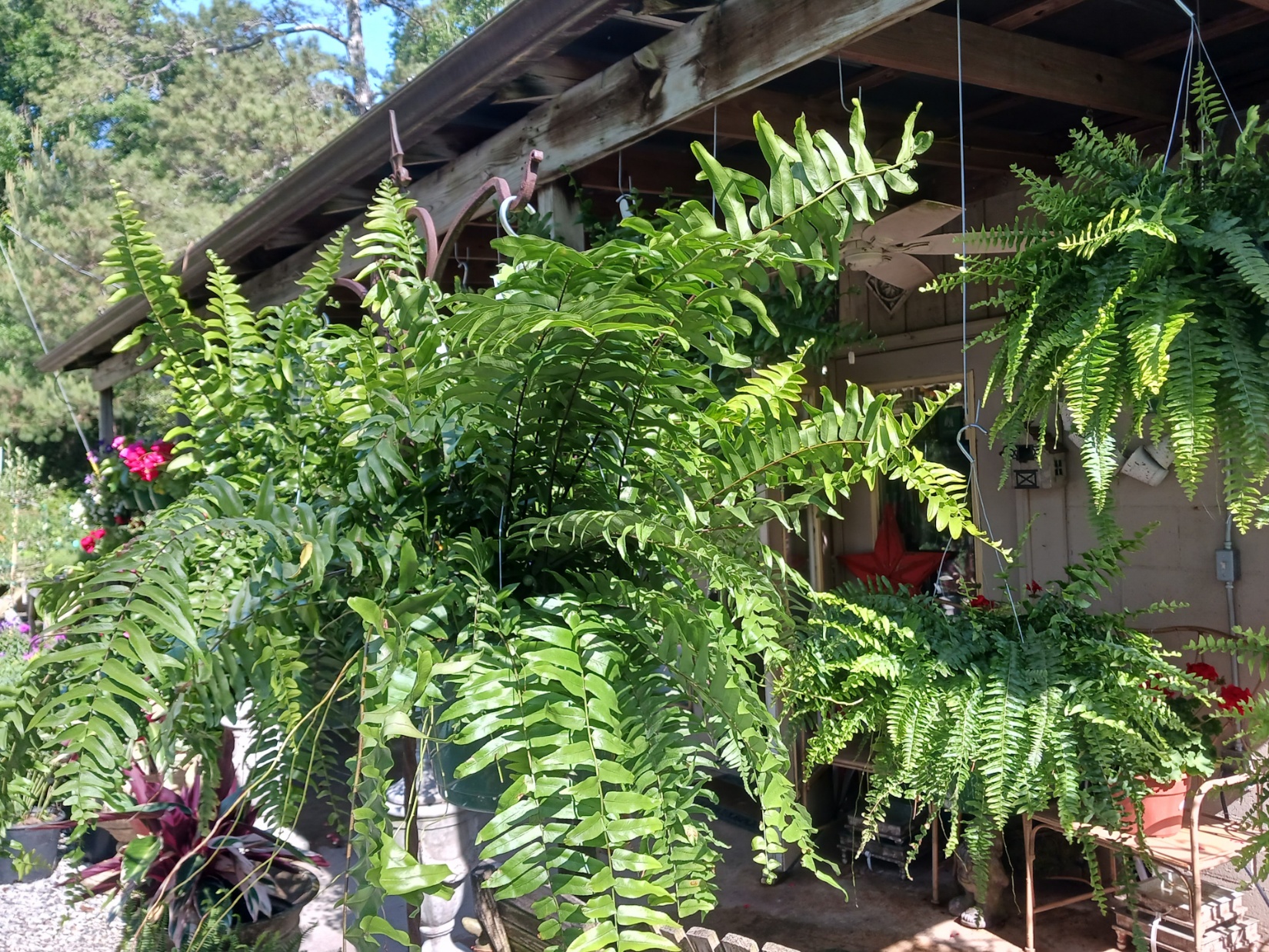
The macho fern (Nephrolepis biserrate) is native to the Americas, Southeast Asia, and parts of Africa.
Ginger E Long, ©2025 HGIC, Clemson Extension
Asparagus Ferns (Asparagus densiflorus)
- These bright green ferns can be used in hanging baskets or containers.
- This plant is not a true fern; it is related to asparagus, as the name implies.
- Cold hardy in USDA planting zones 9 to 11.
- There are 2 types most often sold:
- ‘Sprengeri’ is the traditional asparagus fern with arching fronds that grow to 2 feet tall and 4 feet long.
- ‘Myersii’ is an upright foxtail fern with fronds that reach up to 3 feet tall and 4 feet wide.
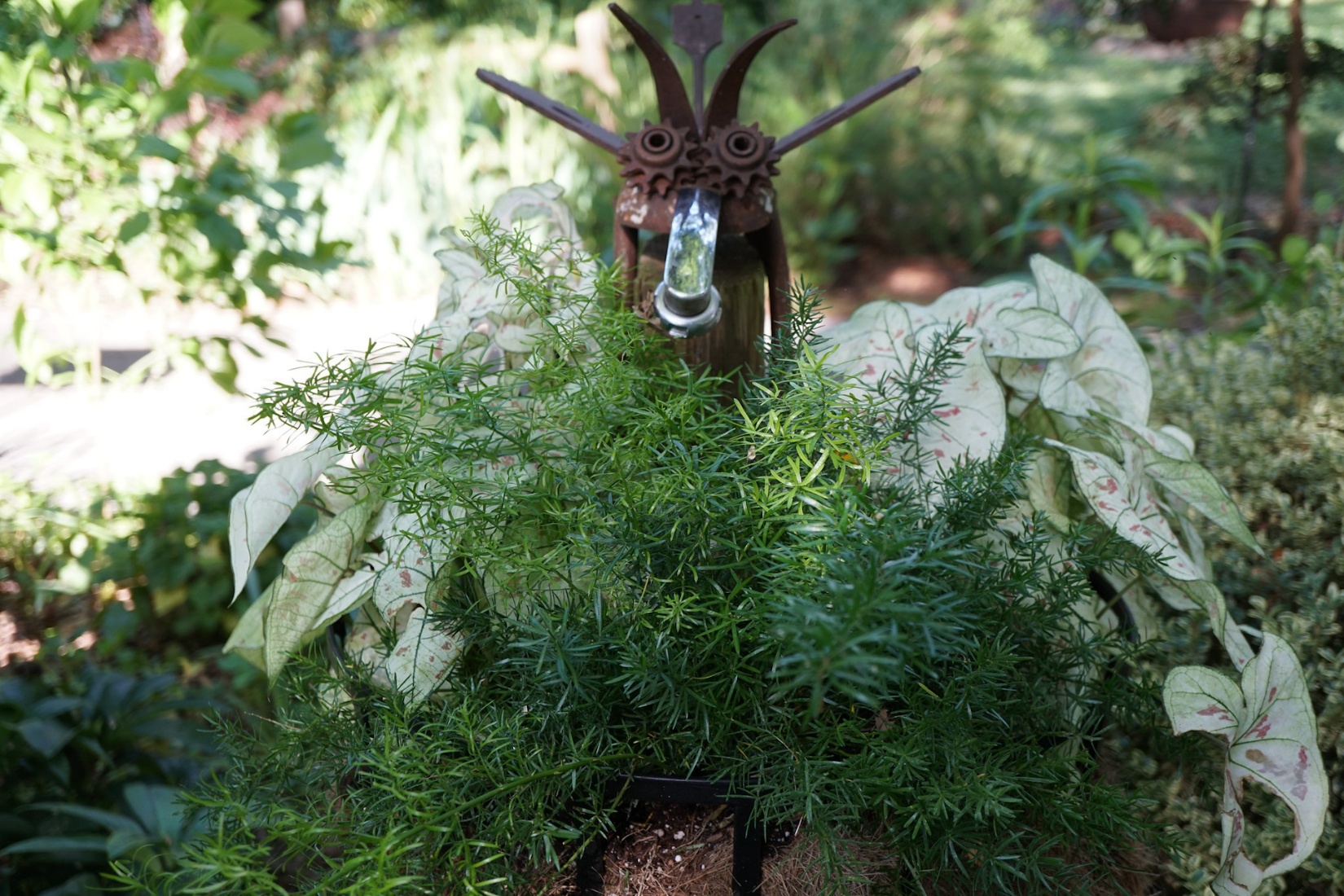
Sprenger asparagus fern (Asparagus densiflorus ‘sprengeri’) is paired with caladiums in a whimsical planter.
Barbara H. Smith, ©2023 HGIC, Clemson Extension

Foxtail fern (Asparagus densiflorus ‘myersii’) has upright, stiff fronds that can take more sun than other ferns.
Ginger E Long, ©2025 HGIC, Clemson Extension
How to Grow Porch Ferns Successfully
Watering Tips for Porch Ferns
During the hottest months of the year, some ferns may need water daily, depending on the size of the pot and root ball.
Water consistently and in the morning if possible.
Mist the fronds to keep humidity levels up.
In spring and fall, water as needed when the soil is dry.
If the fronds turn yellow, that is an indication of overwatering.
If a fern gets too dry, immerse the root ball in a bucket of water and let it sit for an hour.
Best Soil for Porch Ferns
- Use a well-drained, peat-based potting mix that is high in organic matter.
Fertilizing Porch Ferns
- Fertilize monthly only when ferns are actively growing in late spring and summer.
- Use a liquid fertilizer every month at half the rate on the label.
- Leaves may scorch when too much fertilizer is used.
Dividing Porch Ferns
- Boston and Kimberly Queen ferns can be divided because of their growth habits.
- Plan your cut to the root ball carefully so both halves are equal in size.
Common Pests of Porch Ferns
- Occasionally, scale, mealybugs, and slugs may be a problem.
- For more information on insect control, see HGIC 2770, Less Toxic Insecticides.
Care Tips for Porch Ferns
- Shake hanging ferns occasionally to remove loose debris or leaflets.
- Remove brown fronds down to the base of the plant.
- Rotate ferns weekly, ¼ or ½ of a turn to ensure each side receives the same amount of light.
How to Discourage Birds from Nesting in Porch Ferns
- Place clear plastic forks with the pointy tines up in the soil throughout the pot.
- Place wooden barbecue skewers vertically in the soil.
- Place crumpled balls of aluminum foil amongst the fronds all around the plant.
- Hang old CDs close by so the reflection will deter birds.
How to Move Porch Ferns Indoors for Winter
- If indoor space allows, these ferns can be overwintered indoors like a houseplant.
- Bring ferns indoors before nighttime temperatures drop below 50⁰F.
- Shake the ferns to remove loose fronds or leaflets before bringing them indoors.
- More information on moving plants indoors after the summer can be found at HGIC 1454, Moving Houseplants Indoors & Outdoors.
- For information on growing ferns indoors, see HGIC 1505, Indoor Ferns.
How to Store Porch Ferns During Winter
- Porch ferns can be overwintered in a garage, basement, greenhouse, or shed, provided the temperature inside does not fall below 40⁰.
- Water the ferns well a few days before moving them inside and allow them to drain.
- Cut the fronds down to 3 inches tall on Boston and Kimberly Queen ferns.
- Check the soil regularly through the winter months and water when dry.
Additional information on Porch Fern Care
NC State Extension: Nephrolepis exalta
NC State Extension: Nephrolepis cordifolia
NC State Extension: Nephrolepis biserrata
NC State Extension: Asparagus densiflorus Sprengeri Group
Mississippi State University Extension: Ferns in baskets or ground add beauty
Wisconsin Horticulture: Asparagus fern, Asparagus densiflorus