What is Soft Caress Mahonia?
Mahonia Description
Mahonia (Berberis eurybracteata ‘Soft Caress’) is a slow-growing, tough, evergreen shrub for the shade garden.
Another common name for this plant is Chinese barberry.
For many years, it was classified under the genus Mahonia. Recently, the classification has changed from the genus Mahonia to Berberis.
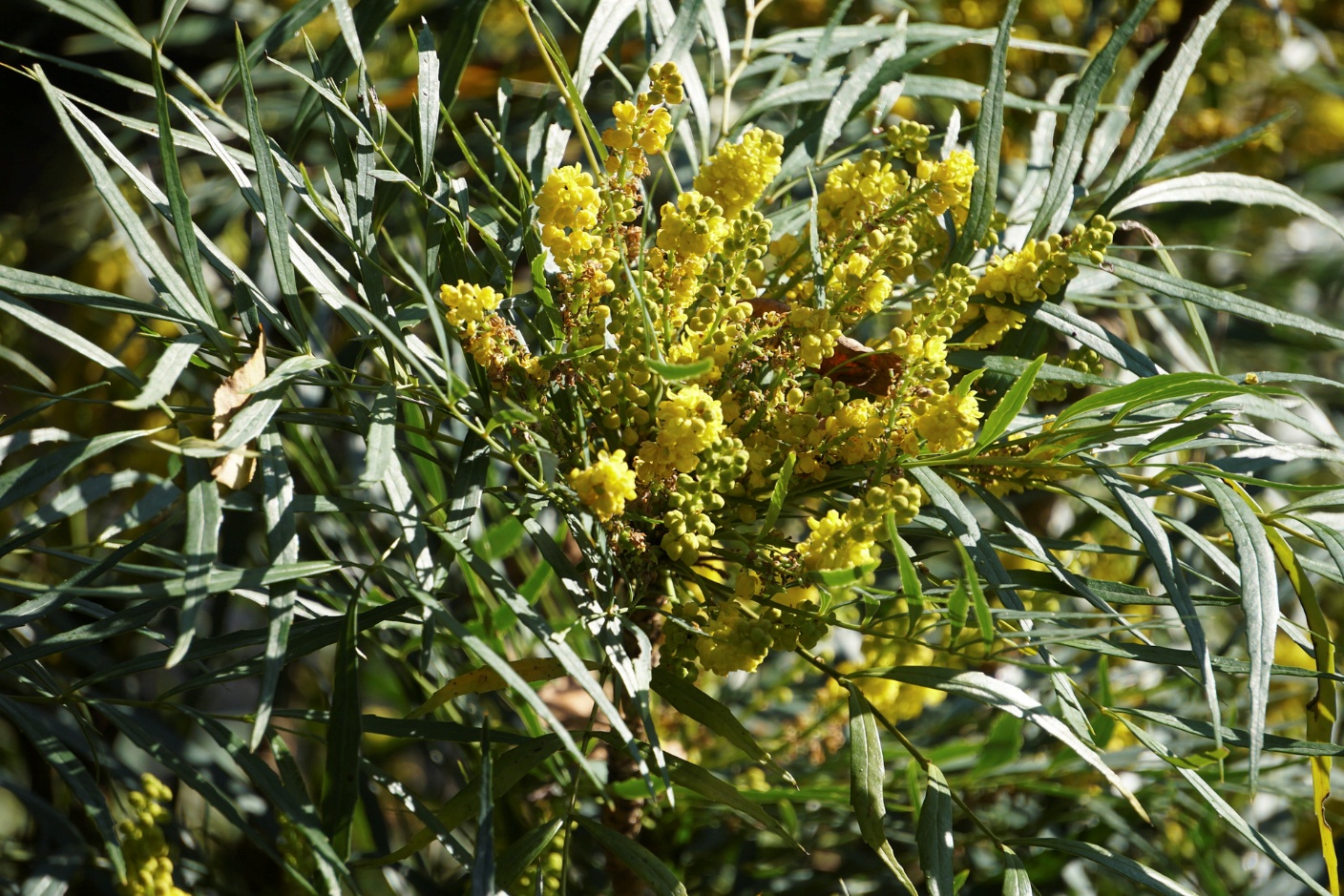
‘Soft Caress’ mahonia (Berberis eurybracteata‘ Soft Caress’) has yellow flower clusters that start in October and continue into winter.
Barbara H. Smith ©2020 HGIC, Clemson Extension
Native Range and Habitat
Mahonia is native to woodlands in southern China.
Plant family
It is a member of the barberry family, Berberidaceae.
When Does Soft Caress Mahonia Bloom?
Mahonia blooms in the fall, starting in October and continuing into winter.
Flower Color and Size
Flowers are bright yellow and borne in upright clusters on the tips of branches.
After the flowers fade, the plants produce bluish-purple berries.
How Big Does Mahonia Grow?
Plants can grow from 3.5 to 5 feet tall and up to 4 feet wide.
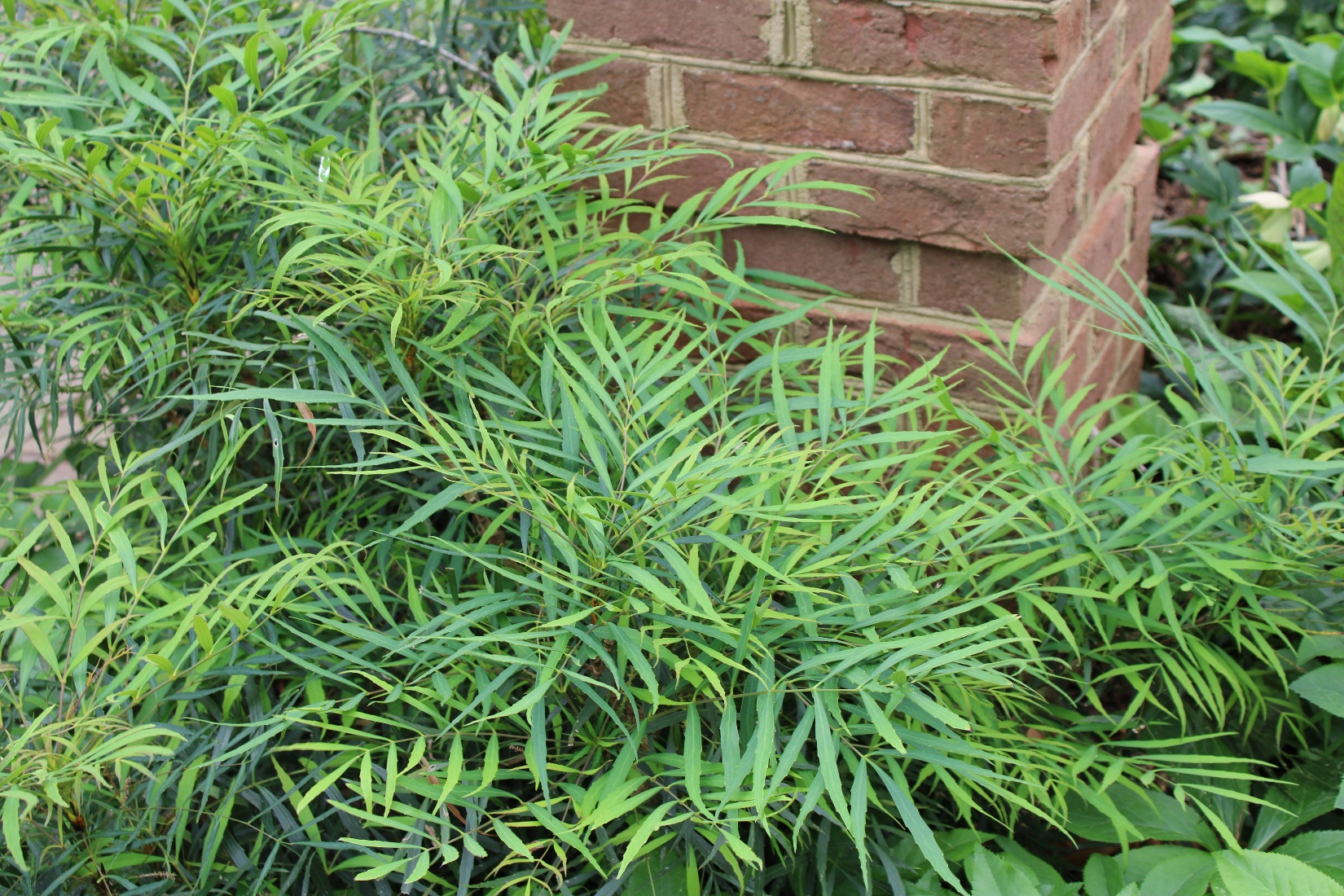
The soft, feathery foliage of ‘Soft Caress’ mahonia (Berberis eurybracteata ‘Soft Caress’) adds texture to a shade garden.
Ginger Long ©2024 HGIC, Clemson Extension
How to Grow Mahonia Successfully
USDA Hardiness Zones of Mahonia
- Mahonia can be planted in USDA hardiness zones 7 through 10.
Sunlight Requirements of Mahonia
- For best flowering, ensure the plants receive a few hours of sunlight daily. Morning sun is best.
- Afternoon shade and dappled shade under trees are ideal growing conditions for Mahonia.
Best Soil for Mahonia
- Plant mahonia in well-drained soil.
- Do not plant where the soil stays wet in the winter.
- Mahonia can tolerate alkaline soil.
Where to plant Mahonia
- Plant mahonia in a shady garden bed, along a shady foundation, or in a north-facing location.
- It can also be planted in a large container.
How to Care for Soft Caress Mahonia
How to Water Mahonia
- Water regularly until plants are fully established.
- Plants become drought-tolerant once established but will need water during extended periods without rainfall.
How to Fertilize Mahonia
- If needed, fertilize with an all-purpose, slow-release fertilizer in late spring.
- Do not use a fertilizer for acid-loving plants.
How to Prune Mahonia
- Mahonia are slow growers and do not need to be pruned annually.
- Prune mahonia after the plant flowers, before it sets flower buds for the following fall.
- To thin mahonia, cut an individual stem back to the base of the plant in late winter. Thin less than one-third of the plant in a year.
Does Mahonia Attract Pollinators?
- Mahonia flowers are a nectar source for pollinators active in fall and winter.
Is Mahonia Deer Resistant?
- Yes, mahonia is moderately deer resistant.
Where can I find Mahonia?
- Check local nurseries and garden centers, online nurseries, and plant sales for plants.
Are Some Mahonia Invasive?
- Leatherleaf mahonia (Berberis bealei) is classified as an invasive plant by the South Carolina Invasive Pest Council.
- It is classified as a Category 1 invasive, meaning it poses a significant threat to native plant communities. It spreads aggressively by seeds or suckering.
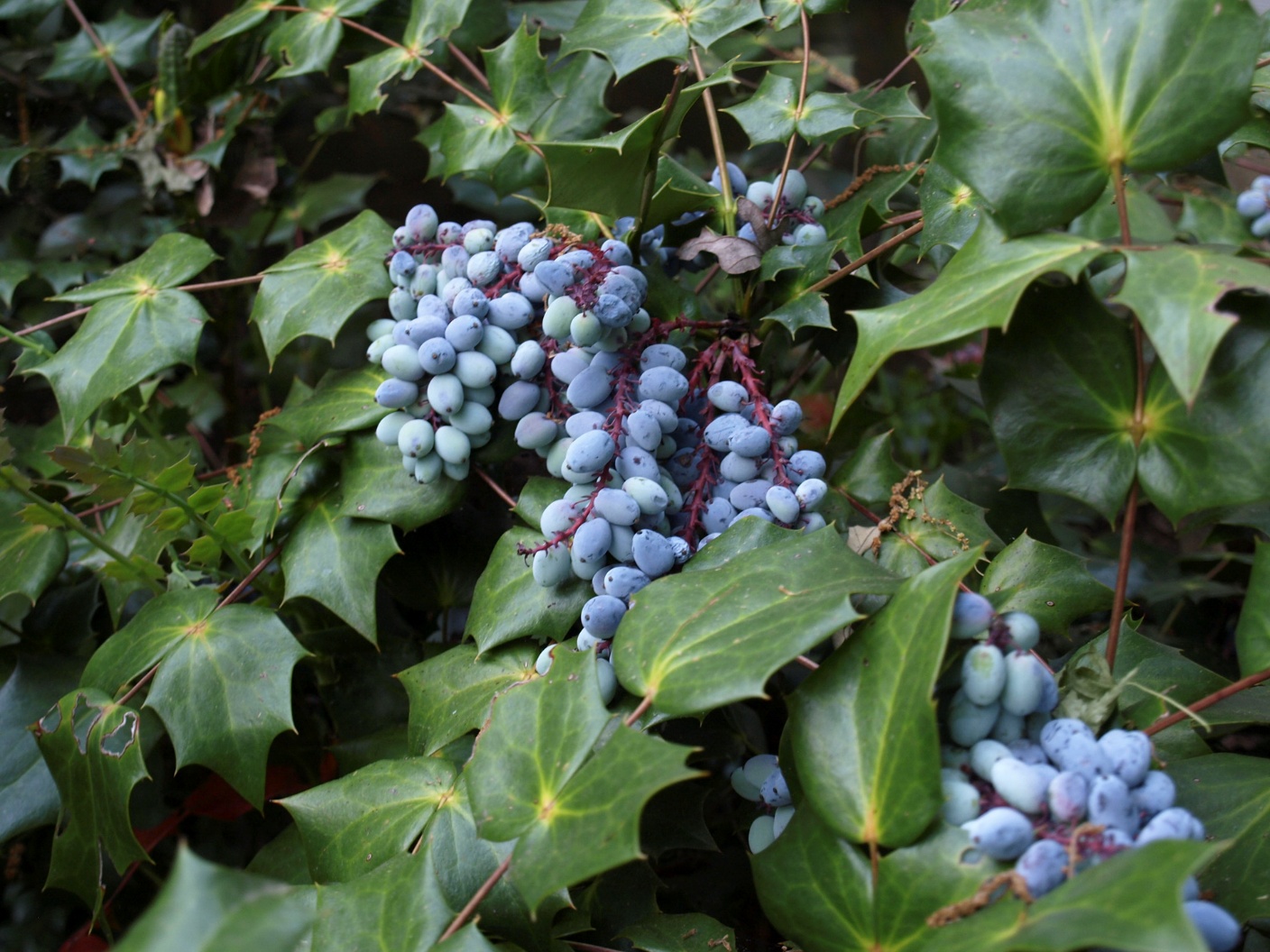
The invasive leatherleaf mahonia (Berberis bealei), can be identified by its thick leaves with very spiky edges. It has yellow flowers in winter, then produces purplish-blue berries.
Barbara H. Smith ©2020 HGIC, Clemson Extension
Additional Resources for Growing Mahonia
North Carolina Extension Gardener Plant Toolbox
This Easy-To-Care-For Shrub Provides Stunning Yellow Blooms In The Winter by Southern Living