What Is Liberty Tea?
I have never been much of a historian, and I just did the minimum to get through the school subject. However, I do not recall learning about ‘liberty tea’ when learning about the United States’ path to independence.
After the Boston Tea Party, the colonists took politics right to their home teapots. They replaced English teas with tisanes of their own concoction.
While true teas come from Camelia sinensis leaves, tisanes are created using any variety of plants. Liberty tea looked different depending on what plant material was readily at hand.
Those with gardens and orchards might have blends of fruits and flowers. Others relied on native plants found in the wild areas nearby. Teatime would carry on with these new recipes and defy reliance upon England.
Native Plants Used in Liberty Tea
Colonists learned many of these native plants from the Native Americans who had discovered their uses long before settlers arrived.
Whorled Loosestrife (Lysimachia quadrifolia) was used as a tea replacement so frequently that it began to take on the common name Liberty Tea in some parts. It is a widely adapted native herbaceous perennial that the Cherokee used for treating urinary conditions.
New Jersey Tea (Ceanothus americanus) is another common tea substitute that got its name during this period. Indigenous peoples used the native shrub to treat respiratory tract infections.
Other Plants Commonly Used in Liberty Tea
Dried fruits like blueberries or raspberries were used to create sweet beverages.
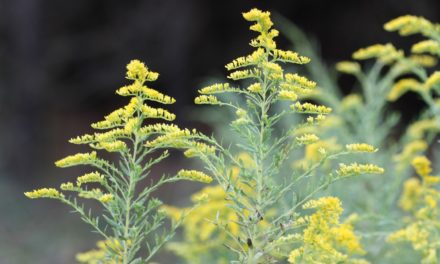
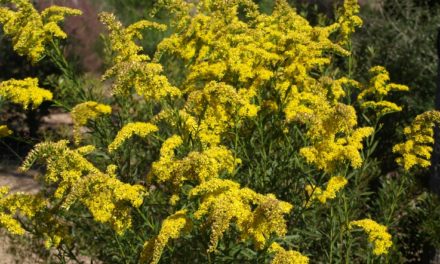
The leaves of sweet goldenrod (Solidago odora) produced a fragrant, licorice-flavored herbal tea.
Wintergreen (Gaultheria procumbens) tea was thought to soothe sore throats and upset stomachs.
The yaupon holly (Ilex vomitoria) was the solution for tea drinkers needing some caffeine.
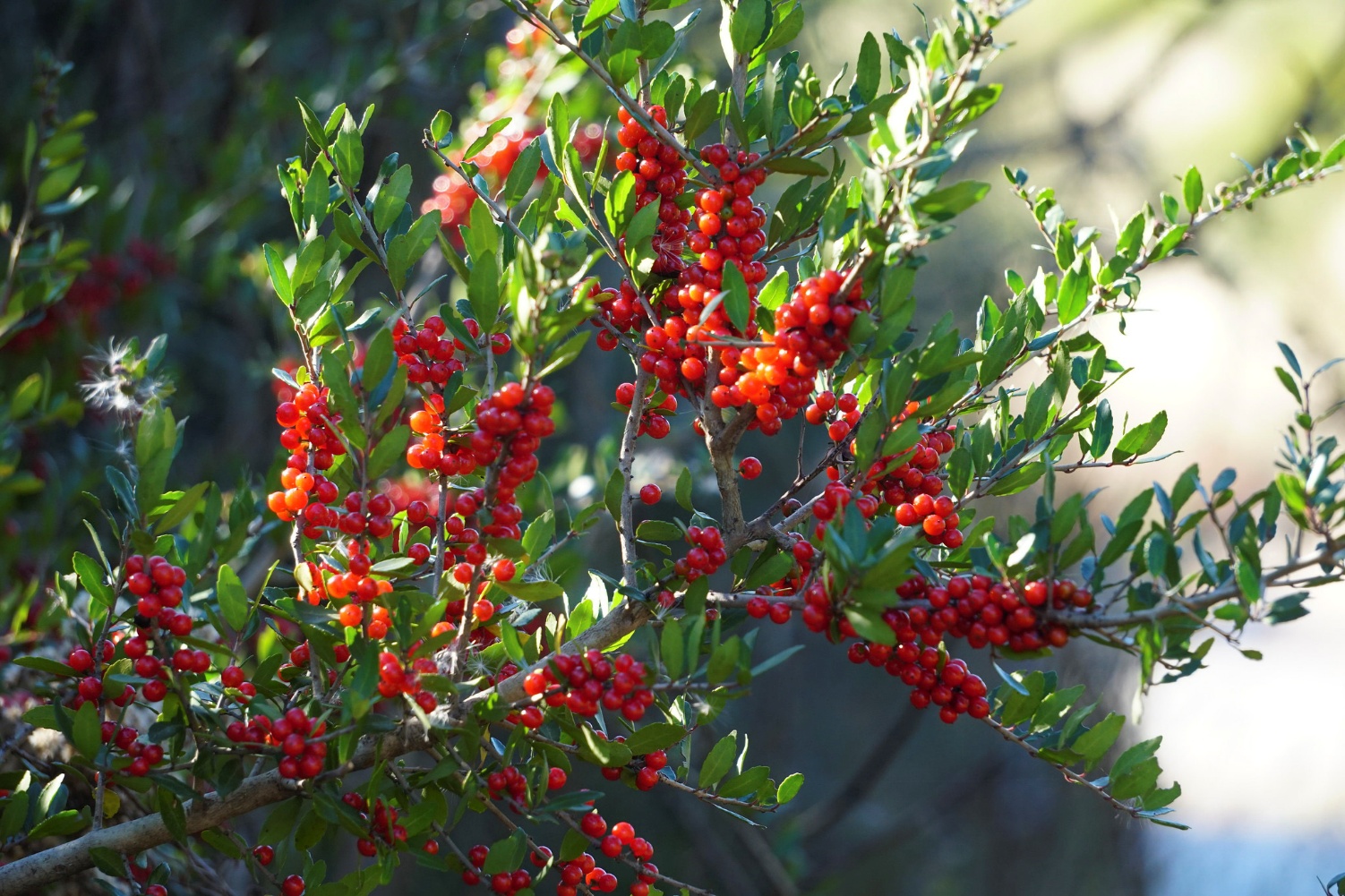
Yaupon holly (Ilex vomitoria) berries are toxic, but the leaves can be used to brew tea.
Barbara H. Smith, ©2020 HGIC, Clemson University
How to Make a Modern Liberty Tea-Inspired Drink
While it may be warm this week to celebrate with some hot liberty tea, take a nod to our history with some cool, crisp, infused water.
Create your own recipe with herbs, fruits, spices, and edible flowers.
Add what you like or keep it simple with duos like:
- Cucumber and lime
- Grapefruit and rosemary
- Mango and ginger root
- Watermelon and mint
Be sure to wash all ingredients and keep the water refrigerated.
You must enjoy your fresh flavored water within 24 hrs. and discard whatever has not been consumed after that time.
Visit the HGIC online publication INFUSING WATER WITH FRUITS, HERBS, AND SPICES for some tips and more suggested ingredients.
Read more about how to grow an herbal tea garden here:
https://hgic.clemson.edu/planting-an-herbal-tea-garden-in-south-carolina/
Liberty Tea Safety: Choosing the Correct Plant Parts
Always double check that you are using the correct plant and plant part for consumption. A field guide like Edible Wild Plants: Eastern/Central North America (Peterson Field Guides) by Lee Allen Peterson and Roger Tory Peterson will help you identify plants and avoid poisonous lookalikes.
Leaves and fruits often have different chemistry on the same plant. For instance, Yaupon holly leaves make caffeinated tea while the berries of the same plant are toxic and can cause severe intestinal troubles.
Gathering plant parts in the wild or in landscaped areas can have risks because you may be unaware of recent pesticide applications that would make the plant unsafe for consumption.
The best way to ensure safety is to stick with commercially available tea components that are grown and processed for human consumption.
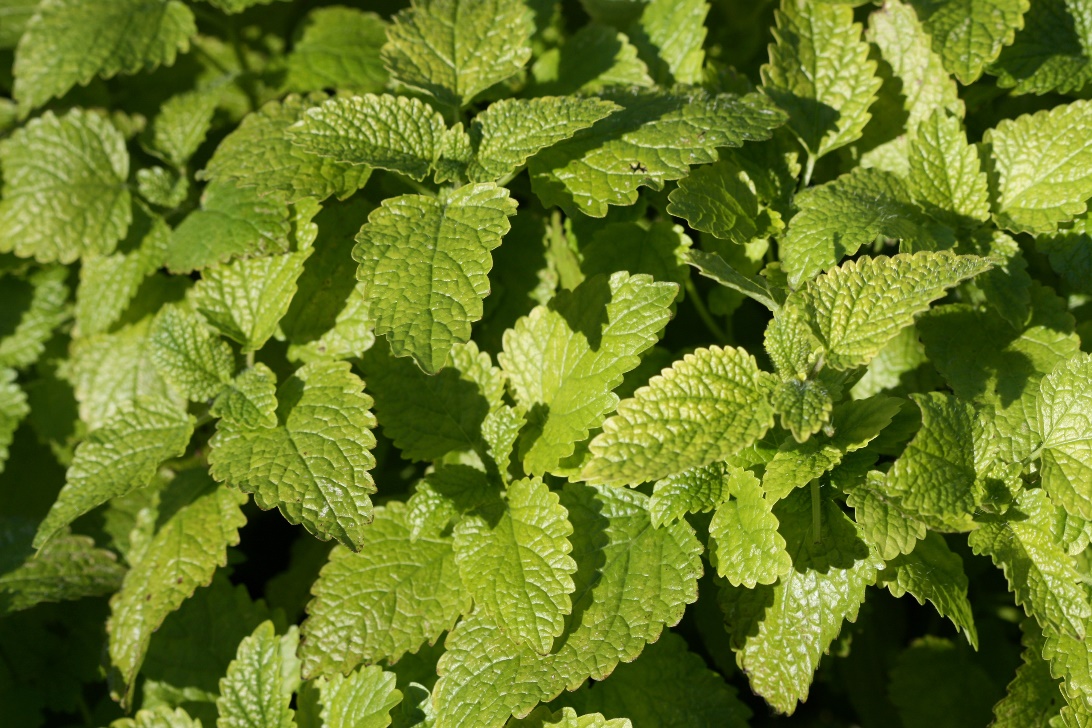
The leaves of lemon balm (Mellisa officinalis) are used in making a lemon-flavored tea.
Joey Williamson, ©2017 HGIC, Clemson Extension
Leaves Commonly Used in Liberty Tea
- Lemon balm (Melissa officinalis)
- Mint (Mentha sp.)
- New Jersey Tea (Ceanothus americanus)
- Sweet goldenrod (Solidago odora)
- Whorled Loosestrife (Lysimachia quadrifolia)
- Wintergreen (Gaultheria procumbens)
- Yaupon holly (Ilex vomitoria)
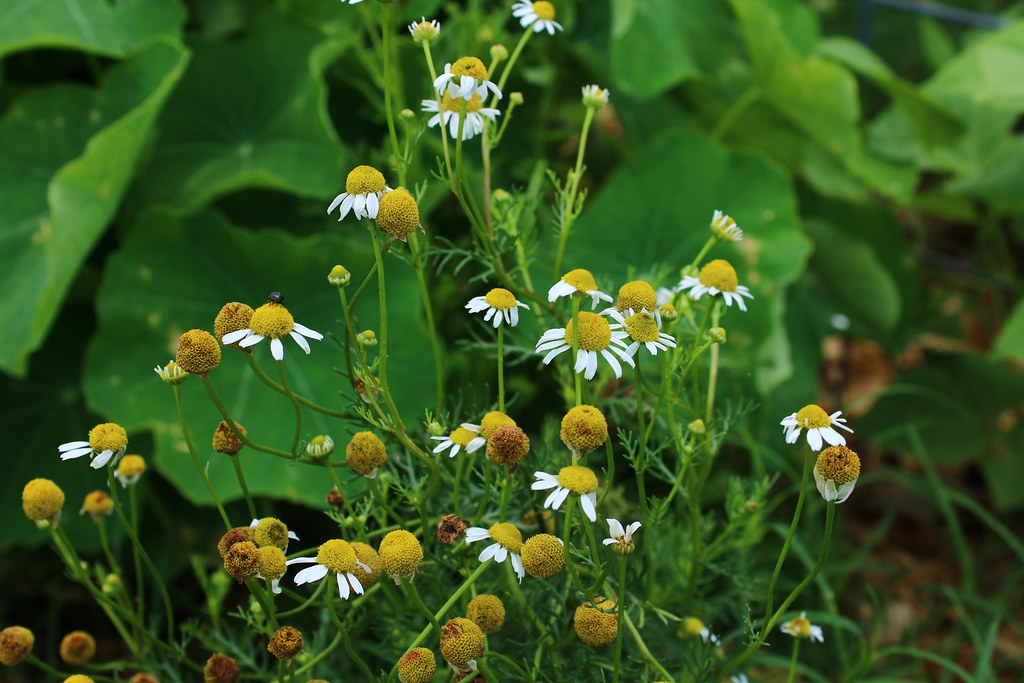
Chamomile (Matricaria chamomilla) flowers create a tea with apple and floral notes.
Julia Nichols, ©HGIC 2026, Clemson Extension
Flowers/Fruits commonly used in Liberty Teas
- Apple (Malus domestica)
- Blueberry (Vaccinium sp.)
- Currants (Ribes sp.)
- Elderflower (Sambucus nigra) *use only ripe berries and boil for 1 minute prior to use
- German Chamomile (Matricaria chamomilla)
- Raspberry (Rubus sp.)
- Roses (Rosa sp.) *conventional pesticide usage can make roses unsafe for consumption
- Strawberry (Fragaria sp.)
- Sumac (Rhus sp.)