Why Choose Native Perennial Wildflowers for Soil Health?
When planting native perennial wildflowers, most home growers immediately think of the pollinator benefits.
Some of these plants offer excellent advantages both above and below ground.
Native plants are superior to non-natives because they are better adapted to local soil and weather conditions and provide specific food sources for a wide range of native wildlife.
Certain native perennial wildflowers can also help build your soil health by improving soil structure, reducing erosion, adding nitrogen, and cycling nutrients.
Be sure all plants planted together in a growing space thrive in similar growing conditions, i.e., full sun, saturated soil, etc.
Check plant tags and seed packets for recommended spacing to ensure proper airflow and reduced pest pressure.
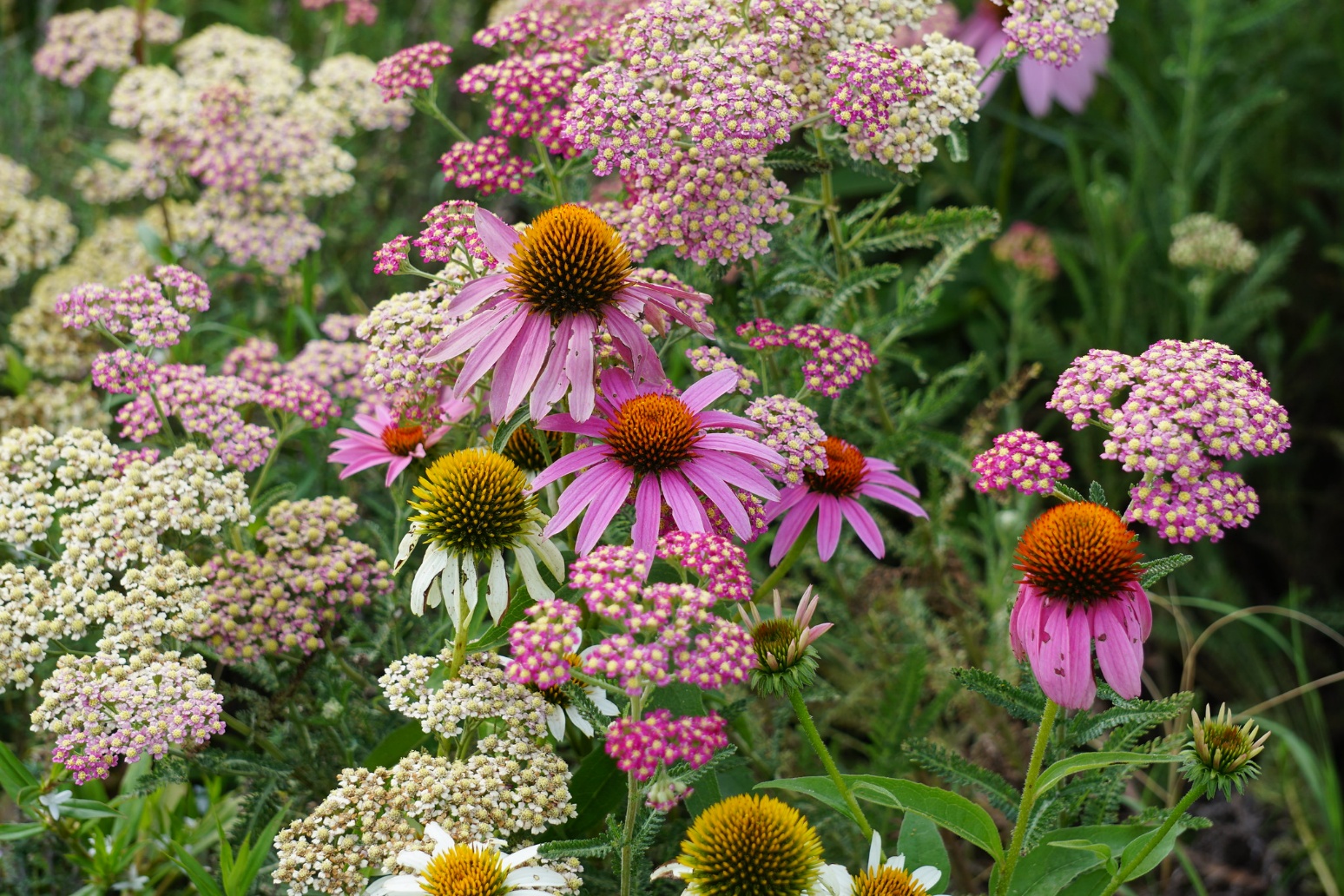
Purple coneflower (Echinacea purpurea) and yarrow (Achillea millefolium) are planted alongside each other.
Barbara H. Smith, ©2025 HGIC, Clemson Extension
Native Plants for Erosion Control & Improving Soil Structure
Native deep-rooted plants are ideal for erosion control and improving overall soil structure.
The fibrous, dense root structure of these plants not only improves the soil’s ability to absorb water but can also help break up heavy clay or compacted soil.
The root system is also a terrific soil stabilizer for loose soils or sloped areas.
Recommended Native Plants for Soil Structure
- Black-eyed Susan (Rudbeckia fuldiga)
- Purple Coneflower (Echinacea purpurpea)
- Great Coneflower (Echinacea maxima)
- Yarrow (Achillea millefolium)
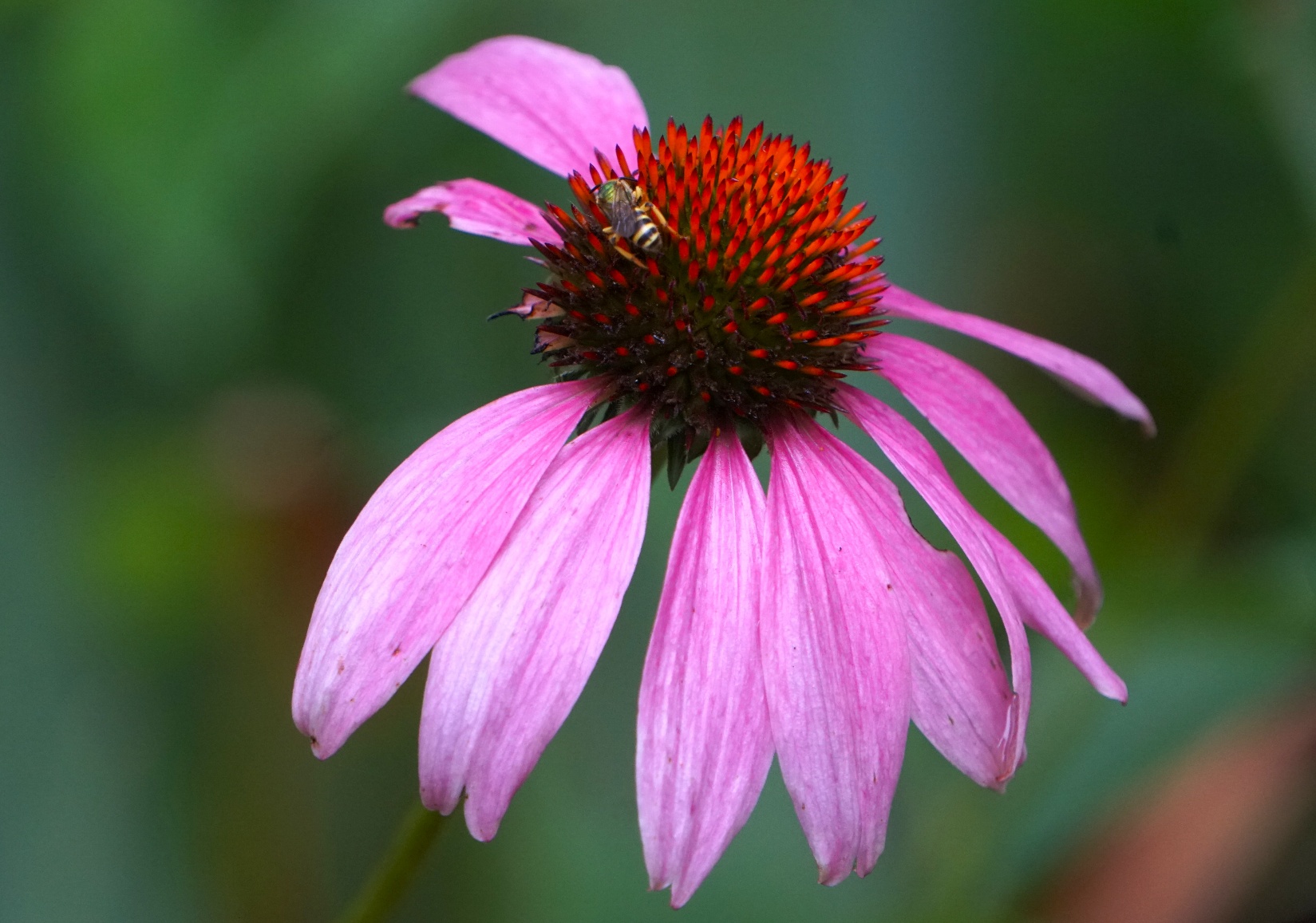
Purple coneflower (Echinacea purpurea) with a green-headed sweat bee (Agapostemon sp.).
Barbara H. Smith, ©2025 HGIC, Clemson Extension
Native Plants for Adding Nitrogen to Soil
Legumes help fix nitrogen in your growing space through their root nodules.
This eliminates the need to add extra fertilizers to the space and naturally feeds the plants around it.
Nitrogen is widely considered the most essential macronutrient for plant growth and chlorophyll production.
Recommended Native Nitrogen-Fixing Plants
- Wild False Indigo (Baptisia spp.): Baptisia alba (white) or Baptisia australis (blue)
- Lupine (Lupinus perennis)
- Coral Bean (Erythrina herbacea)
- Round-headed Bush-clover (Lespedeza capitata)
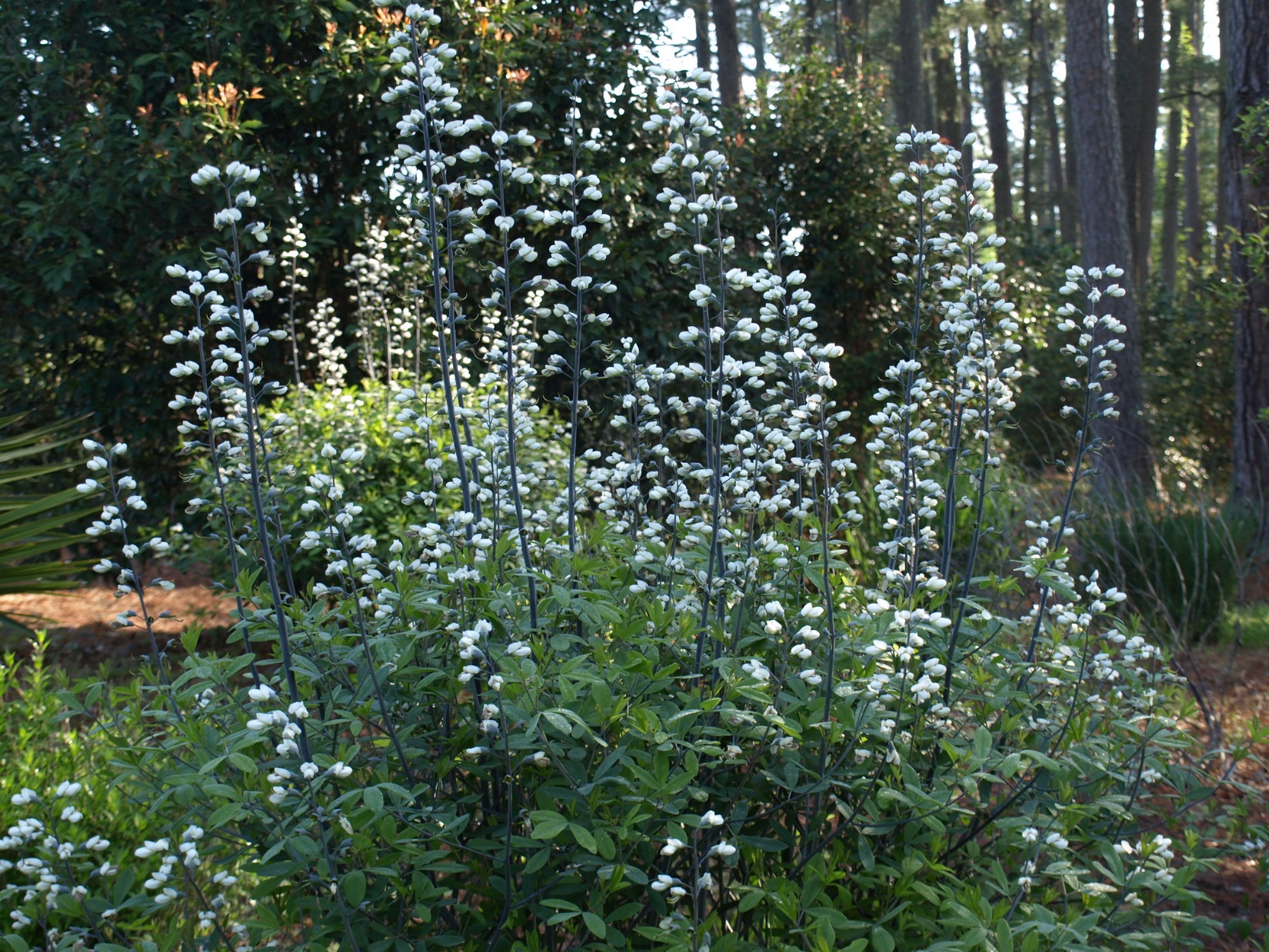
White false indigo (Baptisia alba) is in full bloom.
Barbara H. Smith, ©2025 HGIC, Clemson Extension
Native Plants for Nutrient Cycling in Soil
Plants with extra-deep taproots are vital in an ecosystem because they help pull nutrients from lower soil levels up to the surface.
This, over time, makes the nutrients available to other nearby plants.
These long tap-rooted plants help to mine nutrients for their neighbors.
Prairie dock taproots have been recorded at 14 feet deep!
In general, these plants are often established from seed due to their long taproots.
They typically do not transplant well.
Recommended Native Plants for Nutrient Cycling
- Butterfly Weed (Asclepias tuberosa)
- Joe Pye Weed (Eutrochium spp.)
- Prairie Dock (Siphium terebinthinaceum)
- Rattlesnake Master (Eryngium yuccifolium)
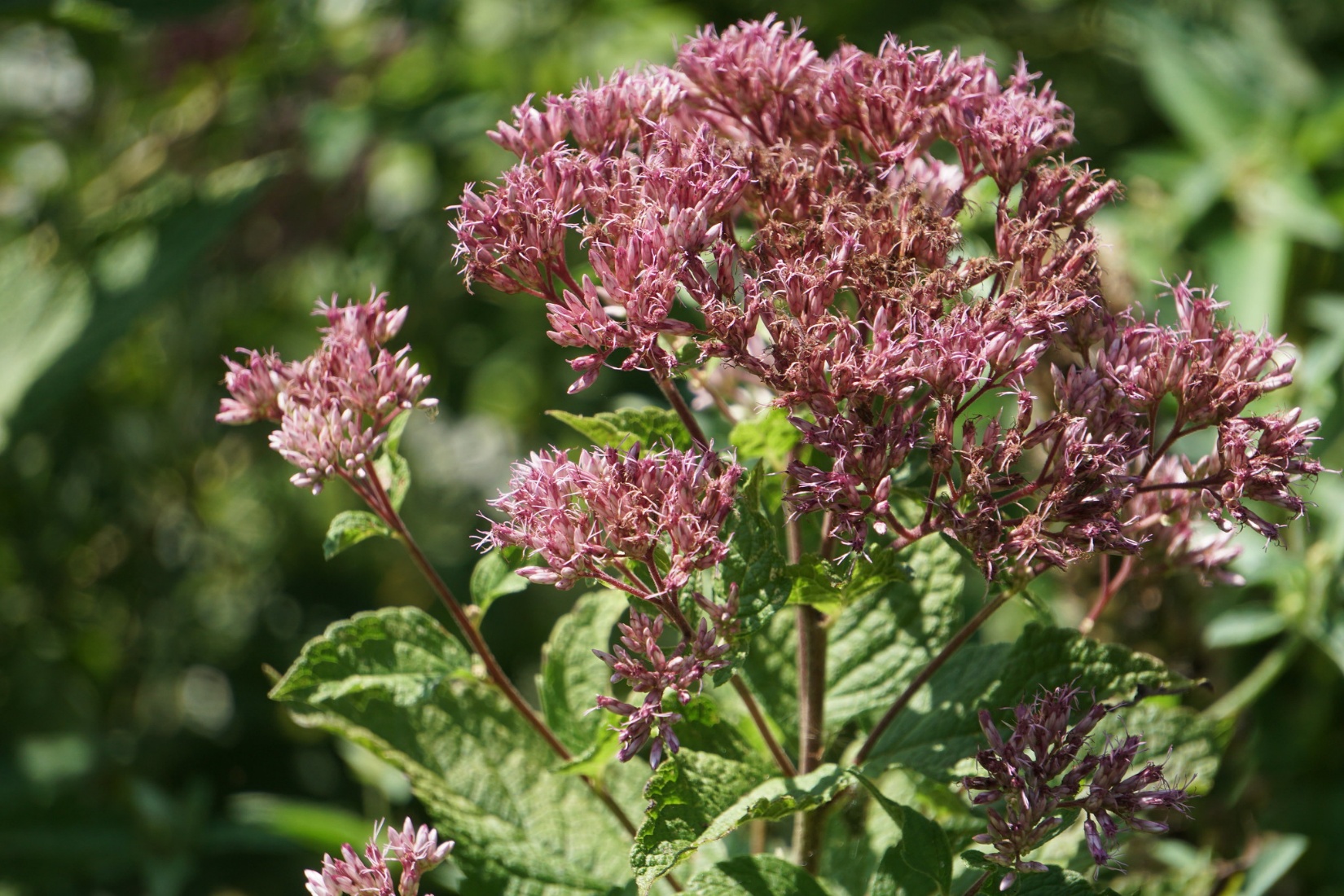
Joe Pye Weed (Eutrochium spp.) blooms on a sunny day.
Barbara H. Smith, ©2025 HGIC, Clemson Extension
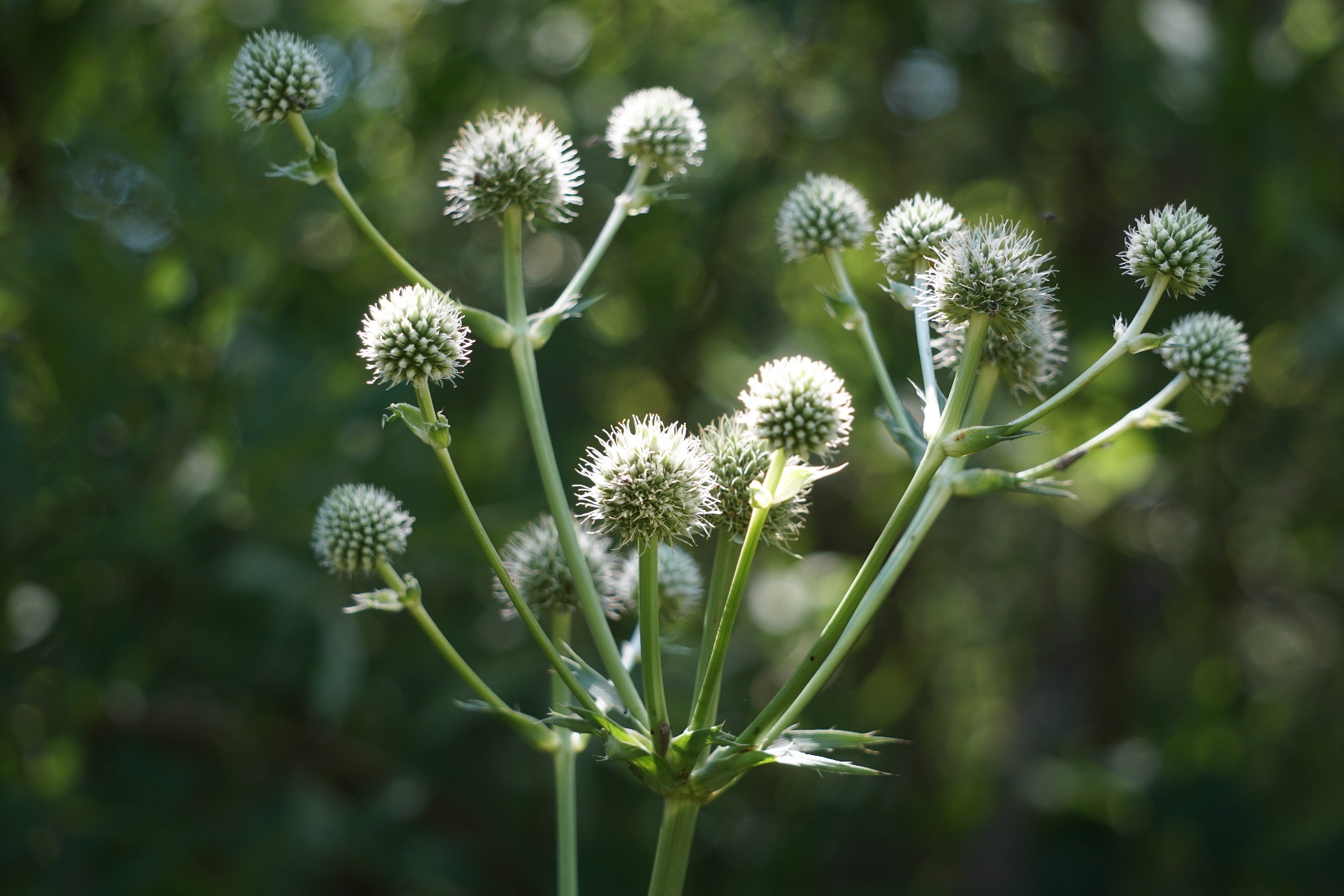
Rattlesnake Master (Eryngium yuccifolium) flowers reaching up for the sunlight.
Barbara H. Smith, ©2025 HGIC, Clemson Extension
Additional Resources for Native Wildflowers
HGIC 1157, Wildflowers
SC Native Plant Society: Native Plant Directory
UCONN Soil Nutrient Analysis Laboratory: Wildflower Meadows