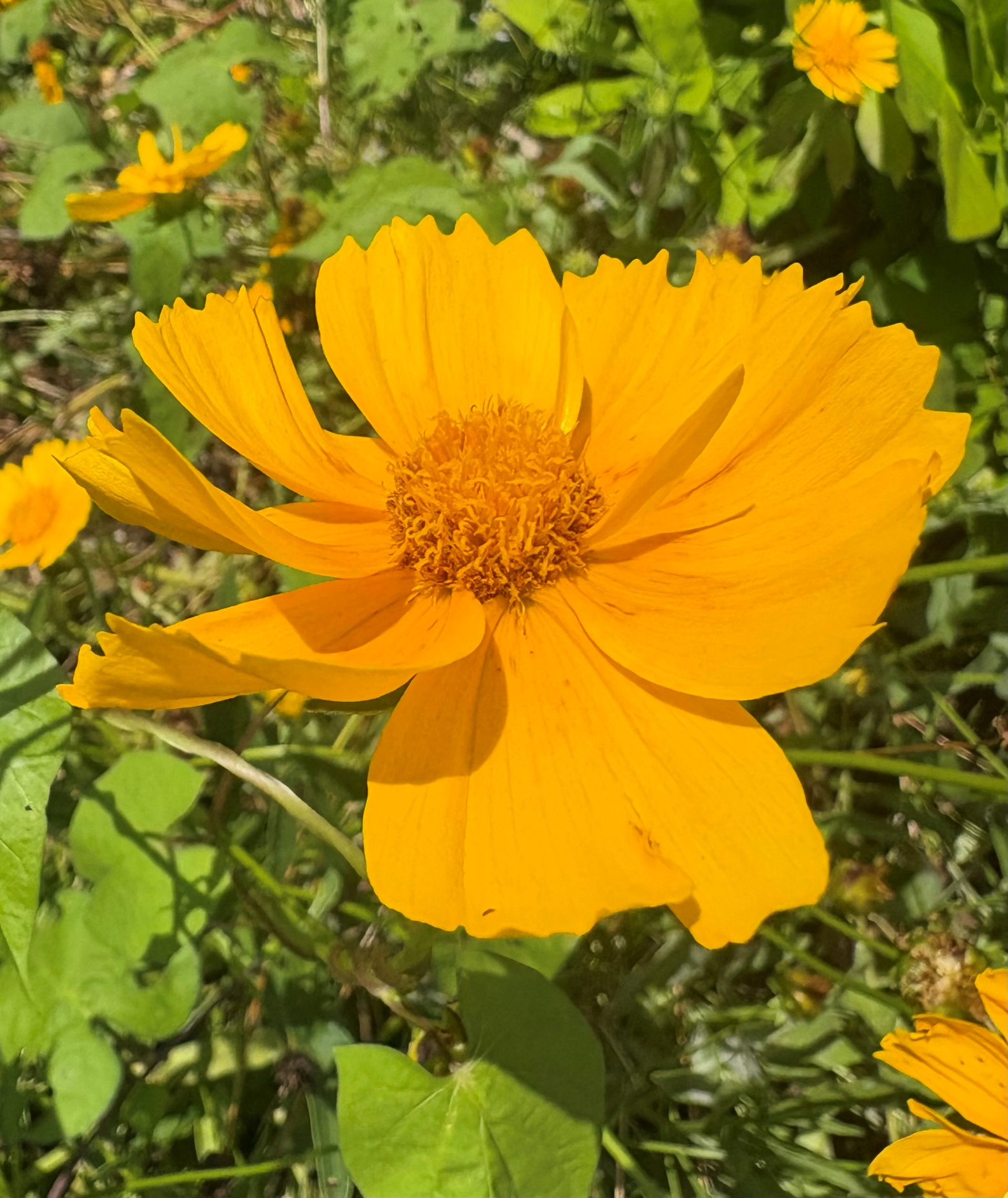
Lance-Leafed Coreopsis in bloom.
Abigail Taylor, ©2026, HGIC, Clemson Extension
What is Native Tickseed?
Disregarding its unfortunate name, tickseed is a fantastic native pollinator plant for our area.
The petals of this brightly-colored flower have lobes on the ends, making each petal resemble a tick, hence the name tickseed.
There are multiple species native to South Carolina, ranging from 6 in to 4 ft tall at maturity.
Why Native Tickseed Is a Great Pollinator Plant
Coreopsis species are low-maintenance, hardy, and extremely drought-tolerant once established.
They have a long blooming period, from early spring to mid-summer, with scattered blooms until the first frost.
They’re perennial and mildly tolerant to deer and rabbit damage, depending on the species.
Tickseed makes a great pollinator plant that provides nectar throughout the season.
Songbirds eat the seeds, and the bright yellow and red blooms make them easy to spot.
Where to Plant Native Tickseed
All our native tickseed species prefer a sunny location with well-draining soil.
They make a great addition to a pollinator garden, and taller species can be used as a cheerful backdrop in garden plantings.
They are perennial plants that will spread and self-seed, so keep an eye on how far they’re spreading in your garden.
How to Grow Native Tickseed
Growing Tips for Tickseed
- Hardy in USDA zones 4a-9b, with the exception of swamp and coastal tickseed, which are hardy in zones 7a-10b.
- Plants need full sun, at least 6 hours a day.
- Well-draining soil.
- Do not over-fertilize; top dress with compost as needed.
- Water deeply in the first year to establish roots.
Native Tickseed Species and Cultivars
Lobed Tickseed (Coreopsis auriculata)
Small yellow flowers with pointed, deer-resistant leaves.
Not as drought-tolerant as other species, but tolerates humidity well.
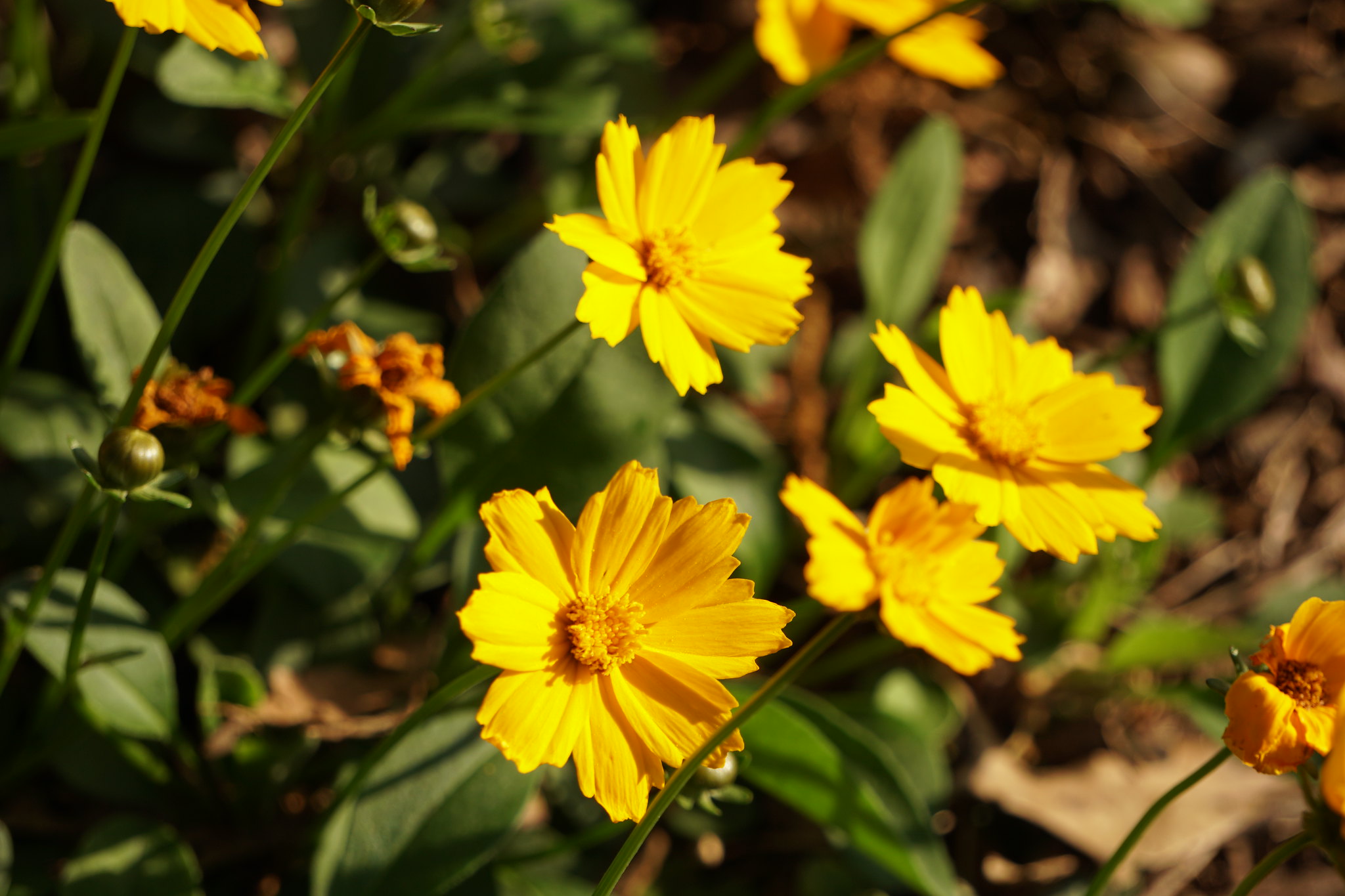
Ear-leaved tickseed (Coreopsis auriculata ‘Nana’) produces bright golden-yellow flowers in spring. This compact, low-growing native perennial attracts bees and butterflies and performs well in sunny borders, rock gardens, and pollinator plantings.
Barbara H Smith, ©2026, Clemson Extension
Dwarf Tickseed (Coreopsis auriculata ‘Nana’)
A dwarf cultivar that maxes out at 9in tall and forms a clump 2ft wide.
Somewhat drought-tolerant, and can tolerate partial shade.
Coastal Tickseed (Coreopsis gladiata)
A rare species with a slender, branching stem.
Prefers full sun and moist, sandy soils.
Blooms in the fall.

Large-flowered tickseed (Coreopsis grandiflora) features long-lasting golden-yellow blooms that brighten the garden from late spring into summer. Deadheading spent flowers encourages continued blooming and helps maintain a tidy appearance.
Barbara H Smith, ©2026, Clemson Extension
Largeflower Tickseed (Coreopsis grandiflora)
Highly drought-tolerant and does well in sandy or rocky soils.
Flowers and plants are larger than other species.
Lanceleaf Coreopsis (Coreopsis lanceolata)
Resistant to deer, drought-tolerant, and likes high humidity.
Flowers often come in reds as well as yellow.
Aggressively self-seeds.
Swamp Tickseed (Coreopsis palustris)
Rare to find in nature, but cultivars can be bought and planted.
Prefers moist soil and full sun, and can tolerate flooding.
Yellow flowers have a brown seedhead.
Star Tickseed (Coreopsis pubescens)
Prefers dry, rocky or sandy soil.
Flowers have both ray and disc florets, and produce blooms throughout the summer.