New England asters are native, late-summer-to-fall-blooming perennials that grow best in sun to part shade and provide nectar and seeds for wildlife.
What are New England Asters?
New England Aster Description
New England asters (Symphyotrichum novae-angliae) are late-summer-to-fall-blooming perennials with daisy-like flowers.
Native Range and Habitat
They are native to the eastern half of the United States and Canada and are found in prairies, stream banks, and meadows.
Plant family
Asters are members of the daisy family, Asteraceae.
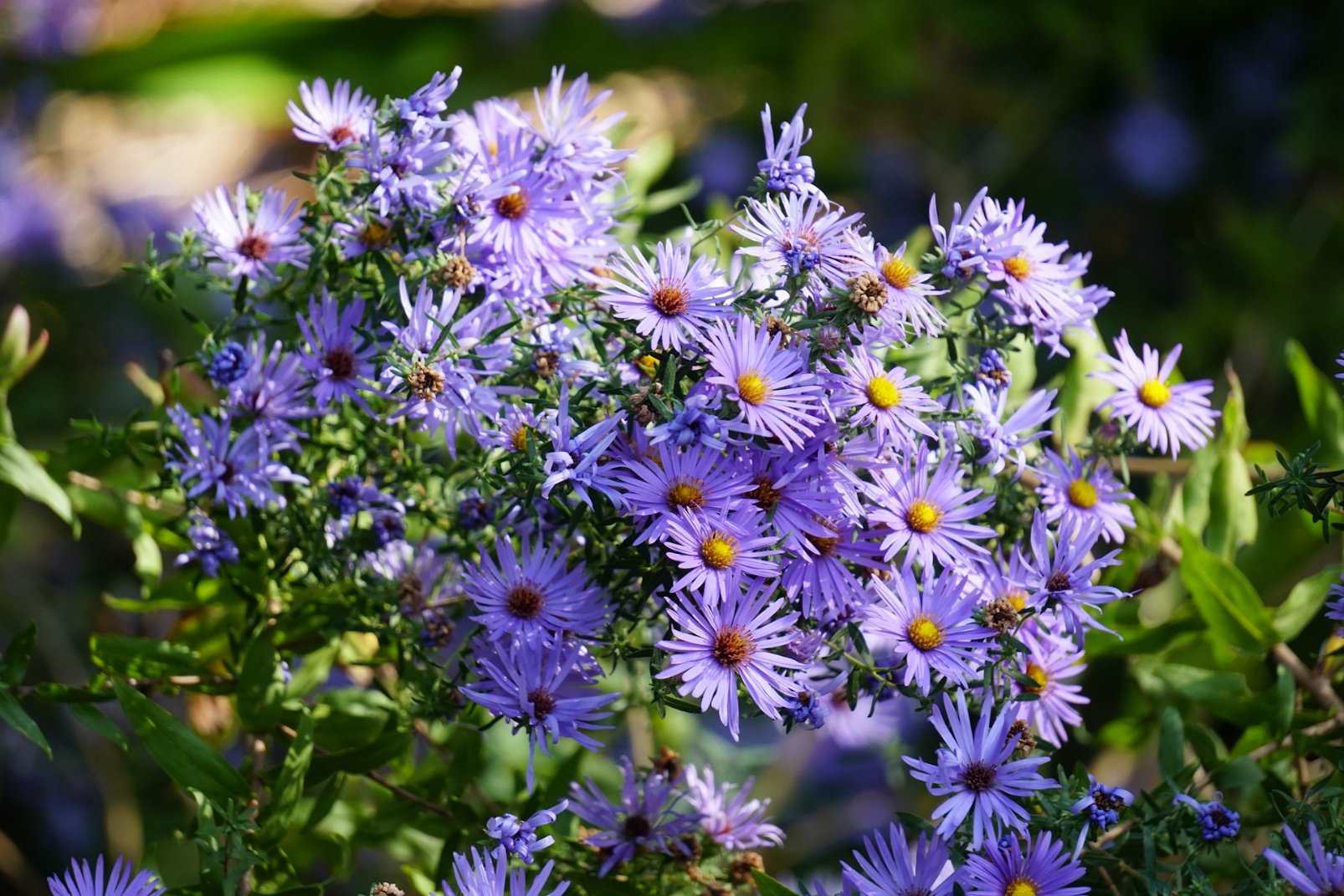
New England aster (Symphyotrichum novae-angliae) plants produce bountiful blooms 1 to 2 inches across in late summer to fall.|
Barbara H. Smith, ©2024 HGIC, Clemson Extension
New England Asters Flower Colors and Bloom Time
Flower Colors
Flowers range from deep purple to light lavender to all shades of pink.
Flower Centers
The centers of the flowers are golden yellow. These are disc flowers or florets.
Bloom Time
The plants bloom for 6 weeks or longer in late summer to fall.
How Big do New England Asters Grow?
Mature Plant Size
Plants can grow from 3 to 6 feet tall and up to 3 feet wide.
Compact Cultivars
More compact cultivars are available.
Best New England Aster Cultivars
New England aster cultivars vary in plant size and flower color. The following cultivars offer options for both compact and larger garden spaces.
‘Alma Potschke’
- Deep pink flowers
- Medium-sized grower
- 3 feet tall and wide
‘Grape Crush’
- Deep purple flowers
- Small grower
- 2.5 feet tall and wide
‘Harrington’s Pink’
- Light pink flowers
- Tall grower
- 4 to 6 feet high
‘Purple Dome’
- Semi Double Purple flowers
- Compact grower
- 2 feet tall and wide
‘September Ruby’
- Fuchsia flowers
- Tall grower
- 4 feet tall
How to Grow New England Asters Successfully
USDA Hardiness Zones of New England Asters
- New England asters can be planted in USDA planting zones 4 through 8b. This includes all of South Carolina.
Sunlight Requirements of New England Asters
- Plant in sun to part shade.
Best Soil for New England Asters
- Plant asters in soil that is well-drained to moist.
How to water New England Asters
- Water regularly until plants are established. Once established, water during periods of low rainfall.
How to Fertilize New England Asters
- Apply a 2-inch layer of compost annually.
- If needed, fertilize with an all-purpose, slow-release fertilizer in late spring.
How to Prune and Maintain New England Asters
Spring Pinching
- As the plants begin growing in spring, pinch the growing tips to make the plants bushier. Stop pinching back in July for fall blooms.
Supporting Tall Plants
- Support tall stems with stakes.
Managing Lower Leaves
- Lower leaves may brown and die off in late summer.
Preventing Unwanted Seedlings
- Plants can self-seed in the garden. Remove flowerheads to prevent unwanted seedlings.
How to Propagate New England Asters
Division
- Mature plants can be divided every three or more years.
Seeds
- Seeds can be saved and sown outdoors in the fall.
Common Diseases and Pests of New England Asters
- New England Asters can be susceptible to powdery mildew.
- Aphids, spider mites, and leaf miners are sometimes pests.
New England Asters for Pollinators and Wildlife
Nectar for Pollinators
- Asters are a nectar source for butterflies, including Monarch butterflies, along with bees.
Caterpillar Host Plant
- They are a host plant for Pearl Crescent butterfly caterpillars.
Seeds for Wildlife
- New England Asters provide seeds for songbirds and small animals.
Are New England Asters Deer Resistant?
- Plants are moderately deer resistant.
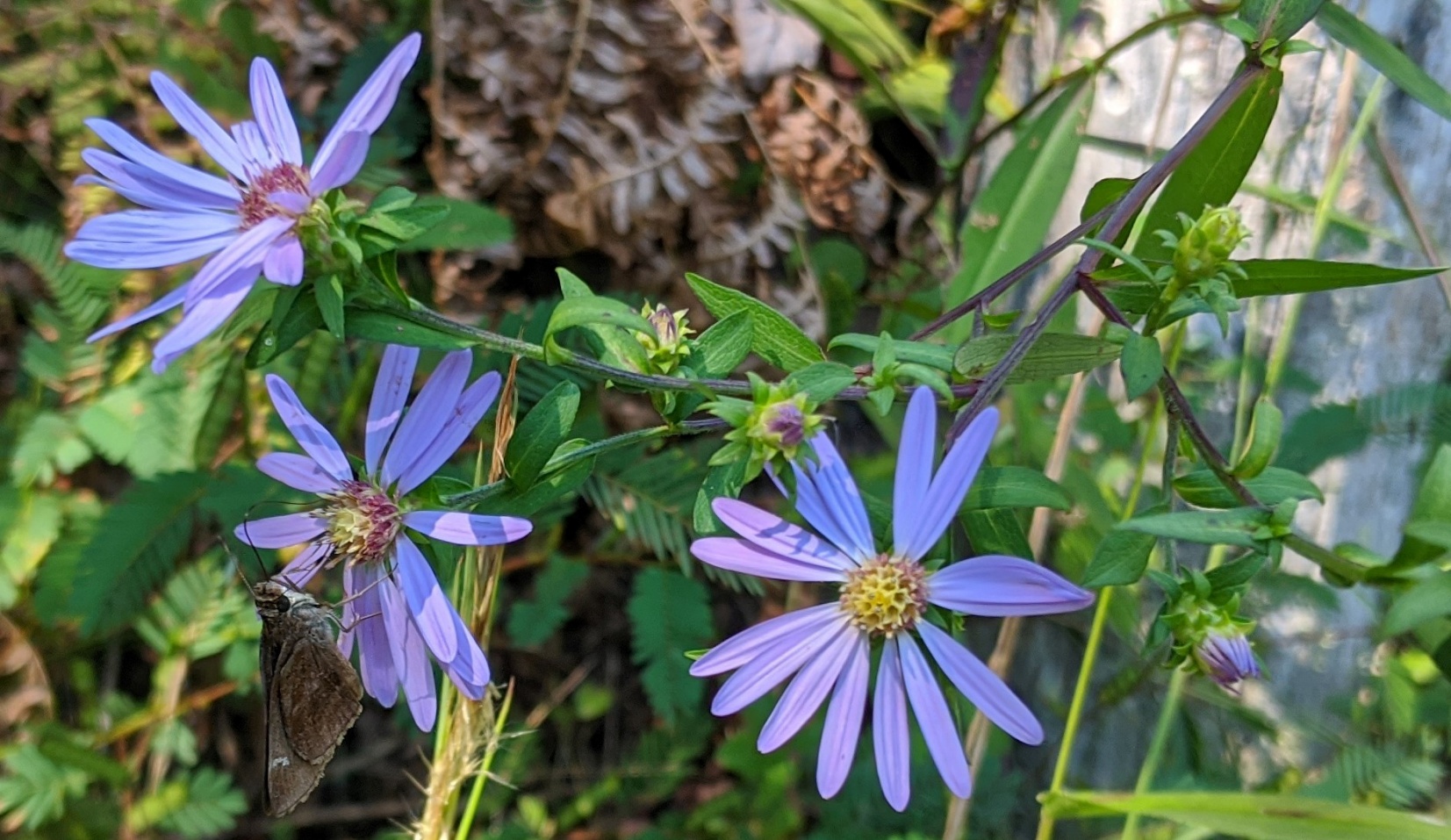
New England asters are a nectar source for many pollinators and make a great addition to a pollinator garden.|
Neil Jordan Franklin, ©2021, HGIC, Clemson Extension