Enjoy a virtual tour of the interior of the Biltmore House. The house has 250 rooms and approximately 135,000 square feet. Construction started in 1889, and it took 1,000 men six years to build the house. It was formally opened in 1895 in time for Christmas.
-

The Winter Garden was where exotic plants could be enjoyed all year long.
Millie Davenport, ©2023 HGIC, Clemson University -

Winter Garden has a trapdoor that allows plants to be moved to and from the Conservatory in order not to disturb the guests.
Millie Davenport, ©2023 HGIC, Clemson University -

Winter Garden
Millie Davenport, ©2023 HGIC, Clemson University -
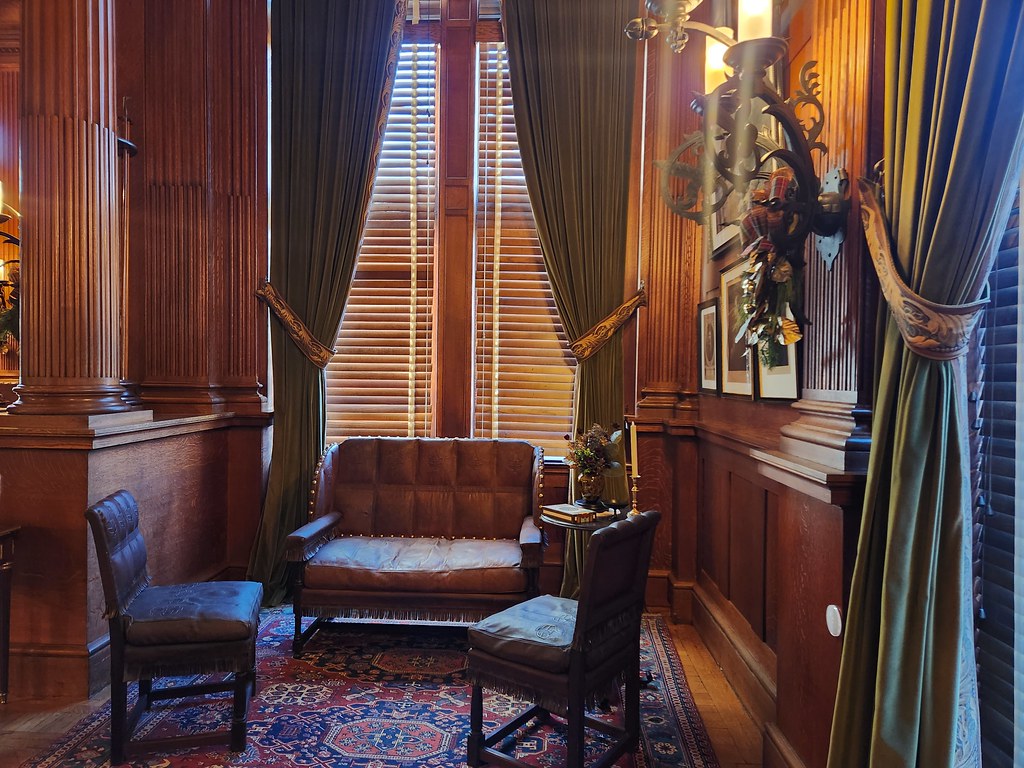
Billiard Room
Millie Davenport, ©2023 HGIC, Clemson University -

Billiard Room has a the hidden door in the wall behind the pool table that leads to the Smoking Room.
Millie Davenport, ©2023 HGIC, Clemson University -

Billiard Room Ceiling
Millie Davenport, ©2023 HGIC, Clemson University -

Banquet Hall with 16th century Flemish Tapestries
Millie Davenport, ©2023 HGIC, Clemson University -

Banquet Hall Ceiling
Millie Davenport, ©2023 HGIC, Clemson University -
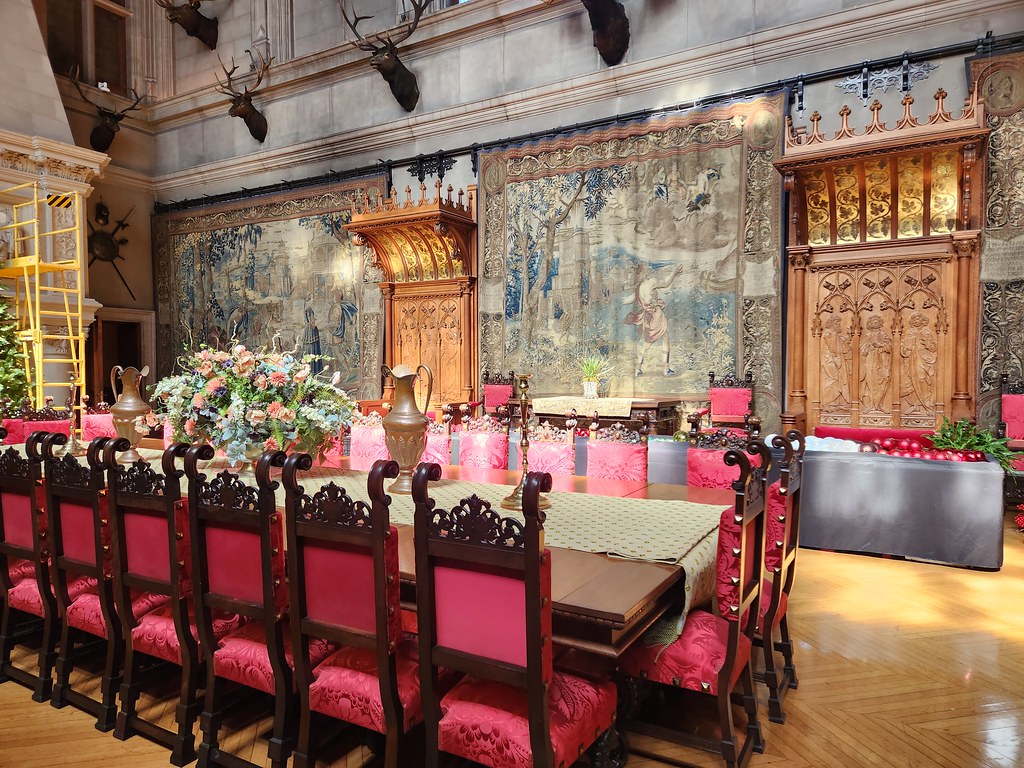
Banquet Hall table will seat 64 guests.
Millie Davenport, ©2023 HGIC, Clemson University -

Banquet Hall Organ Gallery with carved oak friese by artist Karl Bitter
Millie Davenport, ©2023 HGIC, Clemson University -

Banquet Hall built-in sideboard below the Organ Gallery that displays a collection of 18th and 19th century brass and copper vessels from Holland, France, and Spain.
Millie Davenport, ©2023 HGIC, Clemson University -

Breakfast Room was used for more informal dining. The fireplace is surrounded by Wedgewood-style blue jasperware tiles.
Millie Davenport, ©2023 HGIC, Clemson University -

Breakfast Room has tooled leather wall coverings. The paintings Young Algerian Girl and Child with an Orange are original Renoirs.
Millie Davenport, ©2023 HGIC, Clemson University -

Music Room features a rare set of the 12 Apostles by Meissen and The Triumphal Arch of Maximilian woodcut by Albrecht Durer.
Millie Davenport, ©2023 HGIC, Clemson University -
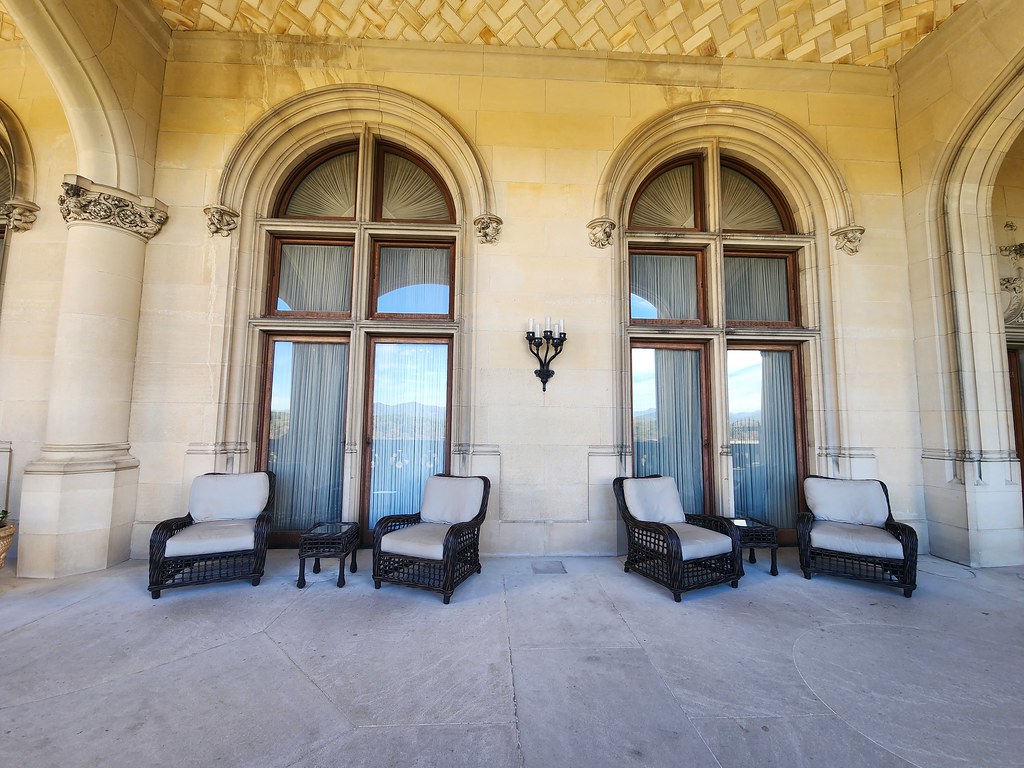
Loggia outside of the Music Room has a view of the Blue Ridge Mountain Range, including Mt. Pisgah, which is 17 miles from the Biltmore House.
Millie Davenport, ©2023 HGIC, Clemson University -

Loggia Carved Doorway Freeze with the Vanderbilt Monogram
Millie Davenport, ©2023 HGIC, Clemson University -

Loggia Door Detail
Millie Davenport, ©2023 HGIC, Clemson University -

The Tapestry Gallery is the second largest room at Biltmore. The 90 foot long room was designed to display 16th century tapestries. It was used for afternoon teas and for entertaining after dinner.
Millie Davenport, ©2023 HGIC, Clemson University -

The Library is decorated in a 1940s style for a recent Christmas holiday movie filmed at the Biltmore Estate.
Millie Davenport, ©2023 HGIC, Clemson University -

Library contains around 10,000 books. George Vanderbilt spoke 8 languages and was an avid reader.
Millie Davenport, ©2023 HGIC, Clemson University -

George Vanderbilt's Master Bedroom is located on the southwest corner of the second floor, where he had a commanding view of his property that included Mt. Pisgah.
Millie Davenport, ©2023 HGIC, Clemson University -

The Biltmore House architect, Richard Morris Hunt, designed the settee, daybed, chairs, and dressing table in George Vanderbilt's Master Bedroom.
Millie Davenport, ©2023 HGIC, Clemson University -

George Vanderbilt's Master Bedroom is wallpapered with 24 carat gold on burlap.
Millie Davenport, ©2023 HGIC, Clemson University -

The Oak Sitting Room was George and Edith Vanderbilt's private sitting room, located between their bedrooms.
Millie Davenport, ©2023 HGIC, Clemson University -

Oak Sitting Room features family portraits.
Millie Davenport, ©2023 HGIC, Clemson University -
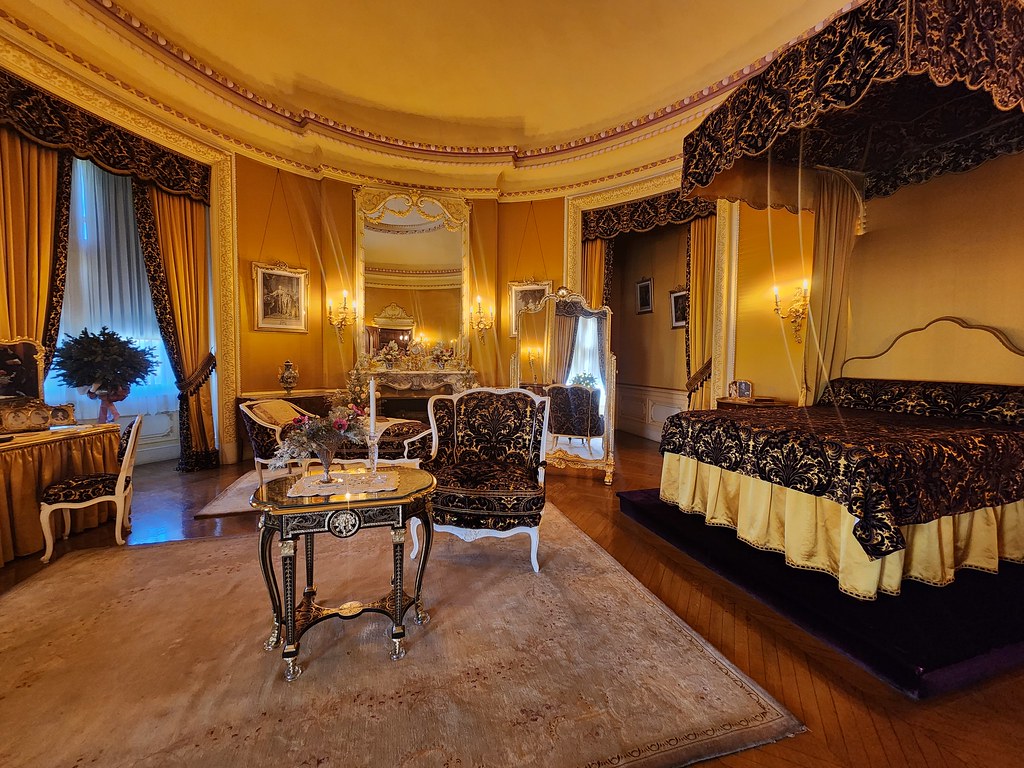
Edith Vanderbilt's Master Bedroom is oval shaped and decorated in the Louis XV style.
Millie Davenport, ©2023 HGIC, Clemson University -

Edith Vanderbilt's Master Bedroom walls are covered in silk, with Savonnerie carpets and cut-velvet drapes.
Millie Davenport, ©2023 HGIC, Clemson University -

The Louis XVI oval bedroom has damask covered walls that have been meticulously restored.
Millie Davenport, ©2023 HGIC, Clemson University -

The Smoking Room was used for gentlemen guests to enjoy an after dinner cigar or pipe along with an aperitif. They could also select a book to read by the fire.
Millie Davenport, ©2023 HGIC, Clemson University -

The Gun Room was designed to display guns used for hunting along with animal trophies. The guns are no longer on display.
Millie Davenport, ©2023 HGIC, Clemson University -

The Main Laundry contains state-of-the-art machinery that was installed in 1895.
Millie Davenport, ©2023 HGIC, Clemson University -

Most of the cooking at Biltmore took place in the Main Kitchen.
Millie Davenport, ©2023 HGIC, Clemson University -

A separate Rotisserie Kitchen was used to roast meats over an open fire.
Millie Davenport, ©2023 HGIC, Clemson University -

The Kitchen Pantry was used for storing china and washing dishes. It also contained two dumbwaiters, one manual and one electric, that could transport food to the dining areas on the second floor.
Millie Davenport, ©2023 HGIC, Clemson University -

The Servant's Hall where Biltmore staff would have their meals.
Millie Davenport, ©2023 HGIC, Clemson University -

Florist Work Room
Millie Davenport, ©2023 HGIC, Clemson University -

Florist Workroom
Millie Davenport, ©2023 HGIC, Clemson University