Quick Guide to Perilla Mint
What It Is: Perilla mint is a summer weed native to Asia.
Identification: Look for square stems, opposite leaves, serrated leaf edges, and a minty odor.
Control: Pull plants by hand, cut small seedlings at the soil surface, monitor for new seedlings, or use non-selective herbicides.
Culinary Uses: Perilla mint is used in Japanese and Korean cuisine.
Important Consideration: Perilla mint can be toxic to grazing animals when consumed in large amounts.
What is Perilla Mint (Perilla frutescens)?
Perilla mint is a summer weed native to Asia.
The South Carolina Invasive Pest Council has deemed it an invasive-exotic plant. It is found throughout the eastern half of the US.
Perilla mint has many common names, including beefsteak plant, shiso, and Chinese basil.
As the common name Chinese basil implies, it has culinary uses in Asian cuisine.
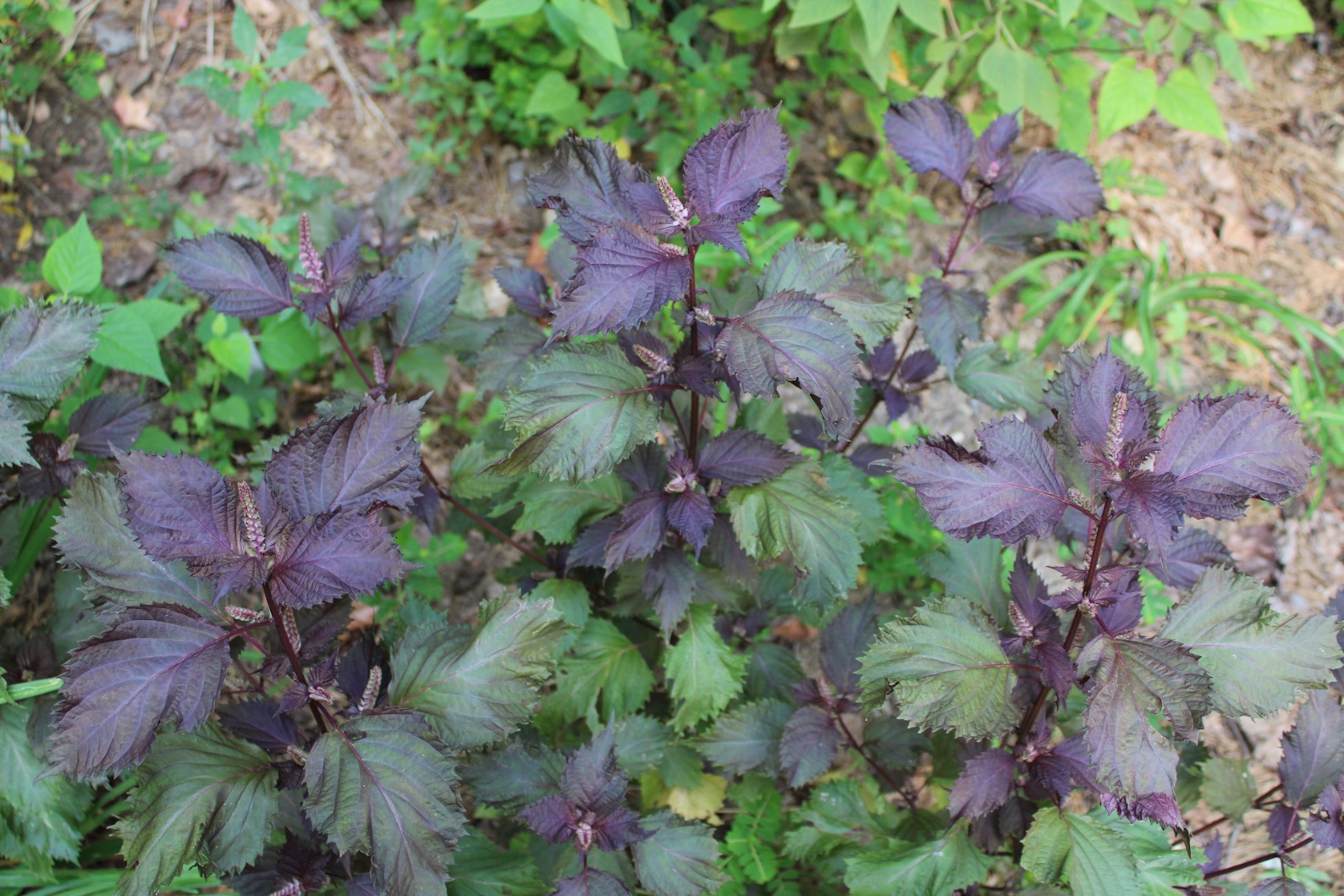
Perilla mint (Perilla frutescens) produces flowering spikes in late summer and fall. If allowed to go to seed, the plant reproduces prolifically.
Ginger E Long, ©2025 HGIC, Clemson Extension
How to Identify Perilla Mint
- Perilla mint is similar in size and appearance to Thai or Italian basil, typically growing to 3 feet tall and 2 feet wide.
- It has a minty odor, square stems, and opposite leaves characteristic of plants in the mint family, Lamiaceae.
- It has green or purple leaves with a serrated edge.
- Perilla mint produces flower spikes in late summer and fall.
- Perilla mint is often found in disturbed areas in full sun to part shade.
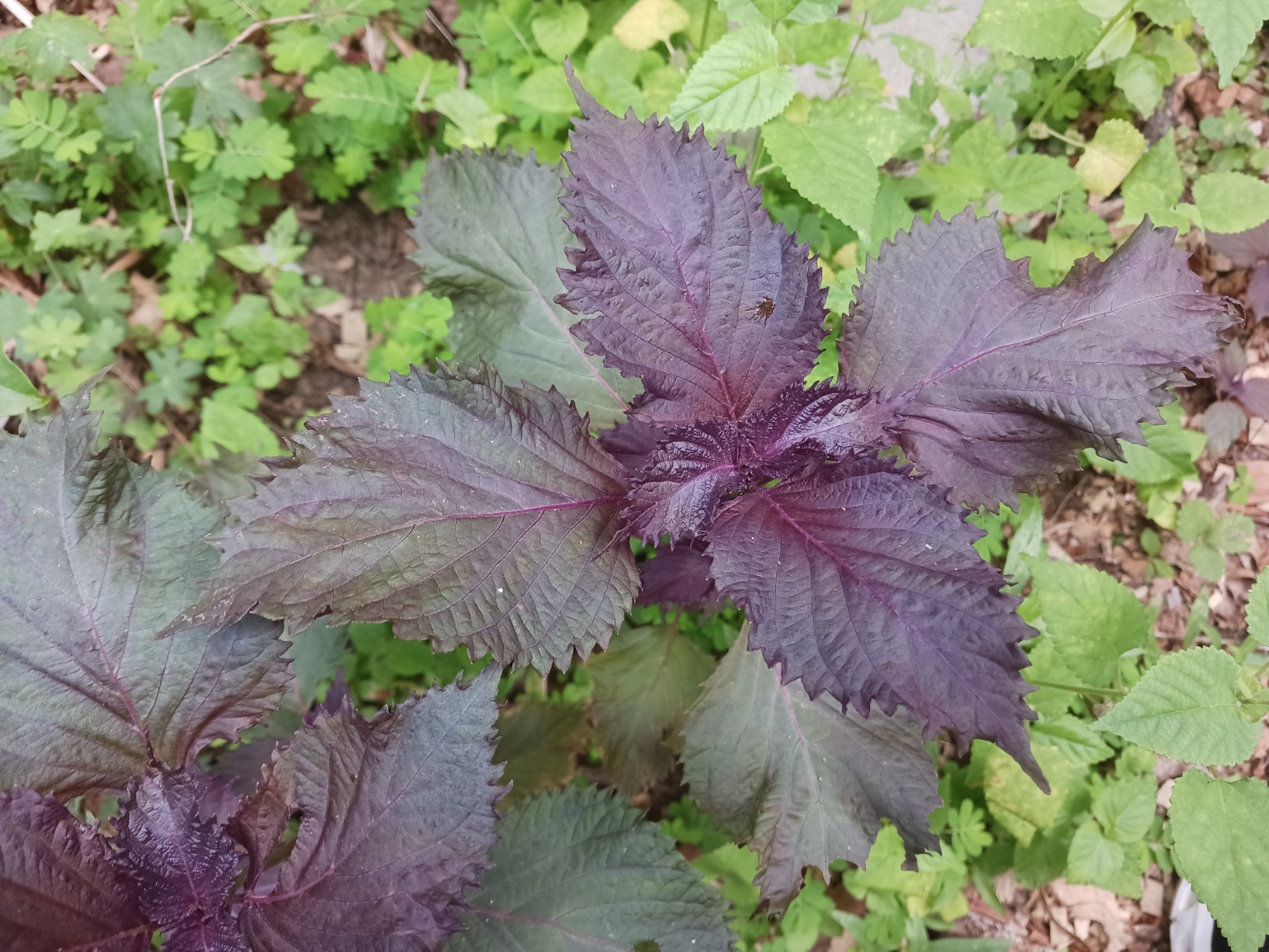
The purple leaves of perilla mint stand out from the surrounding green weeds and are easy to spot. It is often used in floral arrangements.
Ginger E Long, ©2026 HGIC, Clemson Extension
How to Control Perilla Mint
- Pull up plants by hand or cut off small seedlings at the soil surface with a sharp hoe.
- Seeds can remain viable in the soil for several years, so continual monitoring for new seedlings is advised.
- If plants are grown for culinary purposes, snip off the flowers so they cannot produce seeds.
- Non-selective herbicides are another option to control perilla mint. These herbicides will kill any plants on contact, so spray on a windless day.
Perilla Mint Control References
For more information on non-selective herbicides that contain the active ingredient glyphosate, see Broadleaf Weeds (HGIC 2301).
For non-selective herbicide alternatives to the active ingredient glyphosate, see Controlling Weeds in Landscaped Beds Without Glyphosate (HGIC 2338).
How is Perilla Mint Used in Asian Cuisine?
Perilla Mint Uses in Japanese Cuisine
- In Japan, it is a very popular herb for its unique flavor and fragrance. It is mostly used in sushi, salads, sashimi, noodles, and tempura.
- The purple leaves are often used as a dye in pickling.
Perilla Mint Uses in Korean Cuisine
- In Korean cuisine, it is used to wrap Korean barbecue meats, in stir-fries, and to make kimchi.
- The leaves are said to taste like a combination of mint, basil, and cilantro.
Perilla Mint Toxicity to Livestock
Perilla mint can be toxic to cattle, horses, and other grazing animals when consumed in large amounts.