Why Yellow-Legged Hornets (Vespa velutina) Are a Growing Concern in South Carolina
Spiders, lizards, and hornets, OH MY! From Joro spiders to tegu lizards, it seems like every year there is a new exotic species introduced into South Carolina, but our newest insect introduction, the yellow-legged hornet (Figure 1), is extremely concerning because it has the potential to cause serious problems for the already embattled beekeeping industry as well as affect the daily lives of the general public.
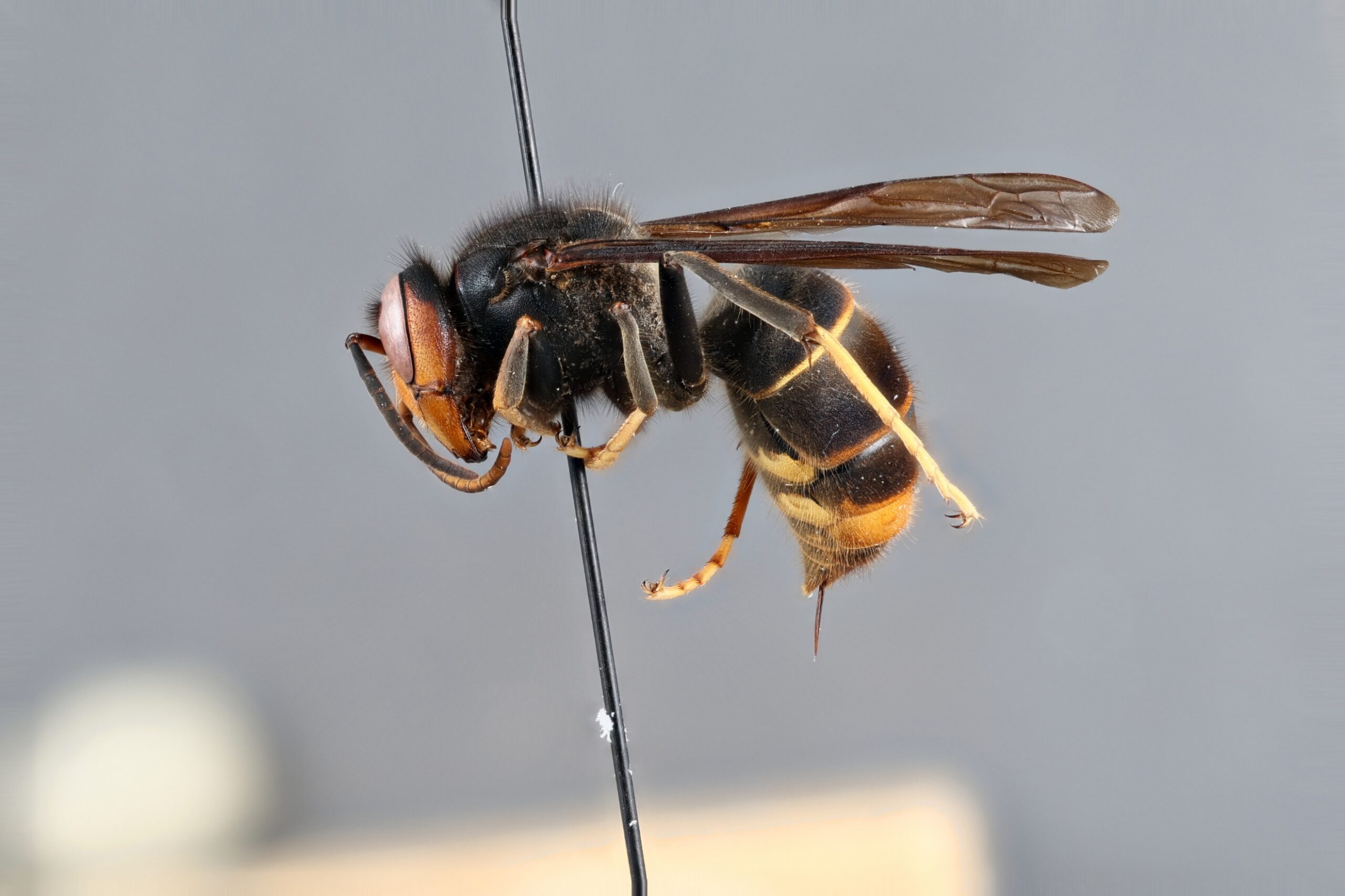
Yellow-Legged Hornet worker, lateral view.
Ben Powell, ©2026, Clemson Extension
How Yellow-Legged Hornets Are Spreading in the Southeast (2023–2026)
In the summer of 2023, the Georgia Department of Agriculture announced that yellow-legged hornets (YLH), Vespa velutina, were observed “hawking” beehives near Savannah, GA. Trapping and public reporting led to the removal of five active nests in the Wilmington Island area by the end of the year.
Now it is 2026. Last year, nearly 200 nests were removed, and hornet activity has been observed as far north as Seabrook Island, SC, inland to Statesboro, GA, and southward of Fort Stewart, GA. The hornet is expanding its range despite the tremendous effort to trap hornets and remove nests (Figure 2)

Figure 2. Range of YLH activity in North America
(Purple) Observed range of YLH activity 2023-2025
(Green) Predicted range of YLH activity 2026
Ben Powell, ©2026, Clemson Extension
York County Detection: How Human Transport Can Spread Yellow-Legged Hornets
The most concerning development occurred just last fall when a beekeeper reported hornets hawking his hives in York County, more than 150 miles north of the closest previous observation. Hornet hunters with Clemson’s Department of Plant Industry tracked hornet flights and removed the nest in less than a week.
The nest was later dissected. The bad news was that it had started its reproductive phase and was raising queens. The good news was that more than 400 queens were killed when the hornet hunters dispatched the nest, but there is concern that some queens had already dispersed and new nests may be present in the vicinity this coming year.
Unfortunately, this situation proves that these hornets can get transported inadvertently to new locations by humans and that novel YLH populations could get started just about anywhere across South Carolina or throughout North America in the coming years.
Yellow-Legged Hornet Biology: Understanding the Annual Nest Cycle
Understanding hornet biology is key to fighting this new invasive insect. In the fall of the year, the colony produces queens which disperse, mate, and shelter in leaf litter, log piles, or human containers.
In the spring, these individual queens emerge, each building its own new nest using papier mâché made from chewed wood fibers. The queen raises some workers by feeding them insects, and the colony grows. Eventually, the workers she raises take over nest building and foraging, and the queen shifts to mainly laying eggs.
Embryo, Primary, and Terminal Nest Stages of Yellow-Legged Hornets
One major difference between the new YLH and our native paper nest-building insects is that the YLH will move and start multiple nests throughout the year.
We call the first nest in March and April the “embryo” nest (Figure 3). After raising some workers, the colony then moves to an intermediate or “primary” nest (Figure 4) between May and June. Embryo and intermediate nests are often on human structures or in dense vegetation low to the ground.
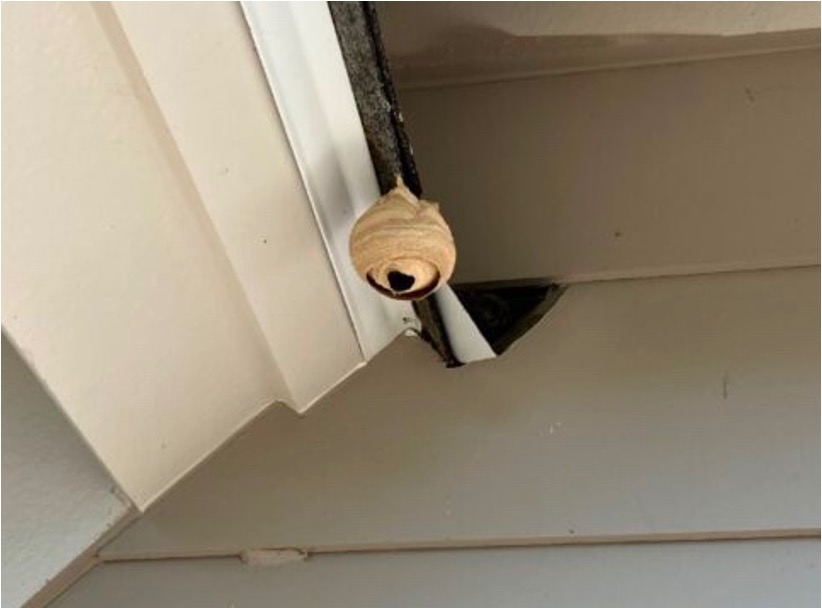
Figure 3. YLH Embryo Nest.
Brad Cavin, ©2026, Clemson Regulatory Services
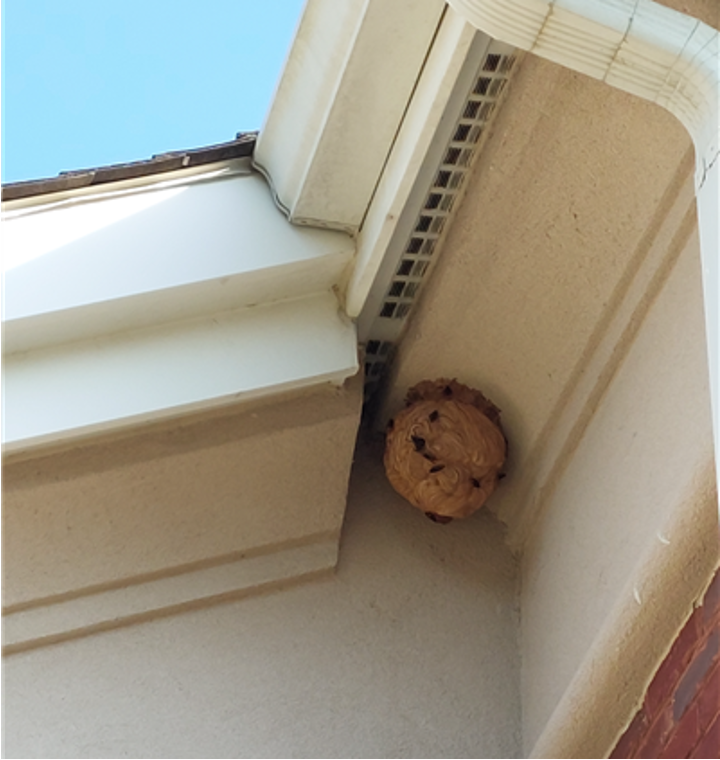
Figure 4. YLH Intermediate Nest.
Brad Cavin, ©2026, Clemson Regulatory Services
Then, sometime in mid-summer, the colony relocates again to a “terminal” nest (Figure 5), which is usually located high in the tree canopy. This terminal nest will grow exponentially through the fall and enter a reproductive phase in September or October, where it begins raising queens and drones. Finally, at the end of the year, Nov.-Dec., the queens and drones disperse and mate to start the annual cycle over again.
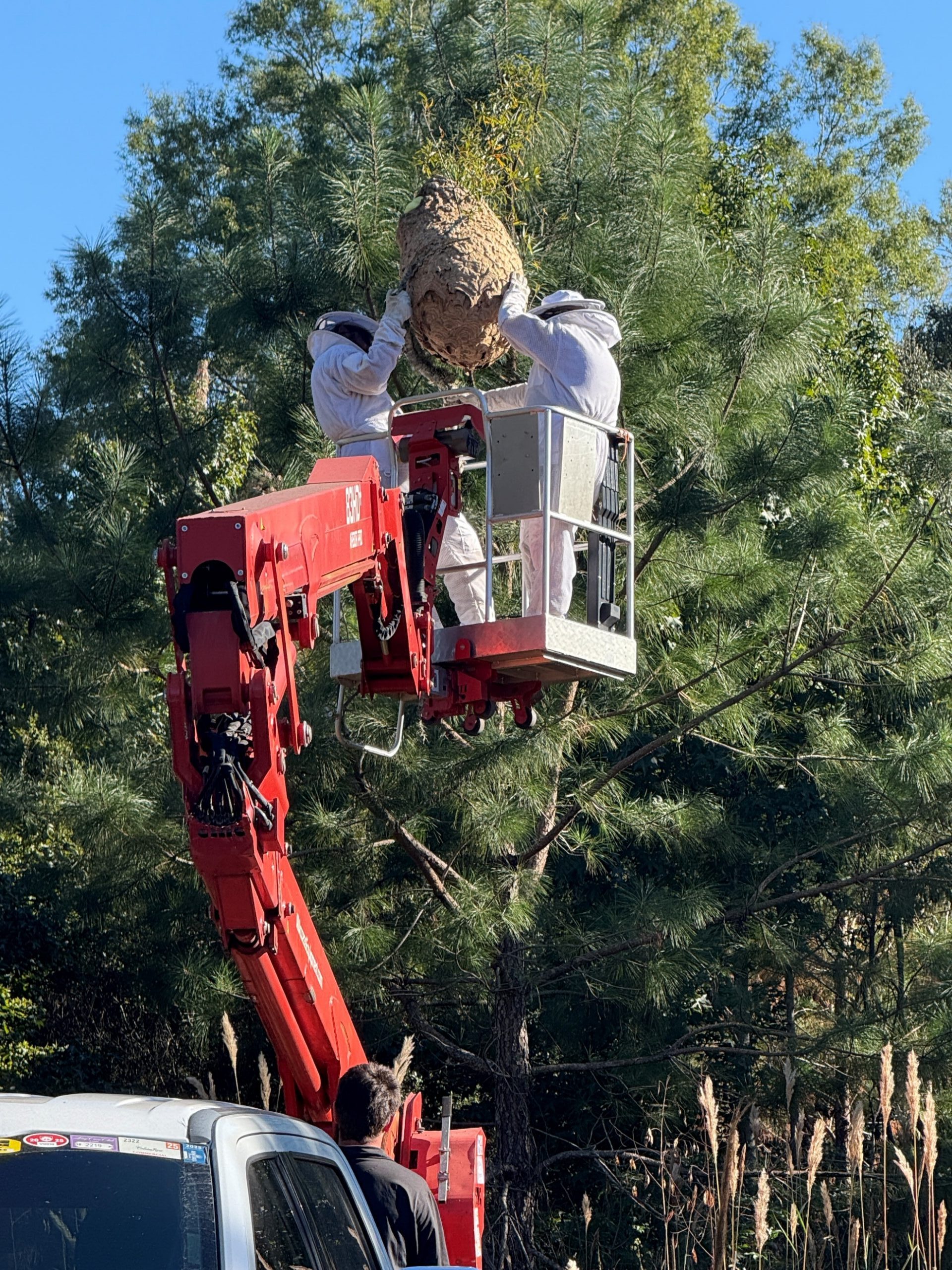
Figure 5. YLH Terminal Nest
Brad Cavin, ©2026, Clemson Regulatory Services
Yellow-Legged Hornet vs Native Wasps: Key Differences and Risks
So, what is the big deal? Isn’t this insect just like our native yellow-jackets or baldfaced hornets? Definitively NO! This new stinging insect is much more dramatic.
Our native yellowjackets and baldfaced hornets, which are known to vigorously defend their nests, usually have a peak colony size of a few hundred workers, whereas the YLH nest may contain as many as two thousand.
While the venom in the sting of a yellow-legged hornet is not believed to be any more potent than our native stinging insects, the larger colony size and the fact that hornet hunters are regularly finding nests on human structures and hornets foraging in trash cans and waste bins means that conflicts between these hornets and humans may be more common than with our native wasps. Spain experienced an increase in hospitalizations from stinging insects after the YLH established across its northern provinces.
Impact of Yellow-Legged Hornets on Honey Bees and Agriculture
The bigger concern is for our beekeepers and the sustainability of our agricultural enterprises. These hornets have an affinity for ripened fruits, which means that they will be a concern in fruit production operations.
More importantly, this hornet has a particular proclivity for honey bees. The hornet “hawks” bee-hives (Figure 6), catching foraging honey bees as they come and go from the hive, and numerous hornets may hawk a single bee-hive at once.
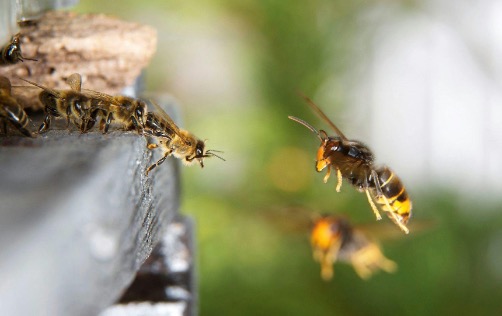
Figure 6. Hornets “hawking” a bee-hive.
Jean-Bernard Nadeau/Science Photo Library, CC BY-NC-ND
The result is that the bee colony is not able to forage to build up winter stores and is unable to raise new bees to replace the workforce. This causes a decline in the fall of the year when hornet activity is at its peak, and the bee colony is unable to survive the winter because it does not have enough stored honey and bees to stay warm.
After this hornet was introduced into France in 2004, winter honey bee colony losses increased across western Europe.
How to Report Yellow Legged Hornets in South Carolina (Public Action Steps)
It is our hope that hornet hunters, with your help, can prevent the same damaging impacts to US beekeepers. The Clemson Apiculture and Pollinator Program and the Clemson Department of Plant Industry are asking for the public’s assistance with reporting suspicious hornets and nests.
While beekeepers may observe hornets hawking their hives, it is likely that the offending hornet colony is on someone else’s property down the road. To minimize impacts to beekeepers and the public, it is imperative that hornet nests be reported in spring and summer before they get to the terminal nest phase and start attacking bee hives.
We need property owners to watch for nests and hornet activity and report them to the web portal at Clemson Plant Industry Invasive Species Yellow-Legged Hornet so that hornet hunters can respond. If you want to go even further and install a trap to help monitor hornet activity, you can also watch the video on how to build and bait a hornet trap on their website.
Contact Information for Yellow-Legged Hornet Questions
Of course, if you have any questions about these hornets, other stinging insects, and honey bees, you are welcome to contact me at Apiculture@Clemson.edu.
An emerging invasive insect, the yellow-legged hornet threatens beekeepers, agriculture, and public safety across South Carolina.
Additional Information
Report Yellow-legged Hornet Sightings
How to Report the Yellow-Legged Hornet
How to Make a Trap and Bait for Yellow-Legged Hornet