What is Mulberry Weed?
Mulberry weed (Fatoua villosa) is a tenacious summer annual weed in the mulberry (Moraceae) family. It grows in USDA planting zones 5 to 11. It will begin to appear in the late spring when the temperatures stabilize at 60 °F and higher.
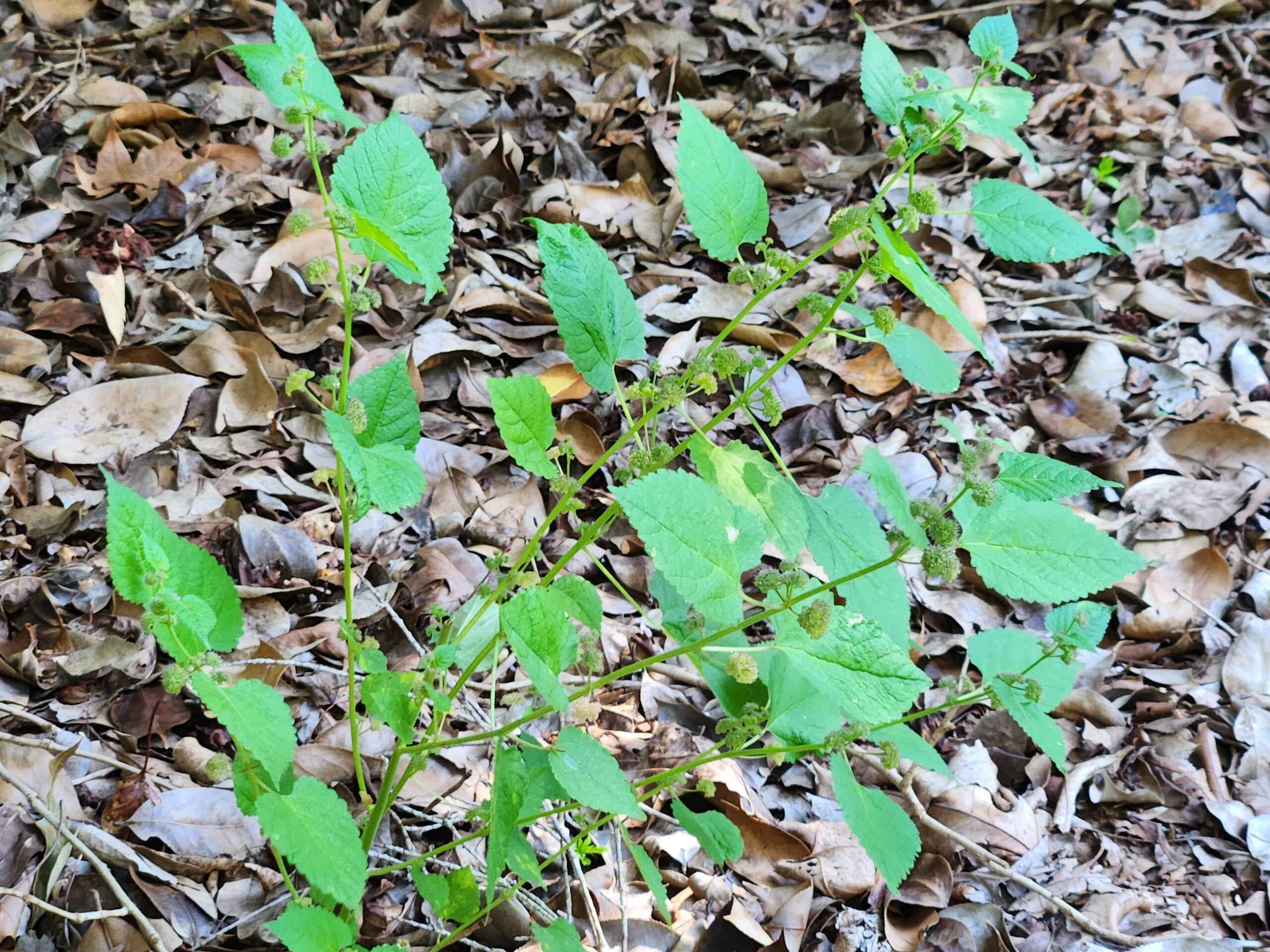
Mulberry weed (Fatuoa villosa) is an invasive summer annual weed in the mulberry (Moracea) family.
Barbara H. Smith, ©2025 HGIC, Clemson Extension
Where Did Mulberry Weed Come From?
As with many invasive species, it was accidentally brought to the United States from Asia by the returning military equipment after World War II, and goods imported from Australia, Japan, and Eastern Asia.
It was officially recorded growing in Louisiana in 1964. By the 1990s, mulberry weed was invading nursery stock that was being shipped all over the United States.
How to Identify Mulberry Weed
The paper-thin, hairy, triangular- or heart-shaped leaves are 1 to 3 inches long. A single plant can get 2 feet tall, but it can start setting seeds when it is only 3 inches high.
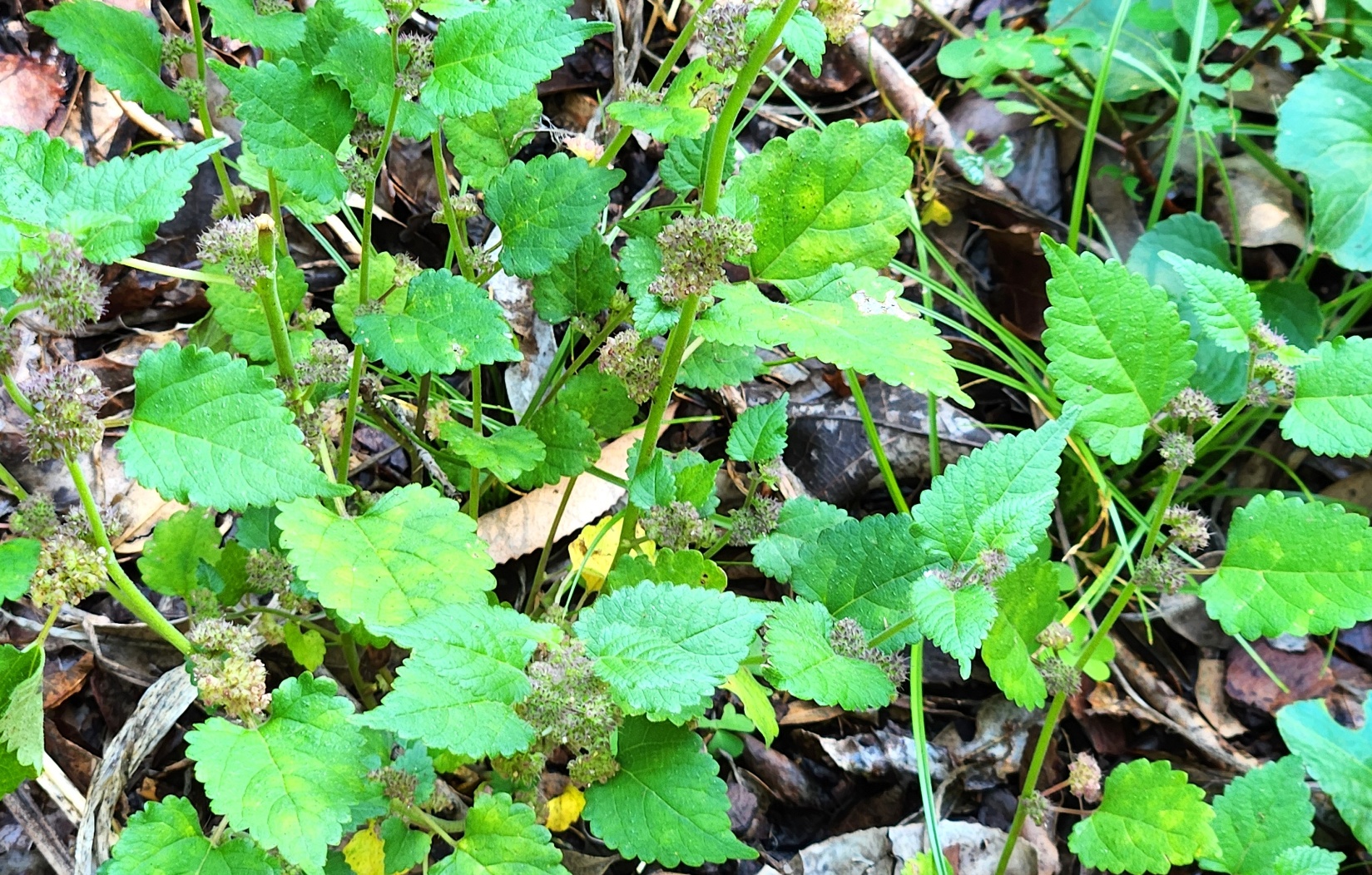
Mulberry weed has paper-thin, triangular-shaped leaves that are 1 to 3 inches long.
Barbara H. Smith, ©2025 HGIC, Clemson Extension
The mulberry weed flowers are in dense cymes (clusters) at the base of the leaf axils (where the leaf attaches to the stem). The cymes are composed of the pistillate (female) and staminate (male) flowers, which are purple when young. They will turn dark brown as the seeds mature.
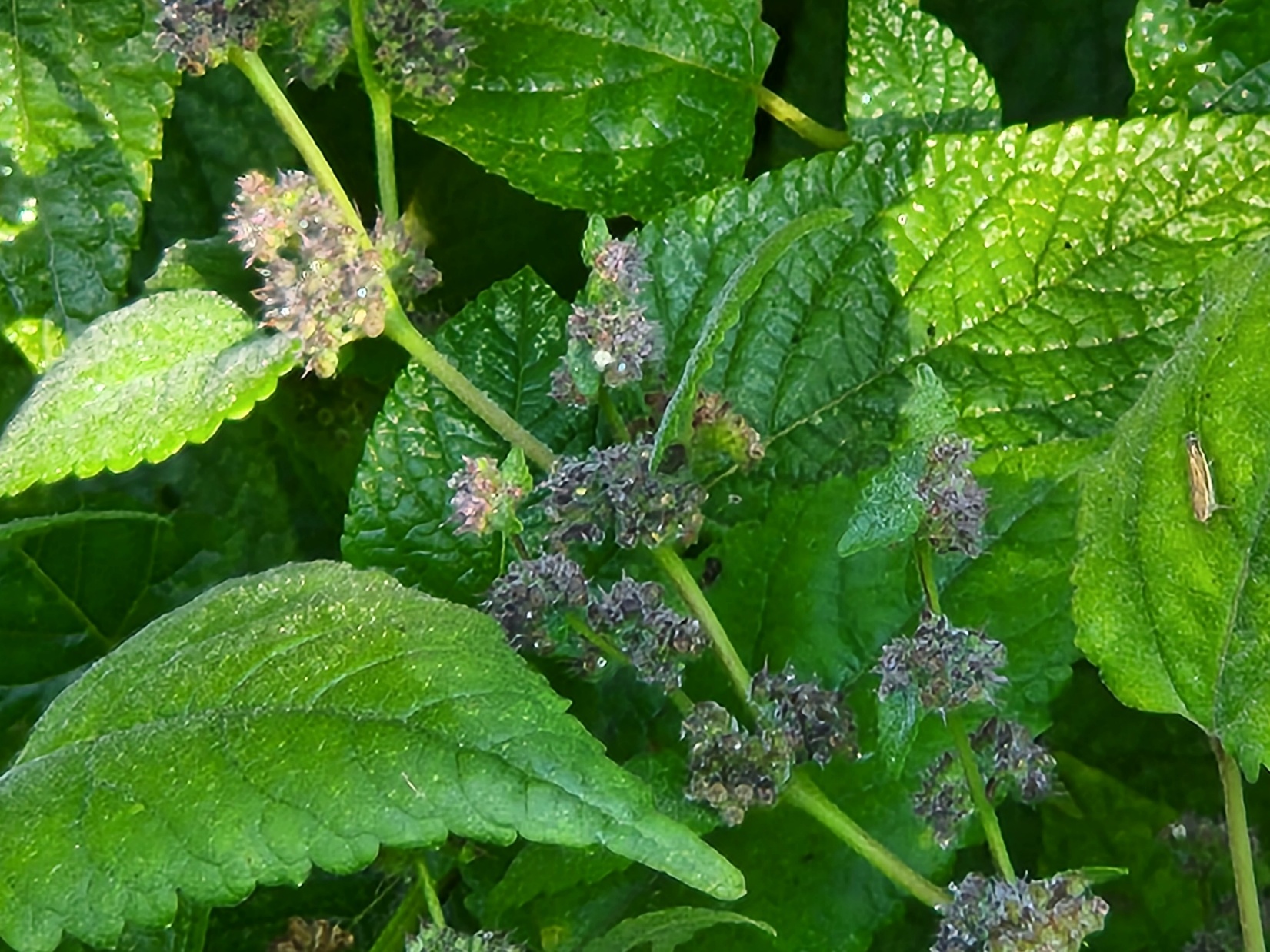
Young purple flower cymes are produced at the leaf axils.
Barbara H. Smith, ©2025 HGIC, Clemson Extension
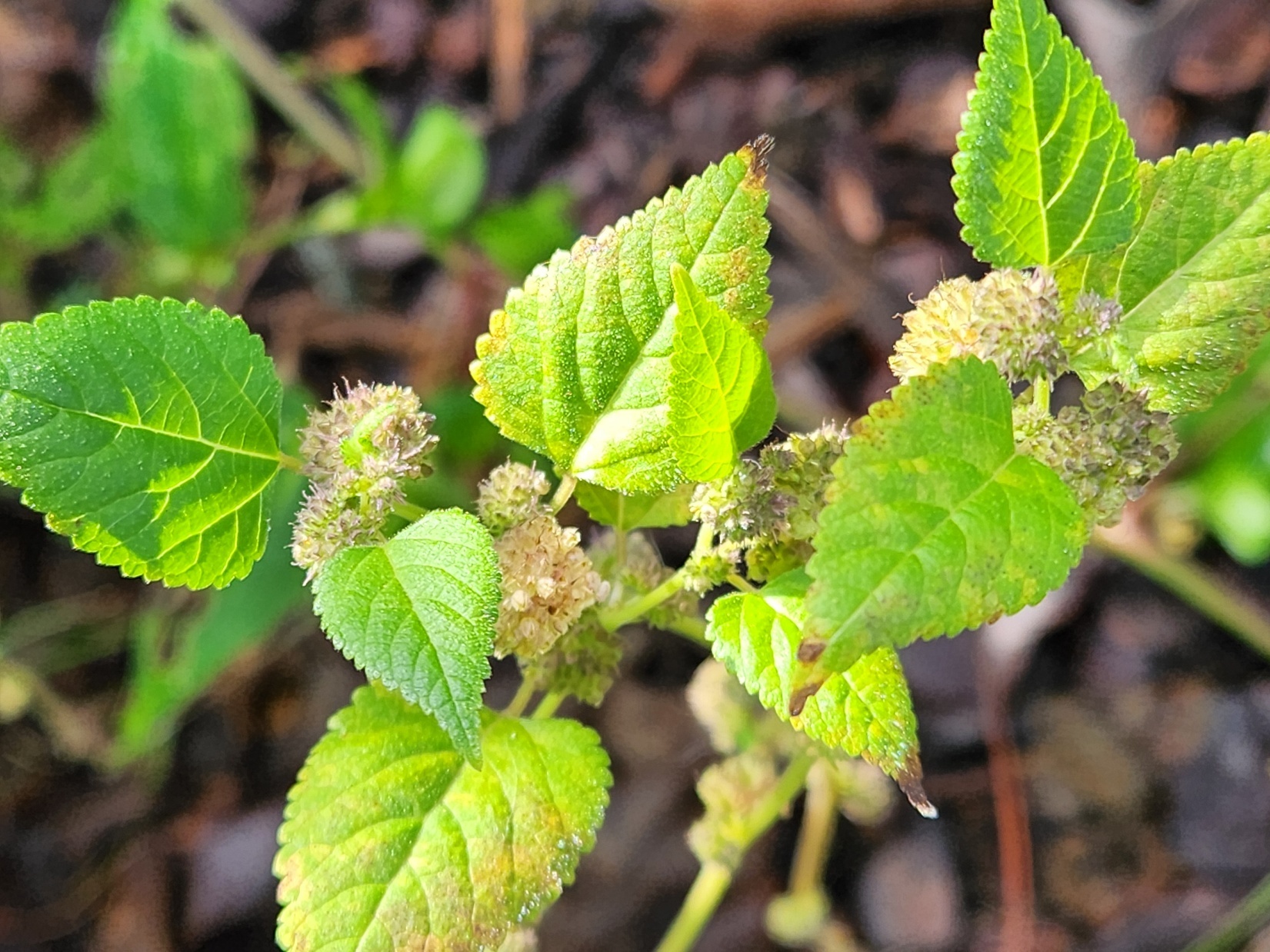
The cymes will turn brown as the flowers age and seeds mature.
Barbara H. Smith, ©2025 HGIC, Clemson Extension
How Mulberry Weed Spreads in the Garden
Unfortunately, mulberry weed can flower and produce seed at an early age from late spring through the fall, resulting in many generations of this noxious weed during the warm months.
The tiny white seeds, called achenes, are explosively ejected up to 4 feet away from the parent plant. Frost will kill the plants, but the seeds can remain viable in the soil for several years.
Where Mulberry Weed Grows Best
Mulberry weed grows best on bare ground in moist, shady areas. It can be found in greenhouses, nursery stock, landscapes, woodland areas, and shady fields.
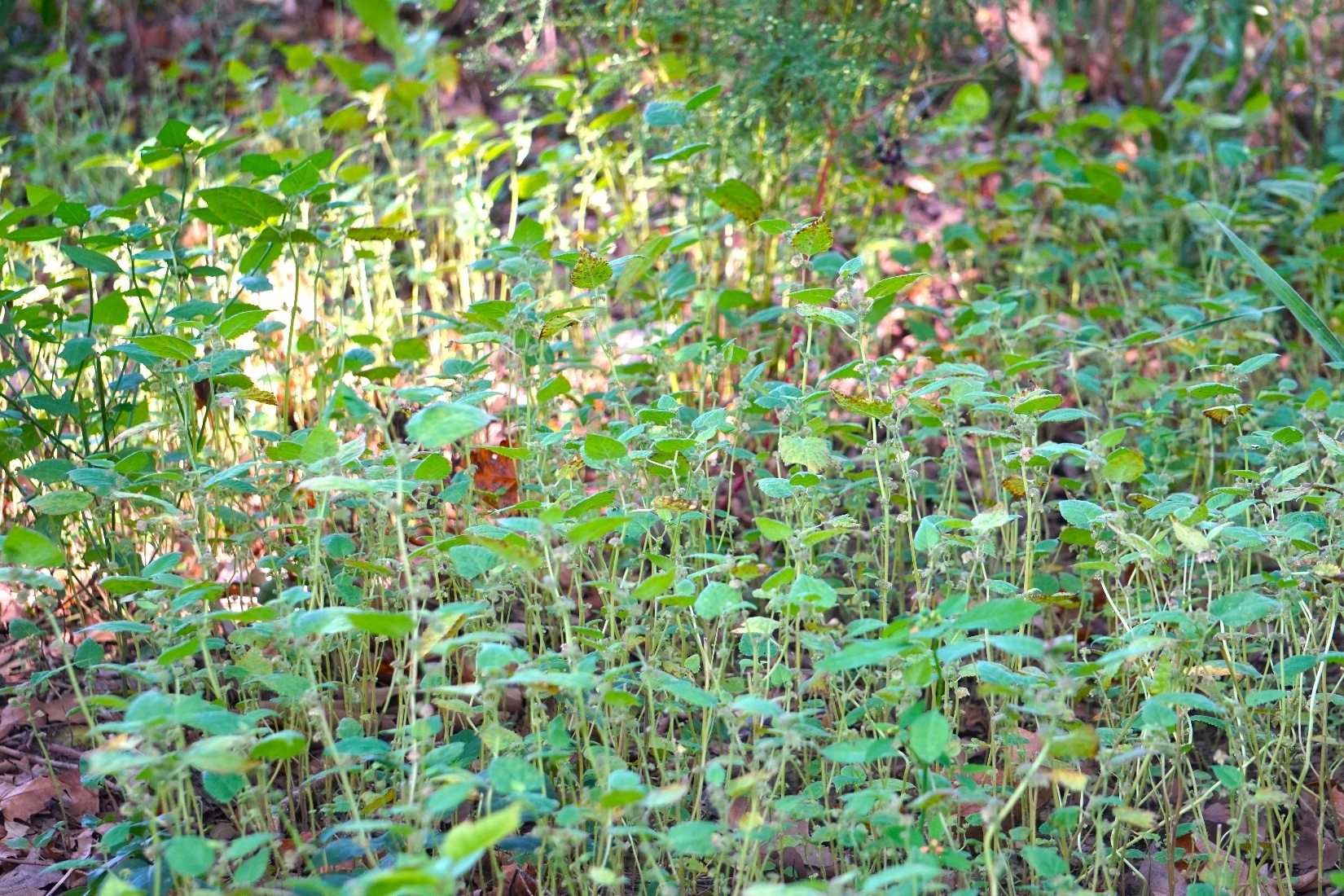
Mulberry weed grows best on bare ground in moist, shady areas.
Barbara H. Smith, ©2025 HGIC, Clemson Extension
How to Manage Mulberry Weed in the Garden
Effective Results Depend on Timing
Control is all about timing. Applying preemergent herbicides before seed germination or hand weeding before the plants flower and set seed is important.
Mulberry weed prefers to grow on bare ground, so applying a 2- to 3-inch layer of mulch can help suppress its growth and seed germination.
Mechanical Removal of Mulberry Weed
- Hand Pulling: Removing before the plants set seed is critical, but you must pull them up by the crown and roots.
- Important: If the stems are broken, the plants will develop multiple, shorter stems and produce more flowers and seeds.
- Safety Tip: If pulling after the seed has set, it’s a good idea to wear eye protection because the plant can forcefully eject the seed.
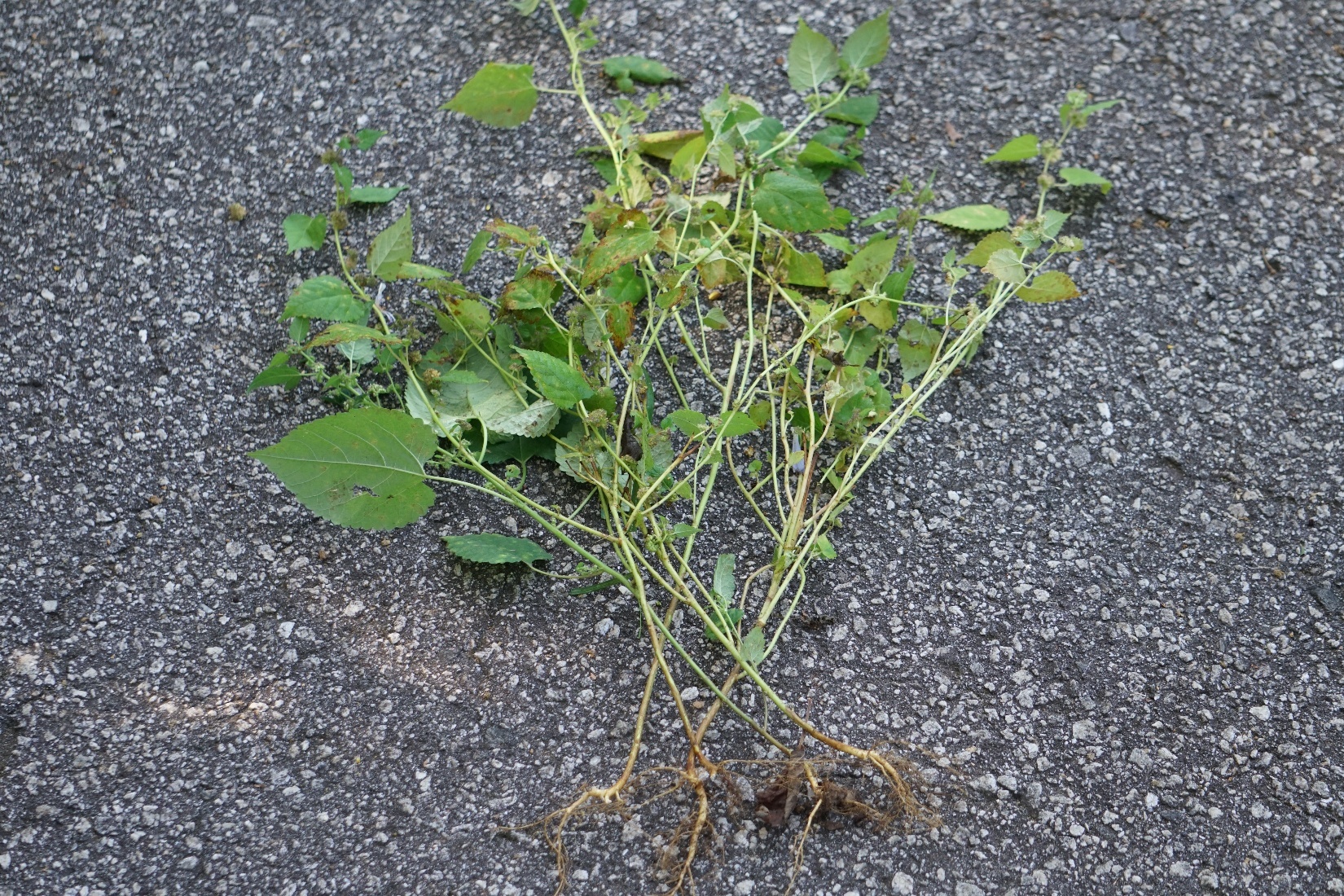
When hand weeding, it’s important to pull the plants up by the crown and roots.
Barbara H. Smith, ©2025 HGIC, Clemson Extension
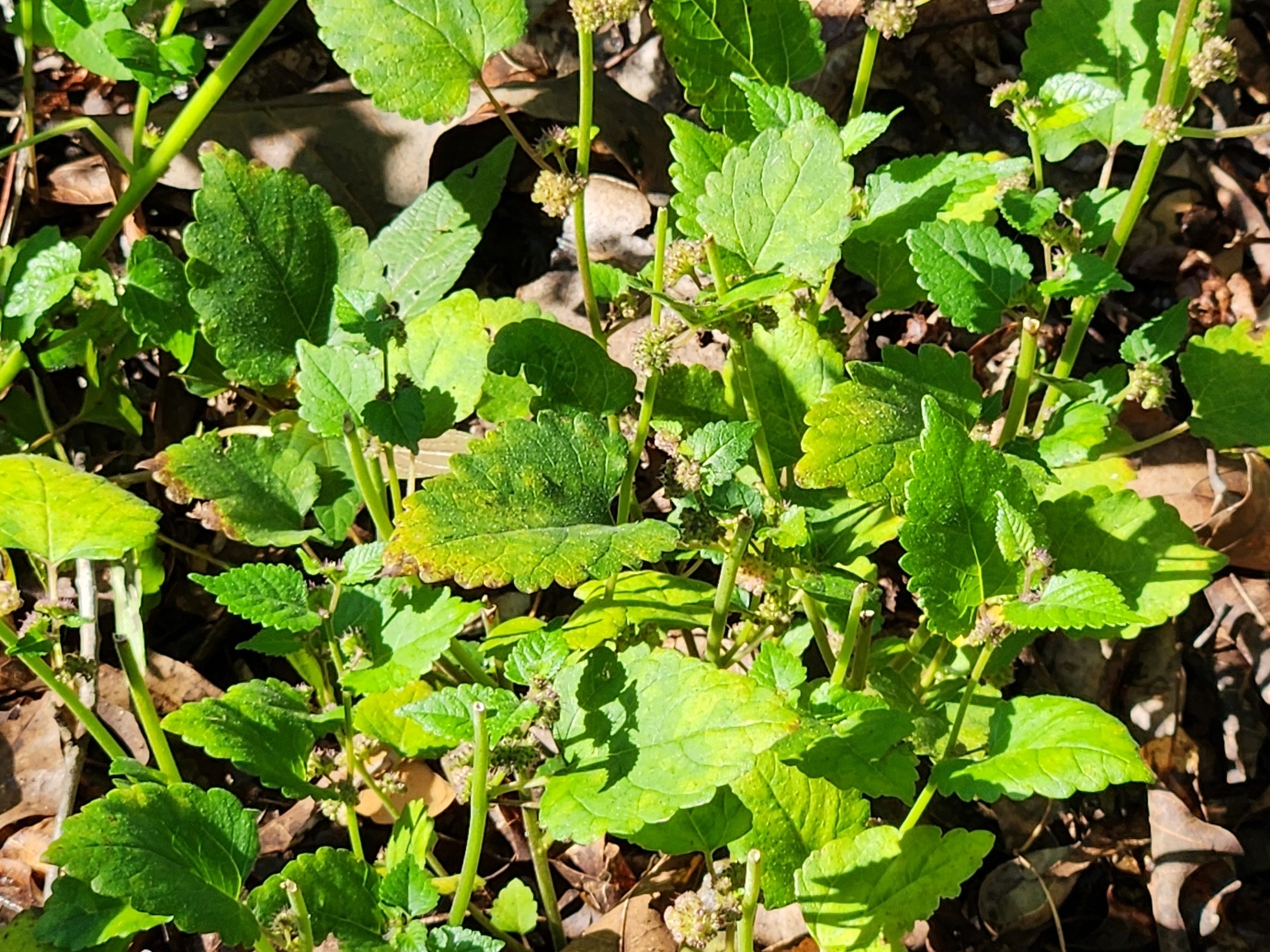
If the stems are broken, mulberry weed will develop multiple short stems.
Barbara H. Smith, ©2025 HGIC, Clemson Extension
Mowing is not a good option, as it causes the plants to branch and set more seed.
Do not compost the plants; compost pile temperatures do not get hot enough to kill the seed. Bag and dispose of the plants.
Chemical Control of Mulberry Weed
Preemergent Herbicides for Mulberry Weed
When applied in the early spring, preemergent herbicides will help keep the seeds from germinating.
- Snapshot (contains isoxaben and trifluralin): Apply to landscape beds only and will give about a 6-month control window. It cannot be applied to turfgrasses.
- Gallery (isoxaben): Can be used on cool-season or warm-season turfgrasses to control mulberry weed and will give a 6- to 8-month control.
- Surflan (oryzalin): Use only on warm-season turf grass types, as it will damage cool-season grass. It typically lasts from 2 to 8 months.
Apply according to the label directions.
Water thoroughly after application.
Keep pets and people out of the area until it has dried completely.
When used as directed, preemergent herbicides are safe to use around people and pets.
Postemergent Herbicides for Mulberry Weed
Postemergent herbicides can be used to control existing mulberry weed.
Glyphosate is a non-selective herbicide that will kill anything it touches, so it should only be applied in areas where you don’t have desirable plants.
Broad-leaf herbicides containing 2,4-D, dicamba, and MCPP are also effective for control, as long as they do not come in contact with desirable broad-leafed plant material.
Always read the label for mixing and application directions. REMEMBER THE LABEL IS THE LAW.
Additional Resources
NC State Extension Plant Toolbox: Fatoua villosa
Lewis Ginter Botanical Garden, Mulberry Weed: A “Dirty Dozen” Plant
Penn State Extension Mulberry