Why Native Bees Matter
Over the past few years, I’ve become fascinated by the hardworking native bees in the South Carolina Botanical Garden. Unlike honeybees, most native bees are solitary pollinators, perfectly adapted to our local plants.
- 70% nest underground.
- 30% nest in hollow stems or dead wood.
Because of their role in pollination, gardening for native bees is one of the most powerful ways we can support biodiversity right at home.
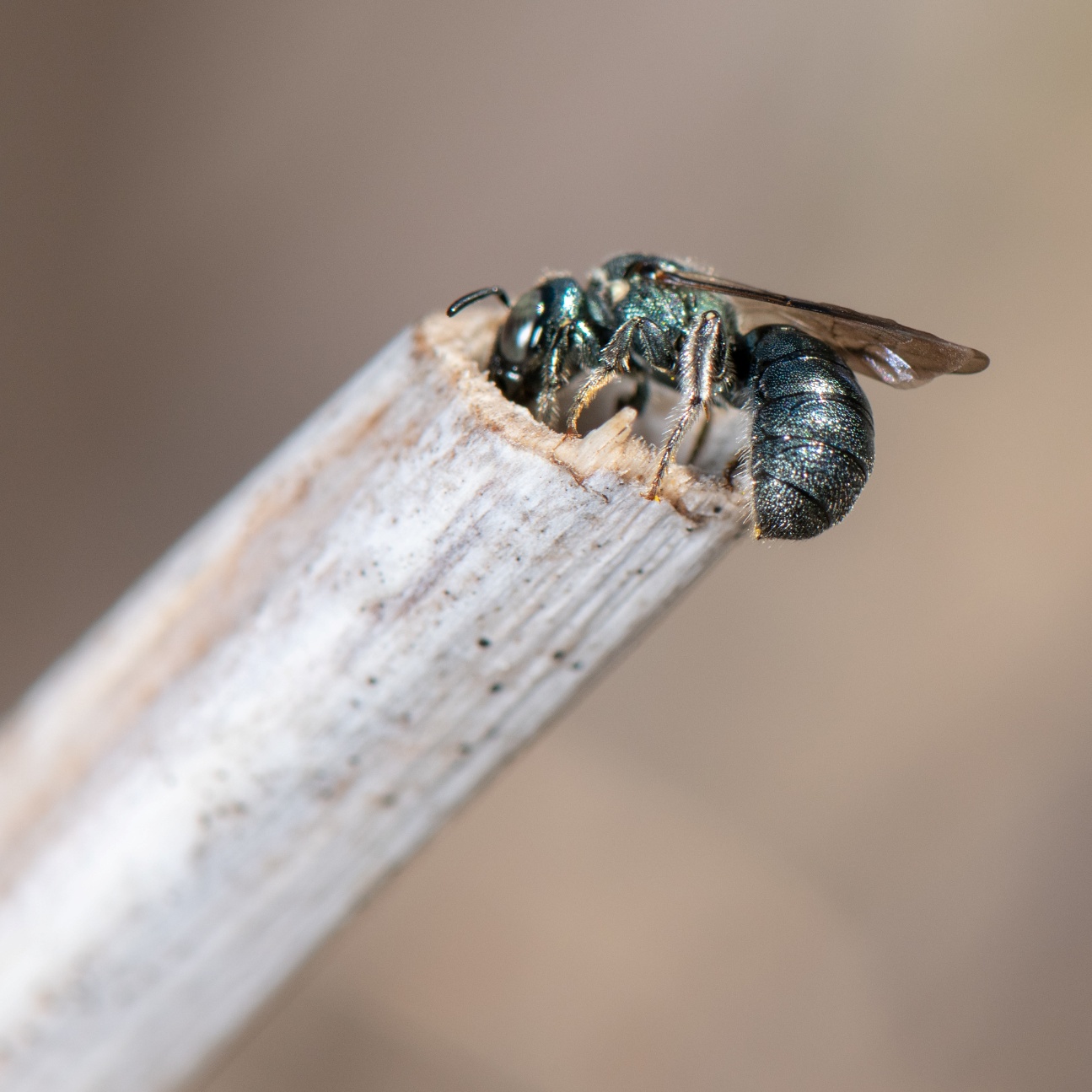
Small carpenter bee nesting in a sumac stem.
Photo Credit: ©Heather Holm
Stem-Nesting Bees: Don’t “Over-Tidy” in Fall
Fall often brings the urge to tidy up gardens. Many people cut back all their perennial stems to the ground—but this removes vital winter habitat for stem-nesting bees.
Instead of clearing everything, try these eco-friendly tips:
- Leave dead stems standing through winter.
- Allow seed heads to remain for birds and small mammals.
- Create “bee hotels” using bundled hollow stems or drilled logs.
The Xerces Society for Invertebrate Conservation offers excellent step-by-step guides on leaving stems for bees.

Goldfinch feeding on echinacea seeds.
Photo Credit: ©Gene Rochester
Ground-Nesting Bees: Gentle Neighbors in the Soil
Last year, I discovered a small colony of ground-nesting solitary bees in my own garden. Their nesting site—about six feet by three feet—was simply bare red clay soil.
Instead of covering the area with mulch, I left it open. Why? Because these bees are:
- Mellow and non-aggressive (sometimes called “tickle bees”).
- Efficient early pollinators, especially active in spring.
By leaving patches of unmulched, bare soil, you can invite these gentle pollinators to return year after year.
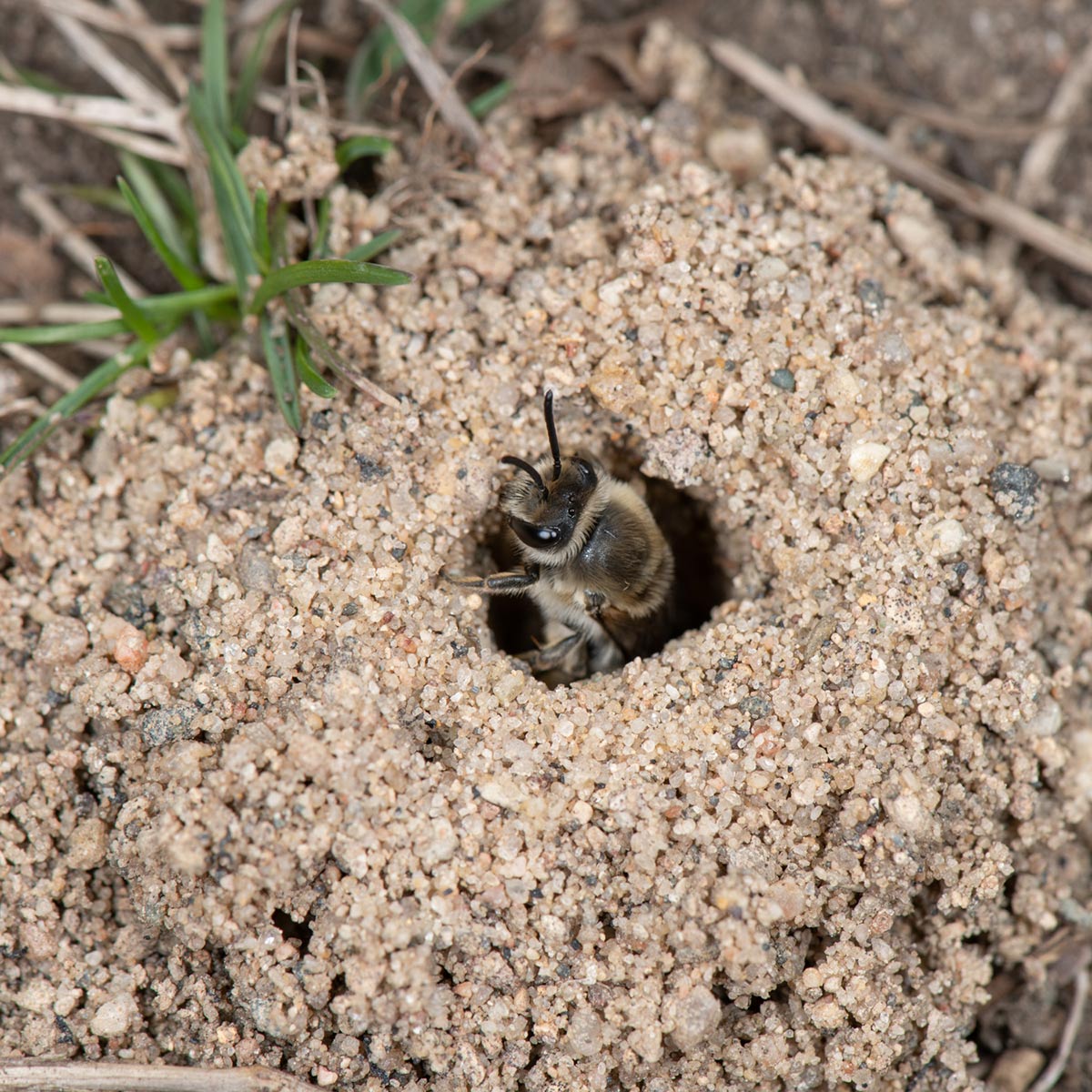
Polyester bees pollinate red maple, willow, and apple trees, and they need access to bare soil to dig out their nests. They get their common name from the cellophane-like lining (made of polyester) that they add to the inner chambers where they lay their eggs.
Photo Credit: ©Heather Holm
Simple Ways to Support Native Bees
Here are a few easy steps anyone can take to create a bee-friendly garden:
- Leave some bare soil for ground nesters.
- Keep stems standing over winter.
- Plant native flowers with staggered bloom times.
- Avoid pesticides that harm pollinators.
- Provide water in shallow dishes with pebbles.
Learn more at The Bee Conservancy: 10 Ways to Save the Bees.
Final Buzz
Native bees are essential, diverse, and surprisingly easy to support. By adjusting how we garden—leaving stems, keeping soil patches bare, and planting native blooms—we can provide thriving habitats for these vital pollinators.
Next time you think about tidying your garden, pause and remember that what looks “messy” to us might be prime real estate for a native bee.
Interested in Learning More?
Sign up for an in-person or virtual session about Gardening for North American Native Bees on November 18th.