Why Volunteer Seedlings Should Be Controlled
Trees, shrubs, and vines can produce large amounts of seeds. The seeds fall to the ground beneath the plant or are dispersed by birds and other wildlife into landscaped yards. The resulting seedlings are known as volunteers. Both native and non-native species, including invasive ones, can produce volunteer plants. Volunteers often grow in parts of the yard where they were not intended to be planted.
Make removing volunteers a part of your weed management plan in the garden. Fall is a good time to address them.

The invasive shrub, nandina (Nandina domestica), can be spread by wildlife that consume the berries.
Barbara H. Smith, ©2019 HGIC, Clemson Extension
How to Control Volunteer Seedlings in the Garden
Basic Removal Methods
- Ideally, hand-pull seedlings when they are small.
- Use a shovel or other tool to dig up the plants, including the roots.
- Spray the foliage with a weed killer during the growing season.
- Use the cut stump method to help control seedlings that are overlooked when they are small.
How to Use the Cut Stump Herbicide Removal Method
It is a two-step technique used in forestry whereby undesired woody plants are cut low to the ground. Immediately after the cut is made, the stump is sprayed with herbicide. Treating the stump in this way greatly stops or reduces new shoots from sprouting from the base.
This method can also be applied in home gardens. It can be done year-round.
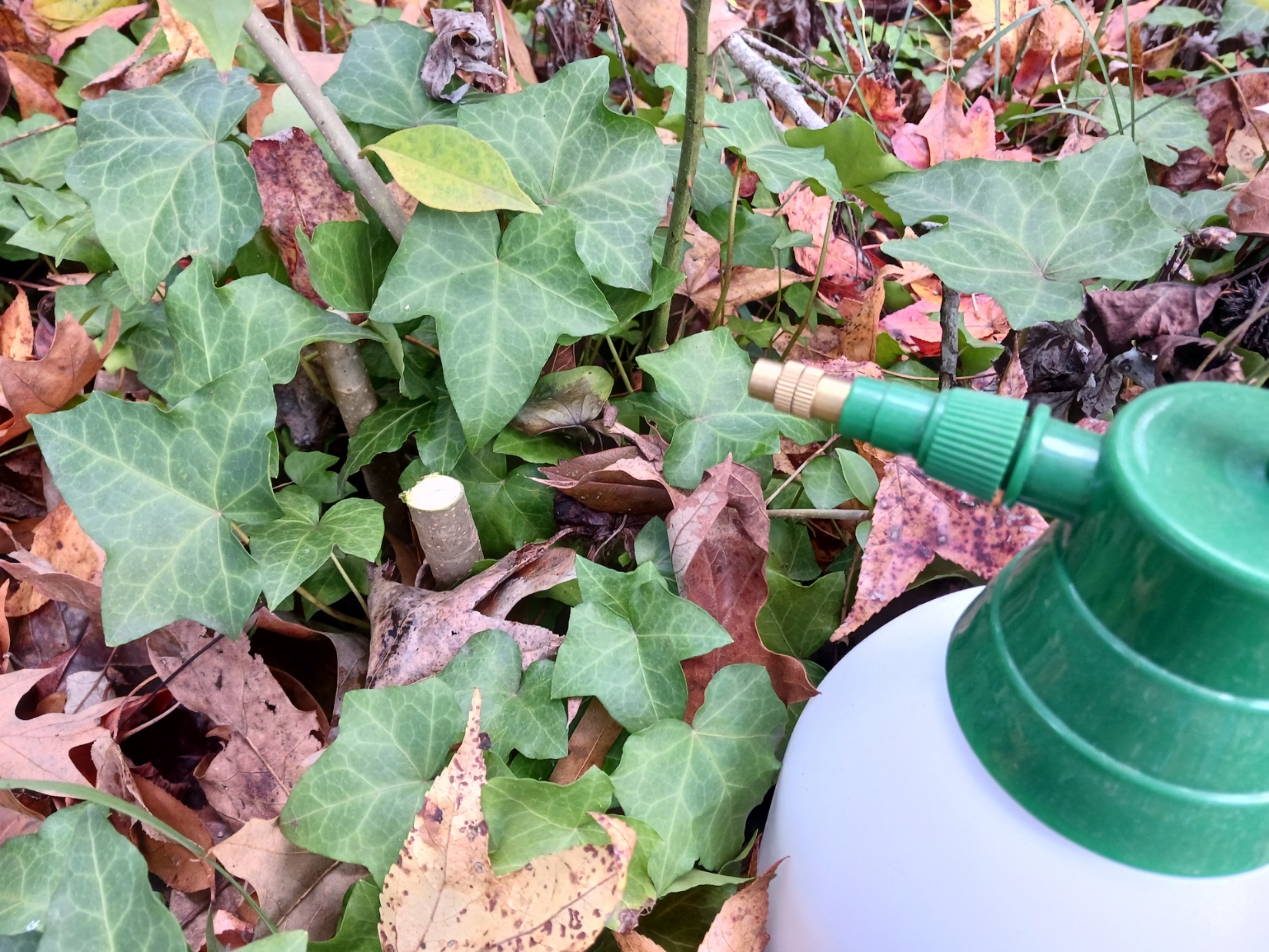
This volunteer plant was cut low to the ground, then sprayed with an herbicide.
Ginger E. Long, ©2025 HGIC, Clemson Extension
Which Plants Can Be Controlled with the Cut Stump Method?
Tree Volunteers
Tree volunteers such as oak (Quercus sp.), tulip poplar (Liriodendron tulipifera), sweet gum (Liquidambar styraciflua), mulberry (Morus sp.), tree of heaven (Ailanthus altissima), etc., can seed prolifically.
Use the cut stump method on these to prevent disturbing the soil in landscape beds.
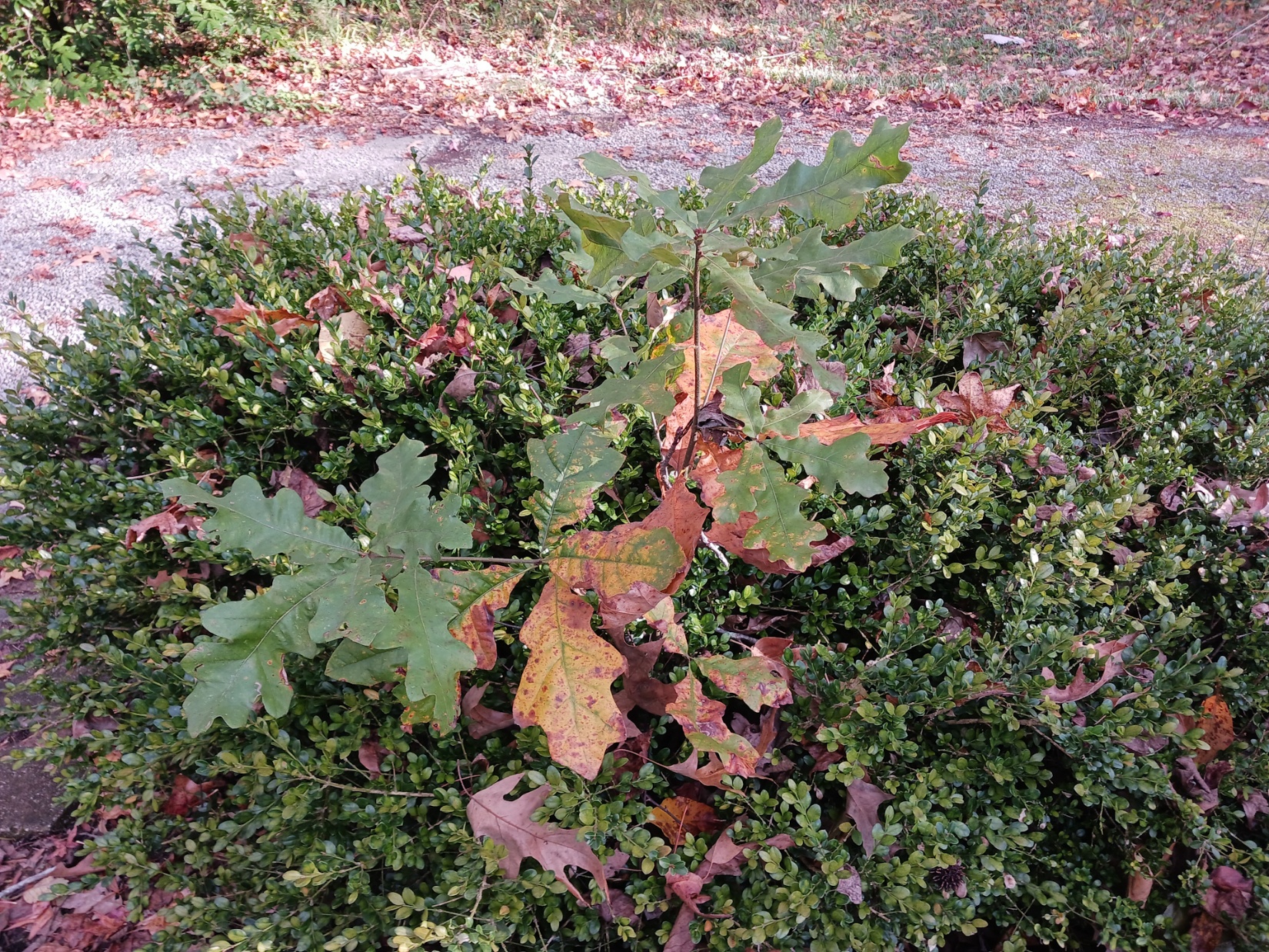
This oak seedling has grown through a grouping of boxwood (Buxus sp.). When an unwanted seedling grows very close to a desirable plant and cannot be dug up without harming the latter, use the cut stump method on the undesirable plant.
Ginger E. Long, ©2024 HGIC, Clemson Extension
Shrub Volunteers
Shrub volunteers, especially invasive species such as privet (Ligustrum sp.), holly (Ilex sp.), Russian olive (Elaeagnus sp.), and nandina (Nandina domestica), can be controlled with the cut stump method.
Their evergreen foliage is easier to spot in the fall when other plants have gone dormant. For plants that are not evergreen, be sure to mark them before their leaves fall. Aggressive native shrubs can also be controlled with this method.
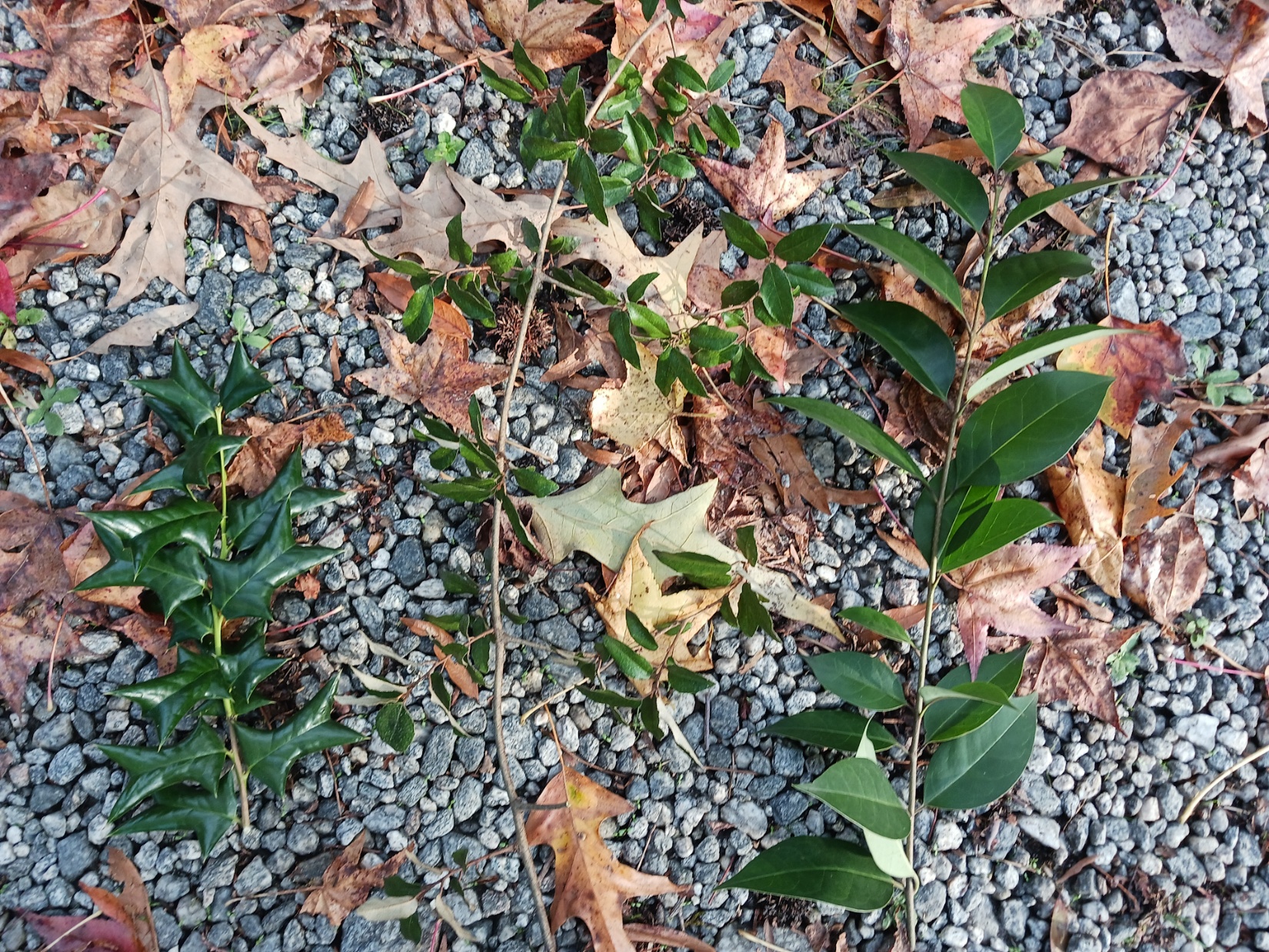
Examples of unwanted shrub seedlings, from left to right, are holly (Ilex sp.), Russian Olive (Elaeagnus sp.), and Japanese ligustrum (Ligustrum sp.).
Ginger E. Long, ©2025 HGIC, Clemson Extension
Vine Volunteers
Vines such as English ivy (Hedera helix), Virginia creeper (Parthenocissus quinquefolia), poison ivy (Toxicodendron radicans), trumpet vine (Campsis radicans), wisteria (Wisteria sp.), sweet autumn clematis (Clematis terniflora), and Carolina jessamine (Gelsimium sempervirens) can be controlled using this method when they have stems over ½ inch in diameter.
Tools Needed for the Cut Stump Method
- Cutting Tools: Hand pruners, loppers, pruning saws, and chainsaws can be used to cut down unwanted plants.
- Application Tools: A sprayer or spray bottle should be used to apply herbicide.
- Safety Gear: Personal Protective Equipment (PPE), including gloves, eye protection, long sleeves, footwear, and other necessary items, should be worn according to the label directions.
- Optional: There are dyes available to mark which stumps have been treated. These can often be found in the herbicide aisle of a store’s gardening section.
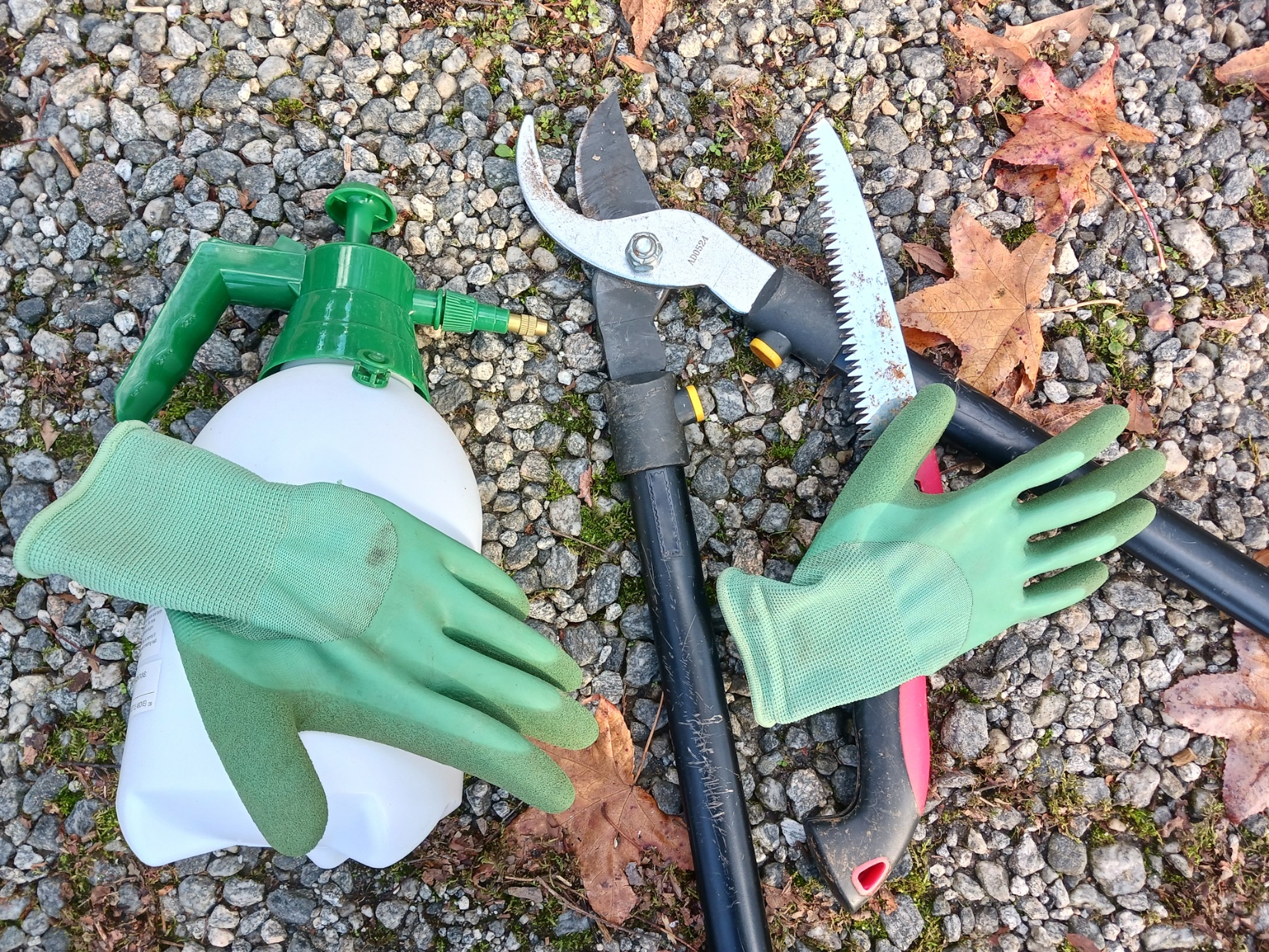
Loppers and pruning saws can be used to cut down unwanted seedlings. Once cut, the stem should be sprayed immediately with herbicide using a spray bottle or sprayer.
Ginger E. Long, ©2024 HGIC, Clemson Extension
Herbicides for Cut Stump Treatment
Look for herbicides labeled as brush and stump killers with the following active ingredients.
- Triclopyr
- Glyphosate
For a list of products with these active ingredients, refer to Table 1 in HGIC 2327, English Ivy Control.
CAUTION: Always read the label carefully and follow the instructions.
The label is the law.