A Tiny Discovery Beneath a Leaf
In summer, I spend much more time outside running several children’s camps in the South Carolina Botanical Garden. In our first camp of the season, the campers’ young, sharp eyes spotted this treasure, truly a beautiful, petite work of art. Found on the shady underside of a black-eyed Susan leaf, this nest is around half an inch in diameter. We thought it was a nest, but whose?
The artist, I discovered, is a female potter wasp, a member of the Eumenes wasp family. The Fraternal Potter Wasp (Eumenes fraternus) may be the most likely candidate since it is widespread in North America and is known for constructing this type of nest. The nectar-feeding adult is small, less than an inch in length, and has a very delicate appearance. They are shiny black with a scattering of white markings and have a distinctive, elongated abdominal segment. We haven’t noticed one yet, but we will pay attention now.
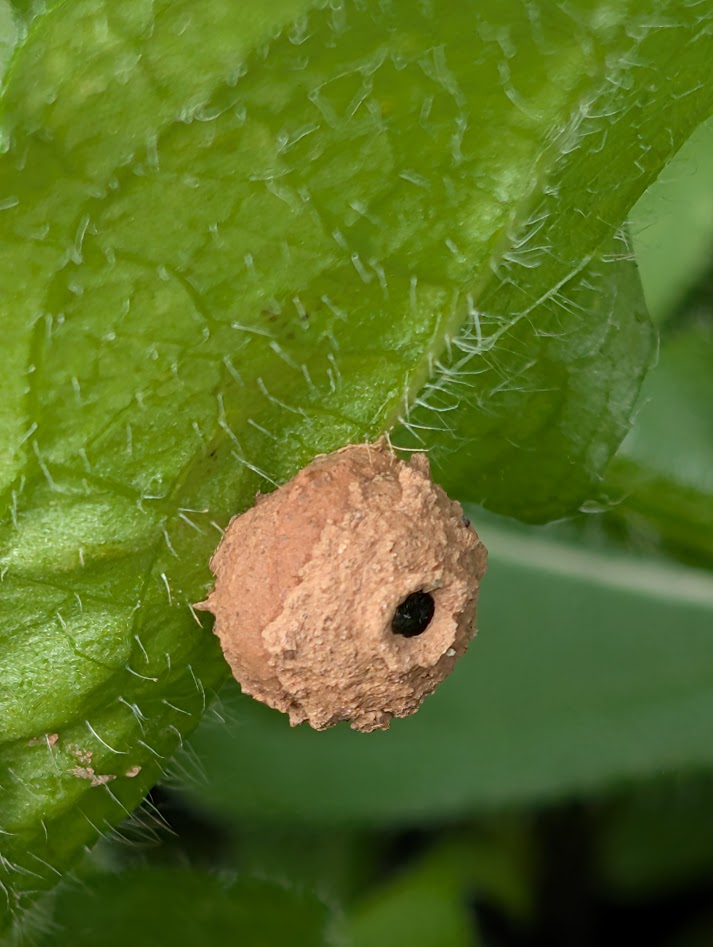
June 18, Fraternal Potter Wasp (Eumenes fraternus) attached to the reverse of a black-eyed Susan with the pot still open.
Sue Watts, ©2026, Clemson Extension
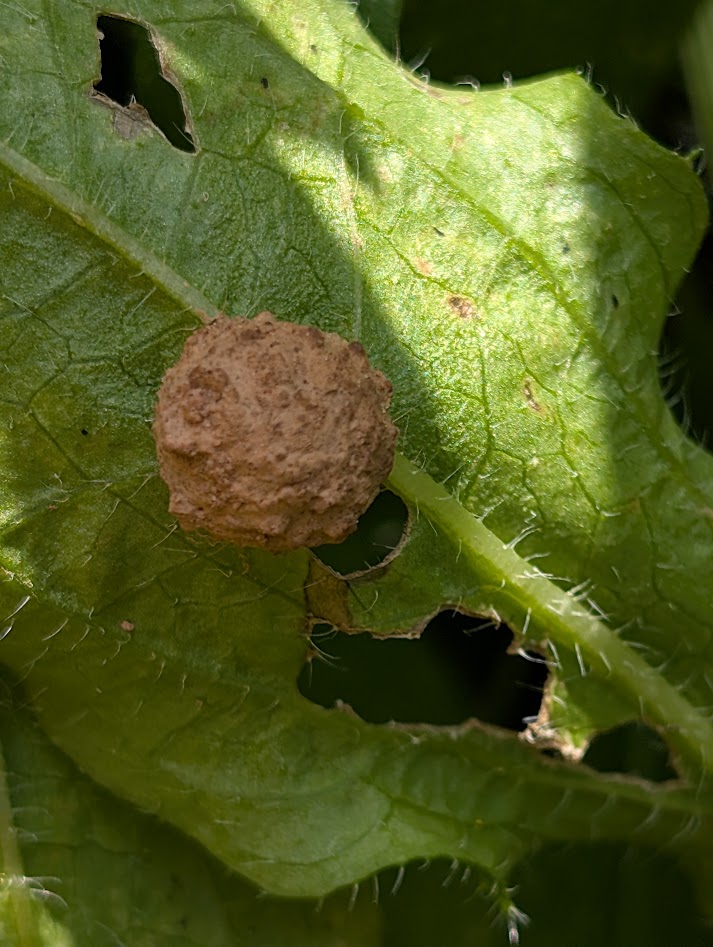
July 9, Fraternal Potter Wasp (Eumenes fraternus) attached to the reverse of a black-eyed Susan with the pot still open. The leaf has sustained significant insect damage.
Sue Watts, ©2026, Clemson Extension
How Does a Potter Wasp Build Its Nest?
This small nest was probably constructed over the course of one to two hours and involved many trips for supplies. The female gathers water and mixes it with soil using her mandibles and adds her saliva as an adhesive, then she fashions the urn. Once finished, she lays a single egg and provisions it with about a dozen paralyzed caterpillars (often inchworms) or other soft-bodied insects. Once the egg hatches, the larva begins to feast on the paralyzed banquet provided by the mother. After about three weeks of molting and finally pupating, an adult emerges from the nest by chewing a round hole in the side.
The Potter Wasp Life Cycle
The potter wasp repeats this nest-building process up to twenty times over her lifespan of a few short months. Potter wasps are active in South Carolina from March to November, with between two and three generations produced over the course of the year. The final generation overwinters inside the nest as a pupa.
Why Gardeners Should Appreciate Potter Wasps
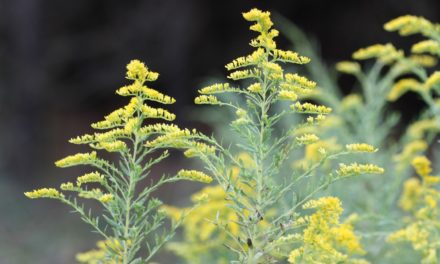
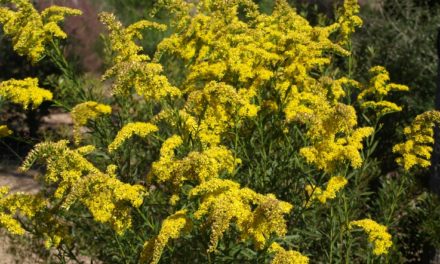
Potter wasps are solitary creatures, and as such, are rarely provoked enough to sting. The caterpillar control service they provide makes them valuable to gardeners. So, all in all, these are beneficial creatures to have in the garden. According to entomologist Heather Holm, you can encourage potter wasps to make your garden home by planting their favorite nectar plants to feed the adults. These include fleabane (Erigeron), mountain mint (Pycnanthemum), boneset (Eupatorium), goldenrod (Solidago), rattlesnake master (Eryngium yuccifolium) and Indian plantain (Arnoglossum).
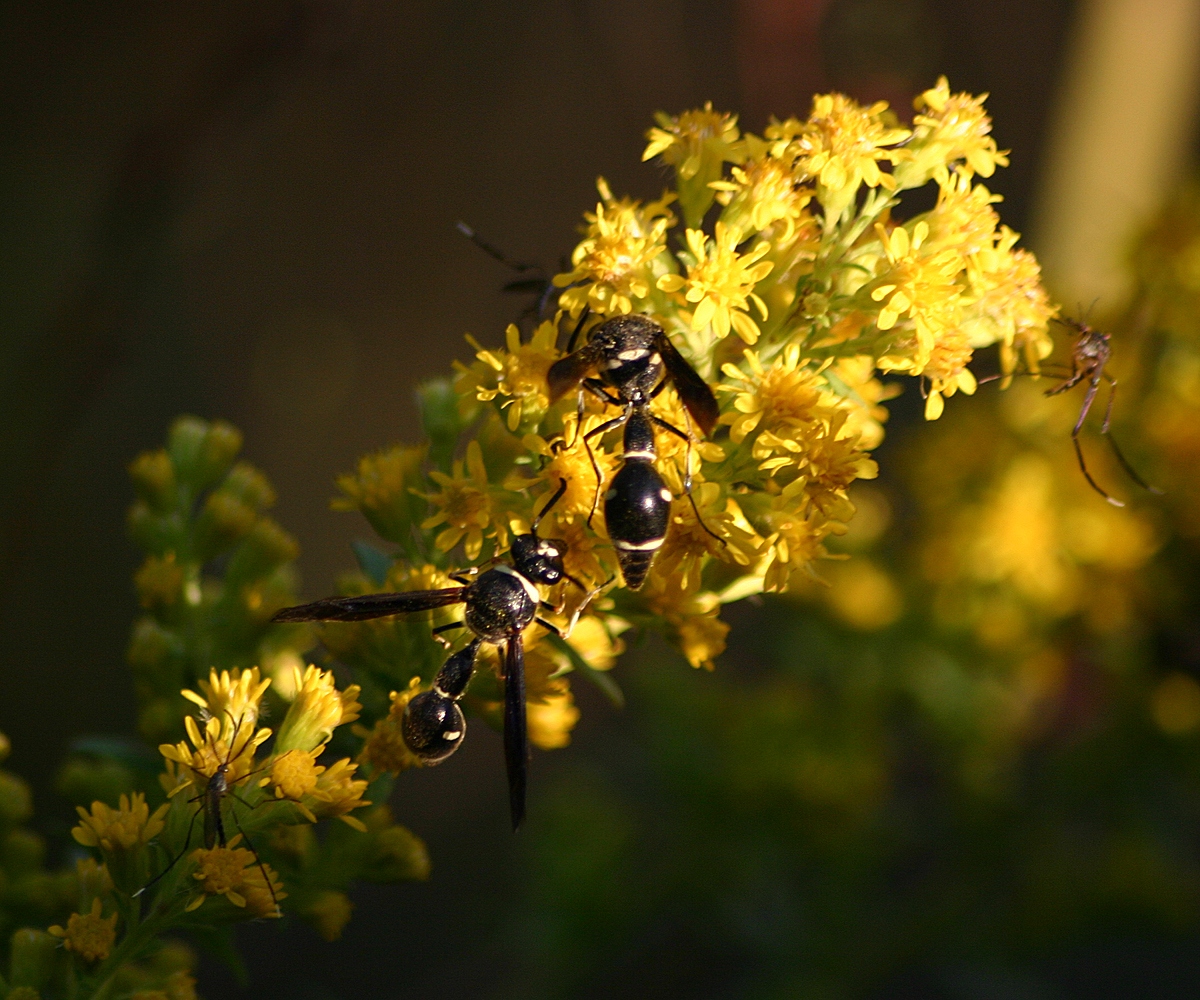
Adults feeding on goldenrod.
CC BY-SA 3.0, By Pollinator at the English-language Wikipedia
https://commons.wikimedia.org/w/index.php?curid=60568626
Watching Nature at Work
When we found this nest on June 18, the center hole into which the wasp lays her egg was still open. I guess that the female was out gathering prey to feed her offspring. When I returned to the pot on July 9, the center hole was filled in. I wonder when the adult will emerge. I’ll continue watching it.