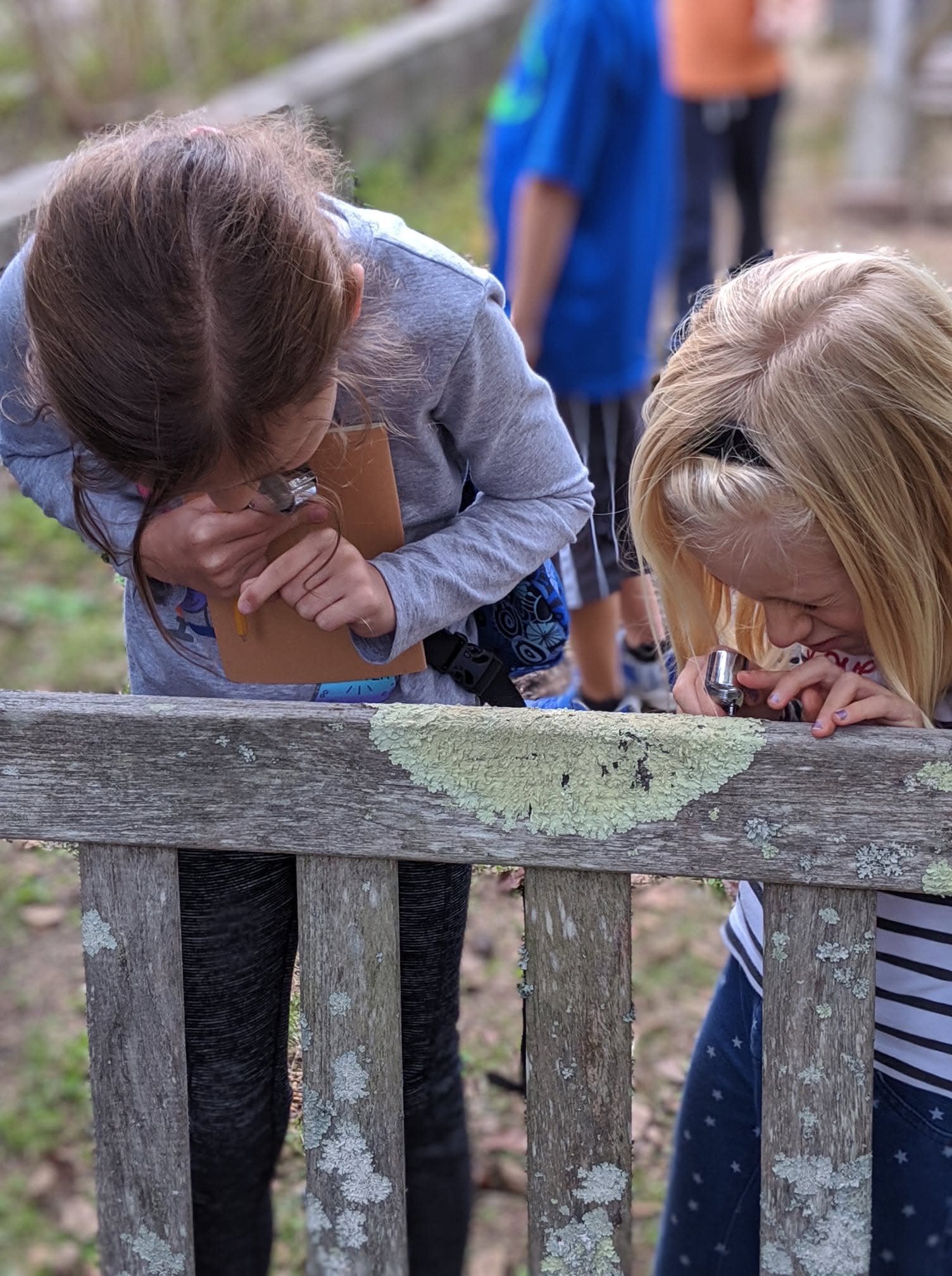
Junior Naturalists examining lichen in the South Carolina Botanical Garden
Sue Watts, ©2026, ©2026, SC Botanical Garden, Clemson University
Look Closely: What are Lichens?
Look closely at the splotches and blotches on trees, rocks, gravestones and even metal, and you may discover a magical world of fairy turrets, tiny pixie cups, crenellations and wispy filaments. This is the remarkable world of lichen. Lichens are a constant presence in the natural world, yet we rarely pause to appreciate their beauty, complexity, and environmental importance. Lichens are found all over the world, even in Antarctica.
How Scientific Knowledge About Lichens has Evolved
Scientific knowledge about lichens is relatively recent. Our understanding has evolved alongside innovations in microscopy and chemical analysis, and even the basic definition of a lichen continues to be revised as new information emerges. Until recently, lichens were generally described as a partnership between a fungus (which provides structure and helps absorb water and minerals) and a photosynthetic partner, such as an alga or cyanobacterium, which produces food. In 2016, however, this definition was challenged when a scientist identified a third major partner in many lichens: a single-celled yeast. The yeast was found to influence the lichen’s form and may help explain differences among species. Research continues into this fascinating relationship, and who knows what else may be discovered?
Lichens are Indicators for Air Quality
Lichens are an indicator species, a canary in the coal mine for air pollution. Since they have no roots, they absorb water and nutrients directly from the atmosphere. As a result, they can respond quickly to air pollutants.
Some lichens are more tolerant of nitrogen oxides, which are produced mainly by traffic. The presence of these tolerant species, together with the absence of more sensitive ones, can indicate poor air quality. In general, fewer lichens and lower species diversity may suggest greater pollution. Lichens can also help improve air quality by trapping particulates and pollutants.
Hunting for Lichens
Hunting for lichens is a wonderful reason to get outside and explore your environment. How many can you find? Consider photographing lichens you find and uploading the images to iNaturalist to the “Lichens of South Carolina” project. You can also find excellent images on the Lichens of South Carolina project on iNaturalist.
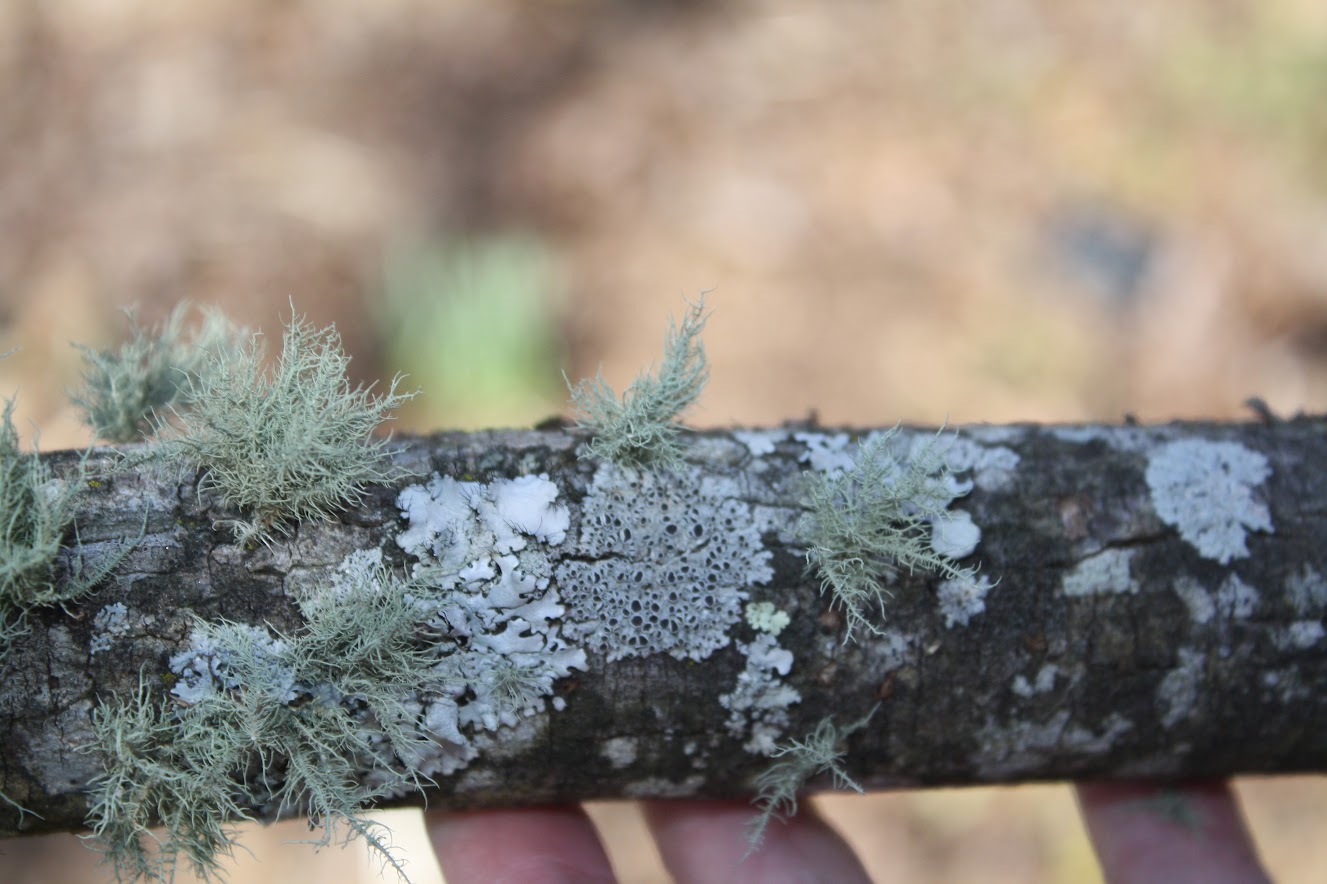
A selection of crustose, foliose and fruticose lichen on a tree branch
Sue Watts, ©2026, ©2026, SC Botanical Garden, Clemson University
Three Major Lichen Groups
There are approximately 20,000 lichen species worldwide divided into three major groups: crustose, foliose and fruticose.
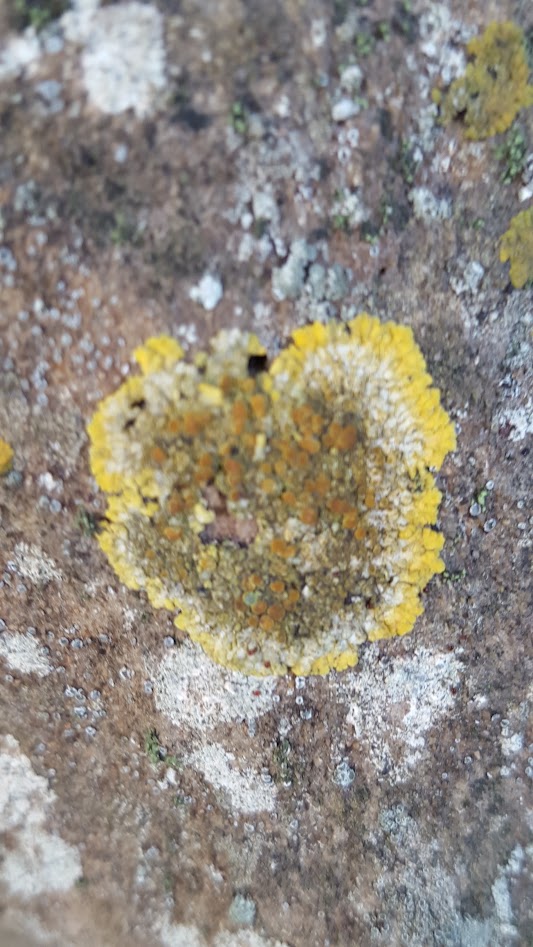
Yellow crustose lichen forming a thin patch on a rock
Sue Watts, ©2026, ©2026, SC Botanical Garden, Clemson University
Crustose Lichens
These lichens form a thin, crust-like layer that tightly binds to surfaces like rocks or tree bark. They cannot be removed without damaging the surface.
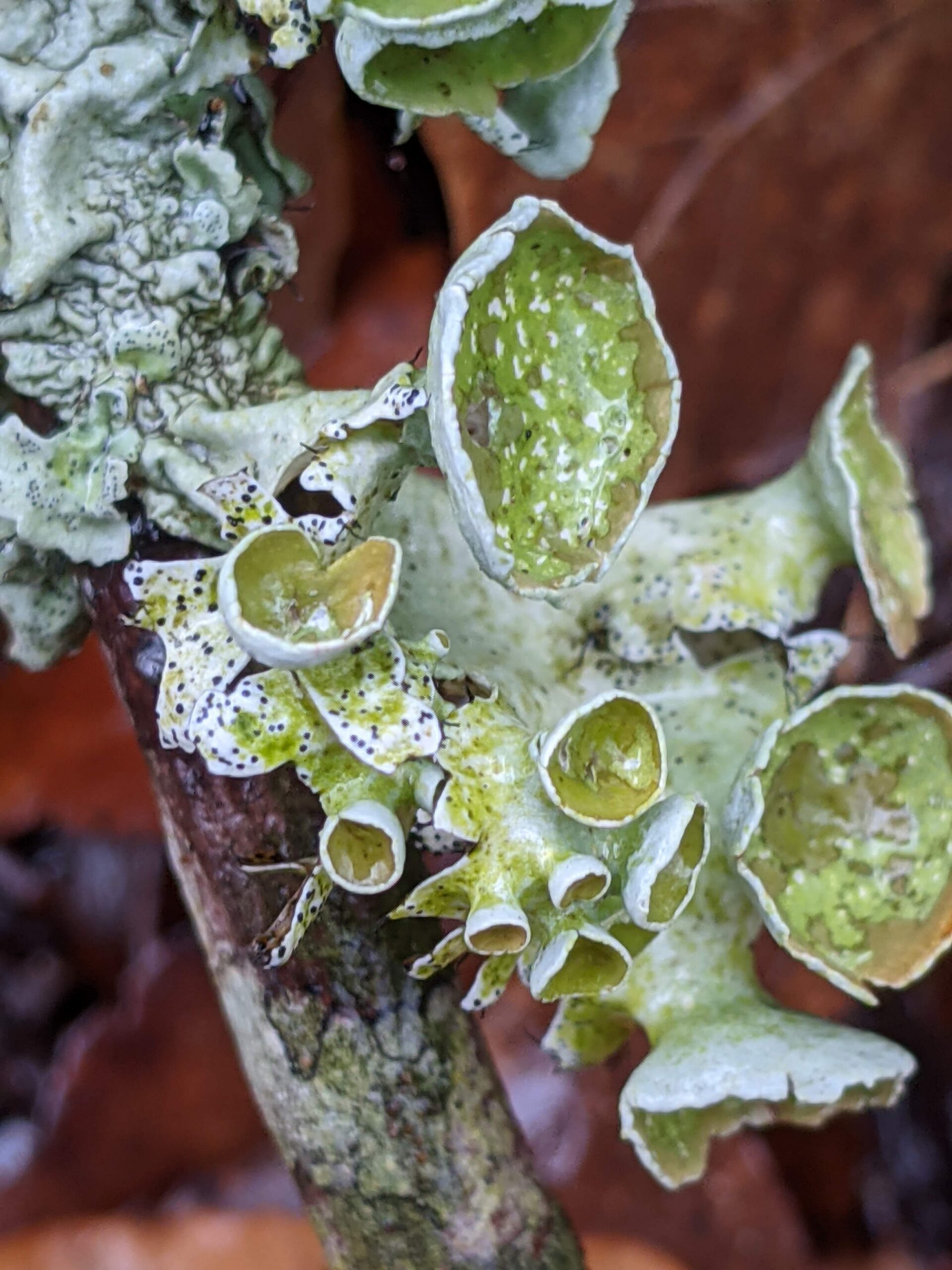
Foliose lichen with broad, leaf-like lobes and brownish reproductive structures on tree bark
Sue Watts, ©2026, ©2026, SC Botanical Garden, Clemson University
Foliose Lichens
These feature flat, leaf-like lobes with distinct top and bottom sides. They attach loosely to surfaces by tiny root-like structures called rhizines.
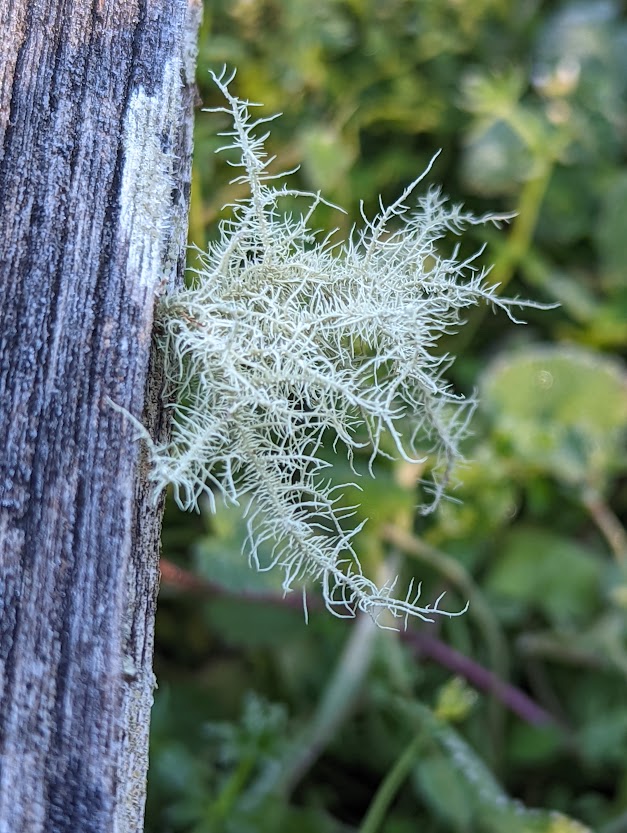
Pale green fruticose lichen with upright, branching growth attached to a wooden post
Sue Watts, ©2026, ©2026, SC Botanical Garden, Clemson University
Fruticose Lichens
These grow upright or hang down like miniature shrubs, hair, or coral. They have a 3D structure without a clear top or bottom surface.
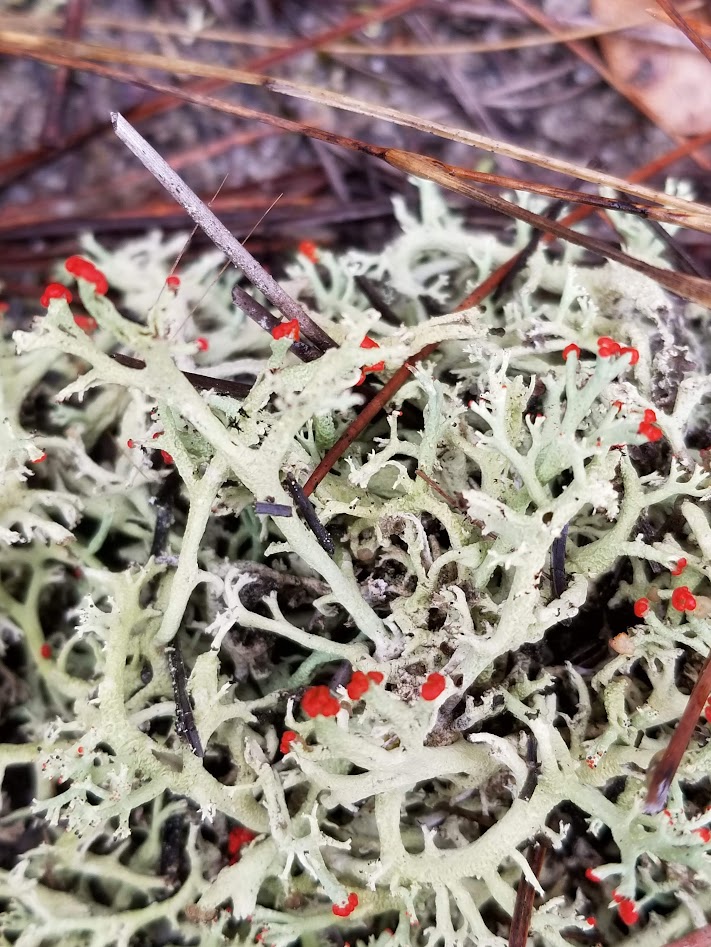
My favorite lichen: British soldiers, Cladonia cristatella
Sue Watts, ©2026, ©2026, SC Botanical Garden, Clemson University