Why a Healthy Landscape Is More Than Just Plants
As you venture into your landscape this Spring and Summer, you know you’re not alone. Like the characters from the Wizard of Oz anxiously treading into the dark forest, you may be chanting “Aphids and borers, and mites, oh my!”
Know that a healthy landscape is part and parcel of a vibrant—and violent—ecosystem that supports a complex social stratum of critters.
Unfortunately, we tend to focus on the pests, which only comprise two percent of the nearly 1 million species of insects. With the right plant choices and with proper care, we can sustain a menagerie of helpful insects, support wildlife, and keep pests in check.
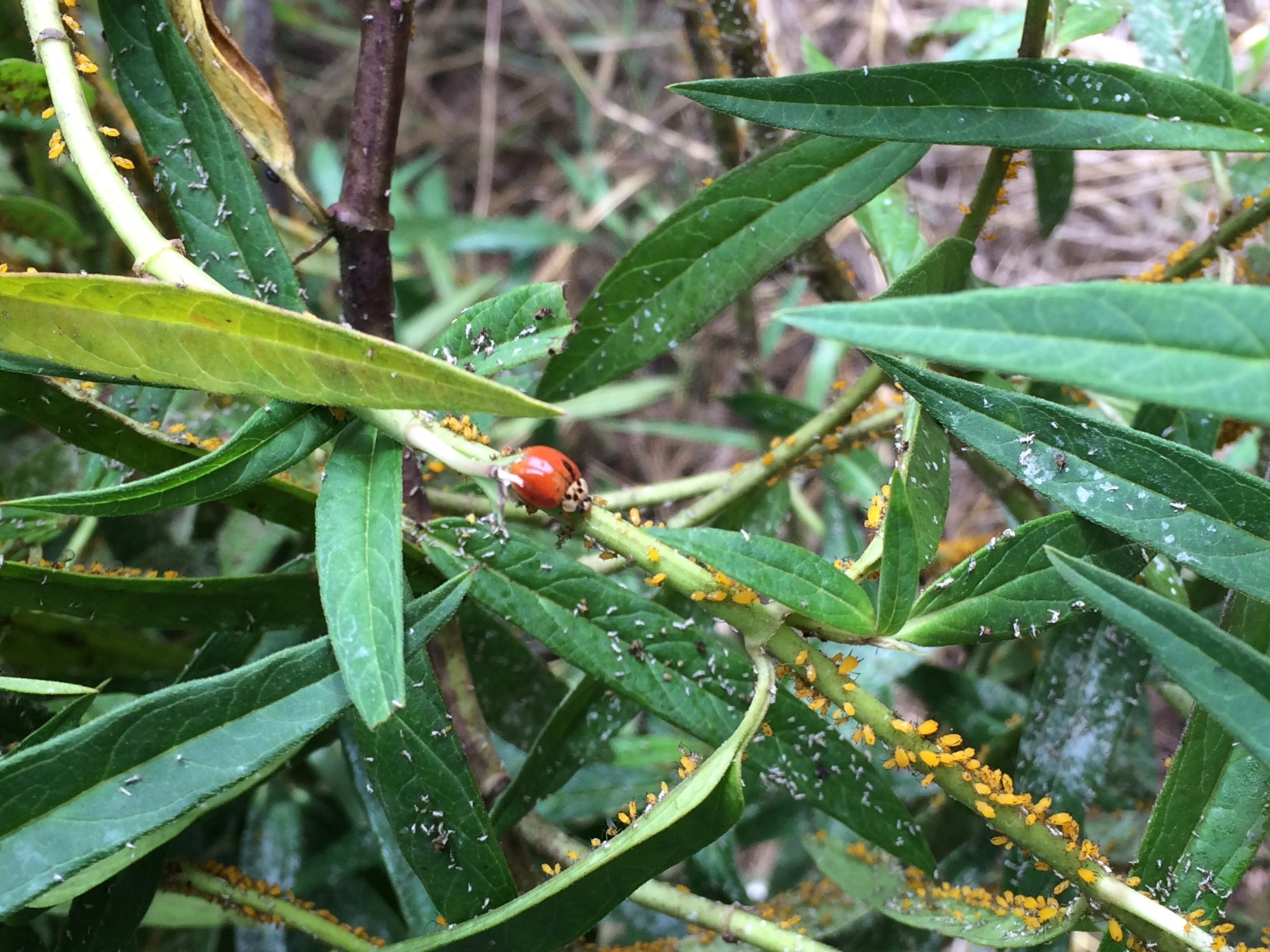
An adult lady beetle munches on oleander aphids (Aphis nerii) infesting a common milkweed (Asclepias syriaca). Although they cause unsightly damage, they rarely kill established common milkweeds (Asclepias syriaca).
Robert F Polomski, ©2026, Clemson Extension
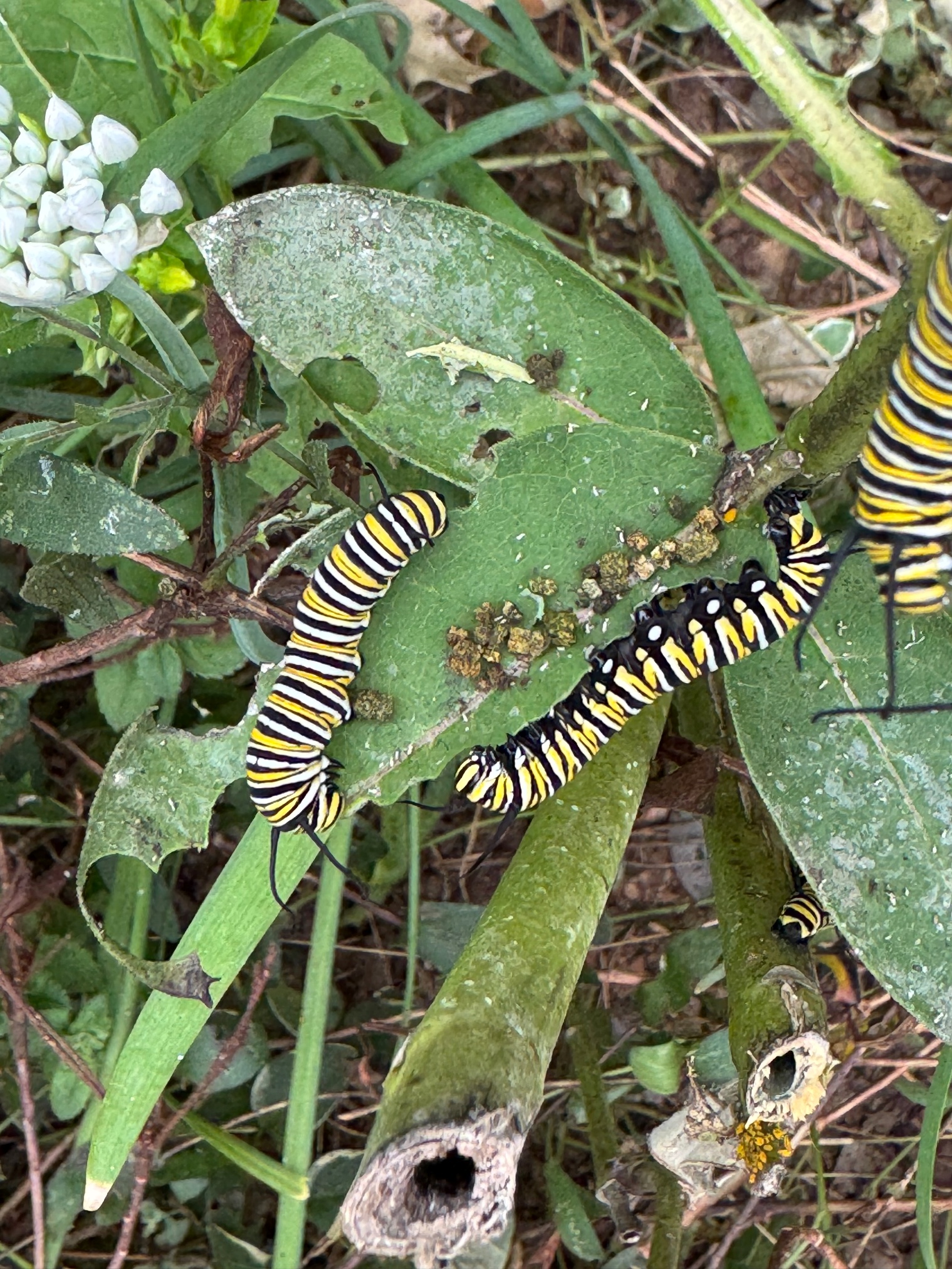
Monarch caterpillars feed on common milkweed (Asclepias syriaca) as adult lady beetles consume oleander aphids (Aphis nerii).
Robert F Polomski, ©2026, Clemson Extension
How to Attract Beneficial Insects with Plant Selection
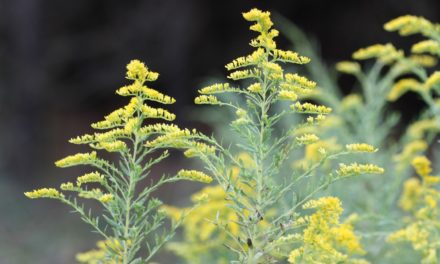
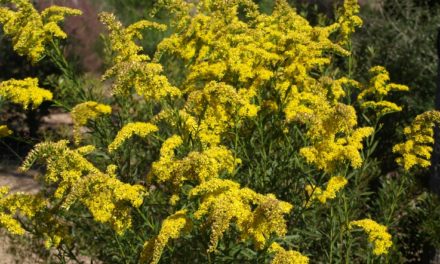
Create and maintain a landscape that attracts beneficial insects. Add native plants to your beds and borders. Native plants have co-evolved with insects and developed complex relationships with them.
Also include non-native, noninvasive plants that also provide pollen, nectar, and shelter.
For more information on beneficial insects, seeHGIC 2820, Natural Enemies: Predators and Parasitoids; HGIC 1721, Incorporating Beneficials Into the Gardener’s Toolkit; and HGIC 1727, Pollinator Gardening.
How to Use Integrated Pest Management (IPM) in the Landscape
When you encounter pests, and you will, practice Integrated Pest Management or IPM. Look for signs and symptoms of damage and identify the culprit.
Avoid the typical knee-jerk response of applying a pesticide to vanquish it. After all, you may end up killing beneficial insects and as the saying goes, “kill a beneficial insect and you inherit its job.”
For more information about IPM, see HGIC 2755, Integrated Pest Management (IPM): a sustainable approach to pest management.
How to Evaluate Pest Damage in a Healthy Landscape
Evaluate the extent of injury caused by the pest. While it’s difficult to accept any kind of plant damage, some may be cosmetic and pose no real harm to the plant.
Expect some damage to certain plants, which is natural for a healthy, well-maintained landscape.
Simple Pest Control Methods for Home Landscapes
When you need to act, choose appropriate control measures:
- Handpick insect pests and discard them in a jar of soapy water.
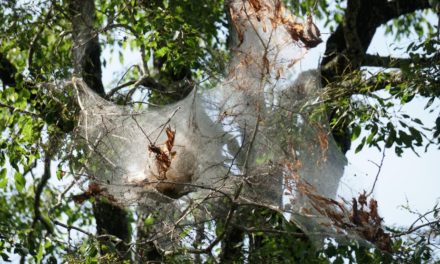
- Dislodge them from tree branches with a strong spray of water from the hose.
- Prune out heavily infested or infected shoots.
When to Use Pesticides in an IPM Approach
Consider a pesticide only as a last resort: when pest levels have reached damaging levels, and your other tactics have not been successful.
Choose a pesticide that specifically targets the pest instead of a broad-spectrum product.
Support a Balanced Landscape Ecosystem Year-Round
Use this sensible pest management approach to support your landscape plants and the creatures they support.