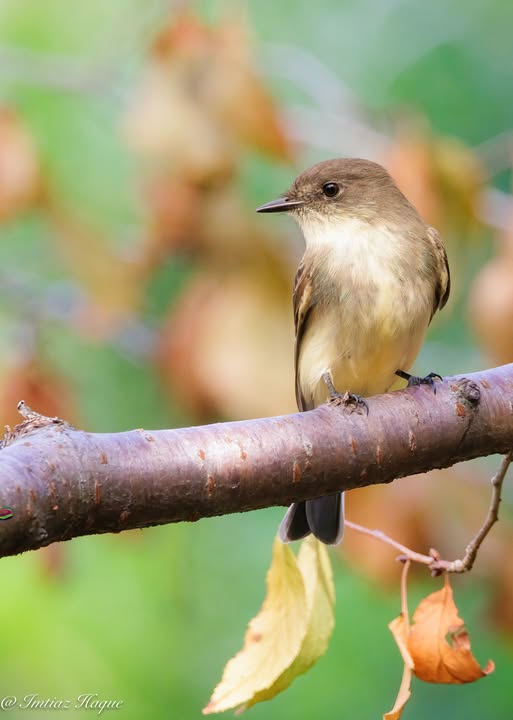
The Eastern Phoebe (Sayornis phoebe) is one of the first migratory birds to return in early spring.
Photo Credit: ©Imtiaz Haque
A Spring Morning and a Familiar Call
On Sunday, March 1, 2026, I stepped out of my house for my morning dog walk as normal.
A loud, distinctive birdcall welcomed me into the brisk spring morning air: “phoebe, phoebe, phoebe!”
This birdcall is one I can easily identify because, thankfully, the Eastern Phoebe says its name.
I am not great at identifying birds by sound, so a bird that says its name, or produces a clearly identifiable phrase like “drink your tea!” (Eastern Towhee) or “teakettle, teakettle, teakettle!” (Carolina Wren) is very helpful to me.
Beyond being pleased to recognize this feathered friend, I realized I hadn’t heard this call since late in the fall.
I wondered, was this a migratory bird returning from its winter vacation to breed in my back garden?
What We Know About Bird Migration Today (Eastern Pheobe Migration)
After being dragged around the neighborhood by my three dogs, I was impatient to check and see if the Eastern Phoebe was indeed a migratory bird.
From Cornell University’s site, AllAboutBirds, I discovered that they are short to medium-range migrants.
Some spend winters in the South Carolina low country, and others travel as far south as areas just below Mexico City.
The Eastern Phoebe is, in fact, one of the first migrants to return to breed in the spring.
How Early Theories Tried to Explain Bird Migration
This incident sent me spiraling into a deeper exploration of bird migration.
The trajectory of our understanding of bird migration is fascinating.
Humans started out strong with Aristotle in the fourth century BC, who was deeply interested in birds and their movements.
He observed and reported upon cranes and pelicans moving seasonally to warmer climes with more abundant food.
He also noted that birds fattened up before they left on their travels.
However, Aristotle made two hypotheses about bird migration that were less accurate, but that persisted in the public psyche for centuries.
One was the idea of transmutation, that some birds turned into other birds for the winter, for example, the summer redstart turned into the winter robin.
The second was that numerous species hibernated in caves, crevasses and tree hollow trees.
Building on the idea of hibernation, an influential Swedish writer and clergyman, Olaus Magnus, posited in 1555 that swallows spent the winters buried in mud at the bottom of lakes and rivers.
Two centuries later, this idea was accepted by Carl Linnaeus, one of the most influential figures in natural history science.
A final common theory promulgated in the 17th century that caught the public imagination was that wintry weather and lack of food drove birds to the moon for the winter!
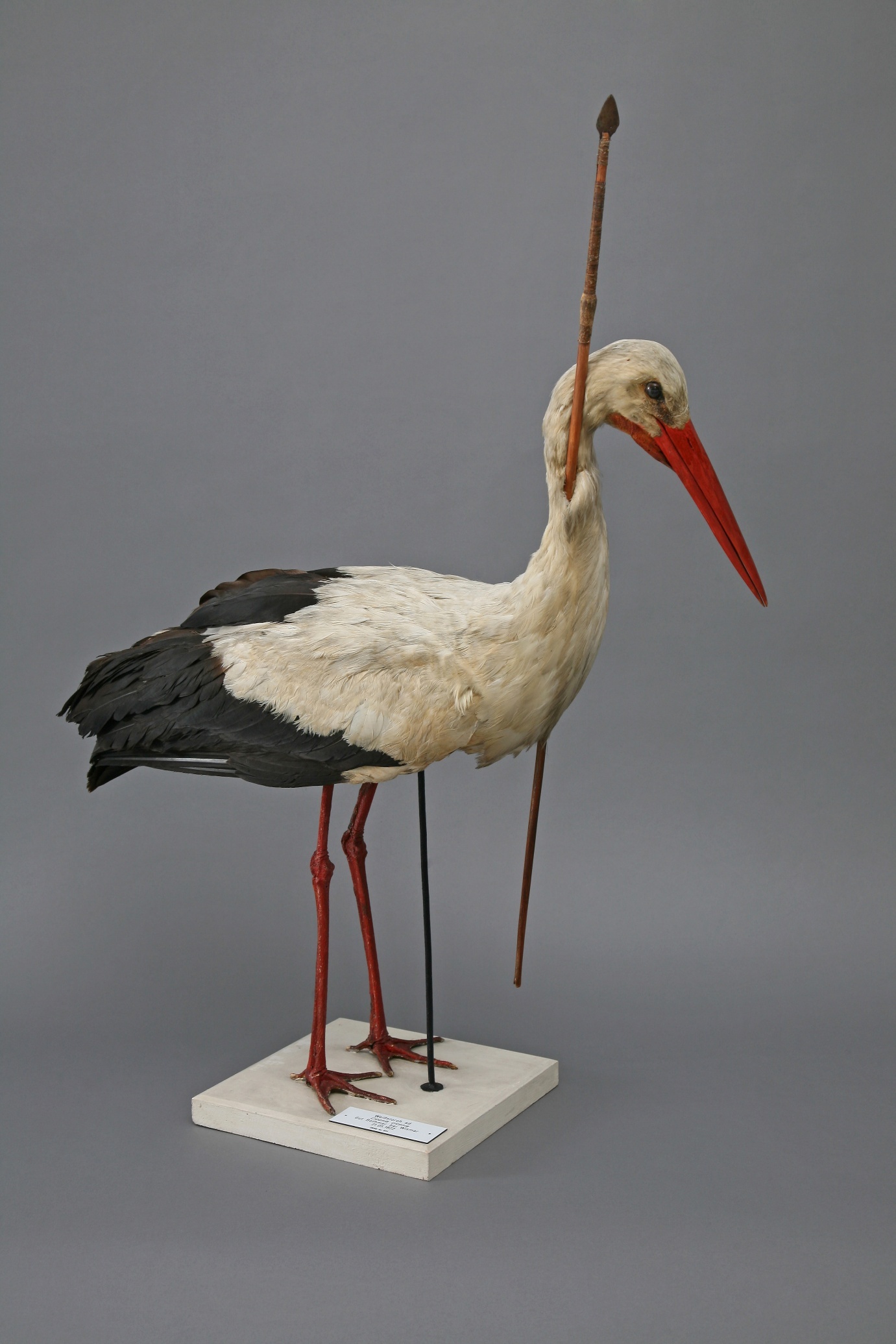
The Pfeilstorch (“arrow stork”) provided early evidence that birds migrate long distances between continents.
Photo Credit: Zoologische Sammlung der Universität Rostock, CC BY-SA 3.0
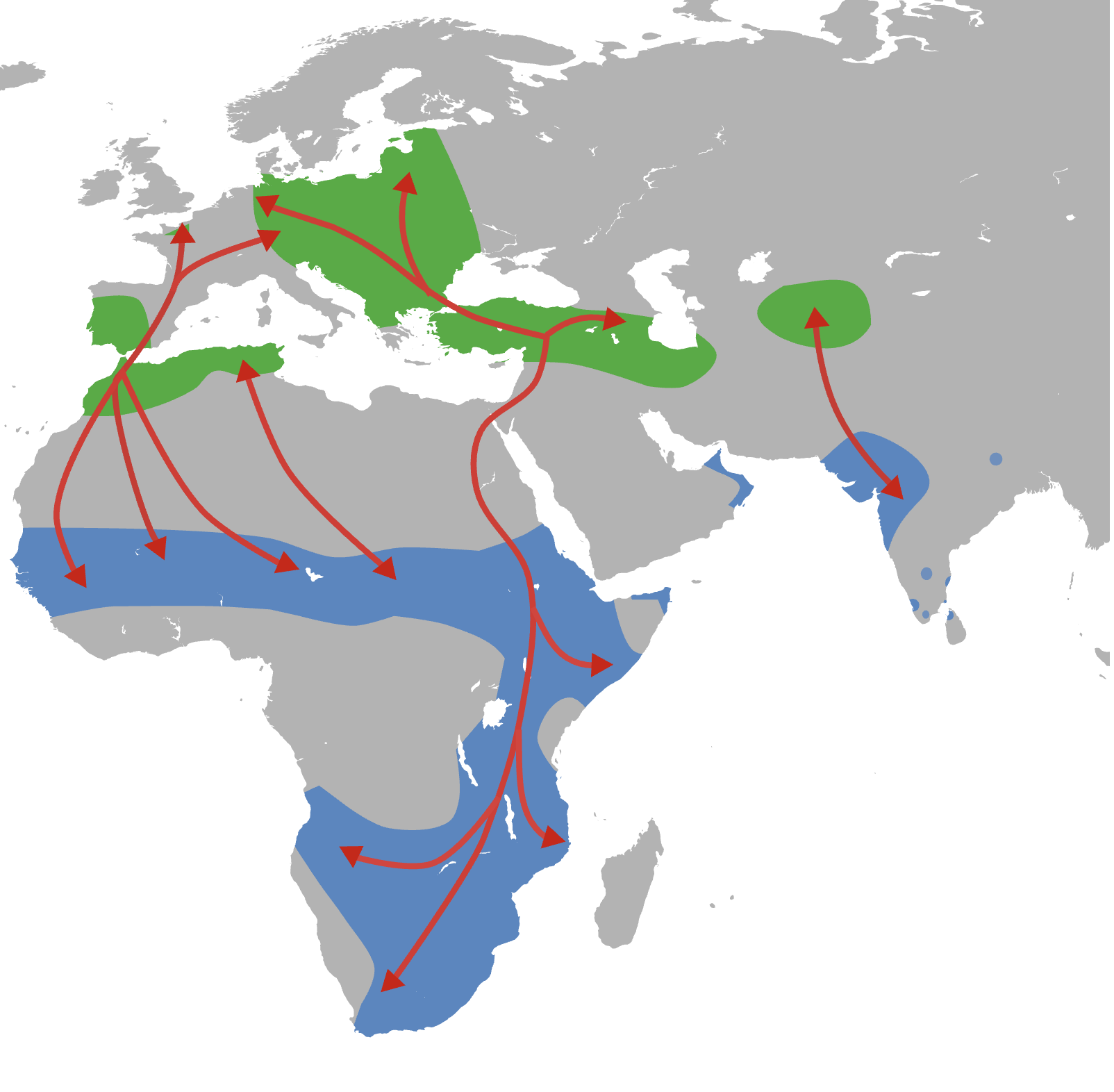
White Stork distribution and migration based on multiple sources.
Photo Credit: 2010, Shyamal
How Scientists Discovered Where Birds Really Go (Pfeilstorch)
It was not until 1822 that a substantial advance in our understanding of bird migration took place.
In Germany, a white stork returned in spring with an African spear embedded in it.
The rather gruesome return of the Pfeilstorch (arrow stork) indicated that they over-wintered in Africa, between 2,500 and 6,000 miles from their summer breeding grounds.
How You Can Help Track Bird Migration Today
Technology has allowed our understanding of bird migration to grow in leaps and bounds, but there are still many questions.
If you would like to help scientists unravel migration mysteries, consider reporting your bird sightings through Cornell University’s eBird.
If you are like me and find birding by sound a challenge, use Merlin.
If you would like to explore bird migration in real time, visit their incredible BirdCast page.
Why Bird Migration Still Matters Today
Now, when I hear that familiar ‘phoebe, phoebe, phoebe,’ I know I’m not just hearing a bird—I’m witnessing the return of a traveler whose journey scientists are still working to fully understand.