Why People Use Pesticides in and Around the Home
People use pesticides in their yard and home to control or prevent pests that can cause damage, spread disease, or create uncomfortable living conditions. These pests can include insects like ants, mosquitoes, and termites, as well as rodents, weeds, and fungi. Certain pests, such as termites, can damage the structure of a home by eating wood, while weeds can take over lawns and gardens, making them look unhealthy and harder to maintain. Using pesticides helps prevent costly repairs and keeps outdoor spaces looking well-kept.
Some pests carry diseases or trigger allergic reactions. For example, mosquitoes can spread illnesses such as West Nile Virus, and cockroaches can worsen asthma, especially in children. Pesticides are often used to reduce these risks and create a safer living environment.
People also use pesticides for comfort and quality of life. A yard full of biting insects or a home with recurring pest infestations can be stressful and unpleasant. Controlling pests makes it easier to enjoy outdoor spaces and maintain a clean, comfortable home.
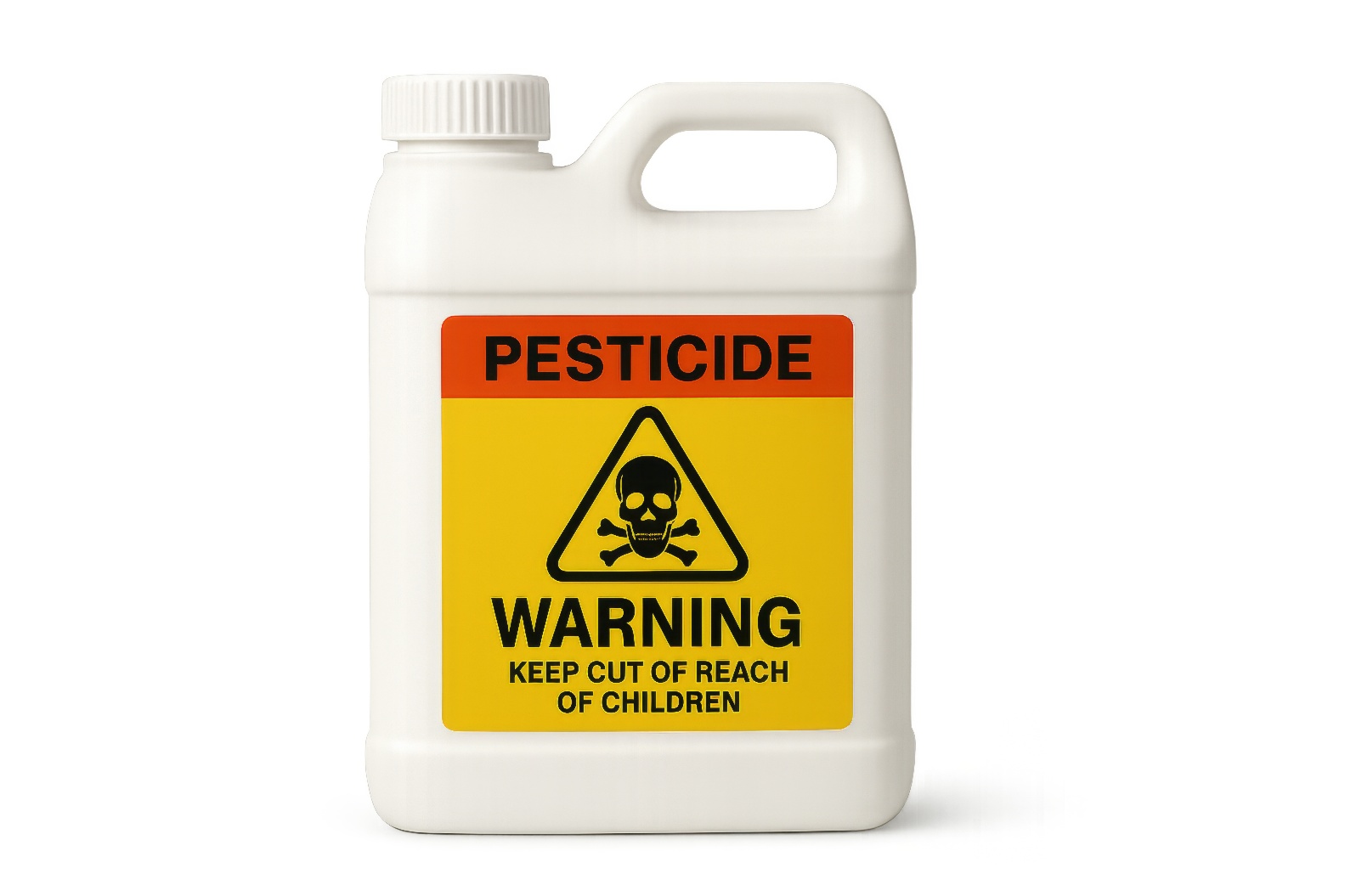
Pesticides should be stored in their original containers and kept locked up and out of children’s reach.
Figure 1 Photo Credit: ArtBox_stock.adobe.com
Why Children Should Not Spray Pesticides
It is important for homeowners to use pesticides safely. Children should not spray pesticides around the house because doing so poses serious risks to their health, safety, and overall well-being. Pesticides are designed to kill or control pests, which means they contain chemicals that can be harmful not only to insects or rodents but also to humans; especially children. Since young people are still developing physically and cognitively, they are more vulnerable to the toxic effects of these substances.
Accidental Pesticide Exposure Risks for Children
One of the primary concerns is accidental exposure. Children may not fully understand the instructions or warnings on pesticide labels. They might spray too much, use the product in the wrong areas, or fail to wear proper protection. This can lead to inhalation of toxic fumes, skin irritation, or even ingestion if the chemicals contaminate surfaces like toys, furniture, or food. Even small amounts of certain pesticides can cause symptoms such as headaches, dizziness, nausea, or more severe reactions like breathing difficulties and poisoning.
Why Children May Misuse Pesticides
Another important issue is that children often lack the judgment needed to handle hazardous materials responsibly. Unlike adults, they may treat pesticide products as harmless household items rather than dangerous chemicals. This misunderstanding can result in unsafe behavior, such as spraying near pets, siblings, or in confined indoor spaces without ventilation. These actions not only endanger the child using the pesticide but also everyone else in the home.
Safer Pest Control and Adult Pesticide Use
Instead of allowing children to use pesticides, adults should take responsibility for pest control or seek safer alternatives. Integrated pest management techniques—such as keeping the home clean, sealing entry points, and using non-toxic solutions—can effectively reduce pest problems without exposing anyone to harmful chemicals. If pesticides must be used, they should be handled by adults who carefully follow safety instructions and ensure that children are kept away from treated areas.
How to Prevent Children from Handling Pesticides
Store Pesticides Safely
Keep Pesticides Locked Up and in Original Containers
Preventing children from handling pesticides is a simple but important step in reducing these risks. The best way to prevent children from handling pesticides and being exposed to them is to keep the pesticides locked up. It is also important to keep pesticides in their original containers and never in unmarked containers.
Never Store Pesticides in Drink Bottles
Never measure or keep pesticides in drink bottles. There have many several cases of this happening and children thinking it is a drink, such as Gatorade. This has led to several deaths.
Keep Children Away During Pesticide Application
Make sure children are away when an adult applies pesticides in or around the home.
Dispose of Used Pesticide Containers Safely
Do not give used pesticide containers to children for them to play with; even if they are rinsed properly. Be sure to puncture a hole in pesticide containers after rinsing them so they may not be sure to store other liquids.
Why Pesticide Labels Matter for Child Safety
One of the most important statements on all pesticide labels is “KEEP OUT OF REACH OF CHILDREN”. It is a clear warning to prevent accidental exposure to children, who are more vulnerable. Children are more sensitive than adults to pesticide exposure, and it can cause harm or even death. Remember, the label is the law and must be followed!
Key Takeaway: Keep Children Away from Pesticides
In conclusion, children should not spray pesticides around the house because of the significant health and safety risks involved. Their lack of experience, combined with the toxic nature of these chemicals, makes it unsafe for them to handle such products. By keeping pesticides out of children’s reach, families can create a healthier and more secure home environment.