The two-spotted cotton leafhopper was found in two more counties last week. The weather has cooled down a bit, and the forecast shows a good chance of rain. Be proactive with disease management this week as moisture will be conducive to disease development, including powdery mildew and anthracnose.
Key Takeaways for Growers This Week
- Two-spotted cotton leafhopper spreads – sightings reported in Clarendon and Calhoun Counties
- Destroy crop residue after harvest – this reduces disease, insect, and nematode carryover
- Rain this week may increase disease – including powdery mildew and anthracnose.
- Fall crops are establishing well – whiteflies may be a problem in some areas
Statewide
Tom Bilbo, Extension Entomologist
Vegetable growers—be aware that the EPA is seeking public comments on an issue regarding the use of neonicotinoid insecticides (e.g., Admire, Assail, Belay, Actor, Venom) on food crops. Clemson/UGA peach entomologist Brett Blaauw wrote a short blog post that explains the issue in more detail if you’re interested in learning more or leaving a comment.
Lowcountry Report
Anna Sara Hill
- We got a break from the heat this past weekend, and some areas saw some rain. The forecast for this coming week will be hot, but not in the triple digits like last week. There is also more rain in the forecast this week.
- Two-spotted cotton leafhoppers have not been reported in my counties yet, but they are in the state, so remain vigilant and call your extension agent if you see them.
- Okra and eggplant are still heavily producing; most of the other summer crops are done.
- Growers are busy cleaning up fields, disking up old crops, clearing weeds, and getting ready for next season.
- Fall brassicas, tomatoes, squash, and pumpkins are growing well.
- One pumpkin field has an infestation of striped cucumber beetles. Cucumber beetles were not observed in the pattypan squash next to the pumpkins. The field was sprayed once, but follow-up sprays are important to manage the populations. In situations where other susceptible crops are planted next to an infested area, it is important that both crops be treated simultaneously, as the insects will seek refuge in the neighboring crop.
- I looked at a sweetpotato field that had very healthy vines, but there was also significant weed pressure. These weeds will likely reduce yields and make harvesting more difficult. A pre-plant herbicide application, followed by a pre-emergence treatment after transplanting the sweetpotatoes, could have provided good weed control and reduced competition throughout the growing season.
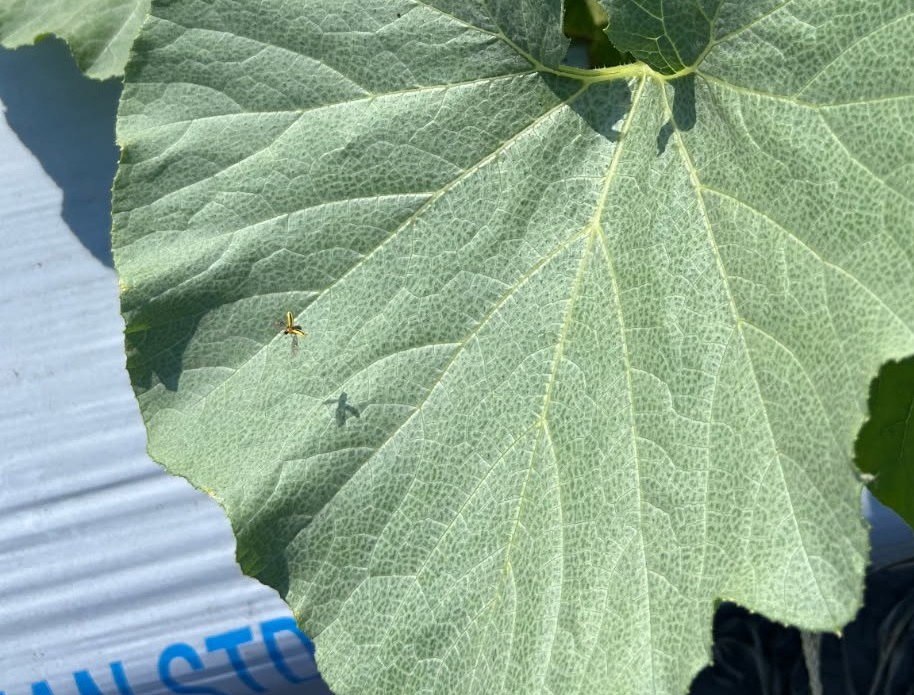
A striped cucumber beetle spreads its wings to take flight from a pumpkin leaf.
Anna Sarah Hill, ©2026, Clemson Extension
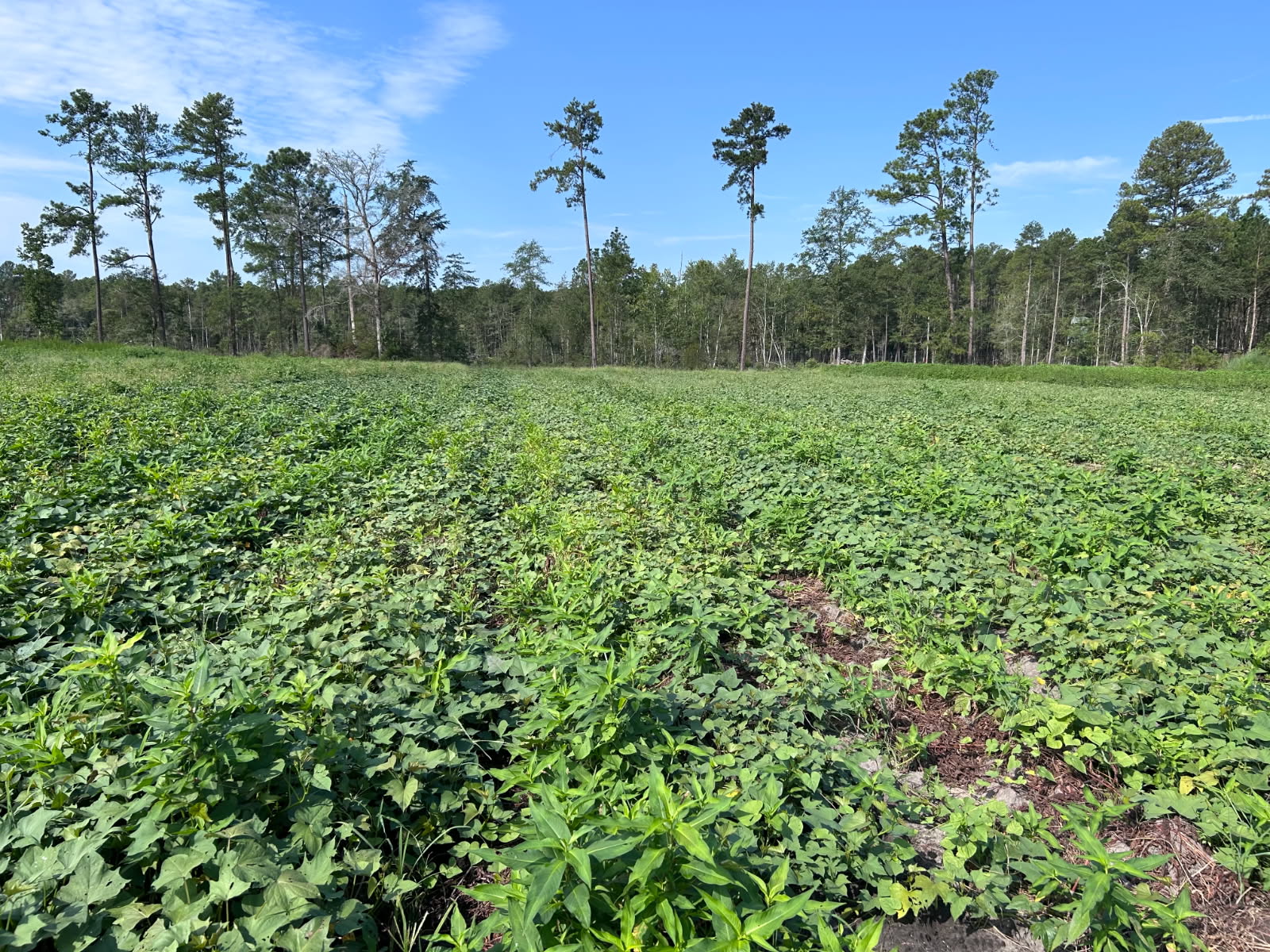
Weed pressure in sweetpotatoes could have been managed by pre-emergent followed by post-emergent herbicides.
Anna Sarah Hill, ©2026, Clemson Extension
Zack Snipes
- We are in the transition season right now. Okra is still coming in, and watermelons have slowed down a bit. Growers are busy preparing land for fall crops, and many have already planted some.
- I was scouting for the two-spotted cotton leafhopper this past week and noticed several issues. One grower mentioned that his beans just didn’t do well this year. He still had beans in the field. I pulled a plant and found galls all over the roots. These galls indicated a severe infestation of root-knot nematodes (RKN). RKN do not go away, so this field will be a hot spot for upcoming seasons. This is the perfect time to sample fields for RKN, as nematodes are active and we can get a complete picture of our nematode pressure. In fields with high levels of RKN or other nematodes, we should be extremely careful when selecting crops next season. Careful crop rotation, cover crop selection, tarping, soil amendments, and nematicide selection can help reduce populations over time.
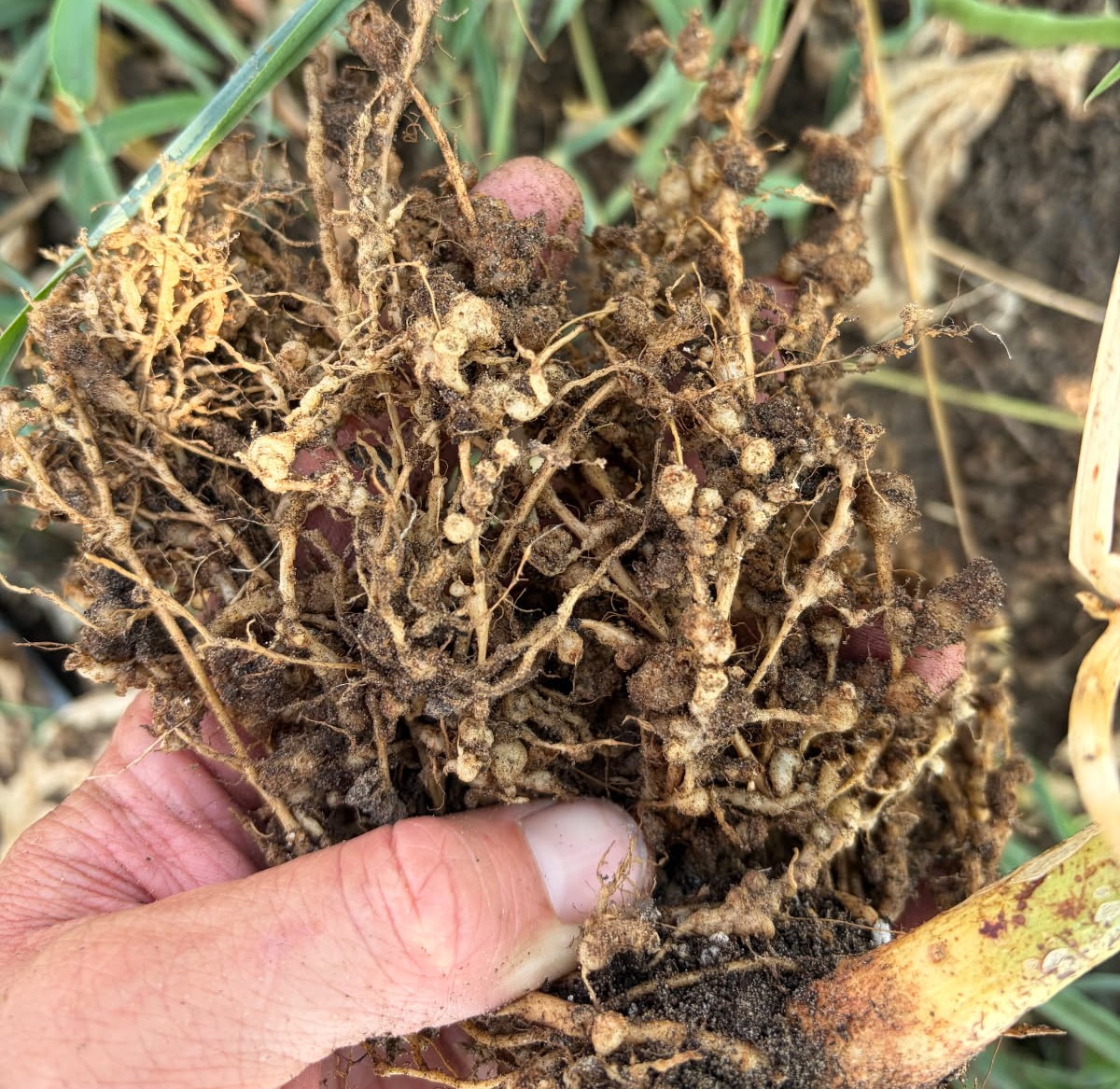
Galled roots are a diagnostic indicator of root-knot nematodes.
Zack Snipes, ©2026, Clemson Extension
Midlands Report
Rob Last
- As temperatures return to a more seasonable and less oppressive normal, some powerful storms rolled through the area late last week.
- Monitoring field drainage can be critical, and freak deluges can highlight where issues may arise.
- There is evidence of powdery mildew and anthracnose in some crops. Increased moisture on plant leaves and humidity can exacerbate the spread of diseases and their appearance.
- Crops continue to develop well with excellent vigor.
- Insect activity continues to increase, particularly whiteflies. Whiteflies can vector several viruses; hence, vector management will be important to limit virus spread. Some good options include Sivanto, Coragen, and Knack.
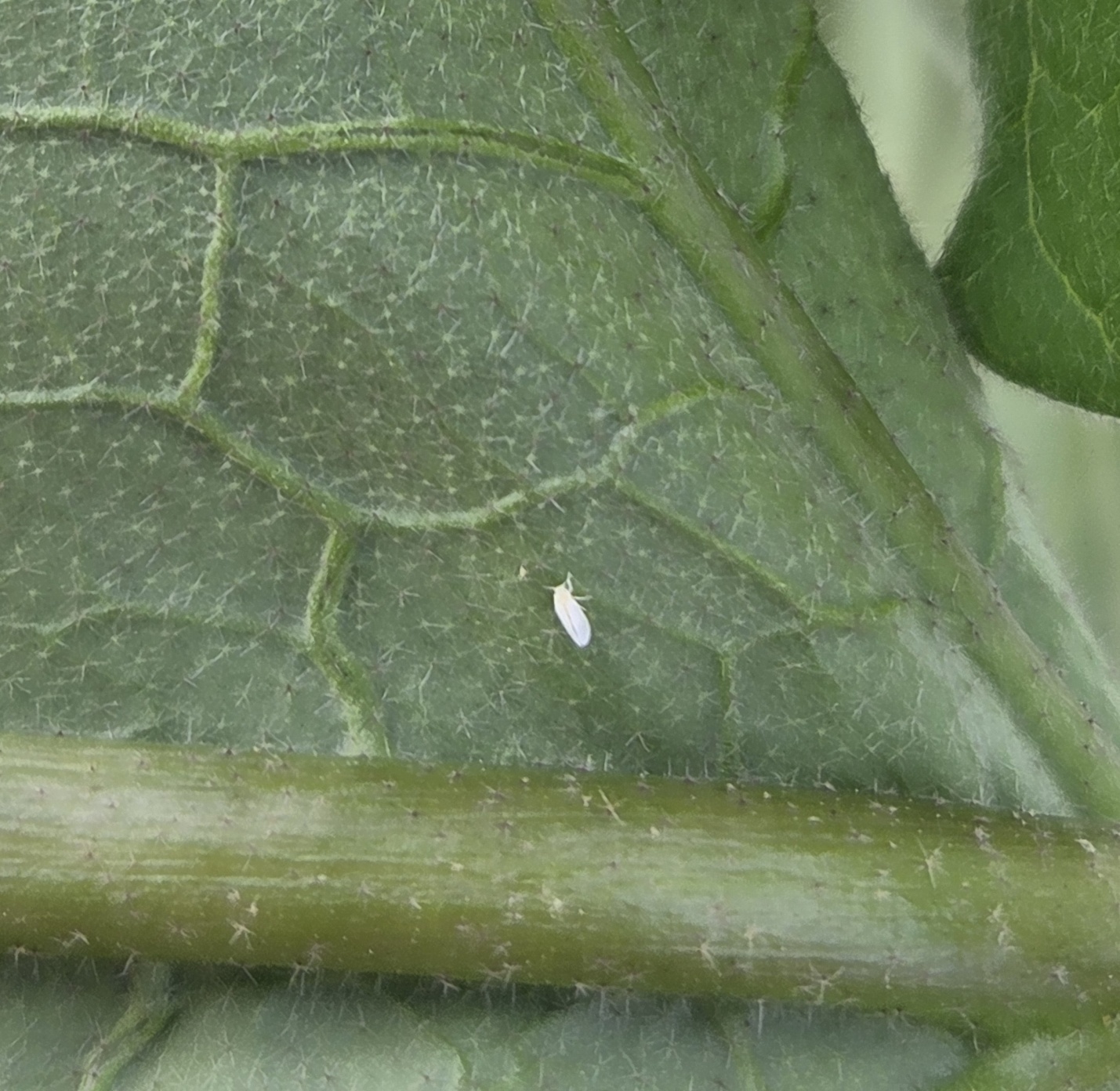
A whitefly on the underside of an eggplant leaf.
Rob Last, ©2026, Clemson Extension
Daniel Lyon
- Overall, last week was much cooler than the previous couple of weeks, and you could feel it. This week is also forecasted to be cooler with a good chance of rain. Some areas of my counties have not received significant rain in over a month.
- The two-spotted cotton leaf hopper was found on okra in Clarendon County, and there is an unconfirmed report of it being found on cotton in Calhoun County. The image below shows one adult and two immatures. The immatures are likely the same pest, but could also be potato leafhopper, as these two species are indistinguishable in their immature stage. Call your county horticulture agent if you suspect this pest.
- Cowpea curculio is a host-specific insect pest, meaning it typically only feeds on cowpea and occasionally, other legume crops. When the host is abruptly removed, they normally retreat to the woods and feed on native legumes, but last week I found a field where cowpeas had been cultivated, and the curculio was feeding on a non-legume, okra. This is interesting because okra is not listed anywhere as an alternate host… but cotton is. Some sources in Florida list cotton as a non-legume alternate host for cowpea curculio. Okra and cotton are both in the mallow family, which explains why cowpea curculio could also feed on okra. However, okra is unlikely to be suitable for curculio reproduction.
- Early plantings of fall produce are coming along well. This cool week with some good rainfall should help get them going.
- It is important to cultivate or remove crop residue from spring and summer plantings to prevent pests from overwintering and reduce disease inoculum in the soil for next year.
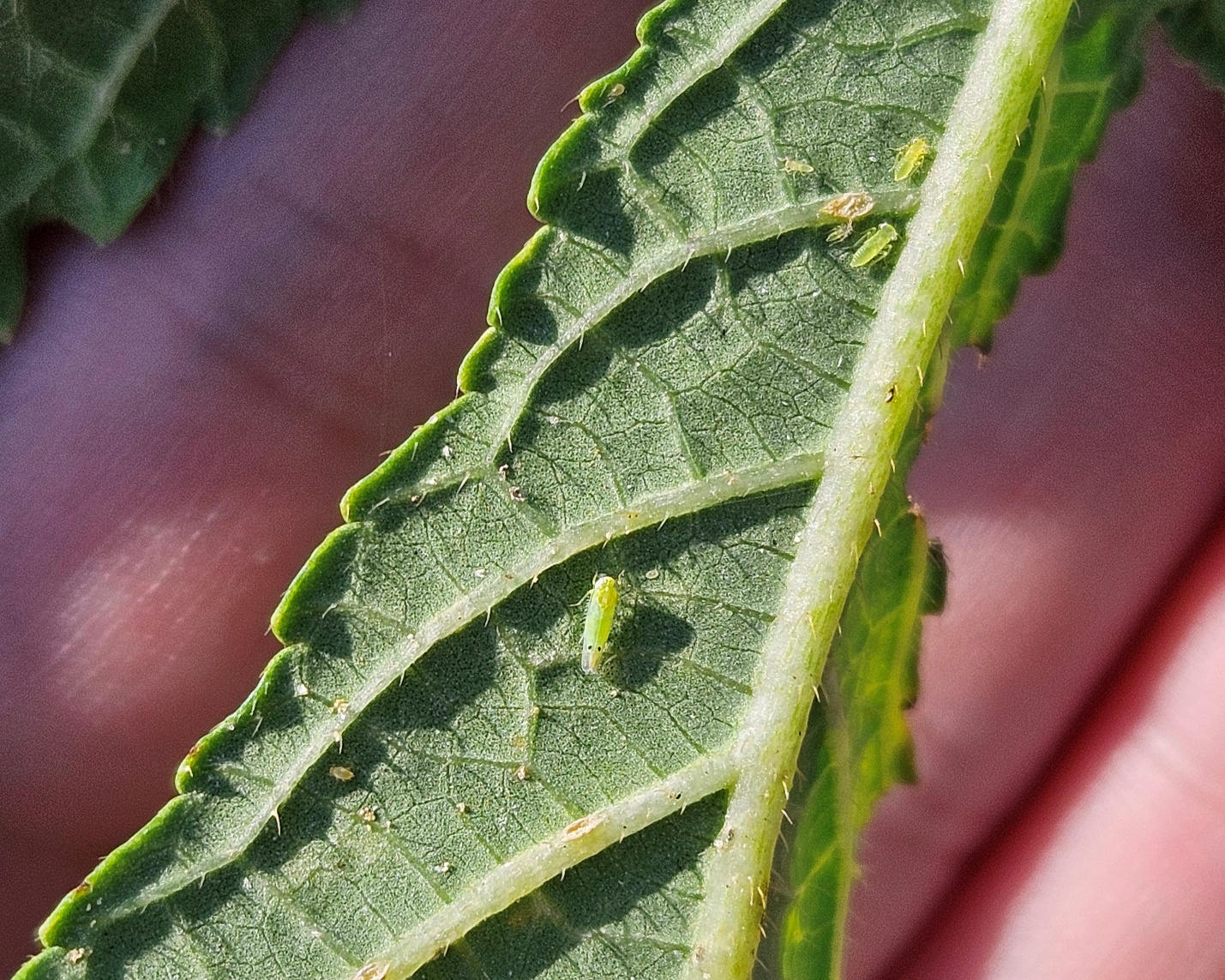
Two-spotted cotton leafhopper on okra.
Daniel Lyon, ©2026, Clemson Extension
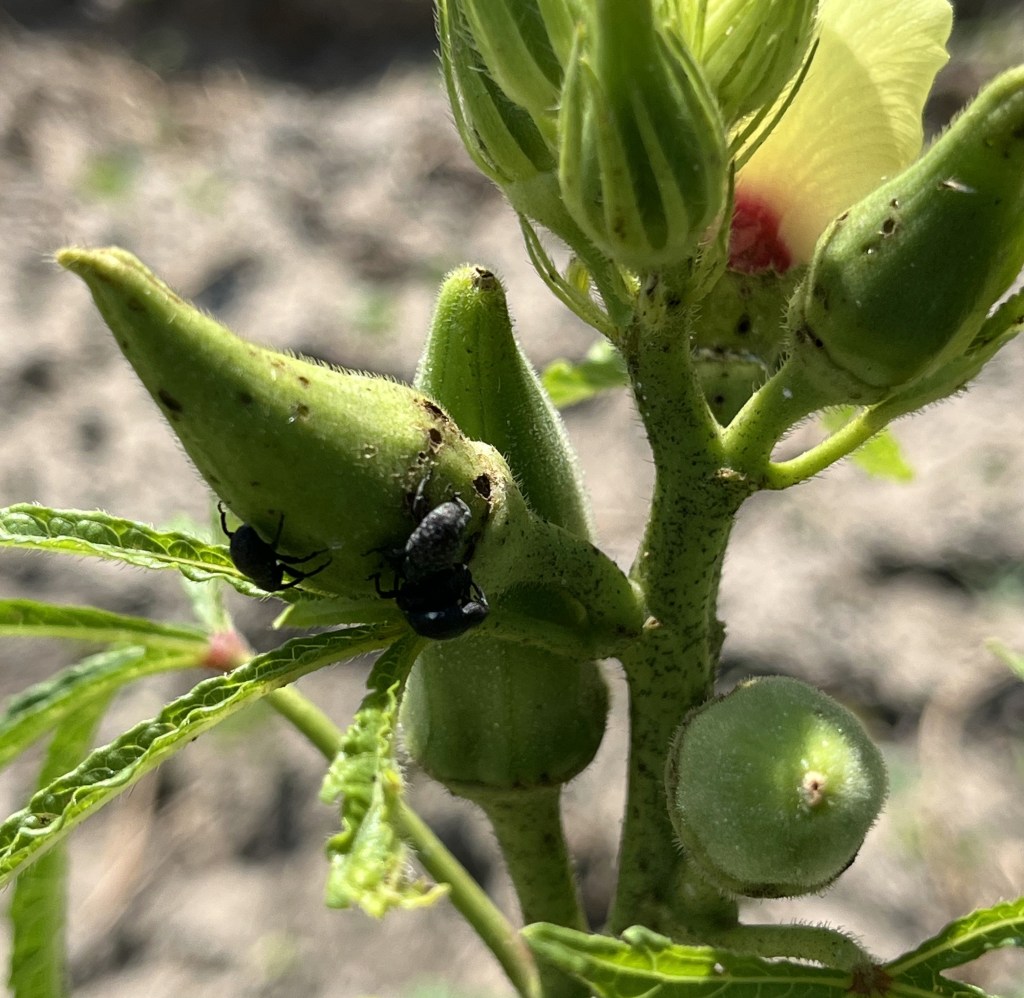
Suspected cowpea curculio feeding on okra following cowpeas being disked in.
Daniel Lyon, ©2026, Clemson Extension
Pee Dee Report
Brad Fowler
- As of now, we still don’t have any reports of the two-spotted cotton leafhopper on okra, but continue to scout and contact us with any potential sightings
- We have seen some interesting leaf and pod damage in an okra field over the past couple of weeks, but we are unsure of the exact cause. We have submitted samples to the lab, and I’ll provide an update when we have the results.
- Cowpea curculio remains a problem, but I was recently given information about a spray program from Georgia that may provide some control. Please feel free to reach out, and we can discuss the options.
- Muscadines seem to be producing well with no real issues reported.

Samples of this pod damage have been submitted to the lab for diagnosis.
Brad Fowler, ©2026, Clemson Extension