Chinese Red Noodle is a burgundy yardlong bean, a close cousin of the southern pea, that shrugs off South Carolina heat, handles dry spells once established, and produces pods up to 18 inches long all summer. Plant it after the soil warms in late spring, give it a tall trellis, and pick often.
Well… I think this is the zucchini of the bean world! It produces so much that you’ll be leaving bags of beans on your neighbors’ porches, and it’s gorgeous in the garden. Here’s what I learned growing it.
Quick Guide to Chinese Red Noodle Beans
Plant type: Yardlong bean (a cowpea subspecies); climbing warm-season annual
Scientific name: Vigna unguiculata subsp. sesquipedalis ‘Chinese Red Noodle’
Also called: Red noodle bean, yardlong bean, asparagus bean, snake bean, long bean
When to plant in SC: After soil warms to at least 65°F, typically May through early July
Sun: Full sun
Support: Sturdy trellis or fence, 6 to 8 feet or taller
Pod length at harvest: About 12 to 18 inches, before the seeds bulge
Days to harvest: About 80 days from seeding (check your seed packet)
Strengths: Heat and drought tolerance, heavy production, color holds when cooked
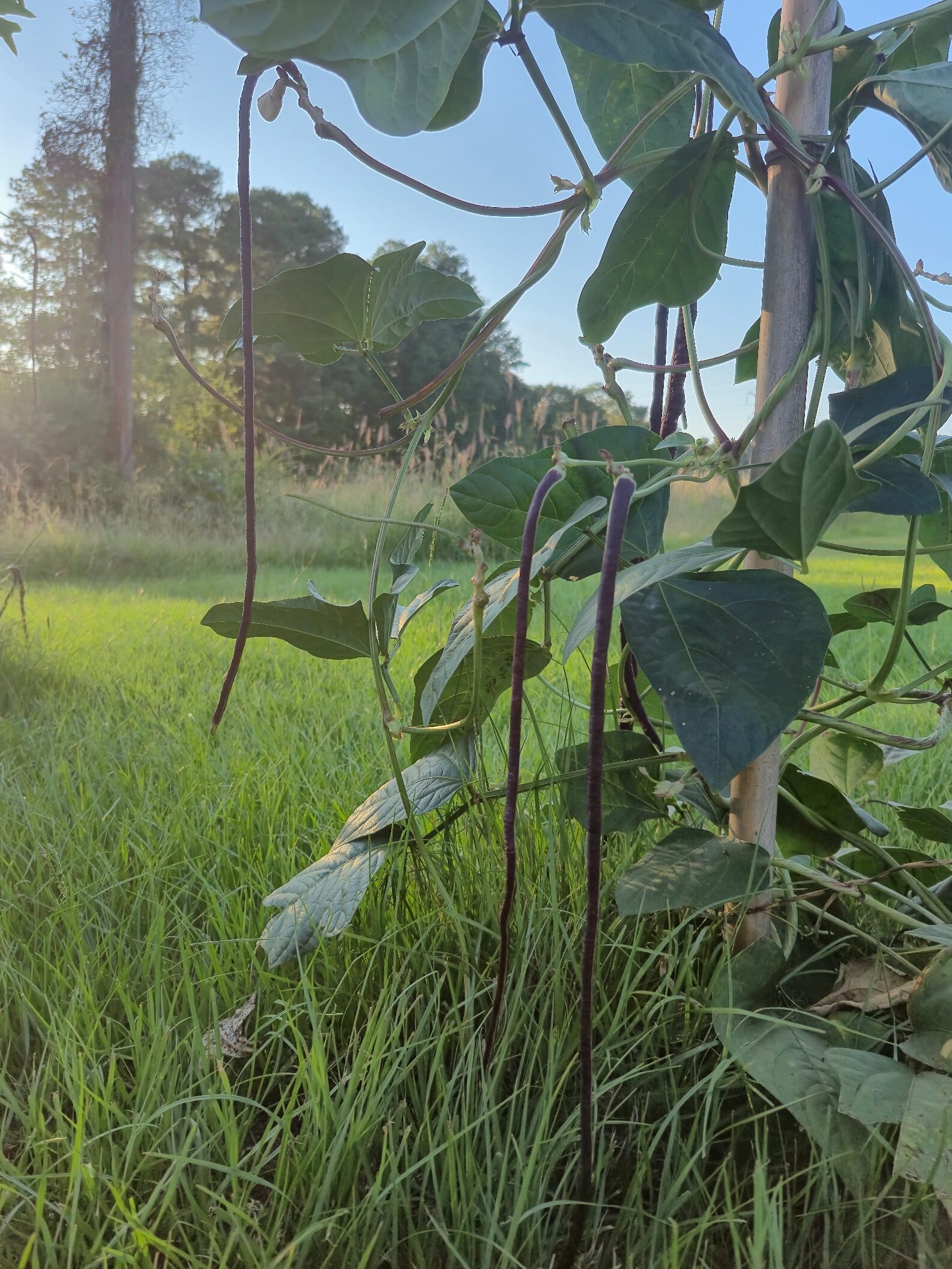
The beans can be harvested at all stages of ripeness. But this is the stage I prefer for stir-frying or oven roasting.
Nicole Goodman, ©2026, Clemson Extension
What is a Chinese Red Noodle Bean?
Chinese Red Noodle bean (Vigna unguiculata subsp. sesquipedalis ‘Chinese Red Noodle’) is a yardlong bean, also sold as asparagus bean, snake bean, or long bean. Despite the name, it isn’t closely related to the green beans most of us grow. The scientific name tells us that it belongs to the cowpea species.
Cowpeas are also known as southern peas, black-eyed peas, frijoles, or crowder peas. Yardlong beans are the type grown for their long, slender, edible pods. Knowing which type a bean or pea cultivar belongs to will help us grow them in the right season.
For cowpeas, that means warm summers instead of spring or fall, which are ideal for garden peas (English peas). Learn more in Clemson’s Southern Peas (HGIC 1319).
Why Grow Chinese Red Noodle Beans in South Carolina?
Why I love This Bean
The Chinese Red Noodle bean absolutely thrives in the heat and can handle our summer dry spells once it is established. I have to admit, I did not test my soil, nor amend it! At the end of May, the seeds went straight into my native clay soil without any fertilizer or amendments to help with drainage.
And still, it was the most prolific crop this year!
Why did that work? Like other legumes, cowpeas partner with soil bacteria to make their own nitrogen, so they don’t need much fertilizer. In fact, too much nitrogen gives you lots of leafy vine and fewer pods.
That said, a soil test is still the best way to start any garden, since it tells you whether your pH or nutrients need adjusting before you plant. Pick up a soil sample bag at your county Extension office or learn more from Clemson’s Agricultural Service Laboratory.
Here are some of the things I love about this bean:
Chinese Red Noodle Beans Thrive in the Heat
It laughs in the face of a 95°F day and produces flowers and pods, while many other summer crops (like tomatoes) start to struggle with the heat. Long stretches of very hot nights can slow pod set a bit, but it handles our summers far better than most vegetables.
Chinese Red Noodle Beans Tolerate Dry Spells
My beans grow on the edge of the garden. While the rest of the garden gets watered regularly before dawn, the beans barely get some of that water. Once established, they never wilted or slowed down during dry spells.
Chinese Red Noodle Beans Produce Abundant Harvests
I planted 10 seeds and harvested around 4 lbs of beans daily… I barely knew what to do with all this harvest, and shared it with a local food pantry. If you end up with more than you can eat, Plant a Row for the Hungry can help you connect your extra harvest with people who need it.
Chinese Red Noodle Beans Keep Their Color When Cooked
The bean is a stunner and could very well be grown as an ornamental. Most other purple-podded beans turn green when cooked. Chinese Red Noodle holds much of its color, though it darkens and can take on a bluish tint.
The pigments behind that color (anthocyanins) are sensitive to pH: a splash of lemon juice or vinegar helps keep them reddish, while alkaline conditions push them toward blue. Best of all, if you harvest them when they’re very young and tender and fry them in butter, you can tell your kids you’re having tarantula legs for dinner! It was a hit, and they continue to beg for more spider legs!
Insects You May Find on Chinese Red Noodle Beans
You may either love or hate this part. The vines attract a lot of unloved insects: wasps, hornets, ants, and more. That’s because cowpeas, including yardlong beans, have small nectar glands near the flower stalks called extrafloral nectaries, which feed visiting insects.
Keep in mind that most of the wasps and hornets are predators that hunt some of our most dreaded garden pests! Give them a little space and wear gloves when you harvest. Ants are a mixed bag, since some protect aphids in exchange for honeydew.
See Natural Enemies: Predators & Parasitoids (HGIC 2820) to learn who the good guys are.
Keep an eye out for the real troublemakers: cowpea aphids (small black insects clustering on stems and young pods) and stink bugs or leaf-footed bugs, which leave pods shriveled or misshapen.
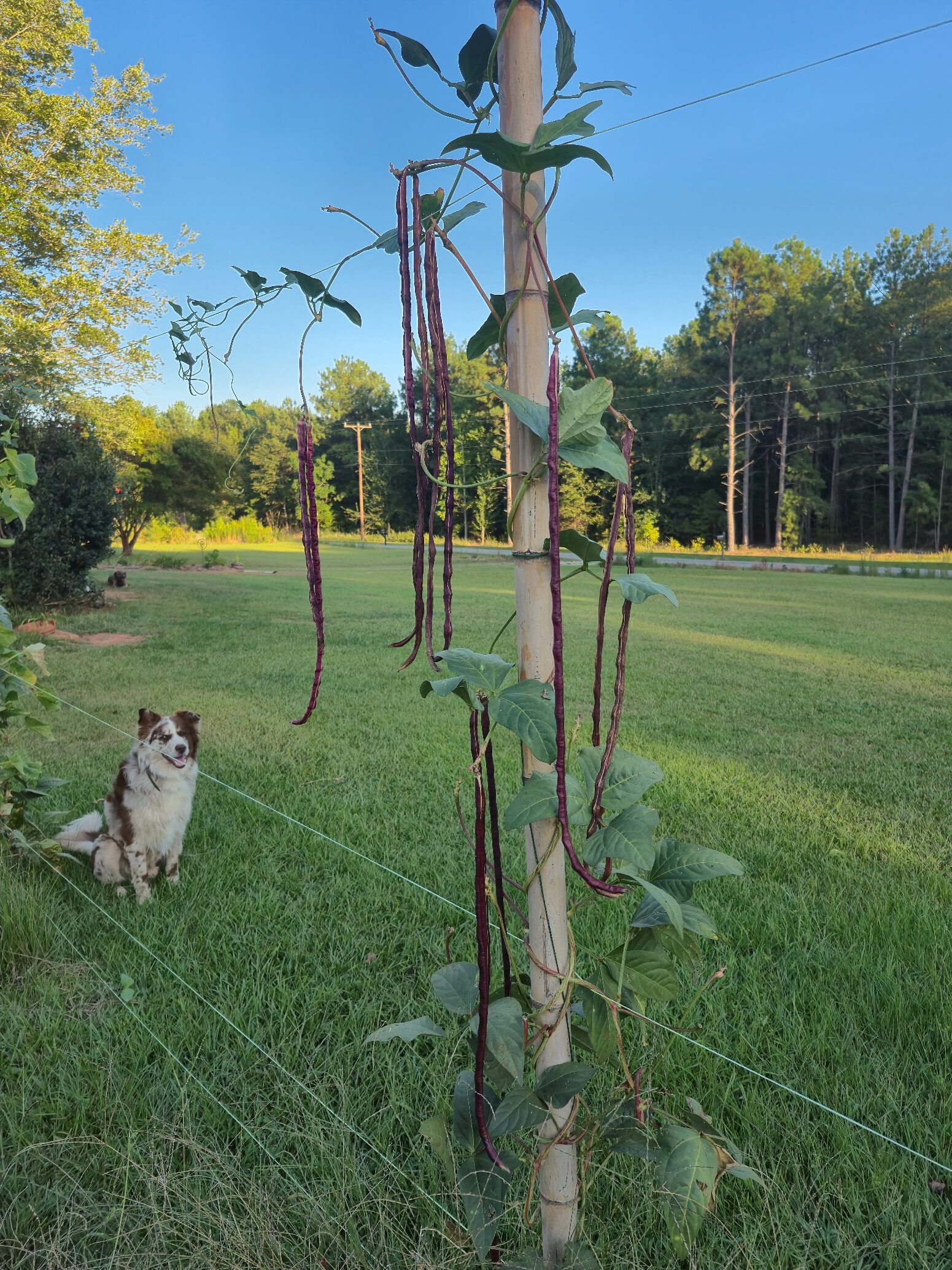
Despite the small leave mass, the plant is producing in abundance!
Nicole Goodman, ©2026, Clemson Extension
Chinese Red Noodle Beans Climb Vertical Supports
This is another love-or-hate thing. The Chinese Red Noodle bean is a pole bean, meaning it will need a support structure to grow well. The vines can easily climb 8 feet or more, so plan on a sturdy trellis or fence.
While you will need a lot of vertical space, this bean will not take up much horizontal space! In situations with limited ground space, this may be a great option for producing abundance!
Ways to Eat and Save Chinese Red Noodle Beans
So far, I have used this bean in its fresh, immature stage; matured it for slow cooking; shelled the immature seeds and used them like peas; and, of course, let them fully mature to be shelled and stored dry or as seeds for next season. One last thing I want to try is fermenting the immature beans! I’m curious to see how the color will change and what the taste will be like.
If you want to try it too, start with Clemson HGIC’s Guide to Fermenting Vegetables.
How to Grow Chinese Red Noodle Beans in South Carolina
When to Plant Chinese Red Noodle Beans
Wait until the soil has warmed to at least 65°F, usually May through early July in most of the state. Sow seeds about 1 inch deep along the base of your trellis, and follow your seed packet for spacing.
Watering Chinese Red Noodle Beans
Water regularly until seedlings are established. After that, the plants tolerate dry spells well, but a deep watering during extended drought while they’re flowering will help keep the harvest coming.
Pests and Diseases of Chinese Red Noodle Beans
Watch for aphids and stink bugs as described above. For diseases to look out for and how to manage them, see Clemson’s Bean & Southern Pea Diseases (HGIC 2200).

Once the seeds bulge within the pod, they can be shelled and cooked. Or leave them on the plant to fully mature. Once dry, shell them and store them as dry beans.
Nicole Goodman, ©2026, Clemson Extension
When and How to Harvest Chinese Red Noodle Beans
Pick pods when they’re about 12 to 18 inches long and roughly pencil-thick, before the seeds start to bulge. Check the vines every day or two. The more you pick, the more the plants produce.
Pods left on the vine too long get tough and signal the plant to slow down.
For dry beans or seed saving, let some pods dry completely on the vine, then shell and store the seeds somewhere cool and dry. Chinese Red Noodle is an open-pollinated heirloom, and cowpeas mostly pollinate themselves, so saved seed usually comes back true to type.
Chinese Red Noodle Bean FAQs
Is a Chinese Red Noodle bean the same as a black-eyed pea?
They’re the same species (Vigna unguiculata) but different subspecies. Black-eyed peas are grown mainly for their seeds. Yardlong beans like Chinese Red Noodle are grown mainly for their long, edible pods.
When should I plant Chinese Red Noodle beans in South Carolina?
Plant after the soil warms to at least 65°F, typically May through early July. Planting in cold soil leads to poor germination.
How long are the beans when I pick them?
Harvest at about 12 to 18 inches, before the seeds bulge. Longer, older pods become tough and stringy.
Do red noodle beans stay red when cooked?
Mostly. They darken and may turn slightly bluish, but they hold their color much better than most purple beans, which turn green. A little acid, like lemon juice, helps keep the red.
Why are there so many wasps and ants on my beans?
Cowpeas have nectar glands near their flowers that attract insects. Most of the wasps are beneficial predators hunting garden pests.
Can I save seeds from Chinese Red Noodle beans?
Yes. It’s an open-pollinated heirloom, and cowpeas are mostly self-pollina ting. Let pods dry fully on the vine, then shell and store the seeds in a cool, dry place.
Give Chinese Red Noodle Beans a Try
Overall, this is a wonderful, prolific garden crop for our state! If you’ve got a sunny fence and a hot summer (and in South Carolina, you do), give it a try. Just be ready to share.
Further reading on Chinese Red Noodle Beans
- Southern Peas – Clemson Home & Garden Information Center
- Natural Enemies: Predators & Parasitoids – Clemson HGIC
- Bean & Southern Pea Diseases – Clemson HGIC
- Want to Ferment Vegetables? – Clemson HGIC
- Chinese Noodle Beans – Fairfax County Master Gardeners
- Long Bean Trial – UC Master Gardeners of Santa Clara County
- Cowpea – Iowa State University Extension
- Plant a Row for the Hungry – GardenComm