Coastal Region – Glen Payne
- Days light hours are dwindling, and nights last longer as summertime growth of turf & plants really slows down. Less water is now required, and irrigation systems can be adjusted for less frequent watering days and duration as well as daylight savings time on Sunday, November 1st at 2:00 am.
- The summer drought is continuing in the SC Lowcountry so, as new fall leafy green plantings of collards, kale, spinach, parsley, lettuce mixes, and strawberries are being planted in the home garden be sure to continue to water them in as this is the most important time as vegetables and herbs root in. https://hgic.clemson.edu/factsheet/watering-the-vegetable-garden/
- Inspect inside the irrigation clock to ensure that insects such as bees, roaches, ants, and the occasional snakes aren’t building a home on the irrigation transformer using it as a heat source during the cold. Removal of critters will prevent the electrical system from shorting. https://hgic.clemson.edu/factsheet/landscape-irrigation-equipment-part-6-timers-controllers/
- Inspect the Ground Fault Indicator (GFCI) receptacles that exterior irrigation controllers are plugged into and verify that the reset button works.
- Inspect rain sensors for damage and verify that they will shut the system off as advertised.
- Mulch should be installed correctly to prevent winter weeds, keep soil warm, and prevent soil compaction. https://hgic.clemson.edu/factsheet/mulch/
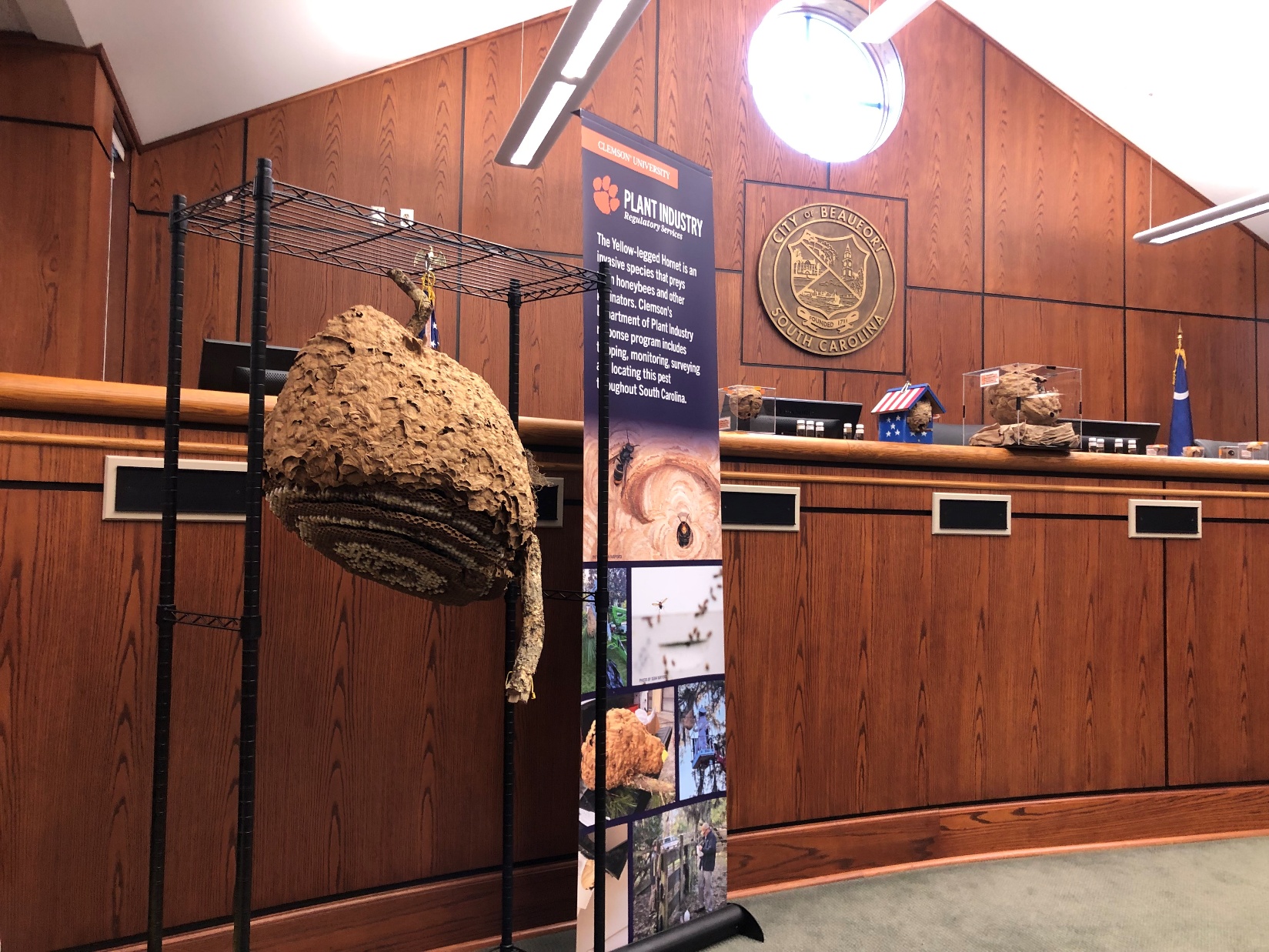
YLH Beaufort Town Hall Meeting.
Glen Payne, ©2026, Clemson Extension
- The Yellow Legged Hornet continues to spread throughout the SC Lowcountry in Beaufort, Colleton, & Charleston counties. Please do not attempt to remove nests and instruct shareholders to report nest sightings using the Clemson YLH Reporting Tool. The Clemson Invasive Species Team will have them scheduled for removal.
Midlands Region – Carmen Ketron
Vegetable Garden
- Plant garlic, onions and shallots now. Choose softneck garlic and short-day onions as they are both are well suited to South Carolina’s mild winters.
- Don’t leave an idle garden bed bare this winter. Sow a cover crop such as a crimson clover and winter wheat mix, or blanket the soil with mulch or shredded leaves. Either one smothers winter weeds and builds better soil for spring.
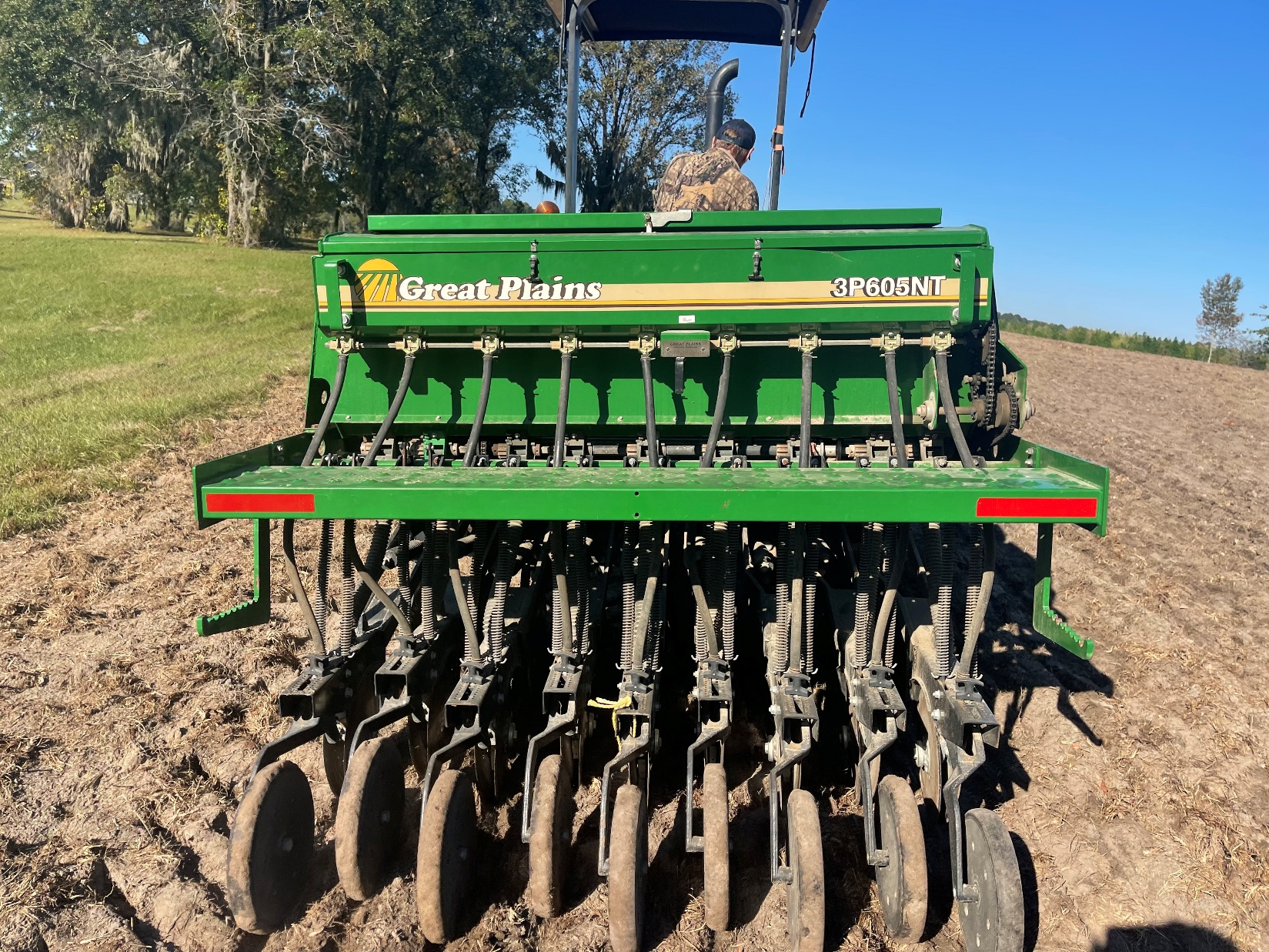
Planting fall and winter cover crops help to improve soil health, reduce runoff, and manage weed pressure when a garden is not being planted for a season.
Carmen Ketron, ©2026, Clemson Extension
Lawns
- Fall is the ideal time to get a soil test for your lawn. Lime takes months to change soil pH, so testing now gives you a head start before spring green-up.
- Annual bluegrass and other winter weeds sprout as soil temperatures cool. If you haven’t applied a fall pre-emergent herbicide yet, do it now. Skip it on any fescue lawn you’ve just overseeded.
- Keep the mowing height raised on warm-season lawns through the last cuts of the season. Taller grass builds deeper roots, stores more energy for spring, and helps crowd out winter weeds.
Landscape Flowers & Shrubs
- Put down the pruners. Azaleas, camellias, and bigleaf and oakleaf hydrangeas have already set next year’s flower buds, and fall pruning can push tender growth that frost will damage. Check Pruning Hydrangeas and Pruning Shrubs before you cut.
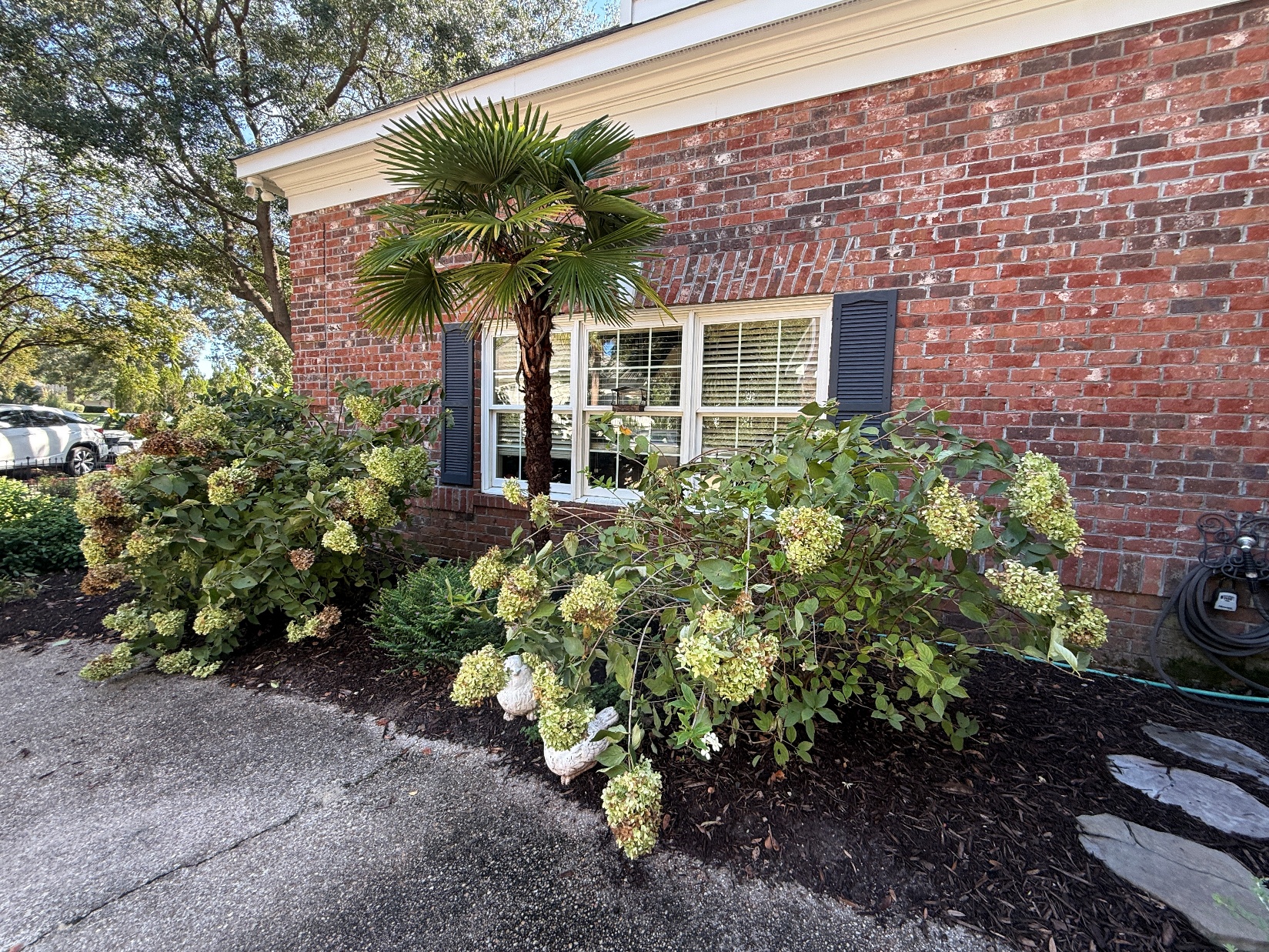
Different species of hydrangeas grow on either new wood or old wood, this determines when to prune them back.
Carmen Ketron, ©2026, Clemson Extension
- Faded perennials such as coreopsis and black-eyed Susans can be cut back, but consider leaving them standing until early spring. Seed heads feed songbirds, while hollow stems and fallen leaves shelter overwintering beneficial insects.
- Stop fertilizing trees and shrubs for the season. Late feeding encourages soft growth that is easily injured by cold. Top-dress beds with compost or mulch instead.
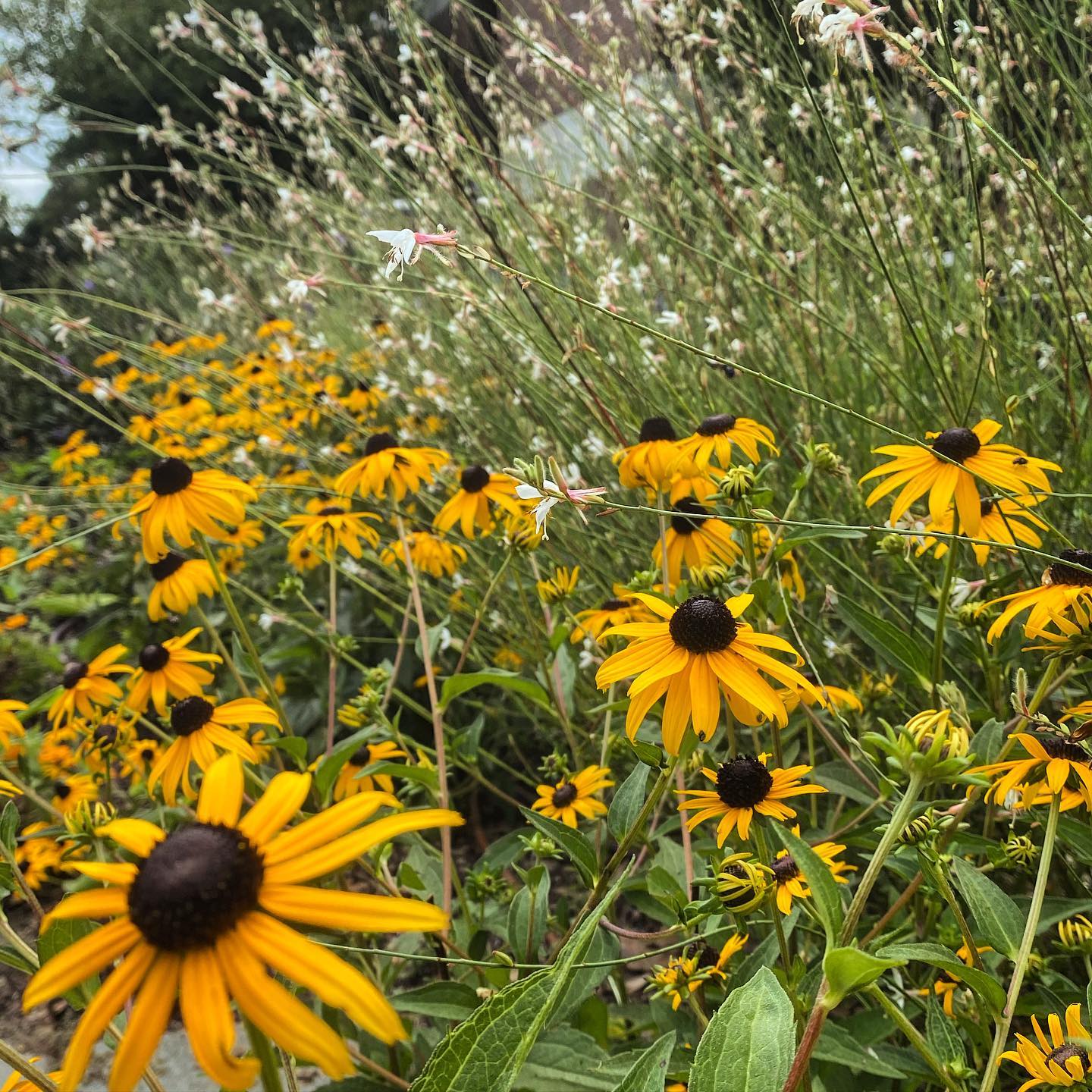
Late summer flowers like rudbeckia can serve as a food source for song birds if you leave their seed heads on the stem through winter.
Carmen Ketron, ©2026, Clemson Extension
Upstate Region – Ginger Long
October Gardening Tips for the Flower Garden
- Plant cold-hardy annuals such as pansies, Johnny-jump-ups (violas), snapdragons, ornamental cabbage and kale. These can be grown in containers or flower beds for color in fall, winter, and spring.
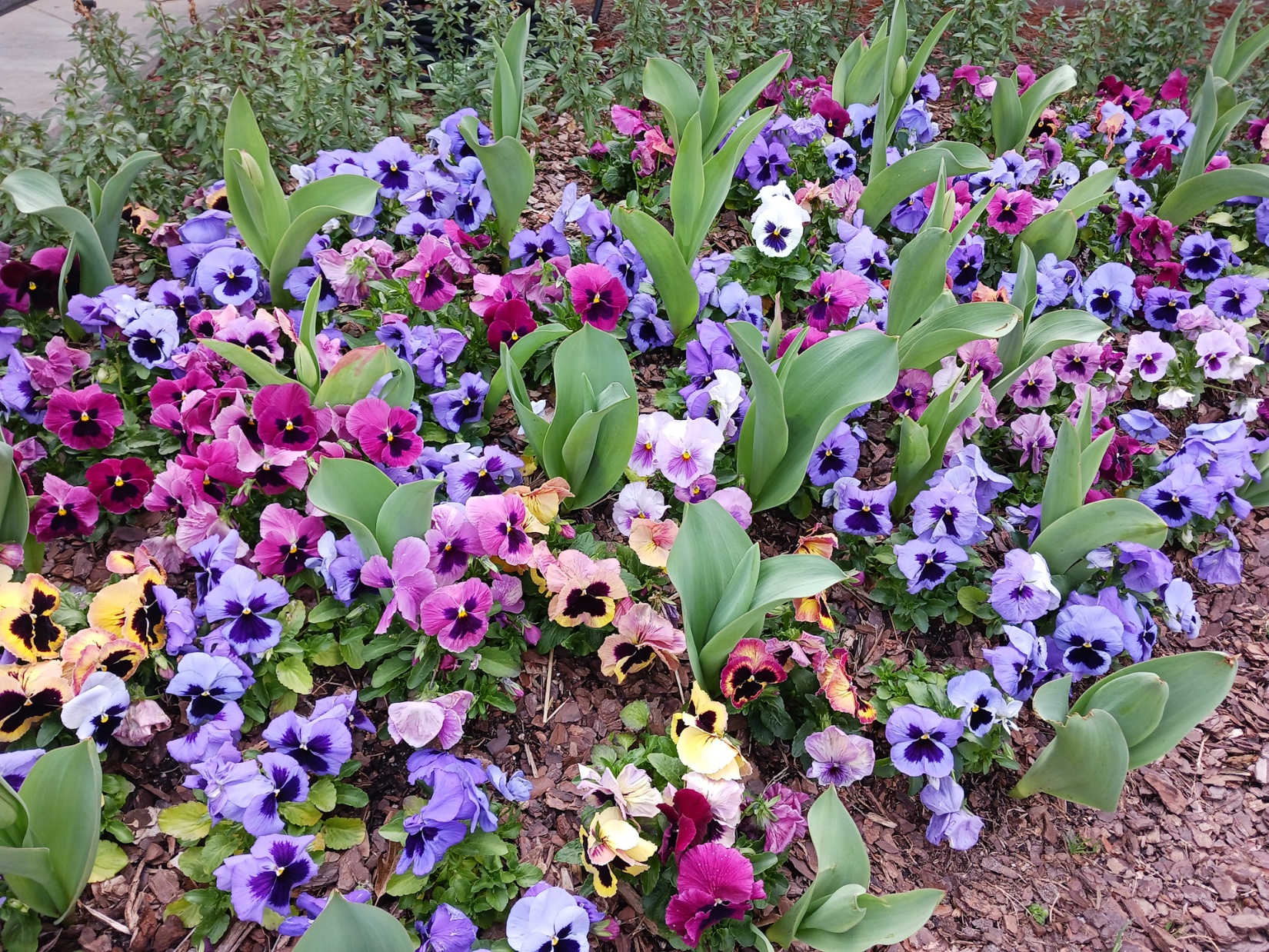
Matrix® Coastal Sunrise Mix pansies (Viola x wittrockiana) bloom from fall through spring.
Ginger Long, ©2024 HGIC, Clemson Extension
- Daffodils, tulips, crocuses and other spring-flowering bulbs can be found in stores this month. Purchase now and store them in a cool place that remains below 60⁰, such as a refrigerator drawer. Plant the bulbs when the soil temperature stays below 60⁰, typically starting in late October.
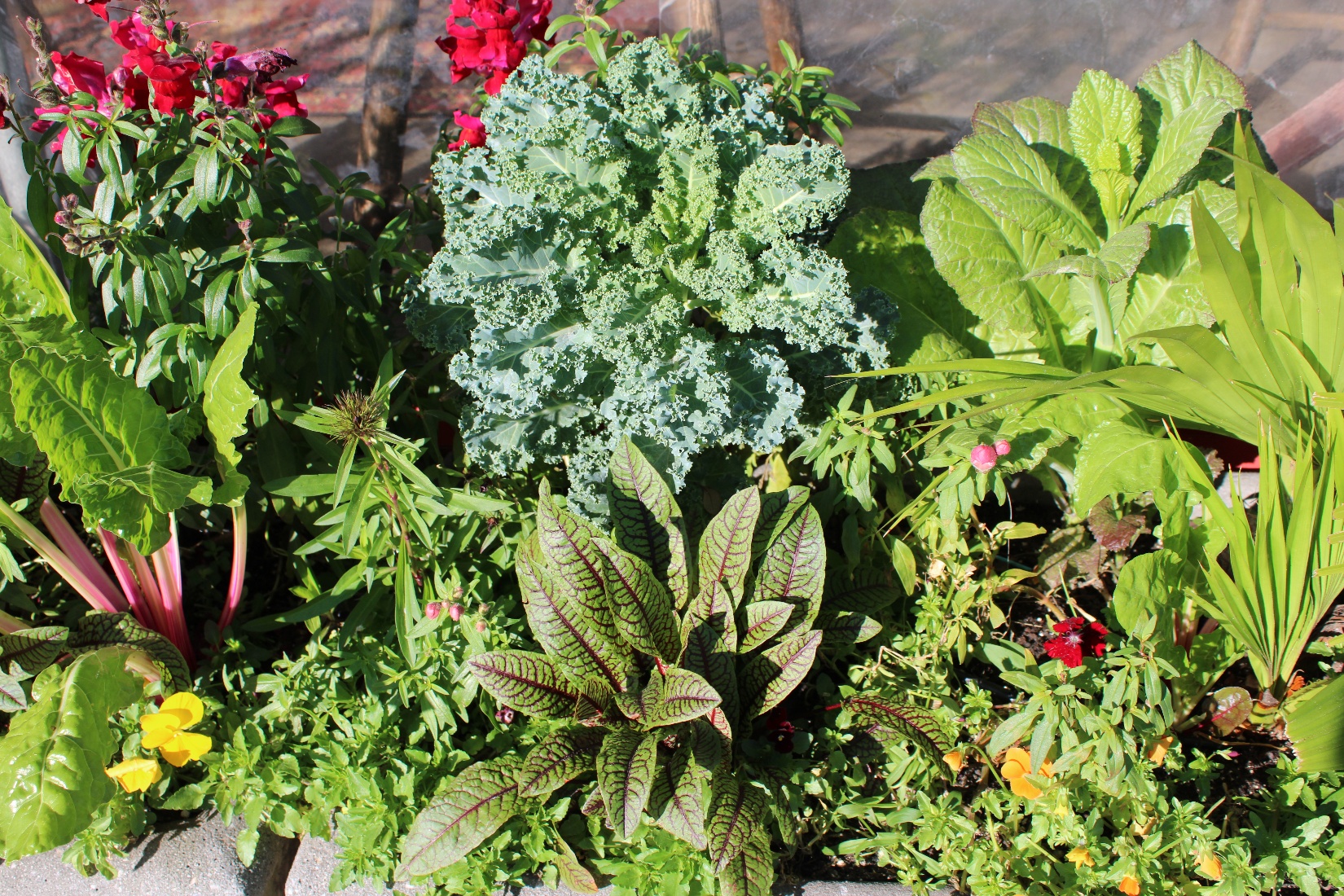
Cool-season vegetable plants add colorful and interesting foliage to a planter. Plants above include Swiss chard, red-veined sorrel, ornamental kale, and mustard.
Ginger Long, ©2024 HGIC, Clemson Extension
October Gardening Tips for the Vegetable Garden
- Plant garlic and onion plants before the middle of the month. Garden peas can be planted until the end of the month.
- Finish pulling up and disposing of summer crops to reduce the risk of overwintering diseases.
October Gardening Tips for Fall decorating
- If you love mums (Chrysanthemum spp.), be sure to pick them when they’re in bud so the flowers will last longer than those in full bloom at the time of purchase.
- To water your new mum, place it in a bucket of water for up to 30 minutes. Soaking the plant will ensure maximum water adsorption.
- When shopping for pumpkins, avoid those with splits, soft spots, or depressed areas.
- Carry pumpkins in your arms and not by the stem, so the stem does not break off.
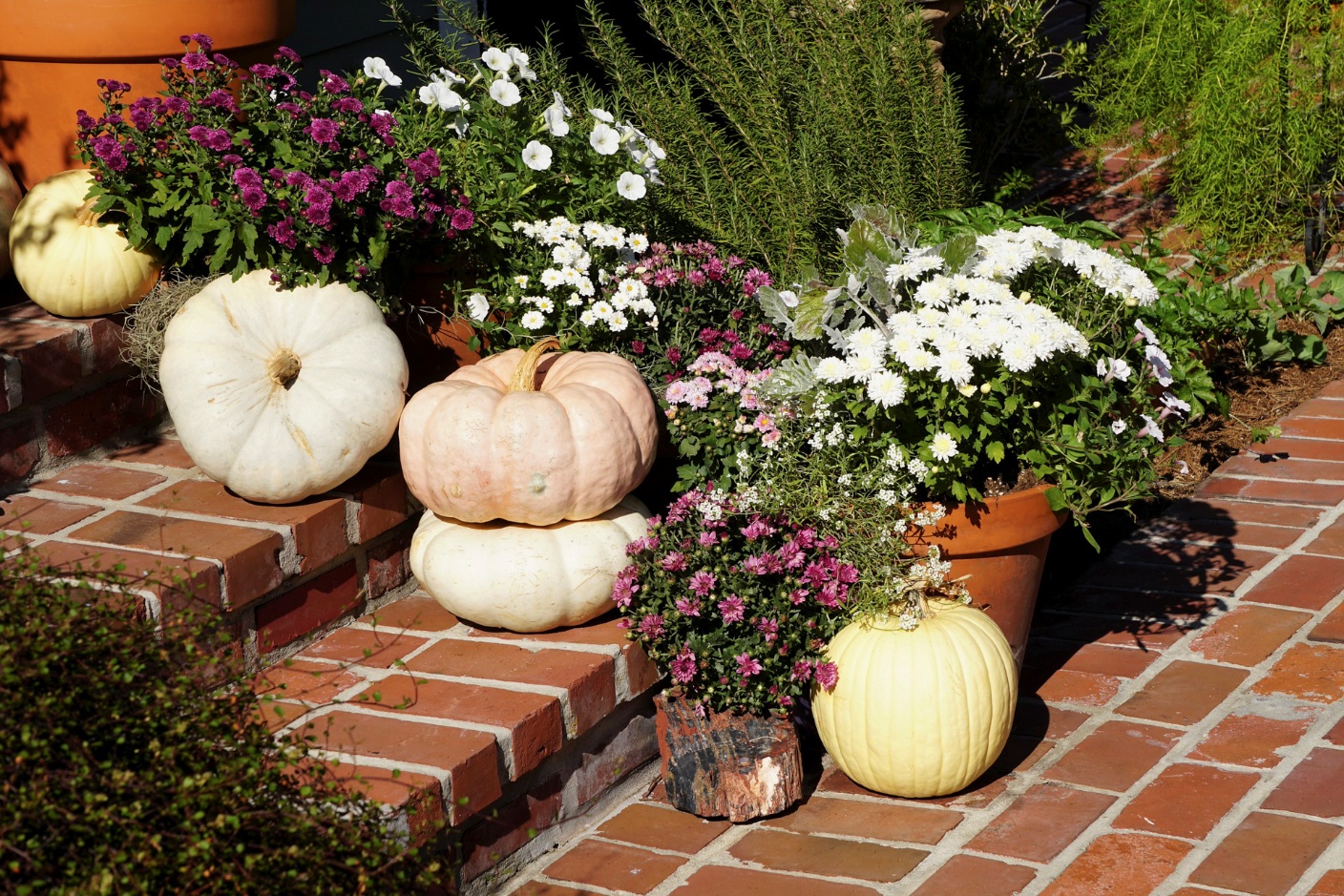
Pumpkins and mums (Chrysanthemums) add interest and color to front porches and entryways in autumn.
Barbara H. Smith, ©2022 HGIC, Clemson Extension
Alt text: Pumpkins arranged with potted chrysanthemums on a brick porch.
October Gardening Tips for Houseplants
- Prepare houseplants to move indoors before nighttime temperatures drop below 50°F, usually in early to mid-October. Inspect plants for pests before bringing them indoors.
October Gardening Tips for Drought and Watering
- Most of the Upstate is abnormally dry or in a moderate drought. Go to the US Drought Monitor site to see the status of your county.
- October and November are the driest months of the year if there is no tropical storm activity.
- Pay close attention to the water needs of plants that have been recently planted. Even though temperatures have cooled, the soil remains dry.
October Gardening Tips for Lawn Care
- Mow fescue lawns at 2.5 to 3 inches in height. Ensure the lawn receives one inch of water per week via irrigation or rainfall.
- Warm-season lawns such as centipede, St Augustine, zoysia, and Bermuda can be treated for fungal diseases like Large Patch in October. Apply fungicides mid-October and again in early November.
- Fire ant bait should be applied in late September or early October. Make a second application the following spring in late May/early June. Broadcast the bait rather than treating individual mounds for the most effective results.
October Gardening Tips for Soil Testing
October is a good month to have your soil tested. Instructions for collecting samples are in our factsheet, Soil Testing. Take samples to your county Extension office for testing by the Clemson Agricultural Service Laboratory