Water-Smart Habits Help Reduce Stormwater Runoff in South Carolina
April is the perfect time to refresh your yard and home habits to help make a positive impact on the environment, especially regarding stormwater runoff.
When it comes to saving water, it doesn’t have to be complicated – just a few simple habits can go a long way both at home and in your community!
As a Water Resources Agent, I often get questions from clients regarding stormwater runoff in their yard landscapes around this time of year.
In this blog, there are ways to reduce stormwater pollution in South Carolina to help celebrate Earth Day!

Lake Hartwell Sunset
Photo Credit: Ray Felton, @2025 Ray’s Natural Media
Start Small: Capture Rainwater and Water Your Yard Wisely
Try focusing on the little things first – think about the ways you use water daily when preparing for the spring planting season in your yard.
Do you get excited and end up overwatering and overfertilizing your lawn without realizing it, hoping the grass will get greener quicker?
Be sure to take the time for a soil test and calibrate your irrigation systems properly.
Increased spring rain showers are also a great opportunity to collect rainwater for your lawn and garden, wash your car, and more!
Rain barrels can help store runoff from your roof and reuse it for watering plants, reducing your reliance on treated tap water.
Many Extension Offices across the state run spring rain barrel sales. Contact your local Water Resources Agent to find out more.

Rain barrel collecting roof runoff to reuse water for garden irrigation in a South Carolina yard
Anaston Porter, 2025 Water Resources Agent Clemson Extension
Why Being Stormwater Smart Protects South Carolina Waterways
It’s worth remembering that what we do in our yards doesn’t stay there – rain can carry fertilizers, pet waste, and debris into nearby streams.
These streams can then flow into larger water bodies, such as ponds and lakes, where much of our drinking water across the state comes from.
A few small changes can help keep our local waterways clean!
Learn more about the watersheds in South Carolina by visiting the SCDES Watershed Atlas.
Be Septic Safe to Protect Groundwater
If you have a septic system, be mindful of what goes down the drain when you use the sink and toilet.
Fats, oils, grease (FOG) from cooking, paint, cat litter, paper towels, coffee grounds, and anything other than toilet paper and human waste should be avoided from going down the drain!
Proper septic care helps prevent groundwater contamination and costly repairs.
Check out Clemson Extension’s Be Septic Safe Website to learn more about caring for your septic system.
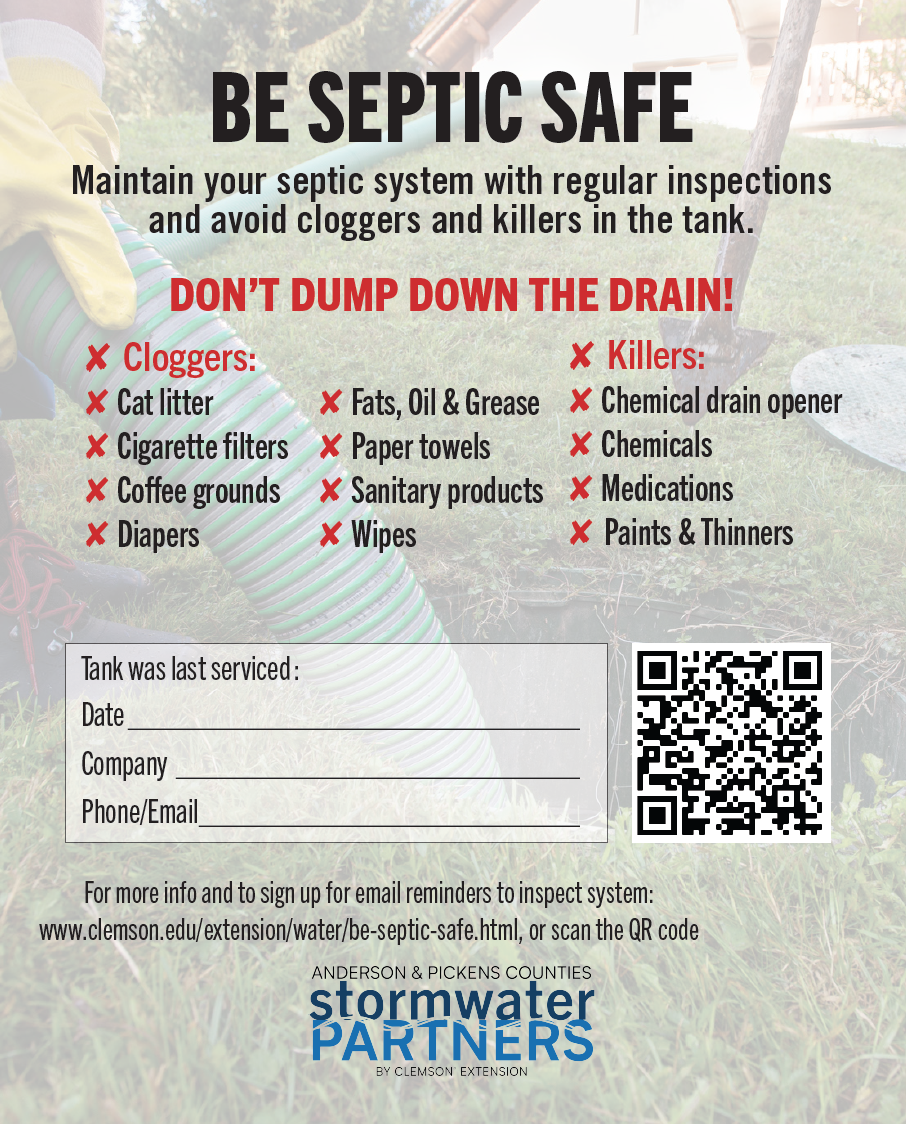
Graphic listing items that should never go down septic systems, including fats, oils, grease, wipes, chemicals, medications, and paper products.
Photo credit: Be Septic Safe Maintenance Checklist. Clemson Extension, Anderson Pickens Counties Stormwater Partners
Make Water-Smart Habits a Community Effort
Earth Month is a great time to think beyond our own homes.
Whether it’s joining a local cleanup, attending a workshop, or just sharing tips with neighbors, those small actions grow when we work together!
At the end of the day, being water smart isn’t about doing everything perfectly – it’s about starting somewhere and building better habits over time.
Talk to your local Water Resources Agent today to learn more about how you can keep our waterways clean in South Carolina!

Community members participating in a local cleanup event to protect waterways and reduce pollution
Anaston Porter, 2025 Water Resources Agent Clemson Extension