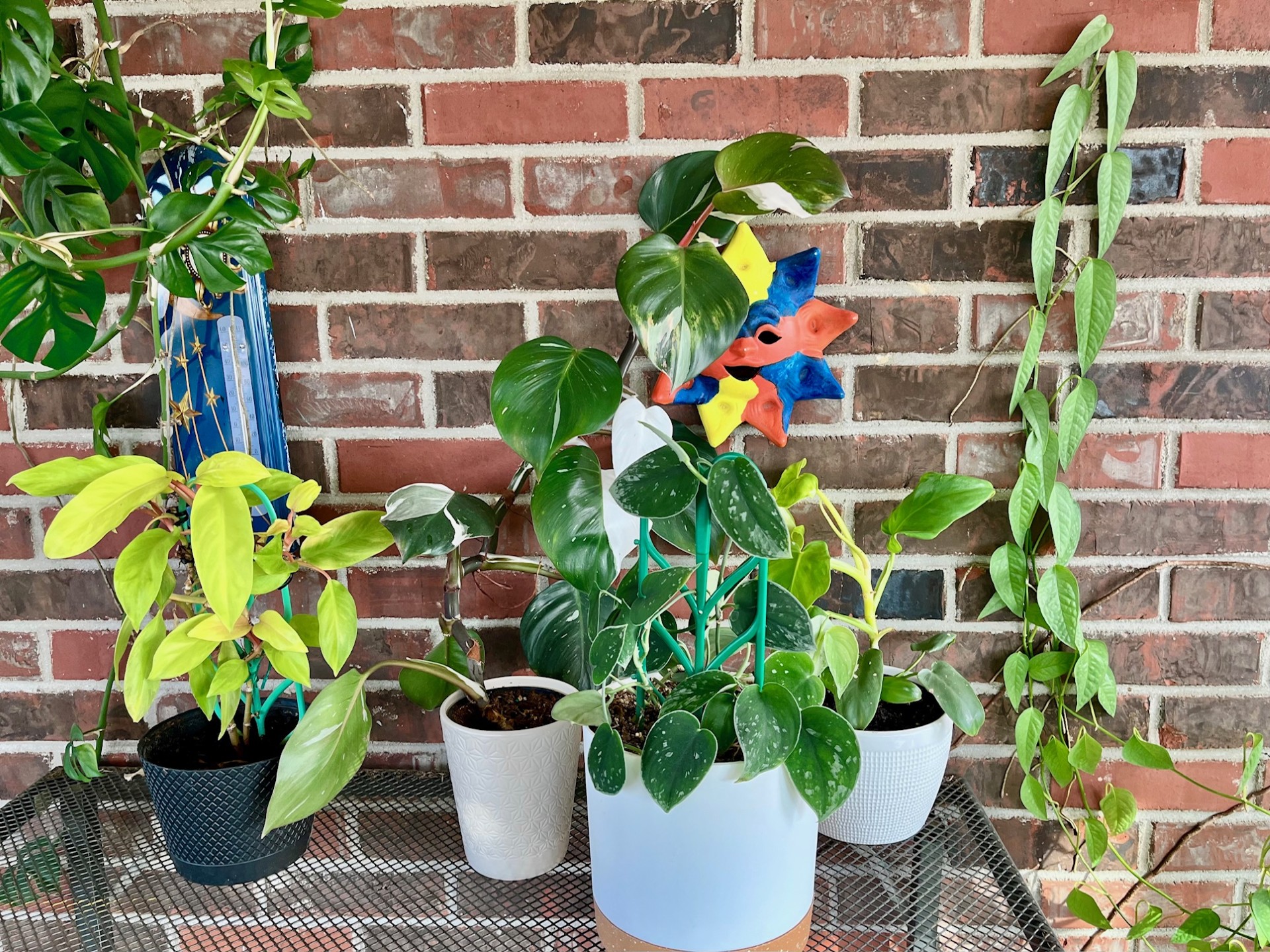
A mixed grouping of potted pothos (Epipremnum sp.) and philodendron (Philodendron sp.) houseplants.
Julia Nichols, ©HGIC 2026, Clemson Extension
Why an End of Winter Houseplant Checkup Matters
Longer days have returned, and your houseplants are definitely noticing, as well. The end of winter sunlight signals to them that the growing season is on its way!
Winter is a common time for pests, diseases, and a slight decline in houseplants. By March, a houseplant owner should inspect for pests, adjust watering for the upcoming growing season, clean foliage, and prep for spring and summer growth.
How to Clean Houseplant Foliage at the End of Winter
Cleaning foliage is a simple and easy task. Wipe the upper side of your plant’s leaves with a damp microfiber cloth. This will remove any dust and debris that has built up over the fall and winter.
Dust and dirt buildup on plant leaves can inhibit photosynthesis and lead to a decline in plant health. Be sure not to leave leaves soggy after wiping. Wipe again with a dry cloth if there are excessive water droplets or trails on leaves.
How to Inspect Houseplants for Pests After Winter
Check all parts of your houseplants for pests: under leaves, on stems, under fronds, and so on. Mealybugs, scale, and fungus gnats will take advantage of a houseplant that has become stressed from subpar winter growing conditions.
Occasionally, a magnifying glass or jeweler’s loop can help locate smaller pests. If pests are found, an organic-based pesticide should be used for indoor purposes. For help with pest identification and a list of acceptable pesticides, see HGIC 2252, Common Houseplant Insects & Related Pests.
How to Prune and Trim Houseplants in Late Winter
Take this time to lightly prune your houseplant. Remove any dead, yellow, or leggy growth with sanitized snips. Sanitize your snips between each plant, as well, to minimize the spread of disease.
Trimming leggy or stretched-out growth can help encourage fuller, bushier growth throughout the growing season. Removing yellow or dead-looking growth will help minimize the introduction of pests and help the plants look cleaner.
How to Adjust Watering for Houseplants at the End of Winter
With longer days, your plants’ need for water may increase. Slowly ease back into your regular watering schedule for the growing season. Avoid overwatering or soggy soil.
Check the top 1 to 2 inches of potting mix with your finger for moisture levels. For more information on how to properly water houseplants, see HGIC 1459, Indoor Plants-Watering.
When to Fertilize Houseplants After Winter
Fertilization should not begin until spring begins. Wait until active growth begins in plants before beginning your spring and summer fertilization schedule for houseplants.
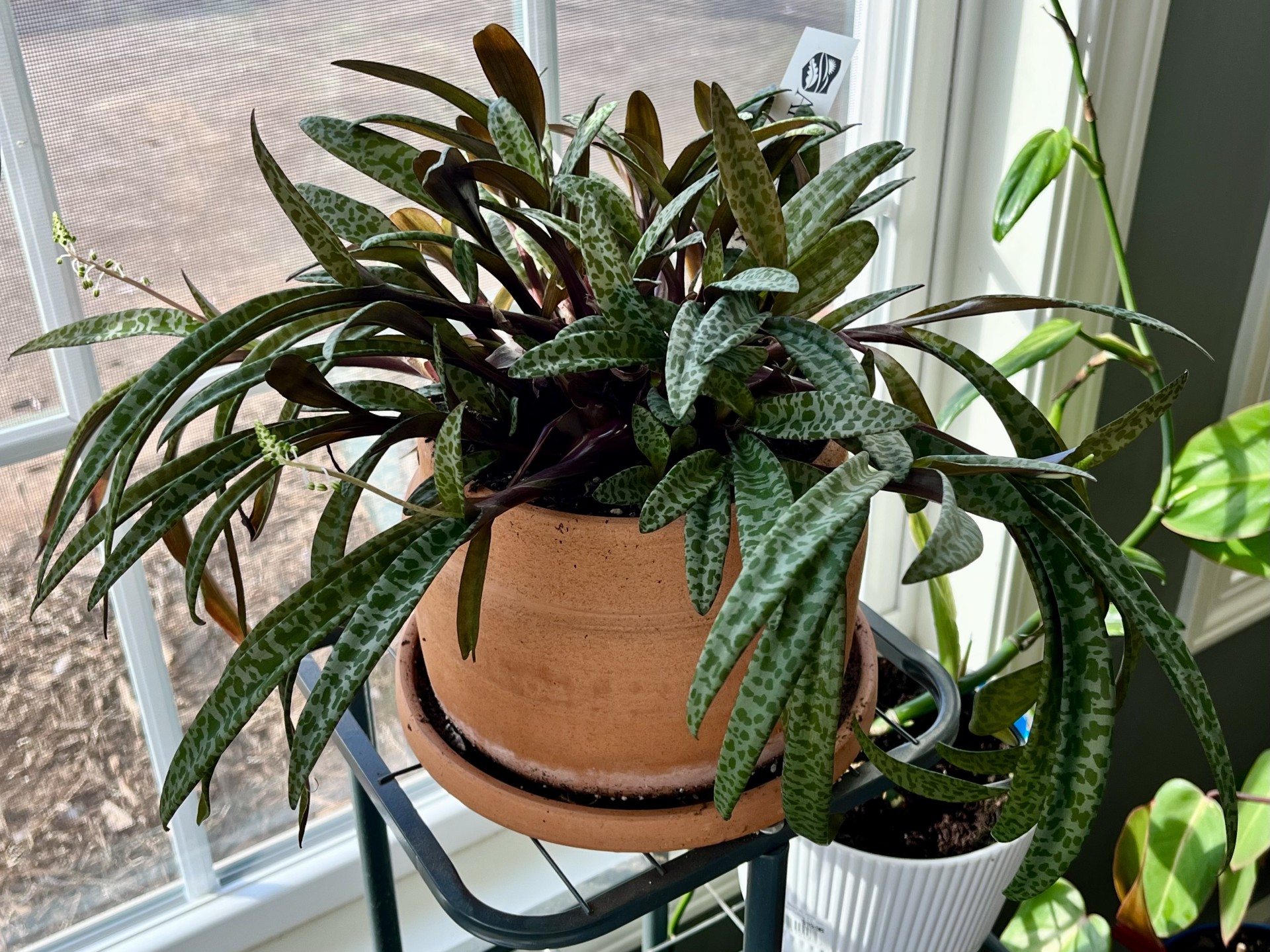
A Silver Squill (Ledebouria socialis) houseplant begins to bloom in a terracotta pot.
Julia Nichols, ©HGIC 2026, Clemson Extension
Why It’s Too Early to Move Houseplants Outdoors
Avoid moving houseplants outdoors at this time; if you have patio or porch plants, wait until nighttime low temperatures are consistently above 50°F. Temperatures below 50°F can damage most tropical plants.
Plants can be moved closer to windows as the sun gets higher. Avoid sun scorch if plants were kept in low lighting. Gradually adjust the lighting as you increase the light. If the houseplants were kept indoors in a low-light environment, avoid sun scorch by gradually increasing their light exposure.
For more information on moving plants outside, see HGIC 1454, Moving Houseplants Indoors & Outdoors.
Additional Resources
https://hgic.clemson.edu/factsheet/houseplant-diseases-disorders/
https://hgic.clemson.edu/factsheet/indoor-plants-soil-mixes/
https://hgic.clemson.edu/factsheet/indoor-plants-cleaning-fertilizing-containers-light-requirements/