Quick Grow Guide for Geo Plant (Geogenanthus spp.)
Plant Type: Indoor
Best Soil: Rich organic soilless mix; good drainage; peat moss or coco coir, fine vermiculite, perlite, and worm castings blend
Sunlight: Indirect bright light to low light
Watering: Moist, not soggy; allow the top inch of potting medium to dry between waterings
Care Tips: Provide warm temperatures; medium to high humidity; grow in a wide pot or hanging basket|
Note: Pet safe
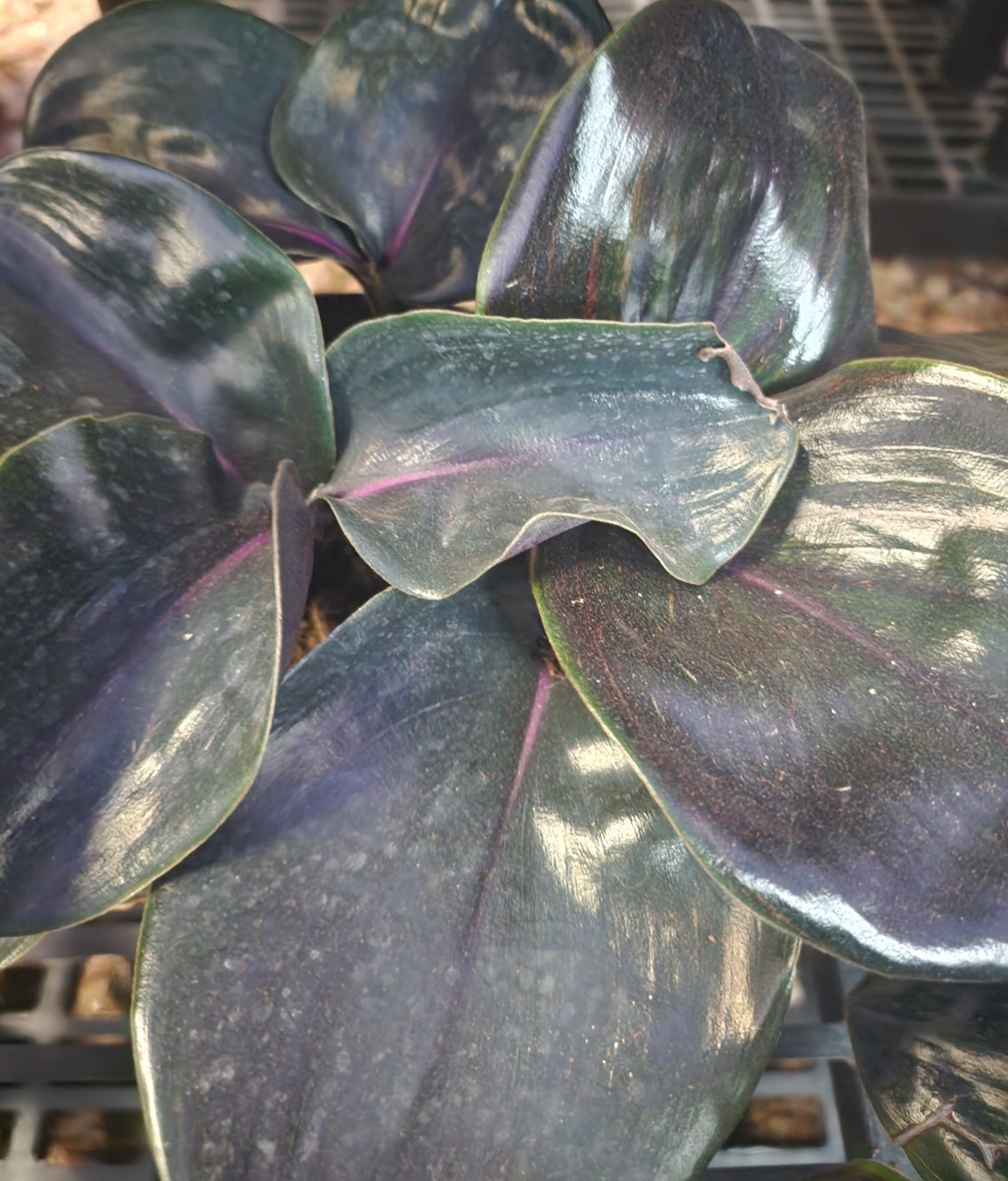
Geo plants (Geogenanthus ciliatus) have thick purplish-black leaves.
Jackie Jordan, ©2024, Clemson Extension
What is a Geo Plant (Geogenanthus spp.) and How Does It Grow?
Geo plants (Geogenanthus) are herbaceous, groundcover, understory plants native to the Amazon rainforest.
They have large oval, leathery leaves with striking coloration.
Only three species have been described in the Geogenanthus genus, and all three are found in the horticultural trade as uncommon houseplants.
Geo Plant Size and Growth Habit Indoors
Understanding the mature size of geo plants helps with proper placement indoors.
- Height: 6 to 10 inches
- Spread: 12 to 24 inches
Ornamental Features of Geo Plants Indoors
Geo plants are grown primarily for their distinctive foliage, which contributes to their strong ornamental appeal indoors.
- Leaves: Large, oval with purple undersides
- Stems: Purple
- Flowers: Small; three fringed, purple petals; rarely seen in cultivation; inflorescences emerge from rhizomes
Common Problems with Geo Plants
Although generally low maintenance, geo plants may occasionally exhibit minor issues related to environmental conditions or pest pressure.
- Browning on leaf edges: Low humidity
- Brown spots: Too much light
- Pests: Spider mites and mealybugs
For more information on controlling common houseplant insects, see HGIC 2252, Common Houseplant Insects & Related Pests.
Best Growing Conditions for Geo Plants Indoors
Proper placement, moisture management, and humidity are essential for healthy growth.
Light Requirements for Geo Plants
Geo plants are adapted to grow in shade. Locate the plants near a north- or east-facing window.
A sheer curtain may be needed to protect leaves from intense afternoon sunlight if placed in a southern or western-facing window.
Temperature Requirements for Geo Plants
- Warm temperatures, between 65°F and 75°F
- Protect from temperatures below 50°F
Watering Geo Plants
These plants like to stay evenly moist; therefore, water them weekly.
For more information on proper watering practices, see HGIC 1459, Indoor Plants—Watering
Humidity Needs for Geo Plants
- Requires medium to high humidity, ideally between 50 to 80%.
- Increase humidity by using a humidifier or covering the plant with a glass cloche.
Fertilizing Geo Plants
- Feeding: Moderate
- Growing season: Fertilize at half strength once a month during periods of active growth (spring and summer) with a balanced houseplant fertilizer (10-10-10 or 20-20-20)
- Dormancy: Do not fertilize in fall or winter
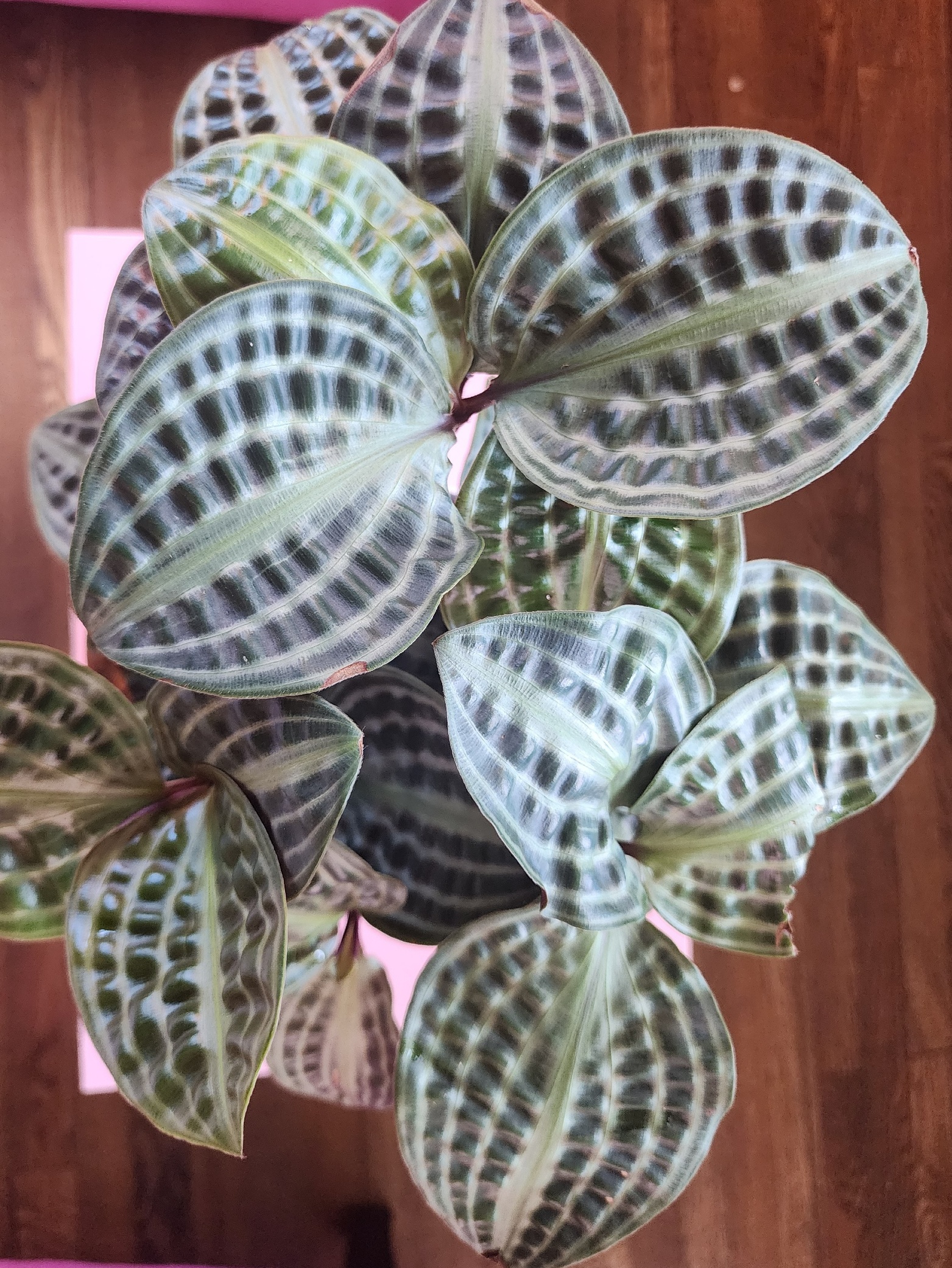
A picture of the crinkled texture of the green striped leaves of Geogenanthus poeppigii.
Jackie Jordan, ©2026, Clemson Extension
Geo Plant Species and Varieties
Several species of Geo plants are available in cultivation, each with distinctive foliage traits.
Geo Plant (Geogenanthus ciliatus)
- Shiny, waxy, thick leaves
- Starts deep green with purple midribs, then darkens to a dark purplish-black
Seersucker Plant (Geogenanthus poeppigii)
- Oval leaves with puckered or undulating texture.
- Striped pattern with alternating light and dark green stripes.
Geogenanthus rhizanthus
- Large elliptical leaves with dark green bases.
- Silver stripe on the midrib of the leaf.
Additional Sources
Originally published 3/26