Quick Guide (At a Glance) — Yellownecked Caterpillar
Common name: Yellownecked caterpillar
Scientific name: Datana ministra
Primary damage: Leaf feeding; can cause partial to complete defoliation
Impact on plants: Most plants recover, but repeated or heavy defoliation may reduce plant health
Key behavior: Caterpillars feed in groups and raise both ends of their bodies when disturbed
Season of activity: Late season; larvae present summer through early fall
Most common hosts: Oaks, maples, birches, elms, walnuts; also apple, pear, cherry, and blueberries
Management need: Usually unnecessary on landscape plants; may be warranted on fruit trees or shrubs
How Yellownecked Caterpillar Damage Affects Trees and Shrubs in South Carolina
The yellownecked caterpillar (Datana ministra) is a common late-season defoliator of many different woody plants in South Carolina. While ten Datana species (all similar in appearance) can be found in our state, the most common is the yellownecked caterpillar.
Larvae (i.e., caterpillars) feed on leaves, sometimes causing complete plant defoliation. While this damage can stress the host, most grow new leaves and survive or the damage is late enough in the season that the host has already received enough nutrients from the leaves to survive. However, heavy or repeated defoliation can impact plant health and may contribute to plant mortality.
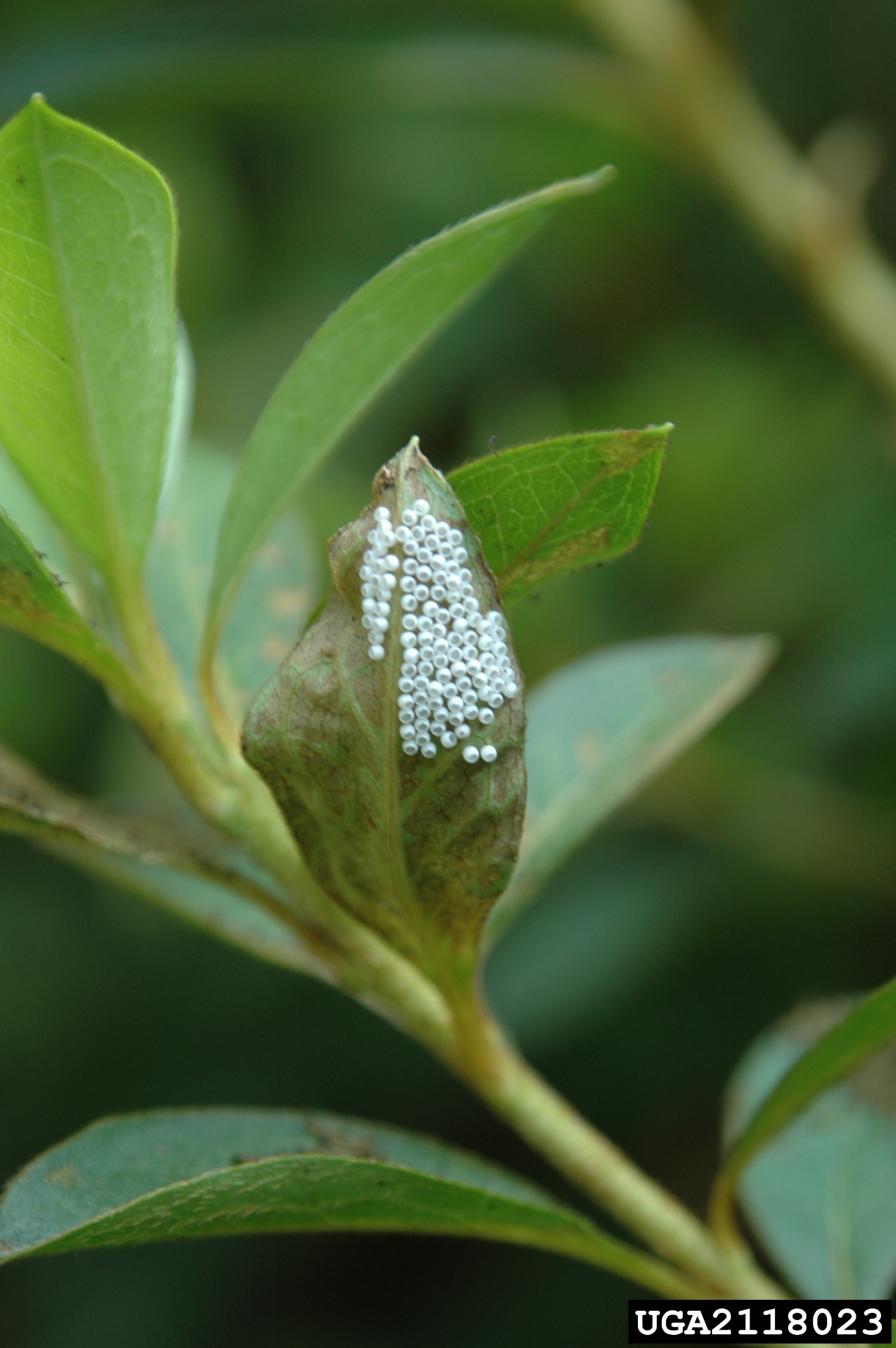
Yellownecked caterpillar eggs are often laid on the underside of leaves.|
Photo by Chris Evans, University of Illinois, Bugwood.org
Identification and Life Cycle of the Yellownecked Caterpillar
Eggs and Early Feeding
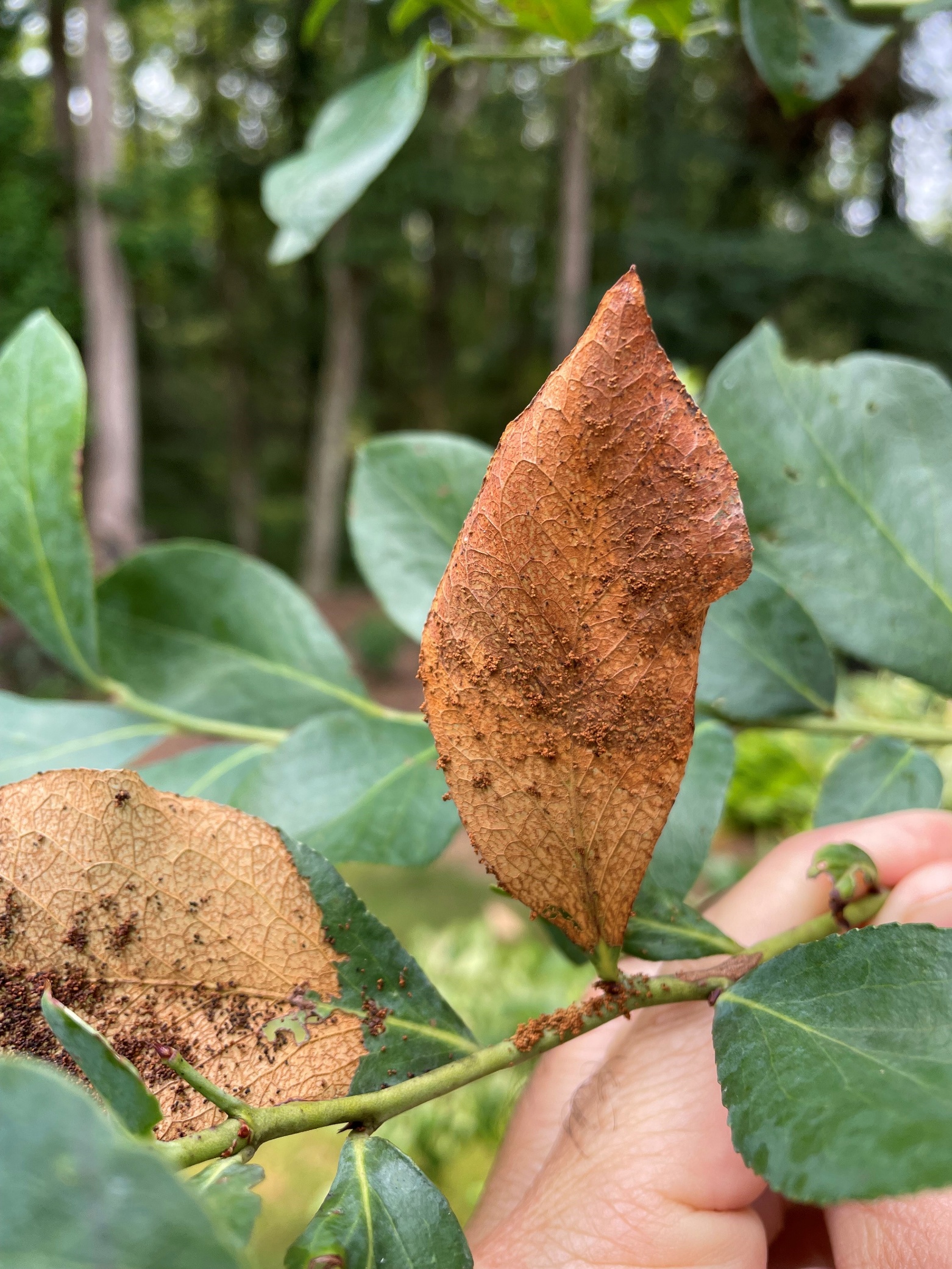
Adult females lay egg masses (which can contain over 100 eggs) on the underside of leaves. Eggs hatch and caterpillars feed on leaves, first “skeletonizing” the leaves by eating just partway through the leaf, which results in a brownish, almost see-through appearance, and then consuming the entire leaf.
Larval Appearance and Behavior
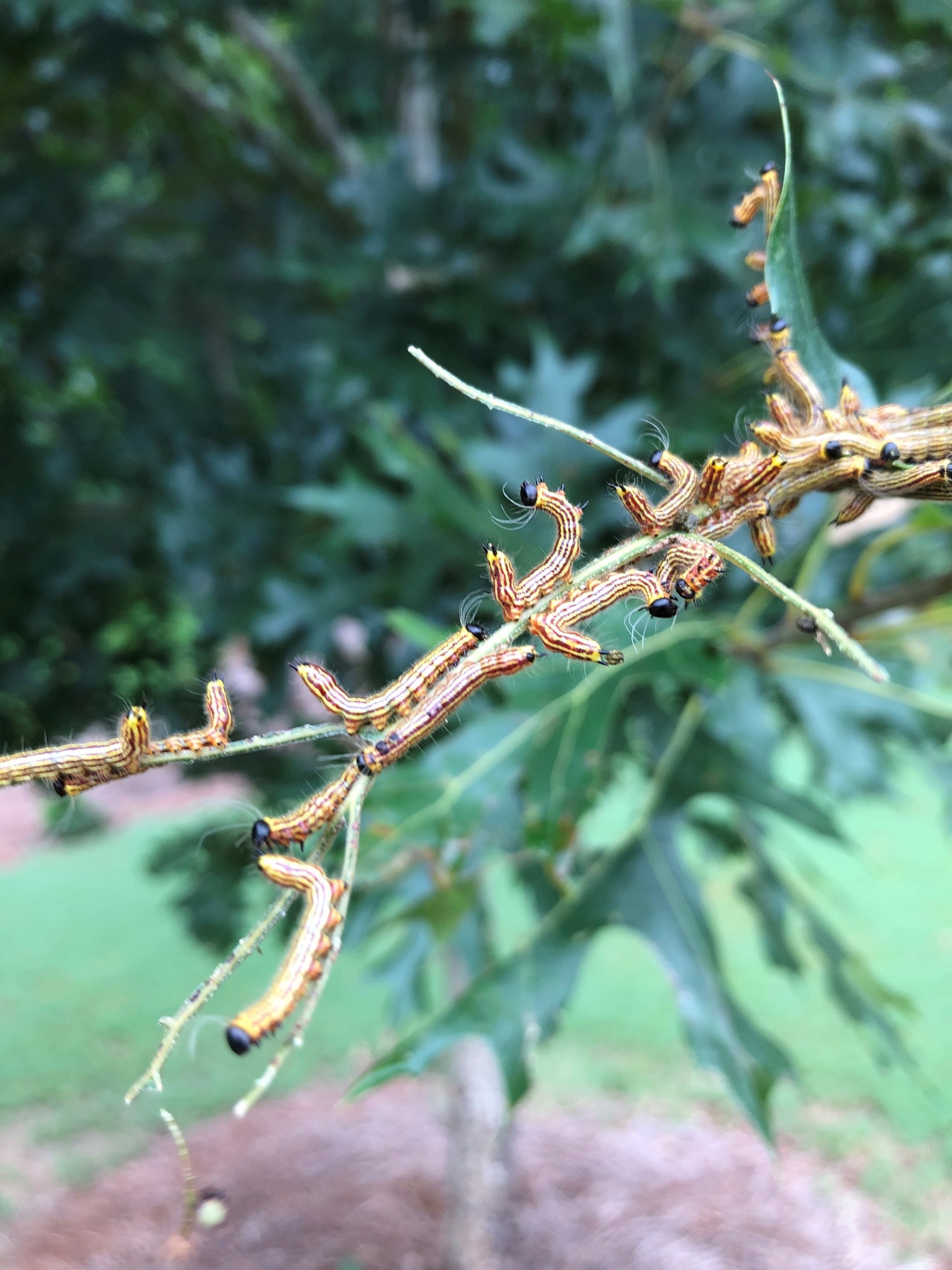
The caterpillars are initially small green worms which change in appearance as they grow (up to 2 inches long). Older larvae develop a black body and head with yellow to white stripes running the length of their bodies; these caterpillars get their name from the small bright yellow/orange patch right behind their head. Their bodies are covered in small hairs.
Yellownecked caterpillar behaviors:
- Feed in groups (gregarious)
- Raise their heads and back ends up to form a “U” shape when disturbed
- Emit a ball of brown fluid out of their mouth to scare off predators
- The brown fluid will stain your skin and clothes, so be careful if you handle these caterpillars!
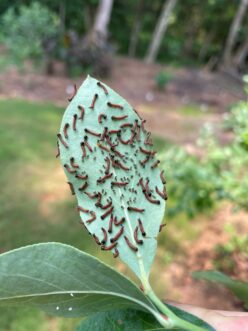
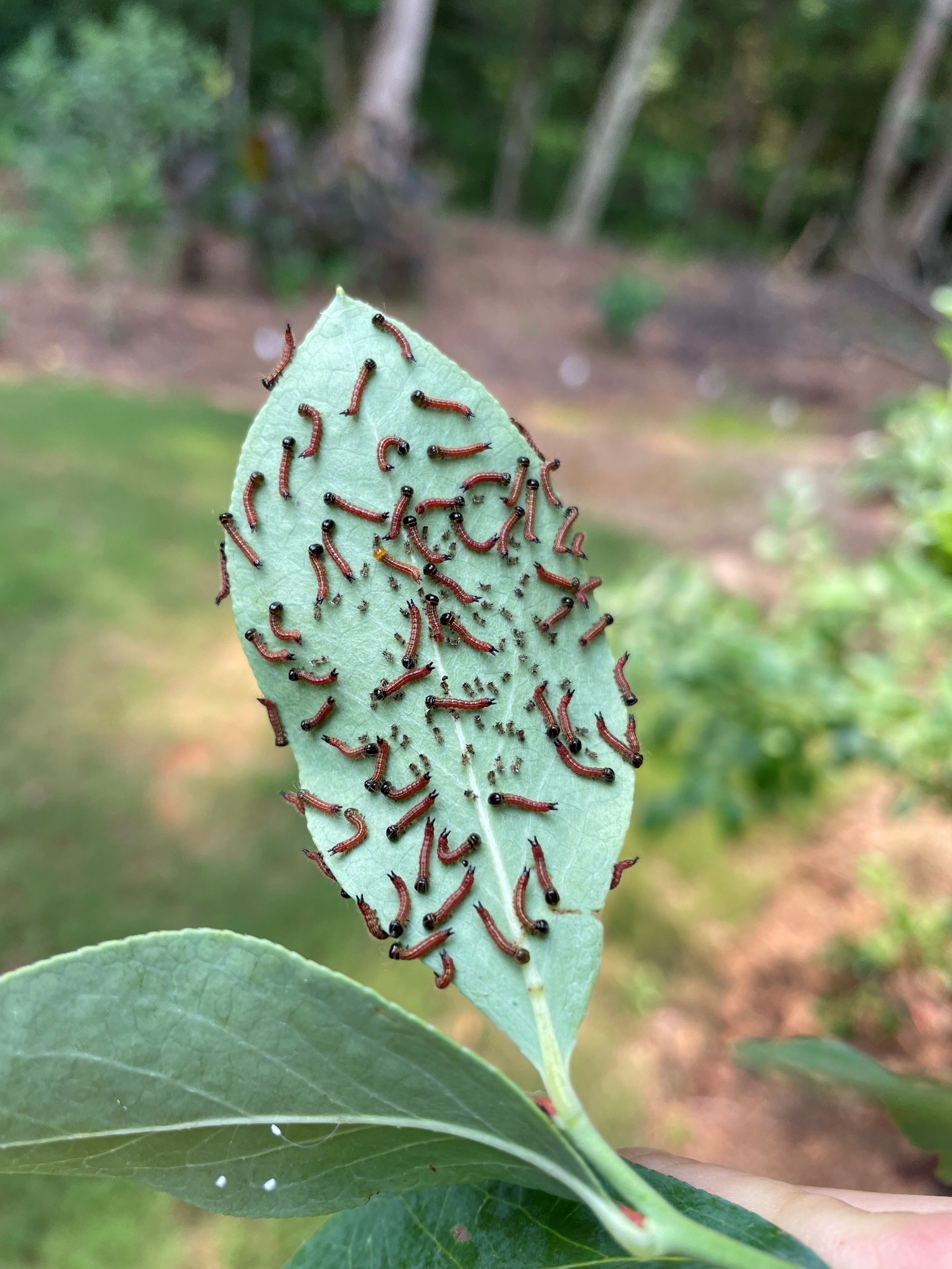
Young yellownecked caterpillars.
Photo by David Coyle, Clemson Extension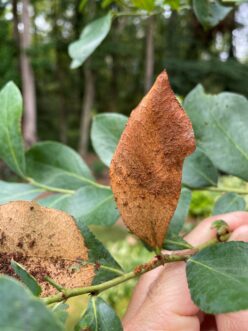
Skeletonized leaves from young yellownecked caterpillar feeding.
Photo by David Coyle, Clemson Extension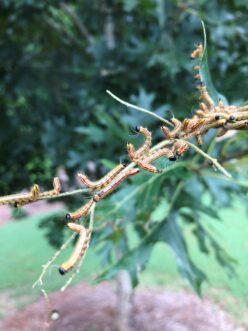
Older yellownecked caterpillars will consume the entire leaf down to the petiole and assume a “U” posture when disturbed.
Photo by David Coyle, Clemson Extension
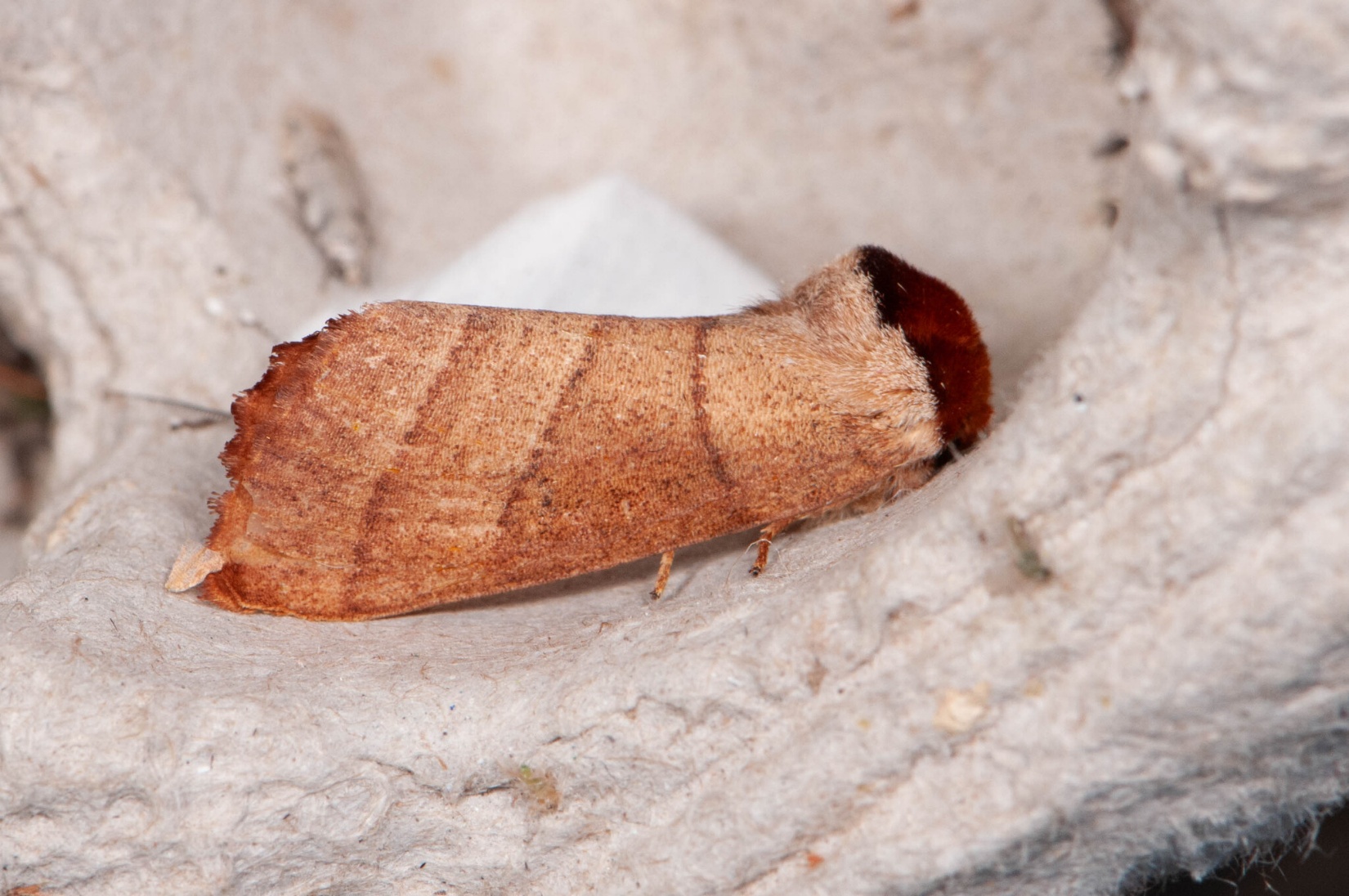
Adult yellownecked caterpillar moth.
iNaturalist Photo 573788632, (c) John Klymko, some rights reserved (CC BY-NC), uploaded by John KlymkoPupation and Adult Moths
Mature caterpillars drop down to the soil and pupate in August and September, spending the winter as a pupa in soil or leaf litter.
The light to reddish-brown adult moths emerge in early summer and are about an inch long (from head to end) when resting. Their wings have wavy lines that are slightly darker than the rest of the wing. The heads of adult moths are dark brown, and the moth resembles the end of a broken stick when resting.
Host Plants of the Yellownecked Caterpillar
Yellownecked caterpillars will feed on hundreds of woody species, including landscape and fruit trees, shrubs, and bushes.
Preferred trees
- Oaks (Quercus)
- Maples (Acer)
- Birches (Betula)
- Elms (Ulmus)
- Walnuts (Juglans)
Fruit trees and shrubs
- Apple (Malus)
- Pear (Pyrus)
- Cherry (Prunus)
- Blueberries (Vaccinium)
Management of Yellownecked Caterpillar
Management on landscape trees and shrubs is rarely recommended since most damage is localized on individual branches or areas, though smaller trees may be completely defoliated.
Biological Control
A diverse assemblage of natural enemies that feed on yellownecked caterpillars includes:
- Birds
- Parasitic flies and wasps
- Predatory insects such as stink bugs and assassin bugs
- Field mice (feed on the overwintering pupae in the soil)
When Intervention is Needed
Chemical or non-chemical management strategies are typically warranted when yellownecked caterpillars are feeding on fruit trees or shrubs.
Non-Chemical Management Options for Yellownecked Caterpillar
- Shake branches to dislodge caterpillars, where predators can eat them, or they can be stepped on.
- Spray the branch with a strong stream of water (e.g., out of a garden hose).
Chemical Management Options for Yellownecked Caterpillar
Insecticides such as Sevin (or other general use insecticides) are effective and easily obtained at most home & garden stores. Larvae should be targeted with insecticide use as they are the most susceptible life stage.
References
- Baker J. 2021. Yellownecked Caterpillar in the Landscape. NC State Extension PDIC Factsheet.
- Oten KLF, RM Jetton, and DR Coyle. 2023. Ecology, Impacts, and Management of Common Late-season Defoliators of Southern Hardwoods. Journal of Integrated Pest Management 14(1): 4.
Originally published 01/26