Quick Grow Guide for ZZ Plant
Plant Type: Indoor
Best Soil: A coarse, well-draining mix. 50% peat moss or coir-based potting soil, 25% perlite, and 25% sand
Light: bright, indirect to low light
Watering: Water 1-2 times a month, only after the potting medium has completely dried.
Care Tips: Do not overwater. Do not allow the plant to sit in water. Make sure the container is fully drained before setting it in a decorative pot or on a saucer.
Note: NOT Pet Safe
Indoor Plant Difficulty Level: Novice grower
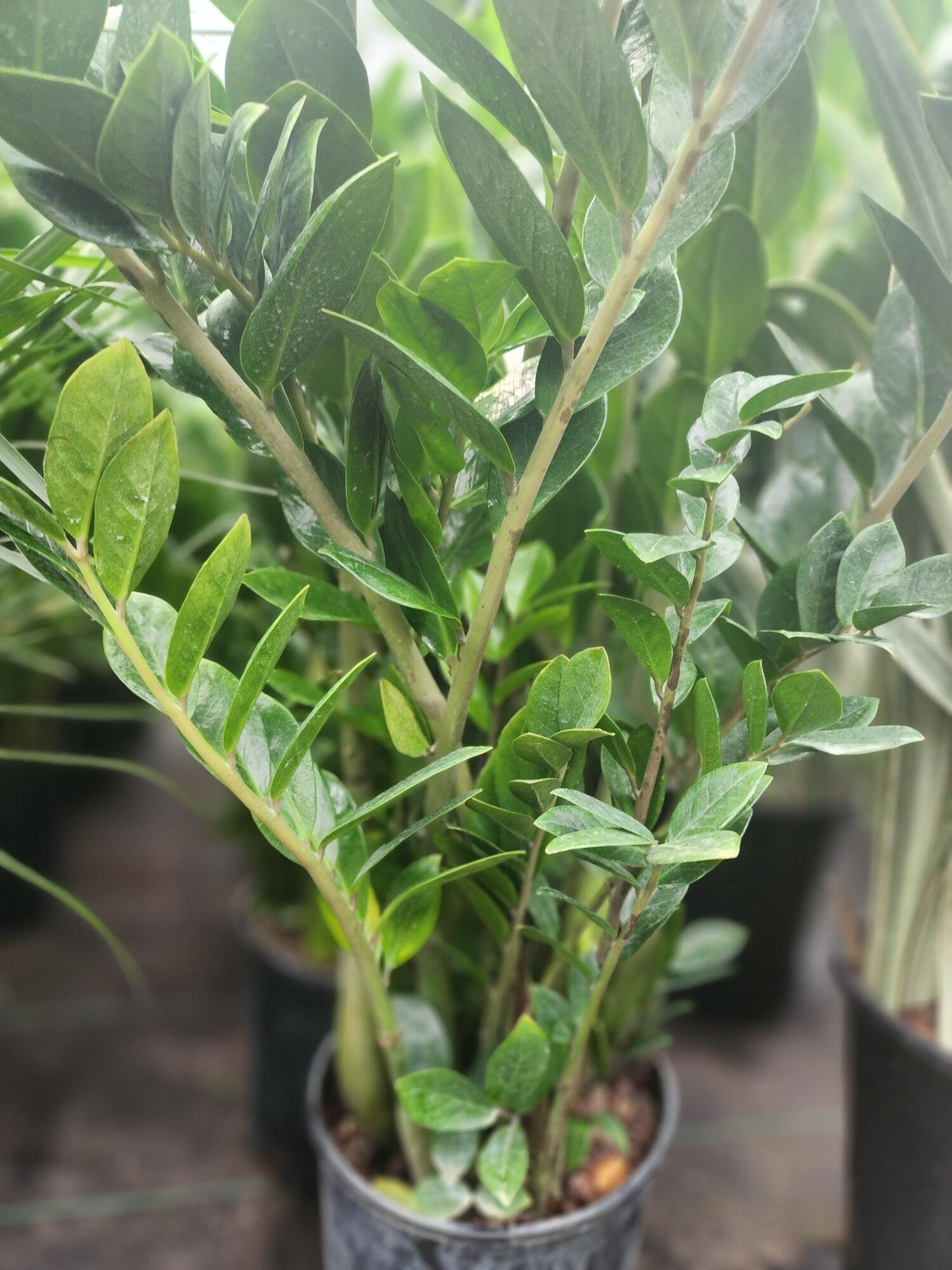
The thick glossy green leaves of ZZ plant
Jackie Jordan, ©2025, Clemson Extension
Why Grow a ZZ Plant Indoors?
The Zanzibar gem, or ZZ plant, provides a dramatic, evergreen, tropical aesthetic and is a great choice for those new to growing houseplants.
Native to Eastern Africa, from Kenya to South Africa, ZZ plants grow in the arid, open woodland forests of the savannah. ZZ plants have bulbous rhizomes that store water and are drought resistant.
They are tolerant of various light conditions and can be easily grown in darker rooms.
ZZ Plant Ornamental Features and Identification
Leaf Structure and Appearance
Upright, pinnately compound leaves grow directly from the rhizomes and can grow up to 4 feet.
Multiple shiny, thick, leathery, elliptical leaflets are attached to the stem, giving the plant a palm or cycad-like appearance.
In fact, ZZ plants are named after their close resemblance to the zamia cycad.
Plant Family and Flowering
However, ZZ plants are members of the Araceae family and related to peace lilies and Chinese evergreen.
They rarely flower, and the inflorescence has a light green spathe and a brown spadix.
ZZ Plant Size: Height and Spread
2 to 4 feet tall and 2 to 4 feet wide
How to Grow and Care for ZZ Plant Indoors
Light Requirements for ZZ Plant
ZZ plants are tolerant of a wide range of growing conditions.
They can survive in low-light conditions, but bright, indirect light will help speed up their very slow growth rate.
Locate ZZ plants anywhere except in full sunlight.
Temperature and Humidity Needs
ZZ plants are acclimated to arid conditions and will thrive with regular indoor humidity levels.
ZZ plants are sensitive to cold and should be kept above 60 °F.
Fertilizing ZZ Plants
ZZ plants are slow-growing and should be fertilized only once or twice during the growing season with a balanced fertilizer.
For more information on fertilizing indoor plants, see HGIC 1450 Indoor Plants – Cleaning, Fertilizing, Containers and Light Requirements.
Common ZZ Plant Problems and Solutions
No serious insect or disease problems.
Black spots on the stems are normal.
Overwatering can lead to root rot.
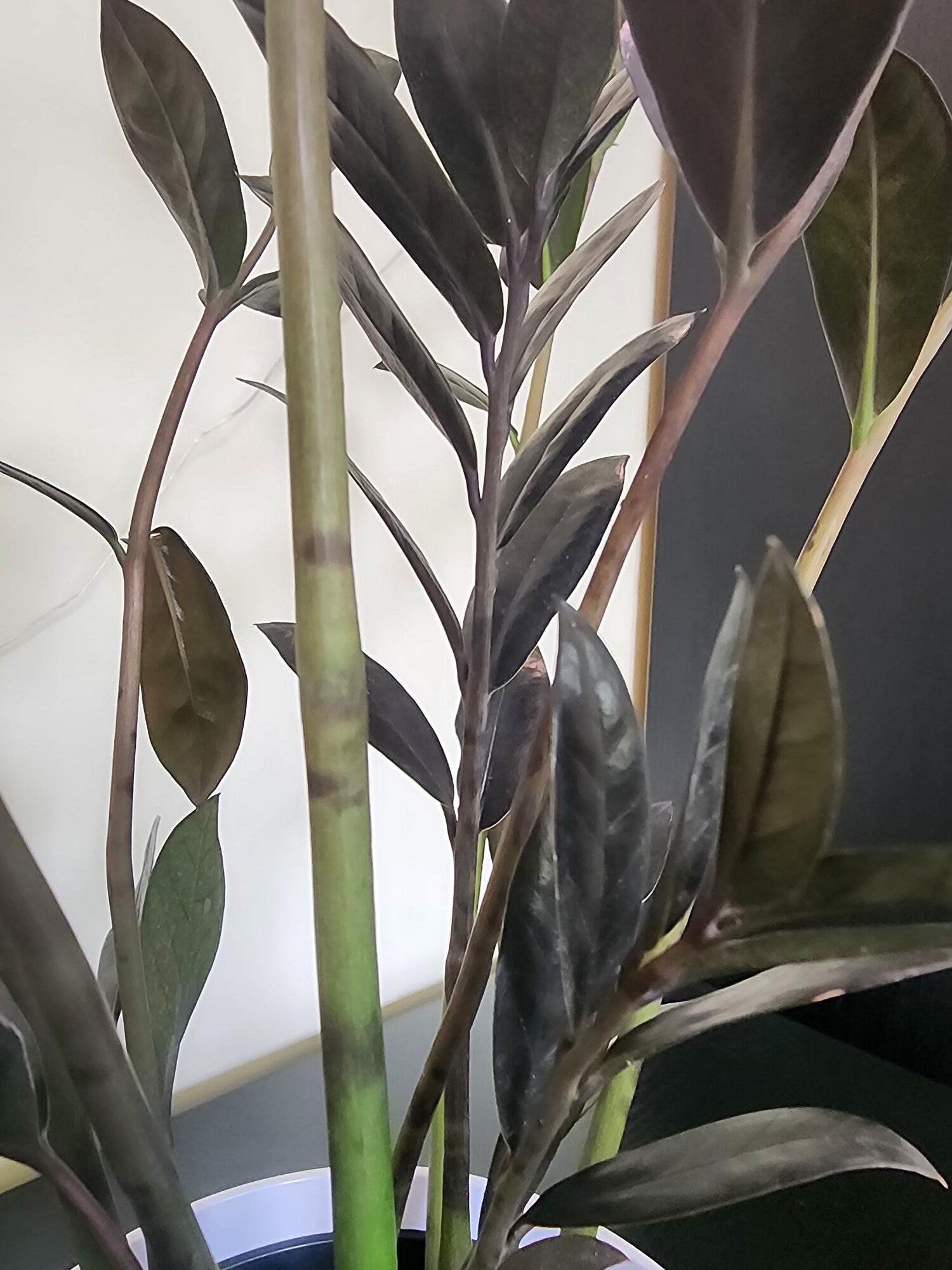
A stem with normal black spots indicates a typical, healthy ZZ plant.
Jackie Jordan, ©2025, Clemson Extension
ZZ Plant Species and Popular Cultivars
There is only one species in the genus Zamioculcas.
- Zamioculcas zamiifolia – has dark green leaves, an upright growth habit and can grow 3 to 4 feet tall.
- Variegated – glossy green leaves with cream or white variegation. It typically grows 1.5 to 3 feet tall.
- ‘Chameleon’ – New leaves emerge yellow and then mature to a dark green and can grow 4 feet tall.
- ‘Raven’ – New leaves emerge green, then mature to almost black. It can reach a maximum height of 2.5 feet.
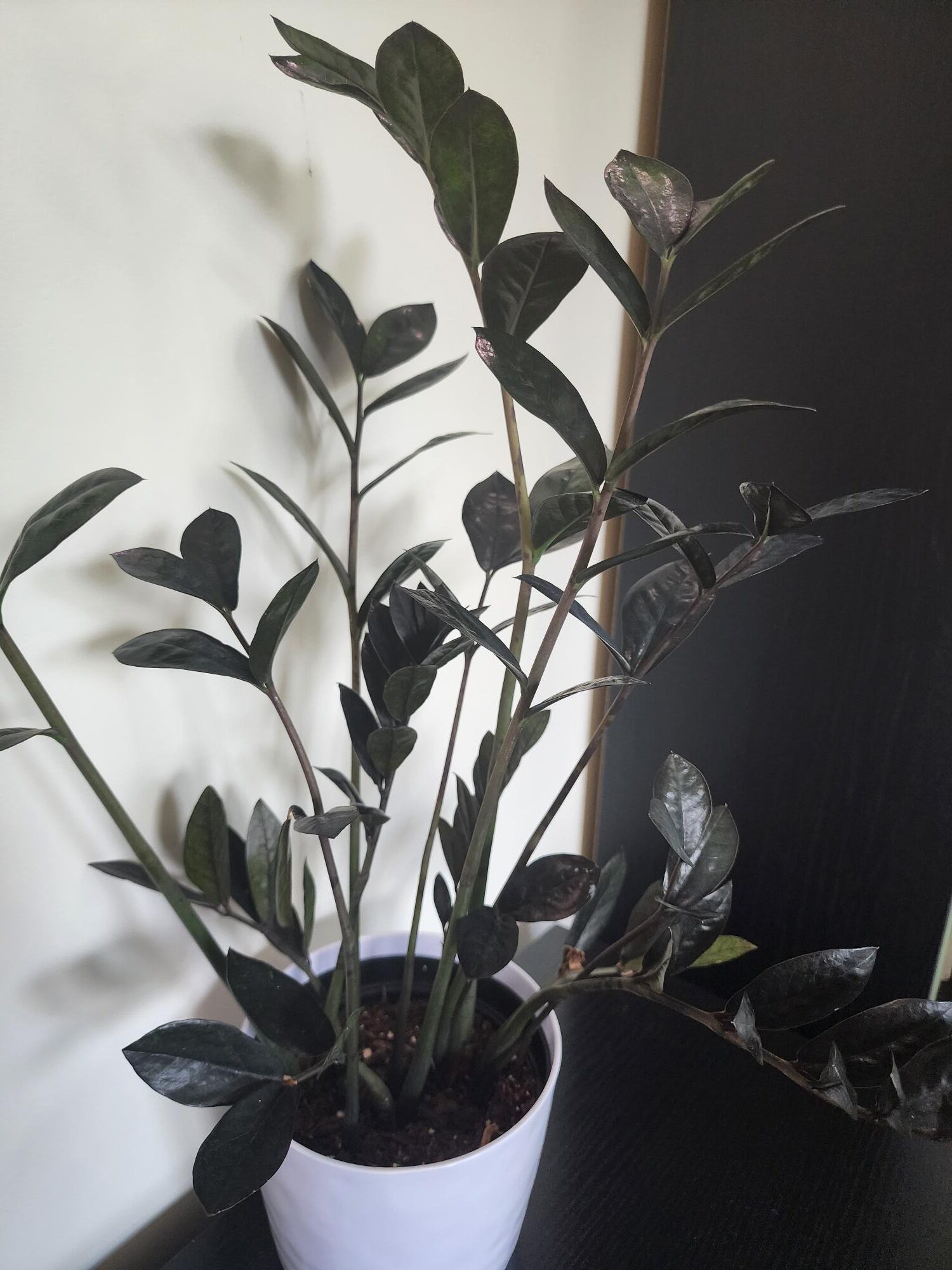
The leaves of the Raven ZZ plant mature deep purple-black.
Jackie Jordan, ©2025, Clemson Extension
- ‘Zenzi’ – dwarf variety that will reach a maximum height of 10 to 12 inches. It has slightly smaller dark green leaves
References
- University of Florida IFAS Extension Gardening Solutions ZZ Plant
- Missouri Botanical Garden – Zamioculcas zamiifolia
- North Carolina Extension Gardener Plant Toolbox – Zamioculcas zamiifolia
Originally published 06/26