What is Hardy Hibiscus?
Hardy hibiscus (Hibiscus moscheutos) is a mid-summer blooming perennial with large, round flowers in shades of pink, red, or white.
There are many common names for this hibiscus, including rose mallow, swamp rose mallow, perennial hibiscus, and marshmallow hibiscus.
Hardy hibiscus are in the mallow family (Malvaceae) along with hollyhocks, cotton, and okra.
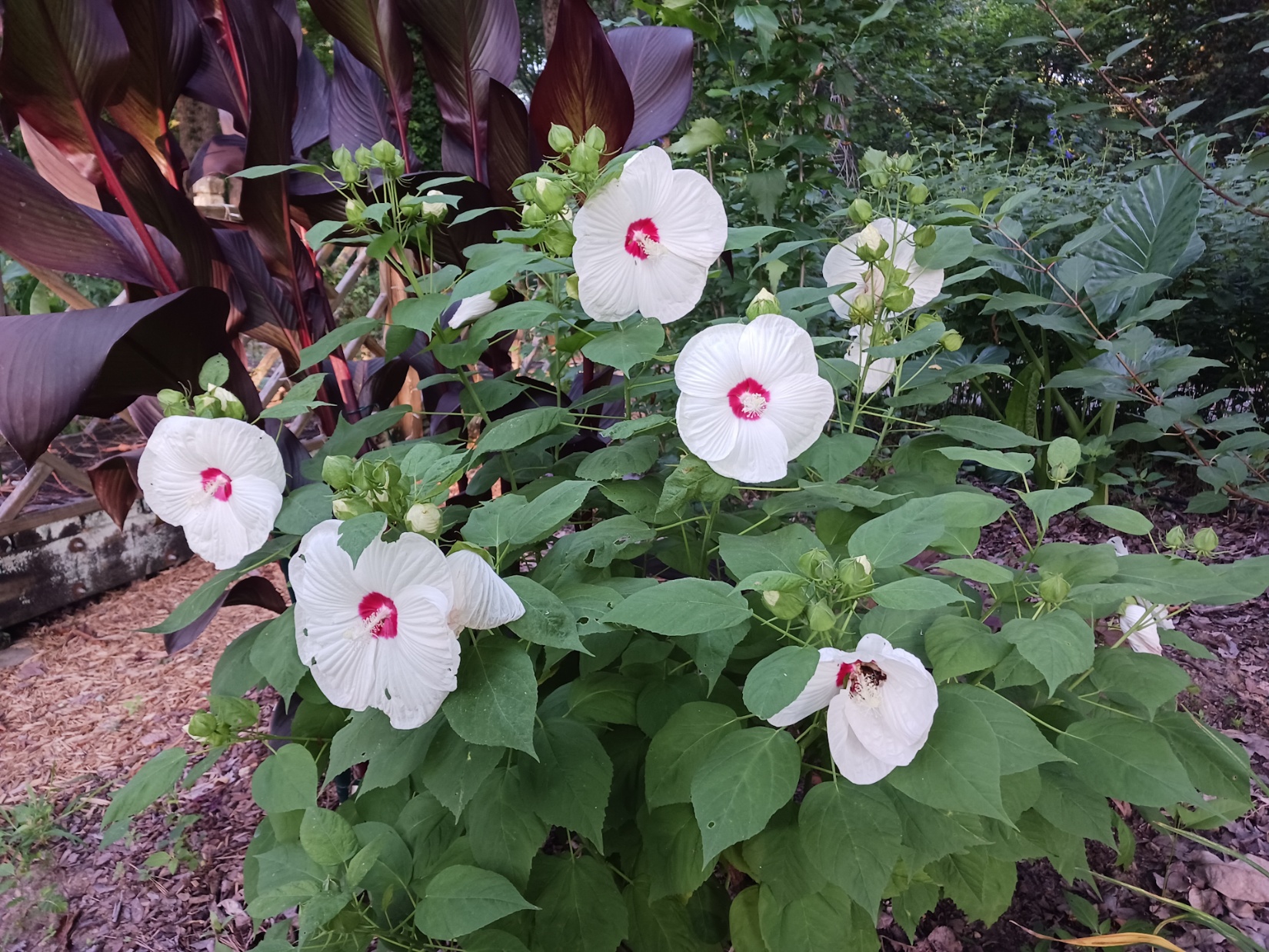
Hardy hibiscus Luna™ White (Hibiscus moscheutos ‘PAS304889’) is a small hibiscus that grows to 3 feet tall and wide.
Ginger E. Long, ©2024 HGIC, Clemson Extension
Hardy Hibiscus Flowers
Hardy hibiscus produces large, 6- to 8-inch blooms in mid-summer. Blooms can continue for up to 3 months.
- 5 flower petals overlap on each flower, similar to a pinwheel.
- Each flower lasts one to two days.
- The flowers are often referred to as “dinner plate” size; however, they are the size of a salad plate.
Hardy Hibiscus Plant Size
The plants range in height from 2 to 8 feet and in width from 3 to 6 feet, depending on the cultivar.

The large flowers of Summerific® Perfect Storm (Hibiscus x ‘Perfect Storm’) are held up by the thick stems of the three-foot-tall plant.
Ginger E. Long, ©2024 HGIC, Clemson Extension
Where to Grow Hardy Hibiscus
Hardy hibiscus can be grown in landscape beds with other perennials and shrubs.
Add hardy hibiscus to rain gardens since they are adapted to moist soil. For more information on rain gardens, see HGIC 1864, Rain Garden Plants: Introduction.
The compact cultivars of hardy hibiscus can be planted in containers, allowing the large flowers to be appreciated up close.
Native Habitat and Range of Hardy Hibiscus
It is native to North America, ranging from Texas eastward to Florida, northward to New Jersey and westward to Ohio and Indiana.
How to Grow Hardy Hibiscus Successfully
USDA Hardiness Zones
- Hardy hibiscus can be planted in USDA planting zones 4 through 9. This includes all of South Carolina.
Sunlight Requirements
- Plant in full sun. It can also be grown in afternoon shade.
- The number of flowers increases with more sun.
Soil Preparation
- Plant in soils that are moist to well-drained. They are most often found growing in moist soil environments in nature.
- Many cultivars can be planted in pots with a quality potting soil.
Watering Tips
- Water regularly until plants are established. Once established, water during periods of low rainfall.
Fertilizing Hardy Hibiscus
- Apply a 2-inch layer of compost annually
- If needed, fertilize with an all-purpose, slow-release fertilizer in late spring.
Pruning and Maintaining Hardy Hibiscus
- As the plants begin growing in spring, pinch the growing tips to make the plants bushier.
- Support tall stems with stakes. Stems with flowers can bend in a heavy rainstorm.
- Pick off spent flowers so the plant puts its energy into producing new flowers.
- Leave the dormant stems in winter to house solitary native bees. In late winter,cut back the stemsto 6 inches high.
How to Propagate Hardy Hibiscus
- Many cultivars can be grown from seed, including the series Luna™, Honeymoon, and Disco Belle™.
- Mature plants can be divided.
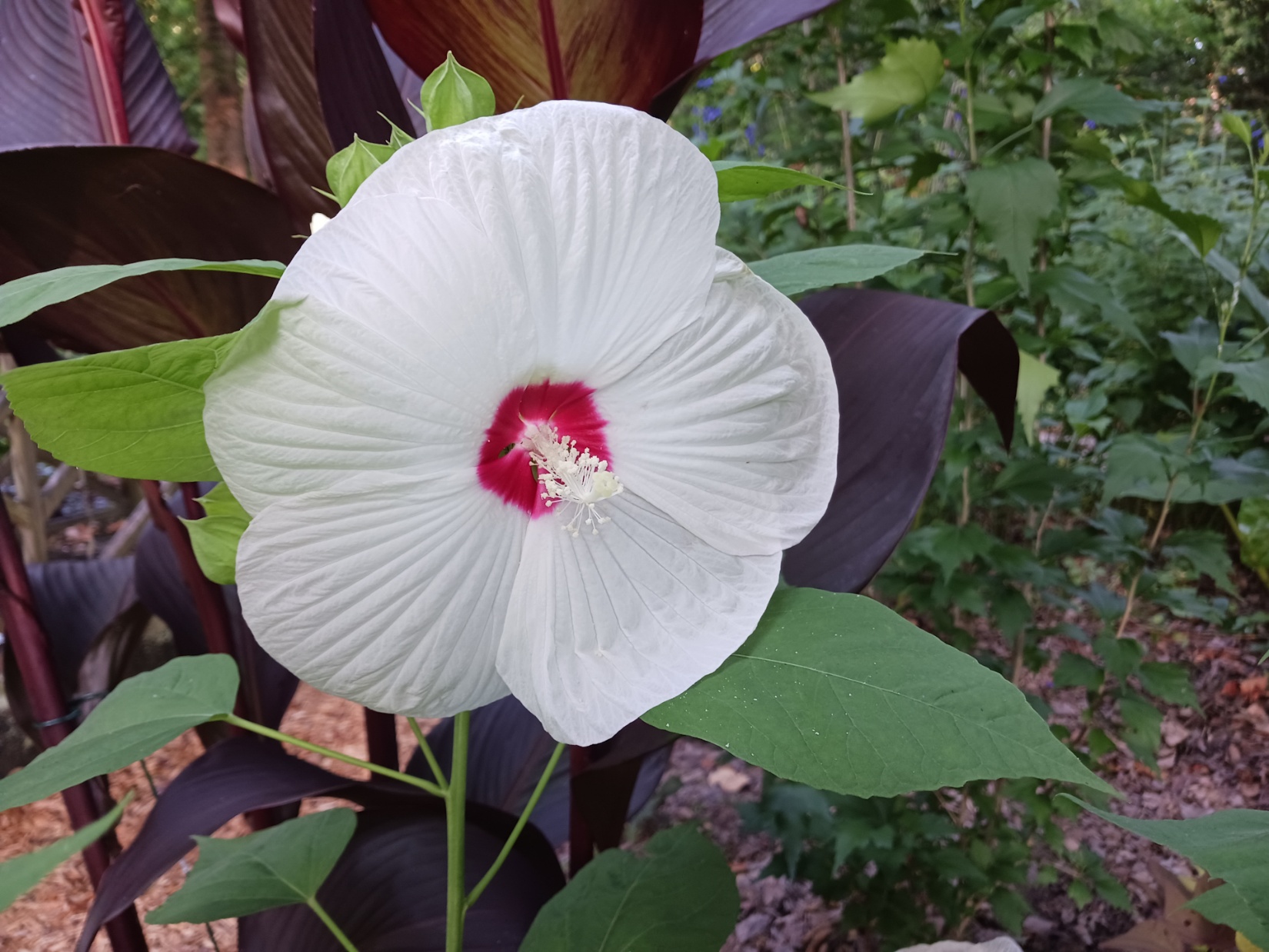
The Luna™ series of hardy hibiscus can be grown from seed, producing blooms of different colors, including white, shades of pink, and red on individual plants.
Ginger E. Long, ©2024 HGIC, Clemson Extension
Hardy Hibiscus Pests and Diseases
- Japanese beetles and sawfly caterpillars cause the most damage, eating so much of the leaves that they look skeletonized. Both can be picked off the plant by hand and submerged in soapy water.
- Aphids and whiteflies can also visit plants. For more information on insect control, see HGIC 2770, Less Toxic Insecticides.
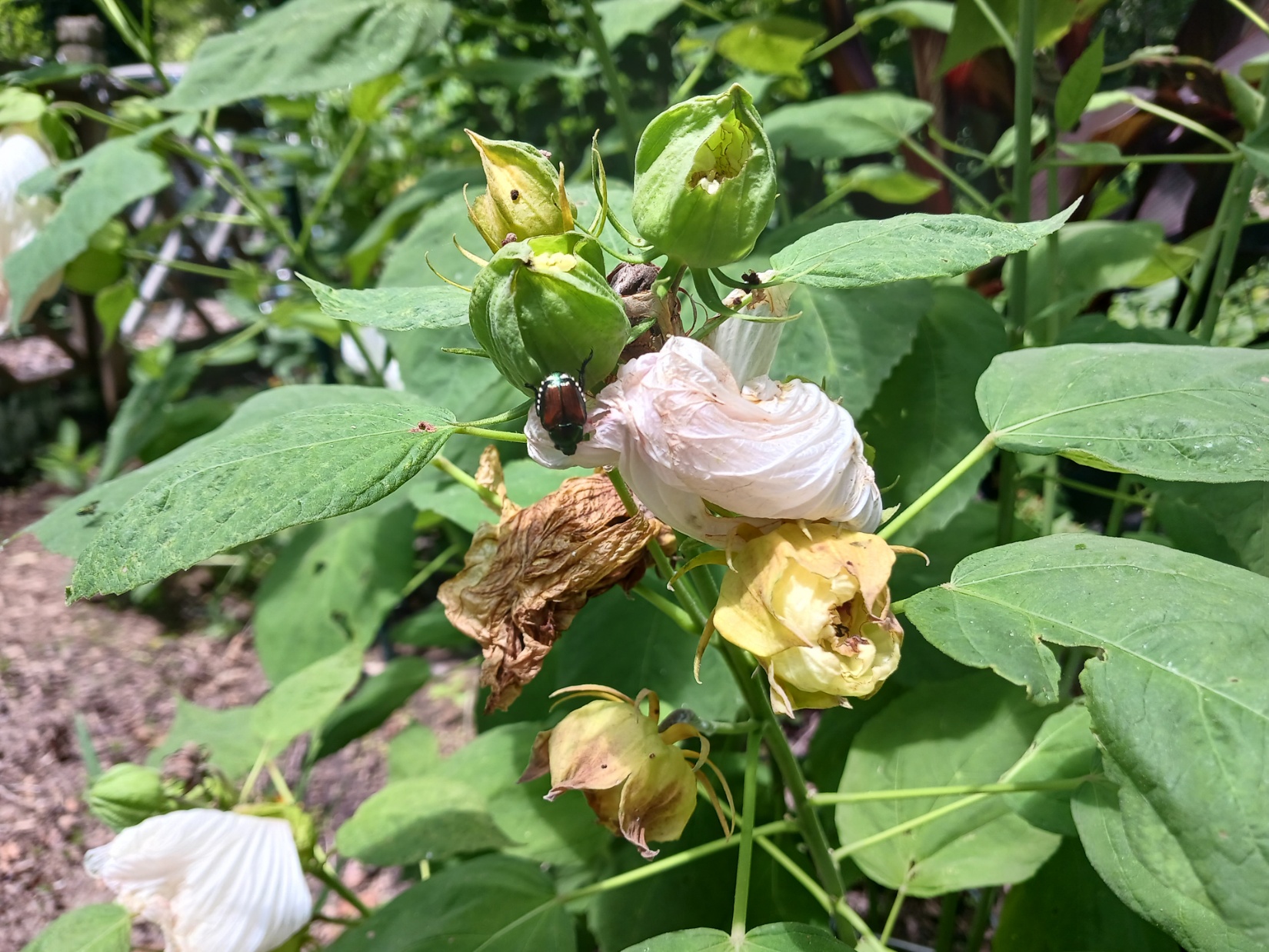
Japanese beetles are a pest of hardy hibiscus, damaging both the flowers and the leaves. Knock them off the plants and into a cup of soapy water once or twice a day.
Ginger E. Long, ©2024 HGIC, Clemson Extension
Wildlife Benefits of Hardy Hibiscus
- Hardy hibiscus attracts hummingbirds, butterflies, bees and other pollinators.
- It’s a host plant for caterpillars of butterflies and moths.
- Native bees overwinter and nest in the stems.
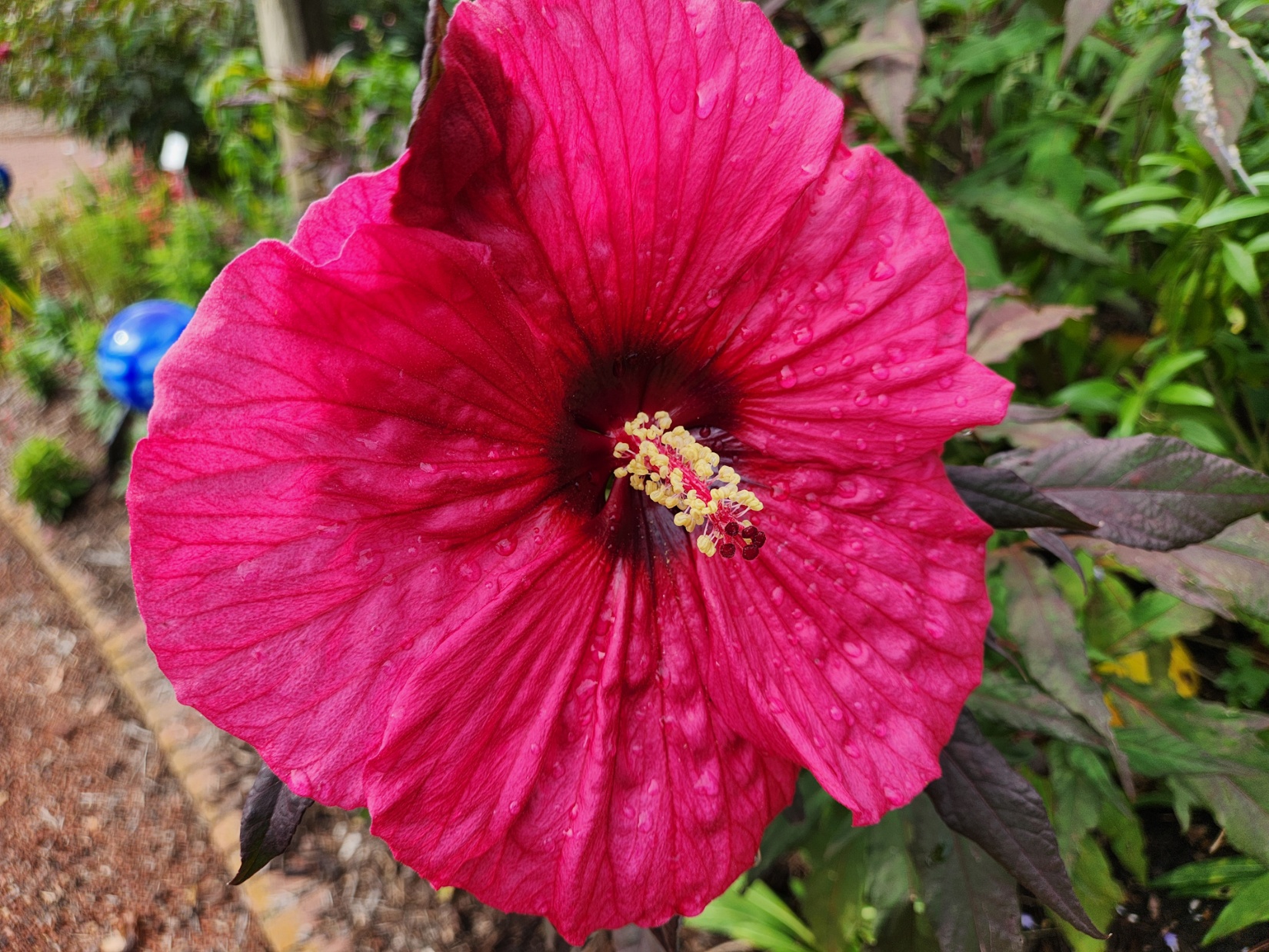
The large blooms of hardy hibiscus Luna™ Red (Hibiscus moscheutos ‘PAS537702’) attract many pollinators.
Barbara H. Smith, ©2025 HGIC, Clemson Extension
Deer Resistance of Hardy Hibiscus
Hardy hibiscus is not considered deer resistant.