It’s going to be a hot week as we prepare for Independence Day. But the weather will be perfect for enjoying some cold watermelon and juicy peaches. Watermelon harvest is going strong with high yields reported. Disease is popping up in places as rain has created favorable conditions.
Key Takeaways for Growers This Week
- Temps will be near 100 – get work done early and stay hydrated
- Leafhoppers present – no two-spot cotton leafhoppers yet
- Insect pressure is high in places – leaf-footed bugs, whiteflies, and hoppers.
- Watermelon Field Day coming soon – register here and add 7/9/26 to your calendar
Lowcountry Report
Anna Sara Hill
- Watermelon harvesting crews are picking watermelons “hot and heavy”, both literally and figuratively! The weather is hot and humid, and after a few hours of picking, those melons start getting heavy!
- Most growers in the area are reporting a bumper crop this year. Some growers who had fields flooded are not getting much from the first planting but expect high yields in subsequent plantings, barring any further natural disasters this season.
- Despite a slow start to the season, the South Carolina watermelon market has strengthened significantly as consumer demand continues to increase. Seasonal factors, including hot summer weather, Fourth of July celebrations, America250 events, and peak vacation travel, have boosted retail demand. High demand, along with market conditions and supply dynamics in other production states, has contributed to the current market, which is expected to remain firm, with favorable prices likely to continue over the next couple of weeks.
- Other vegetables under drip are growing well with very little disease. We have seen some insect issues, including leaf-footed bugs, whiteflies, and glassy-winged sharpshooters.
- I noted some scab on pecan trees, which was surprising with how dry it has been, but it’s an example of how one rain event can create the right environmental conditions, causing disease symptoms to pop up on susceptible plants when least expected. It is always important to scout regularly, use protective sprays, and never let your guard down.
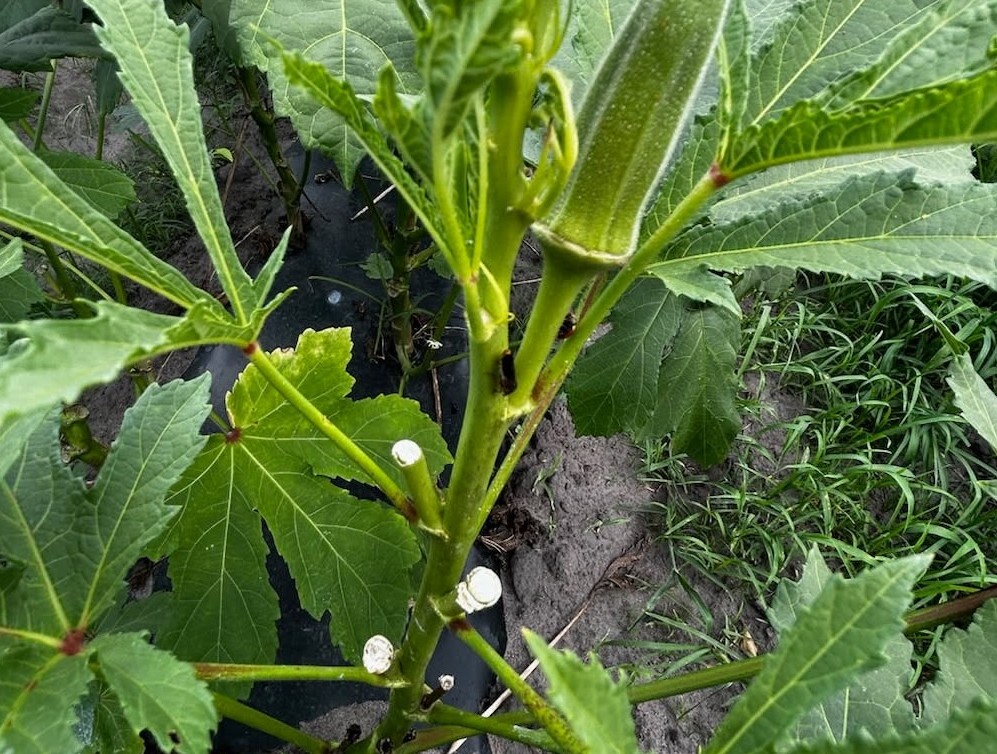
Glassy-winged sharpshooter on okra.
Anna Sarah Hill, ©2026, Clemson Extension
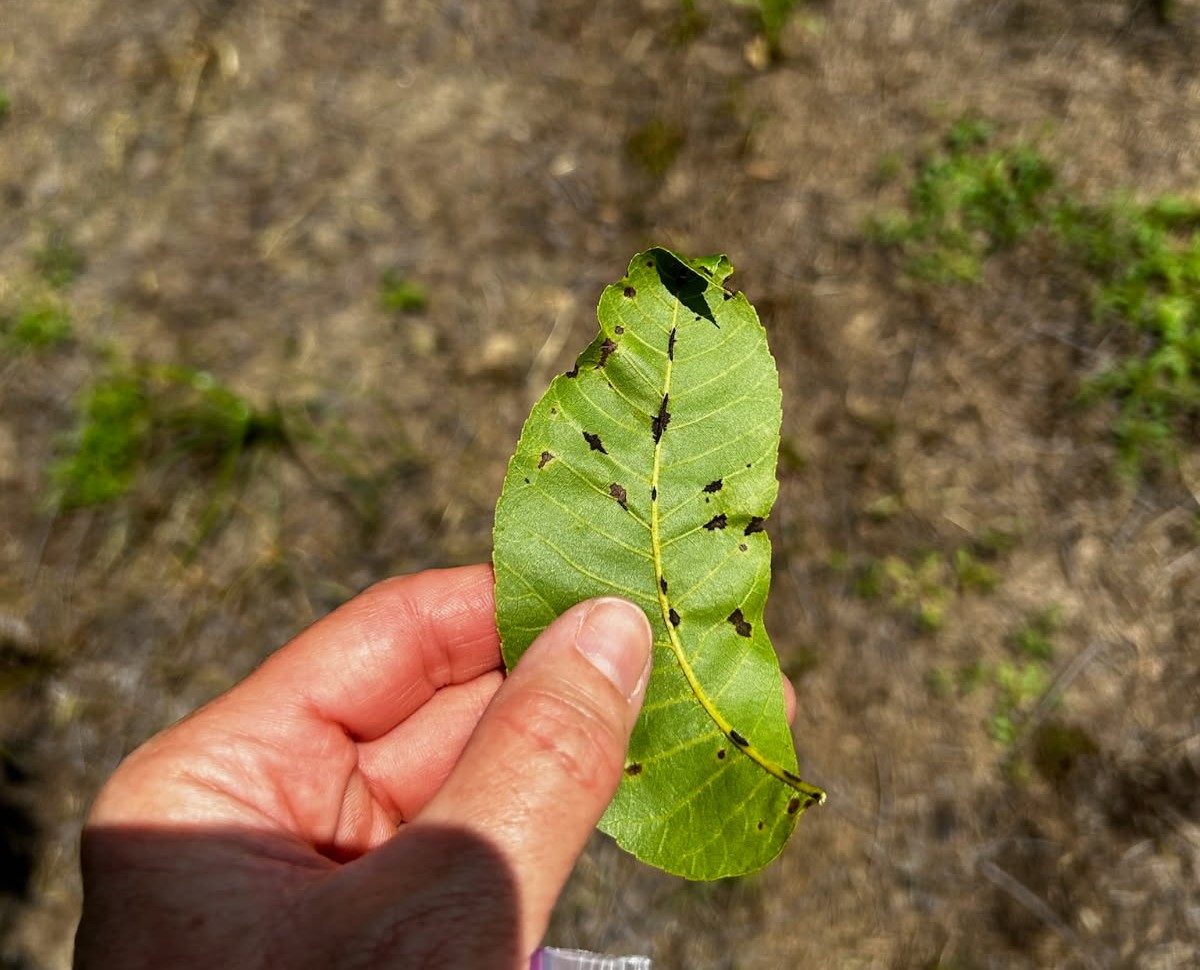
Pecan leaf with scab symptoms.
Anna Sarah Hill, ©2026, Clemson Extension
Midlands Report
Rob Last
- Another hot week here in the Midlands with more to follow in the run-up to the July 4 celebrations. With high temperatures in the forecast, be mindful of heat stress. Drink plenty of water and keep out of the heat of the day. Remember sunscreen, wide-brimmed hats, and sunglasses. Try to schedule strenuous tasks in the cooler times of the day.
- Crops coming to market include okra, tomatoes, blueberries, blackberries, eggplant, and peppers. The quality of crops looks great. Be mindful of pathogen activity and insect activity, which may potentially increase.
- Leaf hoppers are being found, though these are NOT the cotton two-spot cotton leaf hopper. Keep an eye out for hopper burn, which appears as chlorosis, leaf curling and a scorched appearance.
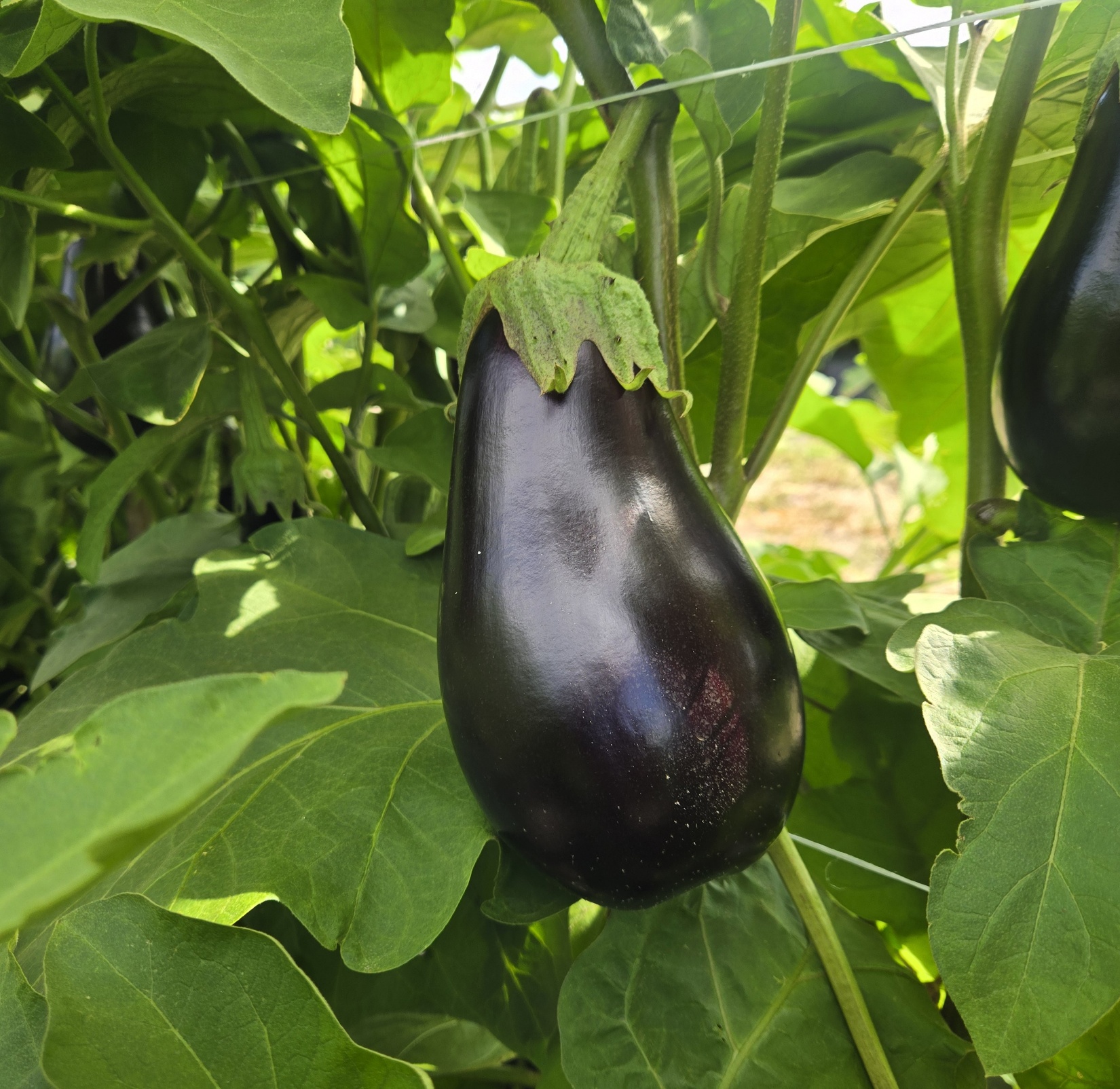
Eggplant is looking great in the Midlands.
Rob Last, ©2026, Clemson Extension
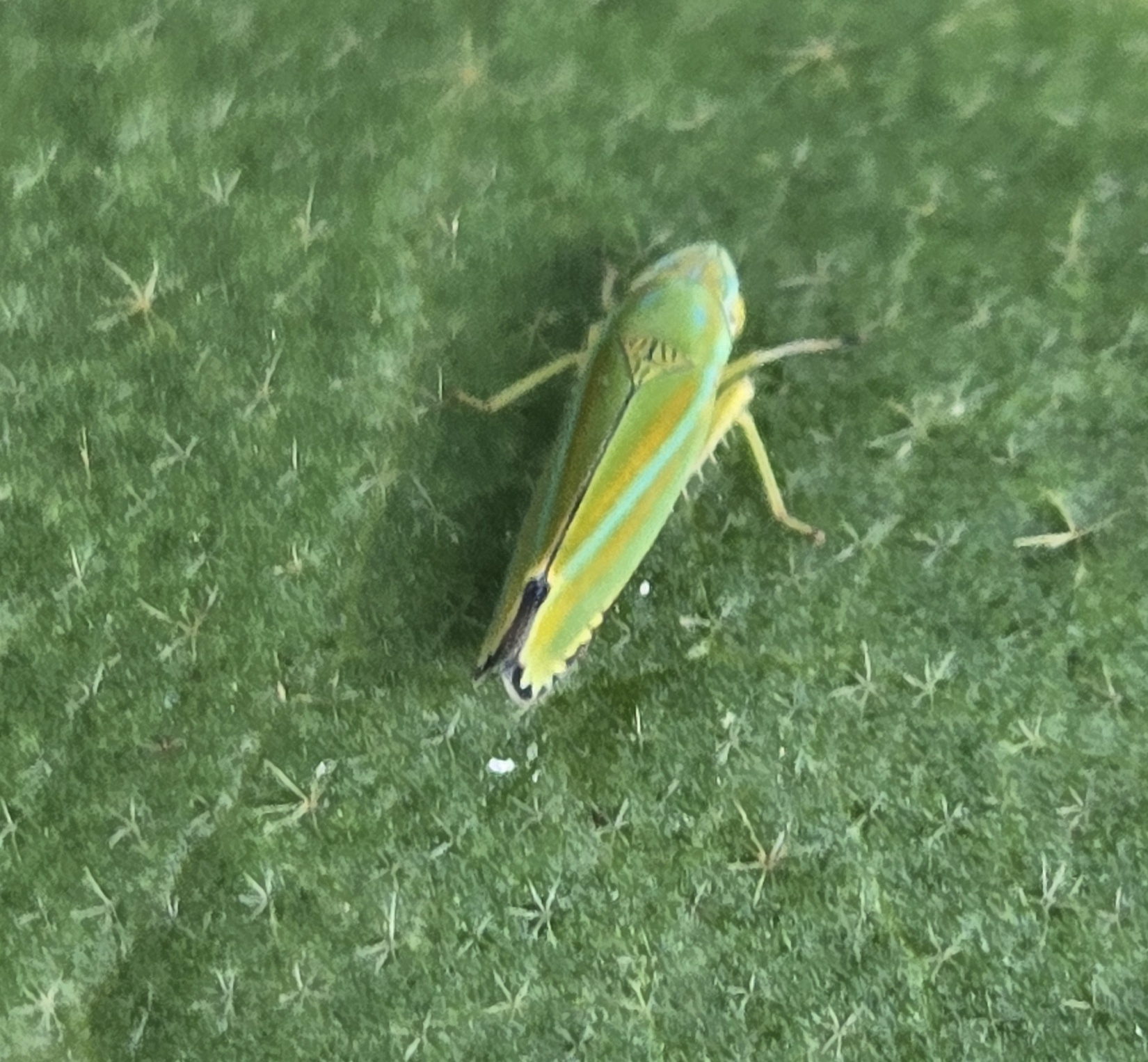
A leaf hopper found recently on an eggplant leaf.
Rob Last, ©2026, Clemson Extension
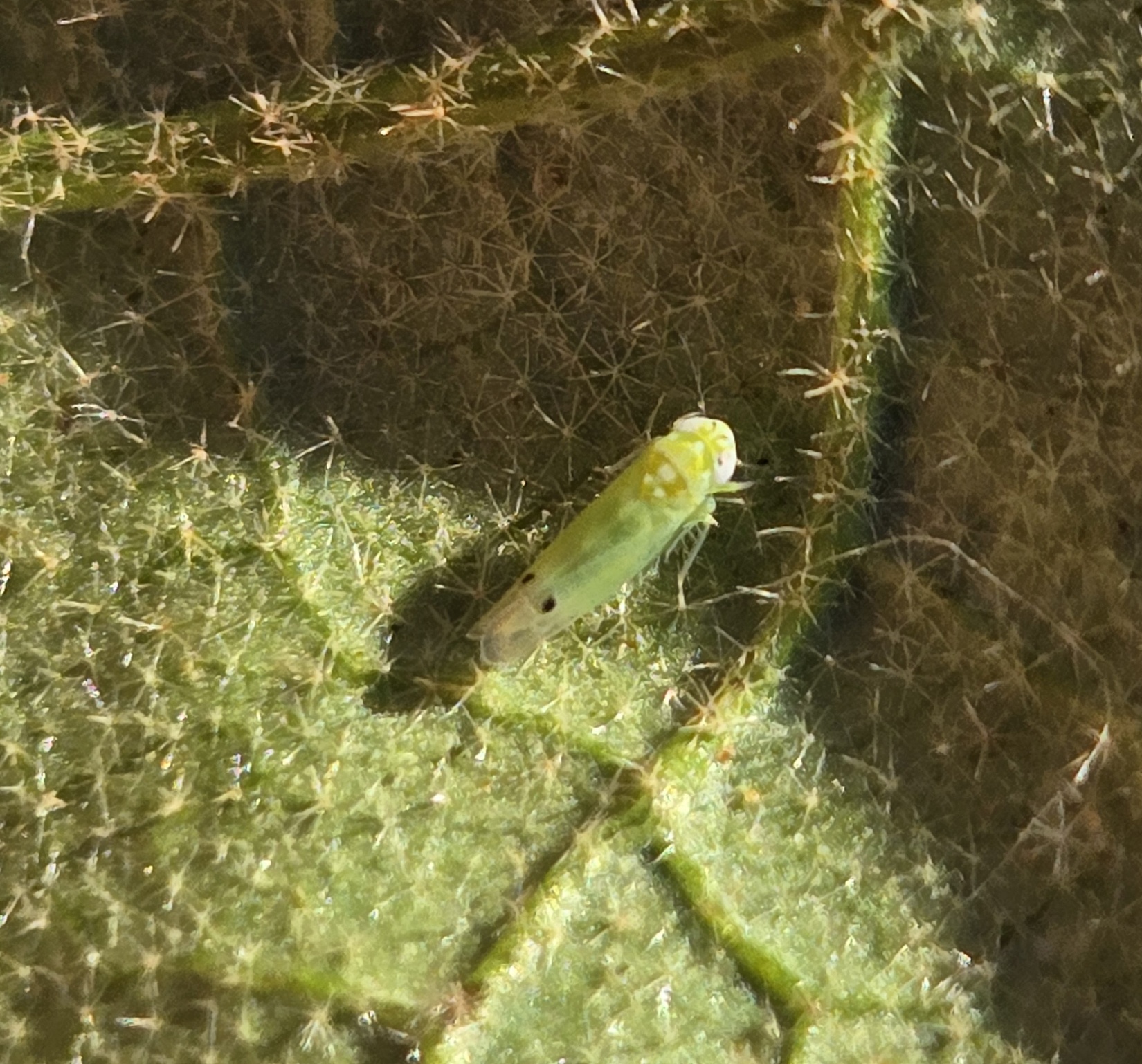
Two-spotted cotton leaf hopper on the underside of an eggplant leaf.
Rob Last, ©2026, Clemson Extension
Daniel Lyon
- Harvest of beans and peas is underway. Last week, I helped harvest beans at Peedee REC with Dr. Hershberger, which will go to Dr. Albornoz at Charleston REC for post-harvest analysis.
- Anthracnose pressure has been pretty high this year. Pay attention to pre-harvest intervals if you intend to treat. Many products are 10-14 days.
- This weekend brought some needed rain to much of my area. Keep an eye out for any disease that may pop up.
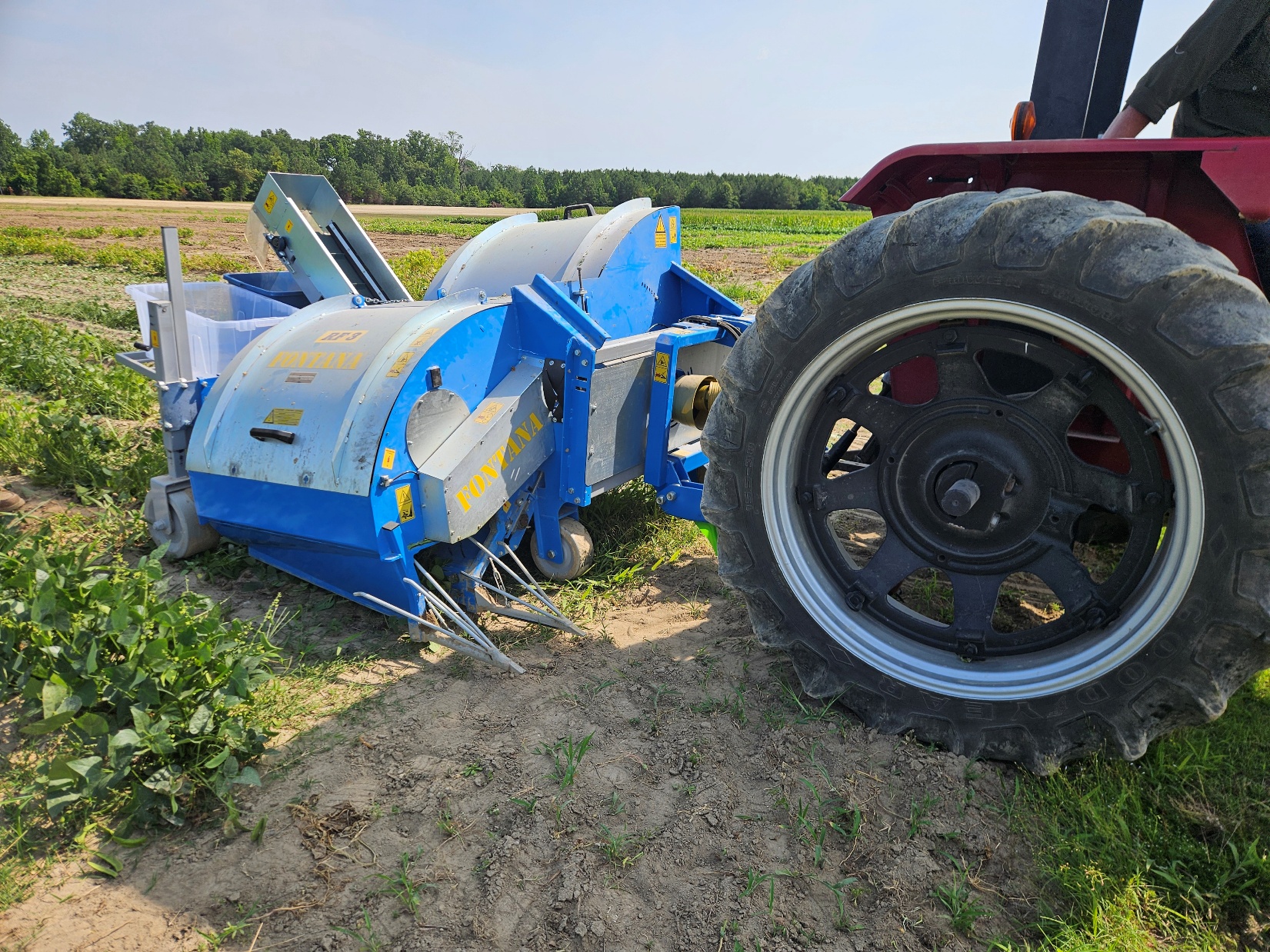
A single-row bean harvester harvesting research plots at the Pee Dee REC.
Daniel Lyon, ©2026, Clemson Extension
Upstate Report
Samantha Brown
- Summer has officially settled into the Upstate, with temperatures expected to climb into the upper 90s by the end of the week and heat index values reaching triple digits. Harvest early in the morning, when possible, to help reduce heat stress on workers and ensure adequate hydration throughout the day.
- Warm-season vegetables are producing well across the area. Continue scouting for diseases such as downy mildew, early blight, bacterial leaf spot, and powdery mildew, especially following pop-up thunderstorms and periods of high humidity. Maintain good airflow through plants, remove diseased foliage when practical, and continue monitoring insect populations to determine if they have reached treatment thresholds.
- Our small fruits continue to shine, with blueberries, blackberries, and peach harvests going strong, while muscadines are beginning to size up and will soon follow. Japanese beetles are making their presence known by feeding on foliage. Also, be on the lookout for fruit rots, anthracnose, rust, and spotted wing drosophila (SWD) as fruit continues to ripen.
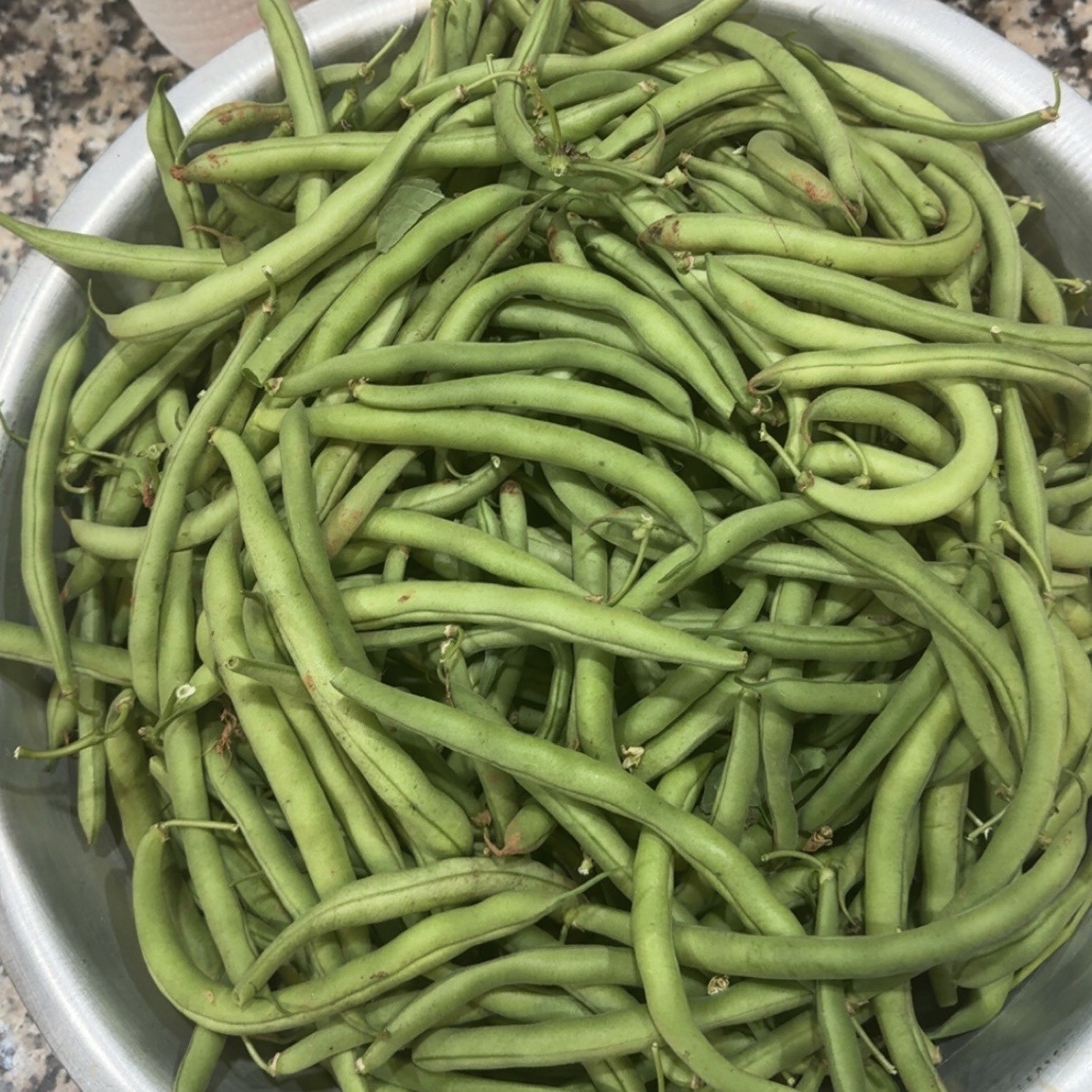
These green beans look great.
Samantha Brown, ©2026, Clemson Extension
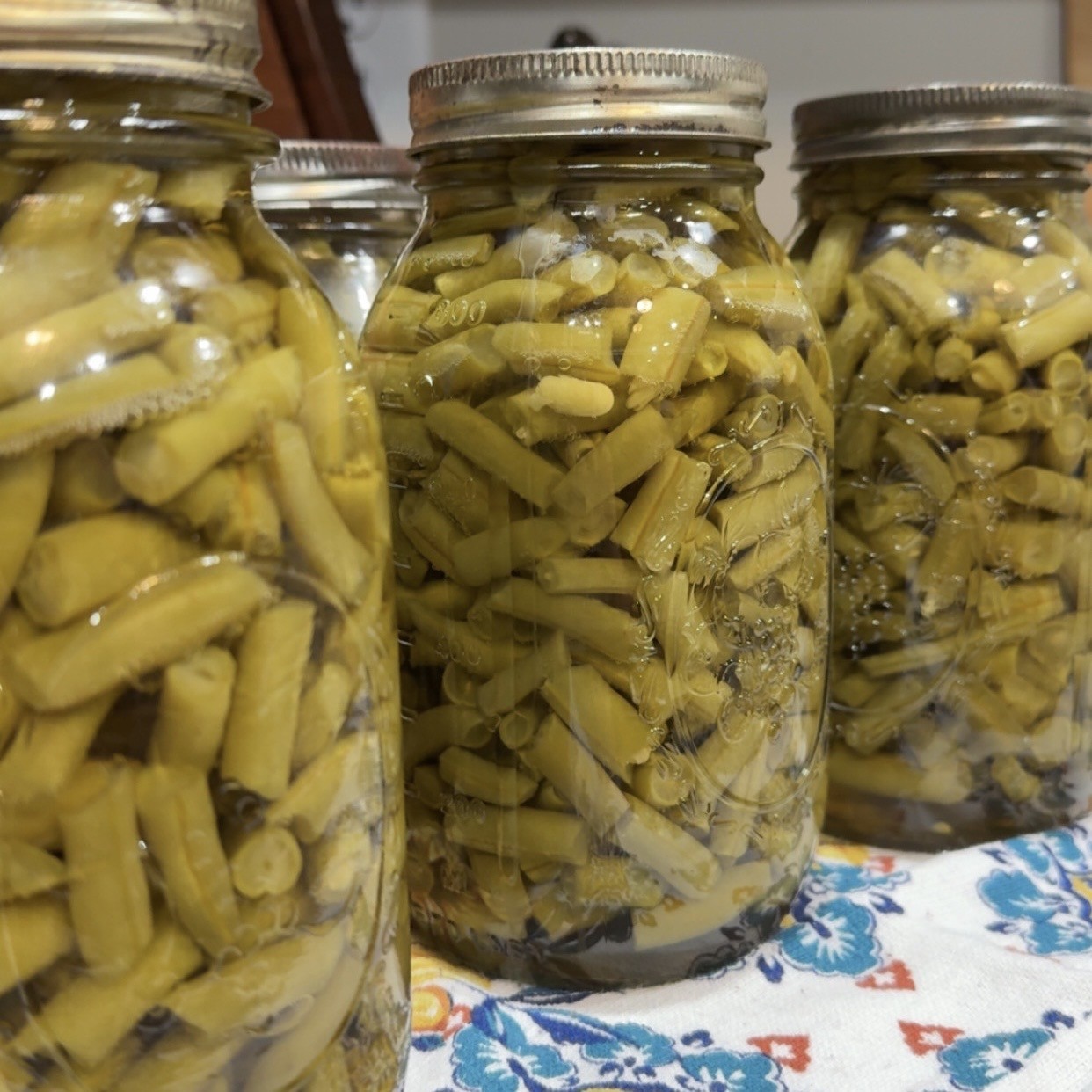
When you can’t eat them fast enough, can the rest!
Samantha Brown, ©2026, Clemson Extension
Briana Naumuk
- Here in the Upstate, we are predicted to have some of the hottest temperatures of the year in the coming week. Be sure to double-check irrigation lines and water sources before those temperatures hit.
- The hot, dry weather has caused sun damage to a number of crops. Be sure that you are managing water properly by increasing irrigation events.
- We have also seen a lot of pest pressure recently, so be sure to continue scouting frequently to get on top of them early.
- Blackberries and blueberries are taking off and continuing to do well. Be sure to continue to scout for pests and fruit rots after this weekend’s rains.