Houseplants aren’t typically associated with Halloween, but if you are looking to add a botanical twist to your spooky décor, this foliage understands the assignment. From moody to macabre, these potted plants conjure creepy inspiration.
Spooky Houseplants That Look Like Skeletons and Bats
Skeleton Monstera
Monstera esqueleto is reminiscent of skeletons dancing. The large tropical leaves have substantial fenestrations or holes. This natural adaptation allows the tropical climber to maximize airflow and light penetration in its natural habitat.
Like all monsteras, the skeleton monstera thrives in bright indirect light, so locate the plant within a few feet of an east- or west-facing window. Allow the top few inches of potting soil to dry in between waterings. Monsteras do require higher humidity, so group your plant with other plants or place it near a humidifier if running heat in colder months.
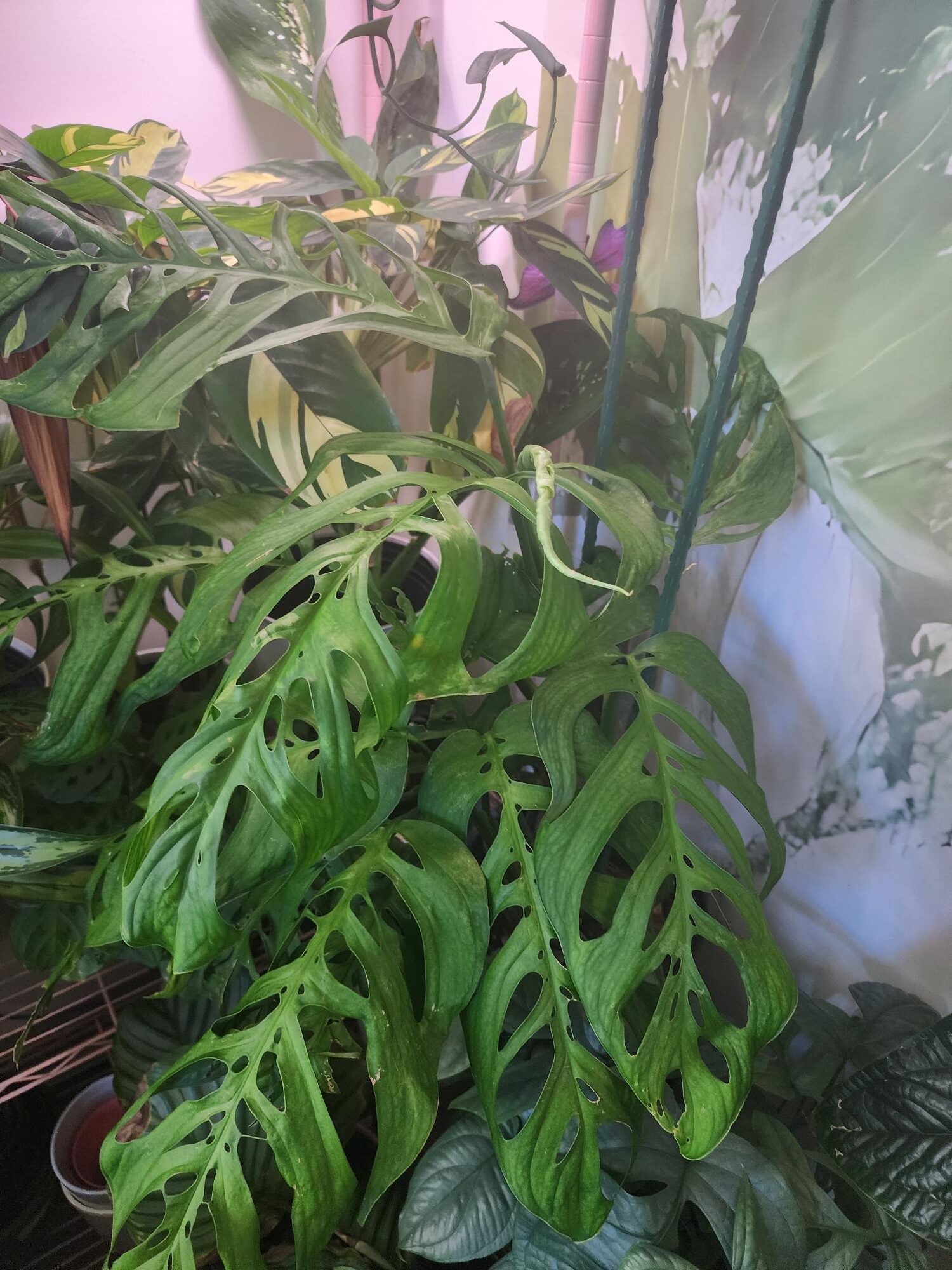
Monstera esqueleto leaf with lots of fenestrations or holes.
Jackie Jordan, ©2026, Clemson Extension
False Aralia
False aralia (Plerandra elegantissima) is a tall and slender, tropical, evergreen shrub with delicate narrow, serrated leaflets. The stems and leaves are such a dark shade of green that they are almost black. The appearance suggests a colony of bats just taking flight.
False aralia needs bright light and can be located two to three feet back from a south-facing window or close to a west-facing window. False aralia should dry out slightly between waterings and needs about 60% relative humidity.
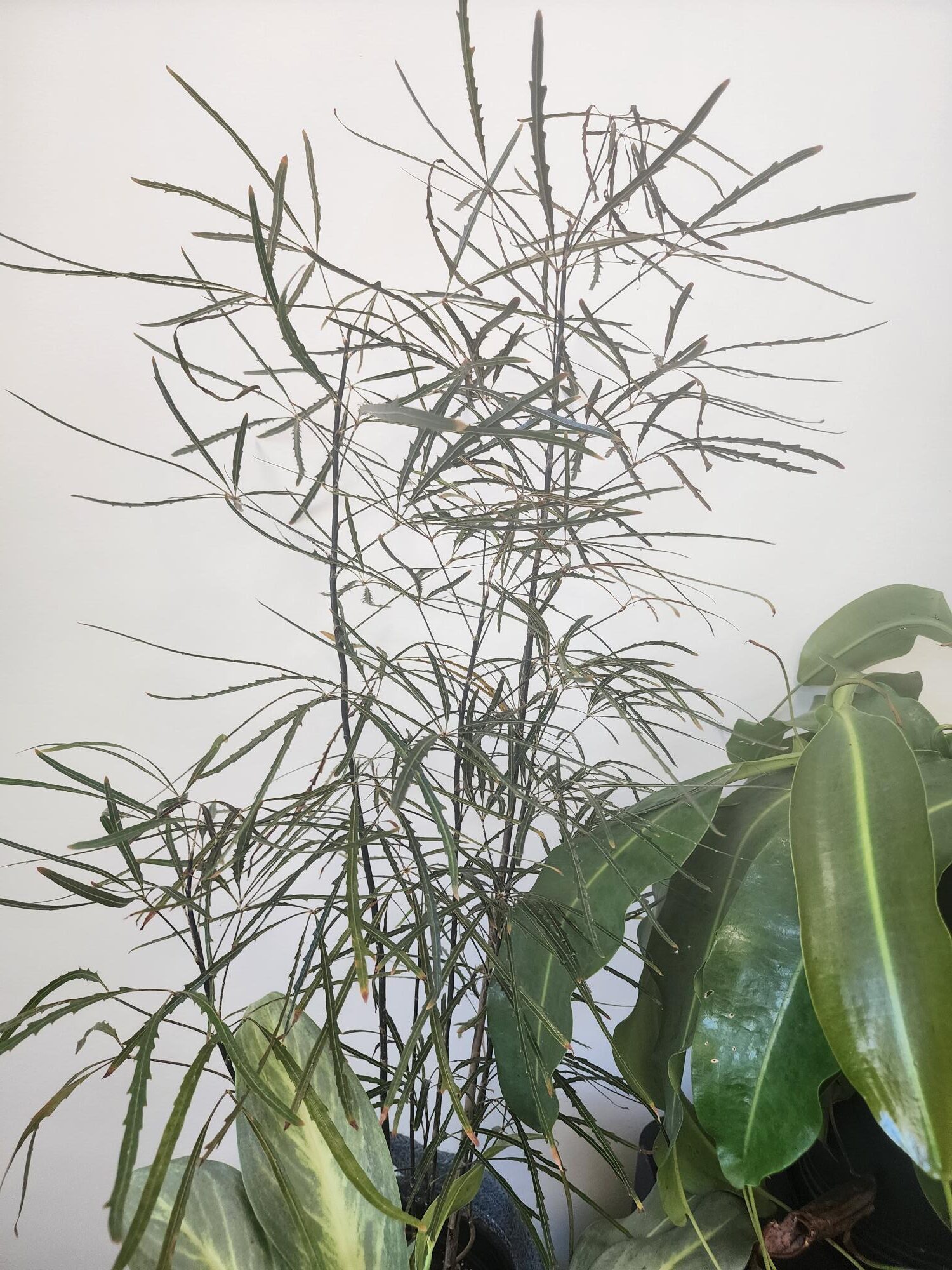
A false aralia plant that has thin, delicate, almost black foliage.
Jackie Jordan, ©2026, Clemson Extension
Ghostly Spooky Houseplants for Halloween
‘White Ghost’ Euphorbia and ‘Ghost’ Aglaonema
What’s Halloween without a couple of ghosts? ‘White Ghost’ Euphorbia and Aglaonema ‘Ghost’ have a silvery-gray appearance. Both plants need bright indirect light and perform well when located near east-facing windows or several feet back from a south-facing window. They like to stay on the drier side and perform well in average household humidity.
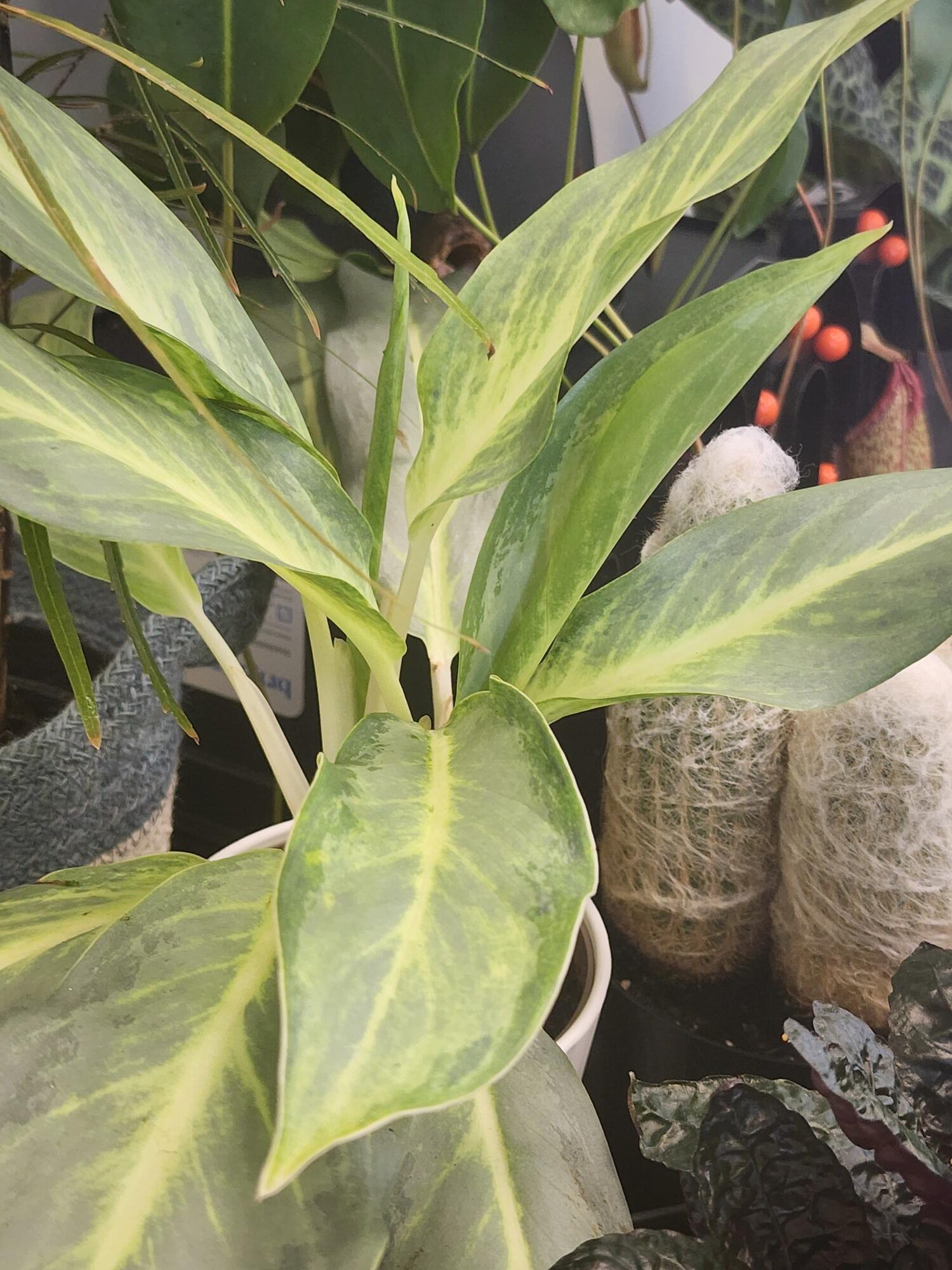
Foliage plant ‘Ghost’ Aglaonema with very pale green leaves.
Jackie Jordan, ©2026, Clemson Extension
Spooky Houseplants That Look Like Spiders and Webs
Peruvian Old Lady Cactus
The Peruvian old lady cactus (Echinopsis melanostele) looks like a plant covered in spider webs. This cactus needs bright light and should be in a south- or west-facing window. Allow it to dry out completely between waterings. Old lady cactus is also tolerant of low humidity.
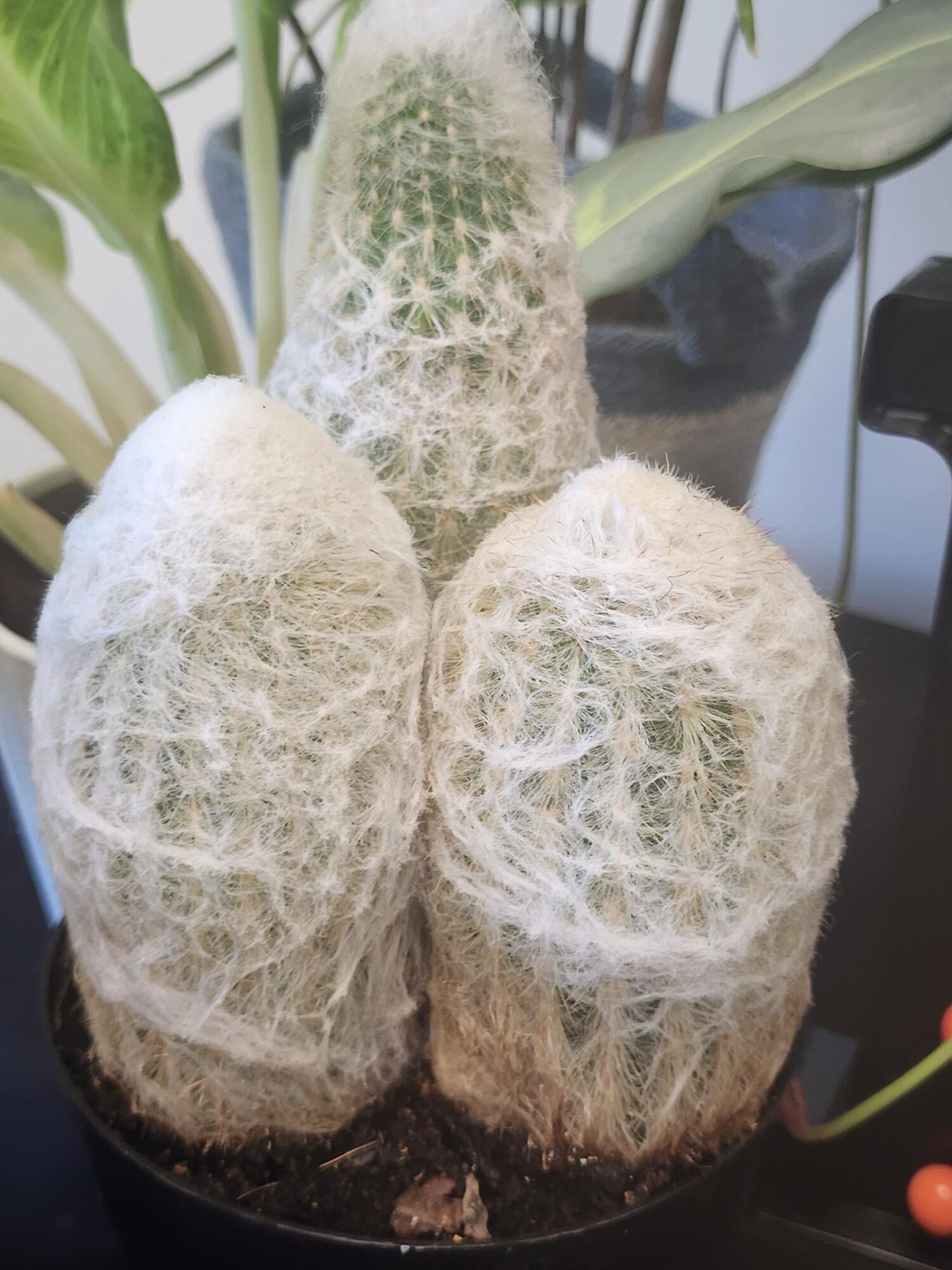
A Peruvian old lady cactus covered in white woolly hairs.
Jackie Jordan, ©2026, Clemson Extension
Lance-Leaved Sundew
Speaking of spiders, the lance-leaved sundew (Drosera adelae) looks like a spider and eats like one too! This tropical carnivorous plant dines on small insects, such as fungus gnats, fruit flies, and midges. The plant thrives in bright indirect light and needs consistent moisture.
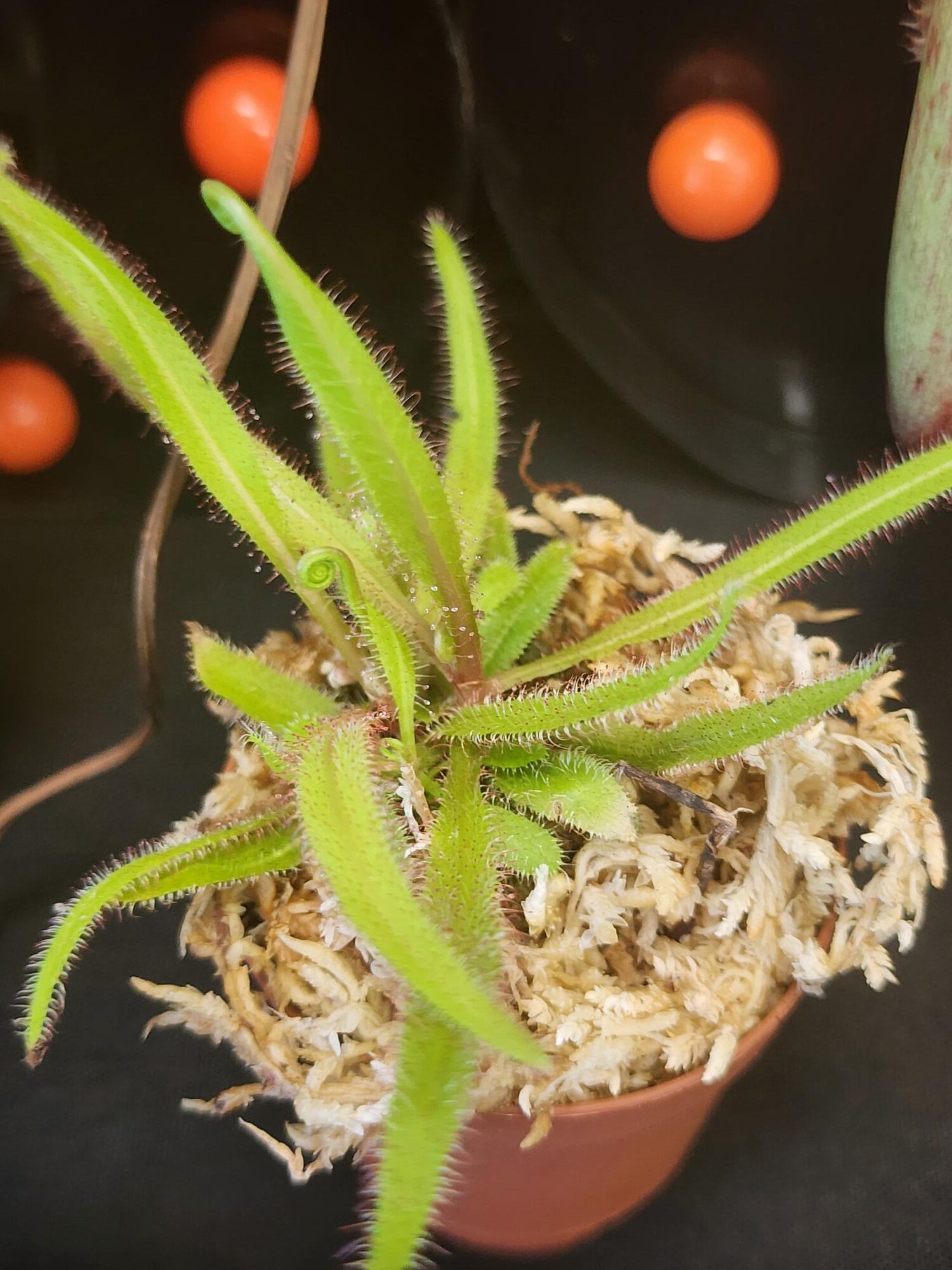
A lance-leaved sundew plant with hairy leaves.
Jackie Jordan, ©2026, Clemson Extension
Carnivorous Spooky Houseplants That Resemble Monsters
Tropical Pitcher Plants
We cannot forget about monsters. Tropical pitcher plants are botanical monsters that dissolve their prey in acid, and their pitchers give them an overall creepy look. The plants need bright indirect light and need to stay evenly moist. They can be fed mealworms if there are not enough creepy crawlers living in your home.
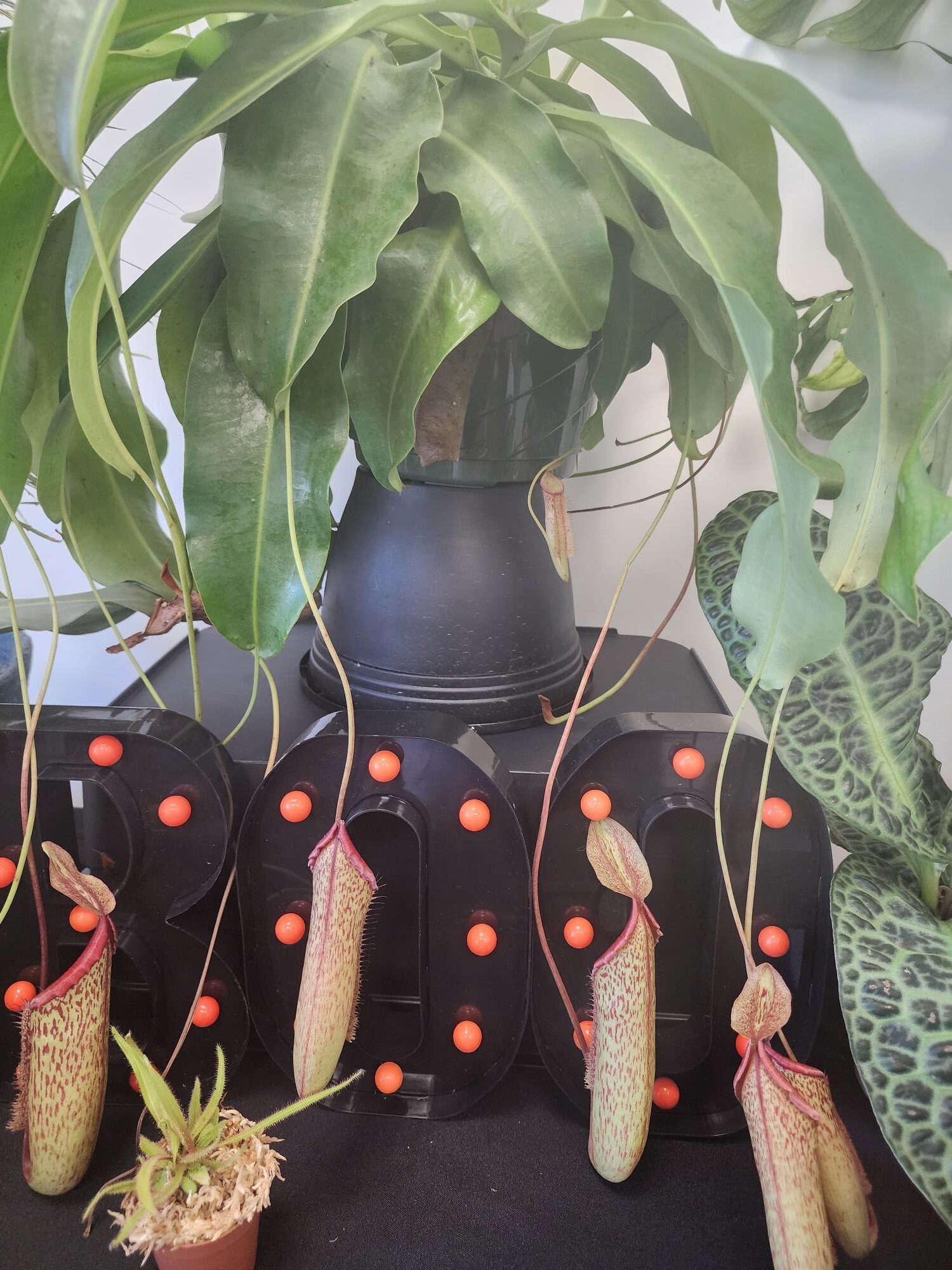
A tropical pitcher plant with several pitchers hanging from the plant.
Jackie Jordan, ©2026, Clemson Extension
Spooky Houseplants With Dark, Witchy Foliage
‘Cracklin’ Rosie’ Begonia, Kura Kura Plant, and Philodendrons
Lastly, what is Halloween without witches? Plants with dark, moody foliage and rich textures round out spooky season. ‘Cracklin’ Rosie’ Begonia has a very dark-green leaf with silver dots. The leaf curls slightly to flirtatiously reveal a dark-red underside.
Begonias perform best with bright, indirect light and require higher humidity. Kura Kura plant (Labisia obtusfolia) leaves offer a rich texture that resembles a turtle’s shell and do best in medium to low light. There are also several philodendrons that sport deep green, burgundy, bronze, or nearly black leaves.
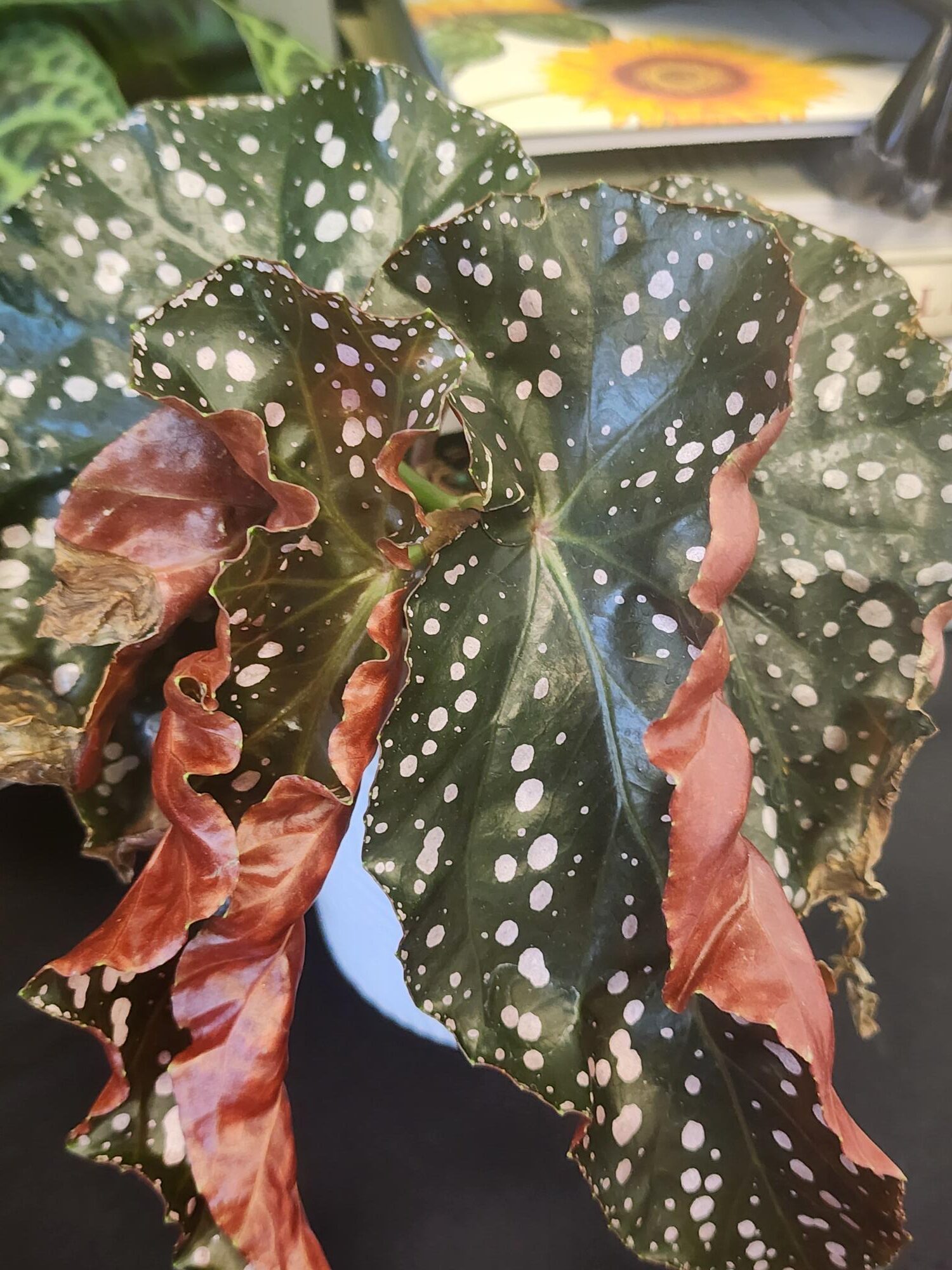
‘Carcklin’ Rosy’ Begonia has dark-green leaves with white dots and a dark-red underside.
Jackie Jordan, ©2026, Clemson Extension
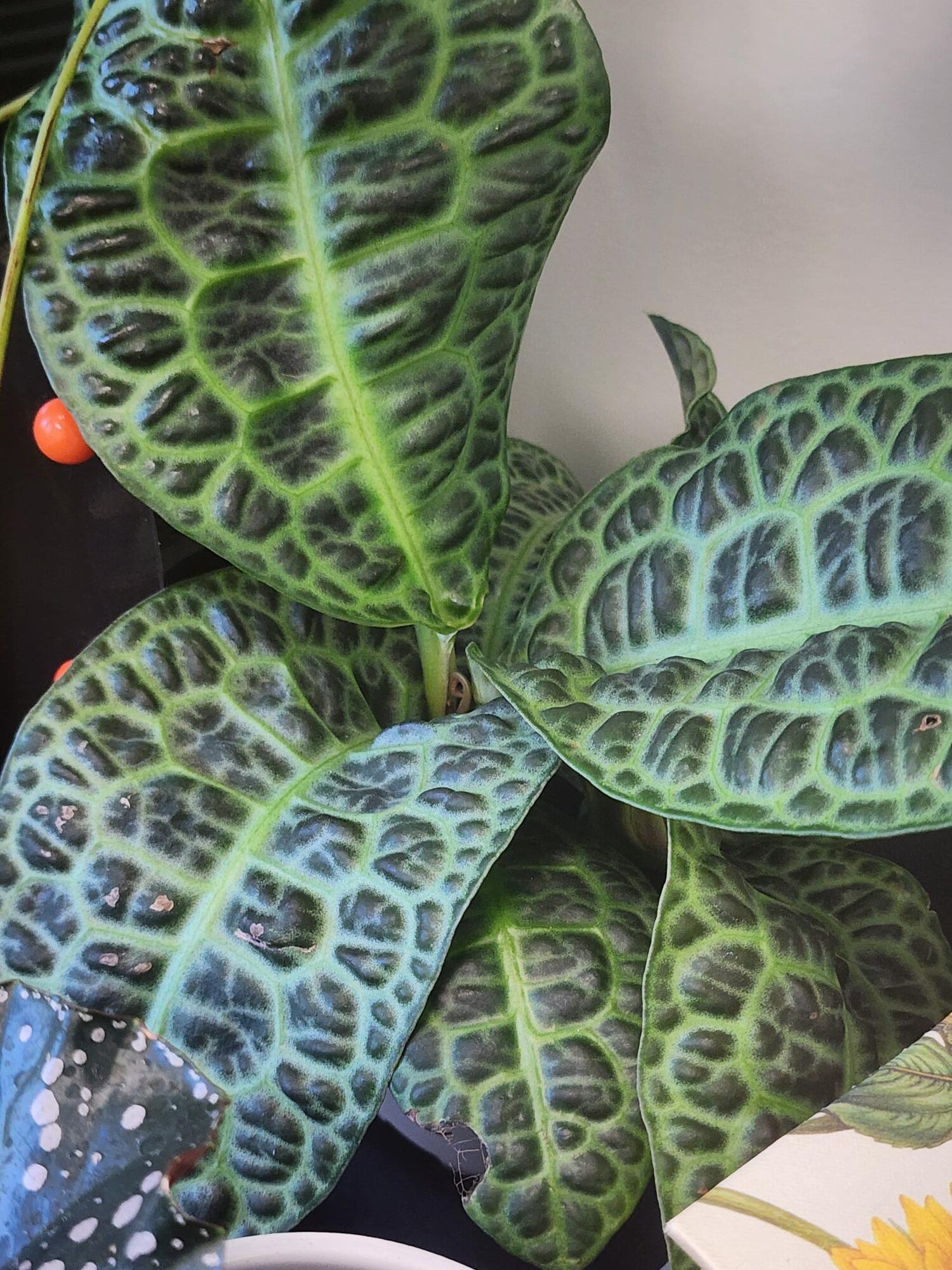
Kura Kura plant with long, oval leaves that have a light green and dark-green pattern that resembles a turtle’s shell.
Jackie Jordan, ©2026, Clemson Extension
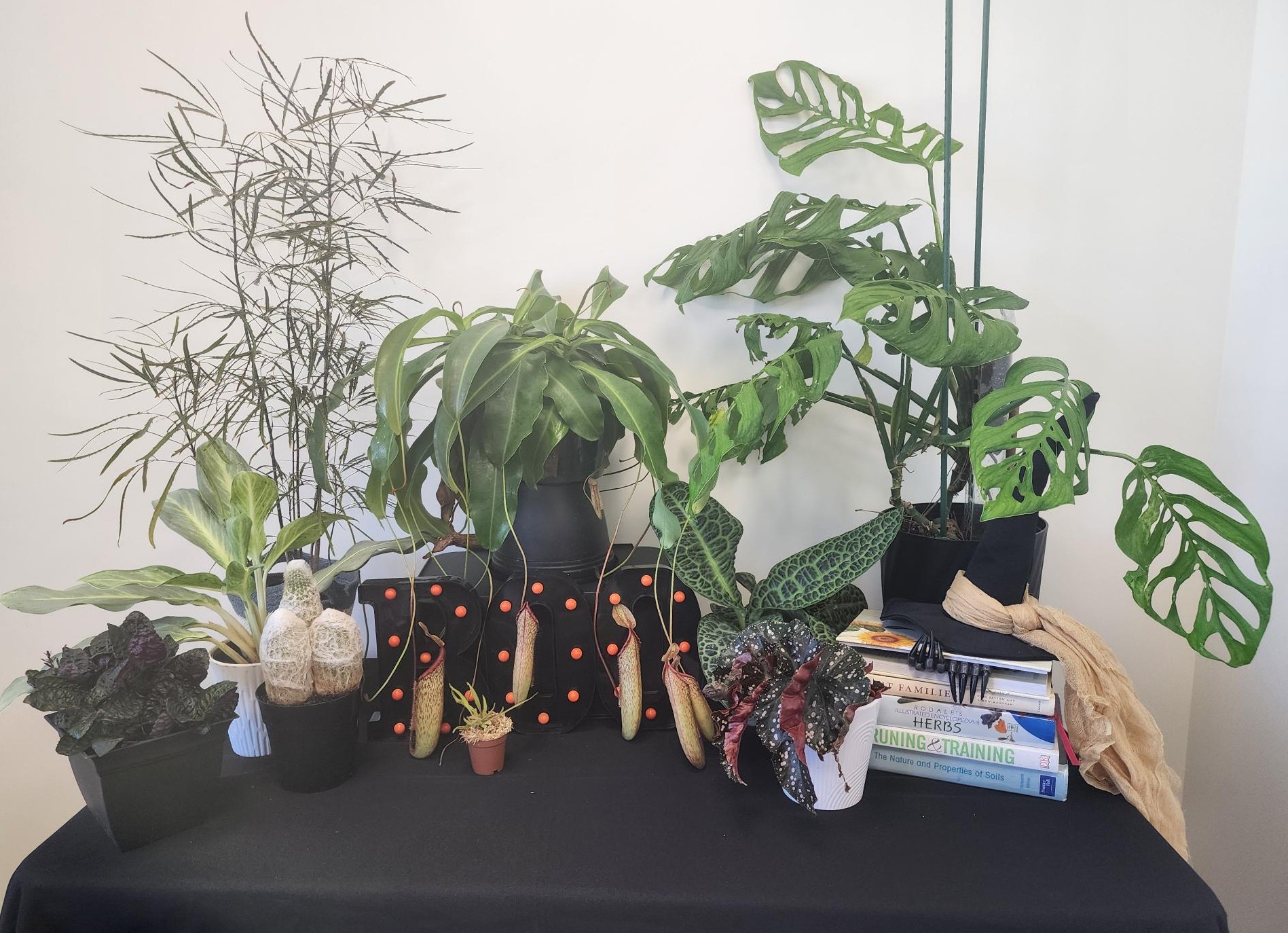
A collection of several different spooky houseplants grouped together.
Jackie Jordan, ©2026, Clemson Extension