Quick Guide: Supporting Soil Health Through Biodiversity
- Support pollinators with native flowering plants
- Encourage beneficial insects and spiders
- Improve soil biology with animal-based organic amendments
- Animal-based soil amendments include composted manure, chicken litter and fish emulsion
- Apply these practices without livestock
The fifth principle of soil health is often described as “animal integration.” While this concept is commonly associated with livestock, home gardeners can apply it by supporting pollinators and beneficial insects and using animal-based organic amendments.
How Biodiversity Supports Soil Health
The Five Principles of Soil Health
The 5 principles of soil health are:
- Keep your soil covered
- Reduce disturbance
- Keep a living root
- Increase diversity
- Integrate animals
Why the Fifth Principle Can Be Difficult to Apply
The 5th principle is somewhat debated, not because of its importance but because it is not viewed as universally applicable or accessible.
While this principle is sometimes presented as integrating livestock, which is more limited in scope, integrating animals can be done in a variety of ways to benefit land on any scale.
How Biodiversity Supports Soil Health
Integrating animals does not require raising livestock. It includes supporting biological activity and using animal-derived inputs to improve soil systems.
Aboveground biodiversity supports belowground biodiversity, creating healthier and more resilient soil ecosystems.
Animal integration is one way to expand diversity, increase biological activity, and support a balanced ecosystem.
Home gardeners can apply this soil health principle without livestock by supporting pollinators, encouraging beneficial insects, and using animal-based organic amendments.
How to Support Soil Health Without Livestock
Support Pollinators for Healthier Soil
A diverse pollinator population supports plant productivity and biodiversity, both of which contribute to healthy soil systems.
- Support pollinators with plant selections like native flowering varieties and letting crops flower when possible after harvest.
- 35% of food crops rely on animal pollinators!
- Pollinators help support the diversity and abundance of aboveground biomass, which supports belowground biomass and soil health.
See Pollinator Gardening (HGIC 1727) for more about pollinator gardening.
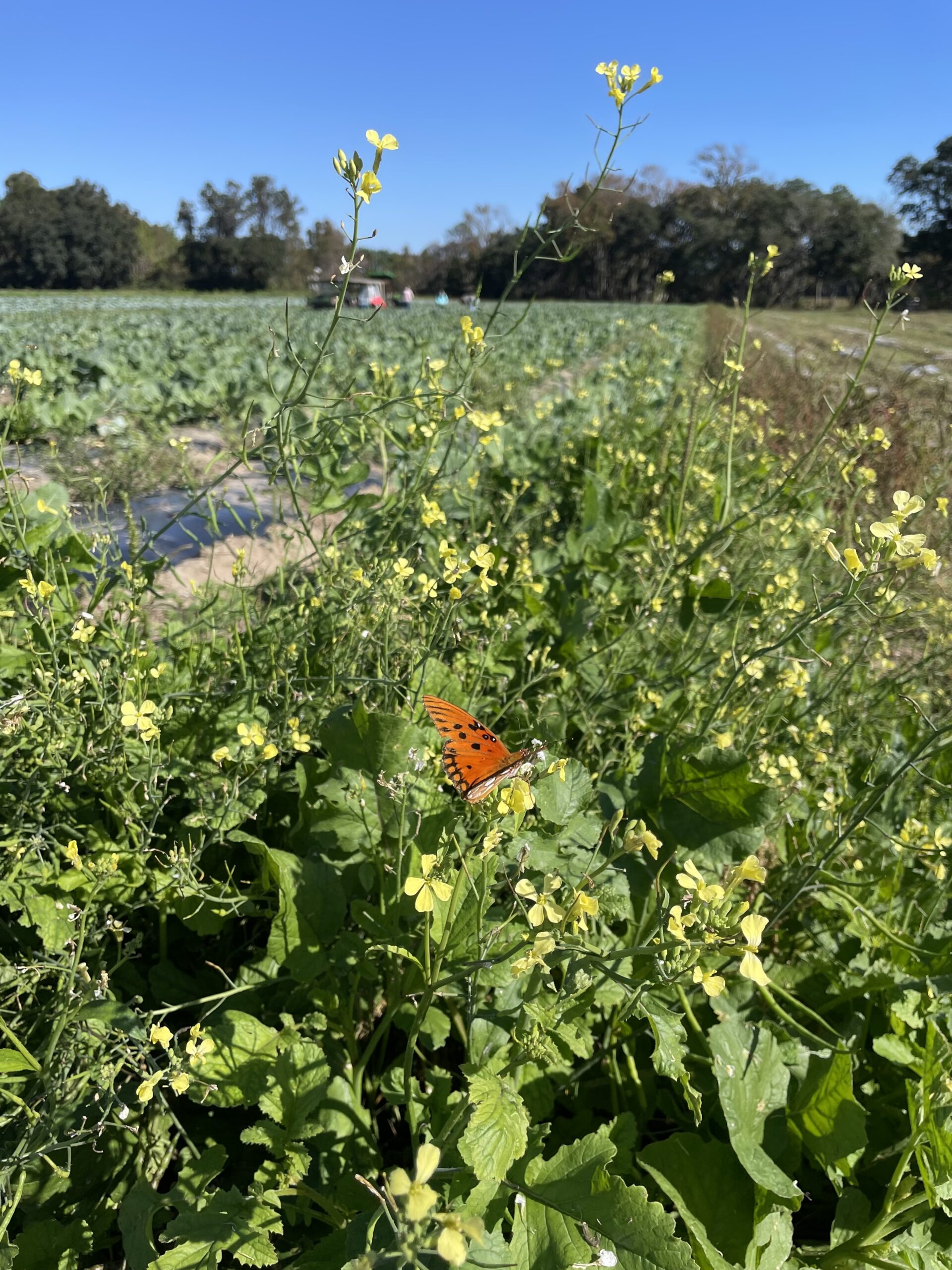
Butterfly on flowering plants between plots of vegetable production.
Lacy Barnette © 2024, Clemson Extension
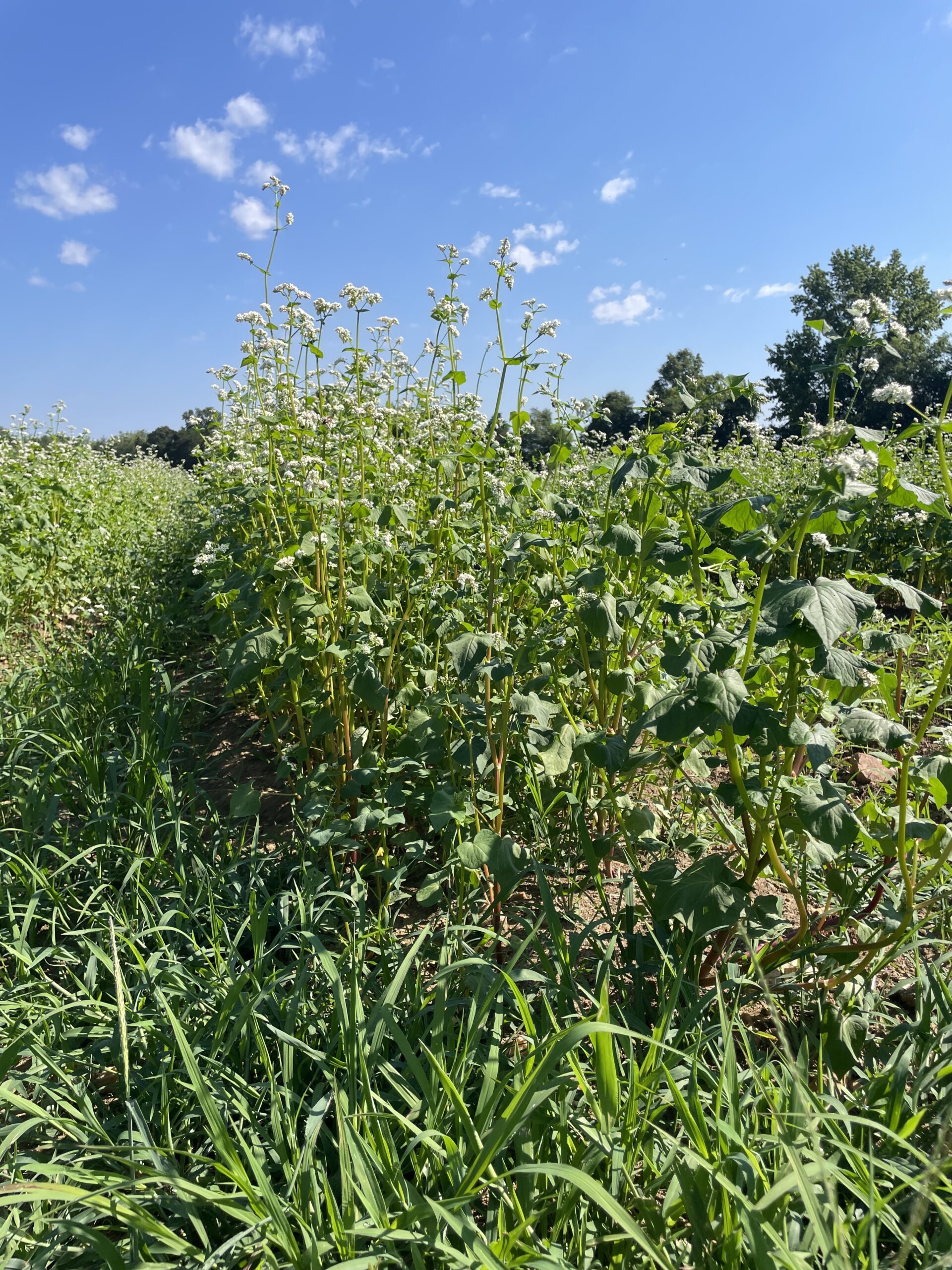
Buckwheat is used as a warm-season cover crop after spring vegetable production to support pollinators with its small white flowers.
Lacy Barnette © 2024, Clemson Extension
Encourage Beneficial Insects and Spiders
Beneficial insects and spiders are important parts of a healthy ecosystem and can reduce the need for pest management inputs.
- Support beneficial insects and spiders by incorporating food sources, leaving residue for habitat, and using the most targeted option when spraying pesticides.
- Beneficial insects reduce reliance on pesticides that can impact soil biology.
- They are also part of the food web, which impacts soil biology and nutrient cycling.
See Incorporating Beneficials into the Gardener’s Toolkit (HGIC 1721) for more about incorporating beneficial insects.
Use Animal-Based Organic Amendments
Animal-derived organic amendments can contribute nutrients, organic matter, and biological diversity to soil systems.
- Properly produced, safe animal products such as compost, chicken litter, or fish emulsion to provide some of the benefits and diversity from animals without the physical animal on your land.
See Composting (HGIC 1600) for more on composting, and Understanding Organic Fertility (HGIC 1659) for more on organic amendments, including animal-based products.
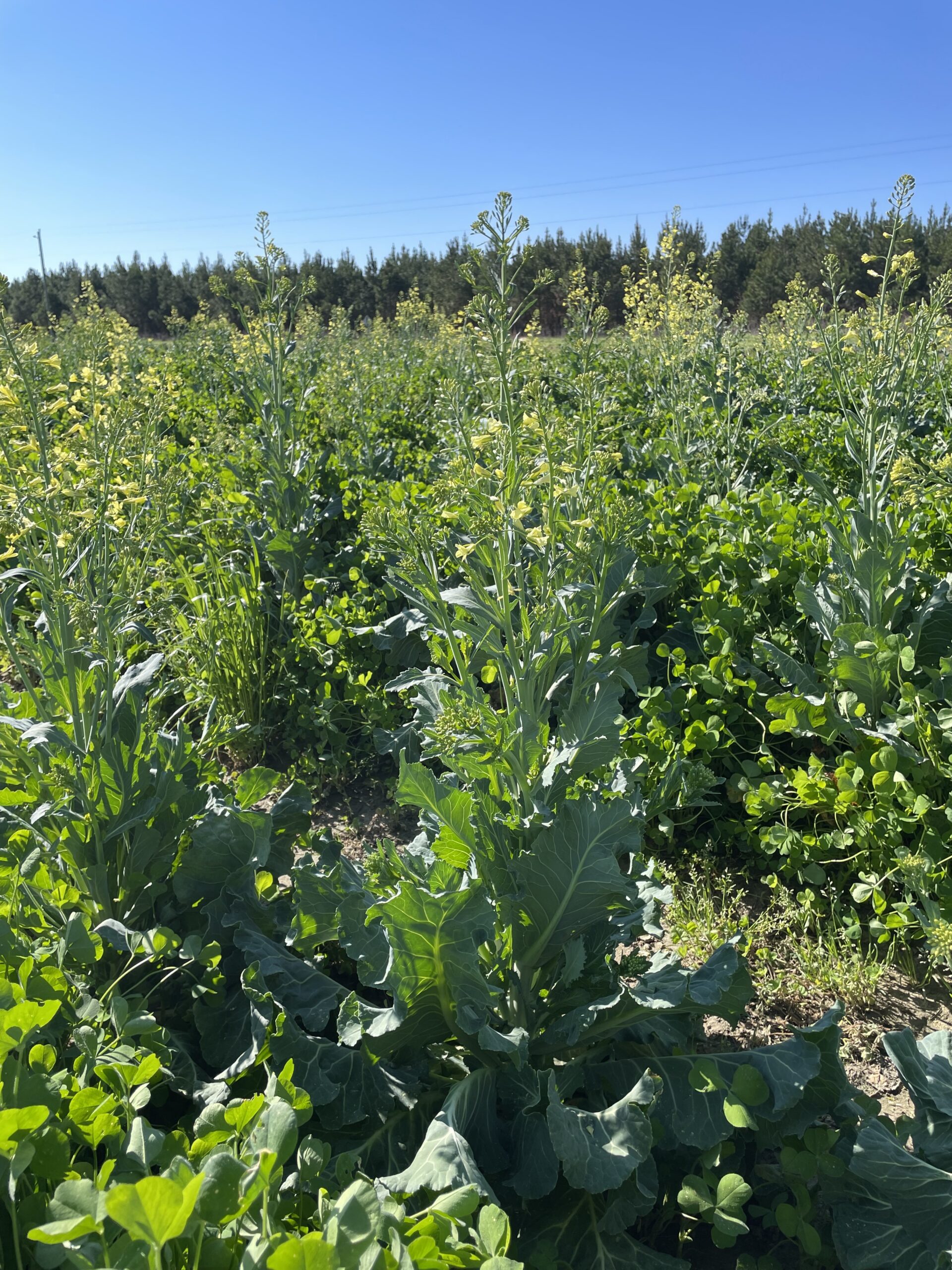
These collards were allowed to go to flower after the final harvest during the cool season.
Lacy Barnette © 2024, Clemson Extension
Supporting Soil Health Through Biodiversity
Home gardeners can apply the fifth principle of soil health without livestock. Supporting pollinators, encouraging beneficial insects, and using animal-based organic amendments are practical ways to increase biodiversity and biological activity.
Healthy aboveground ecosystems help support healthy belowground ecosystems. By fostering biodiversity throughout the landscape, gardeners can contribute to healthier, more resilient soil systems.
Biodiversity connects plants, insects, pollinators, soil organisms, and nutrient cycling into a functioning ecosystem. Supporting these interactions is one practical way gardeners can improve soil health at any scale.