What is a Bird’s Nest Fern?
A bird’s nest fern (Asplenium nidus) is a tropical fern with wide, strap-like fronds (leaves). The new fronds unfurl at the center of the plant and are said to resemble a bird’s nest. It is typically grown as a houseplant.
In its natural habitat, the bird’s nest fern is an epiphyte that grows in trees. Epiphytes are plants that grow on another plant, instead of in soil. They get water and nutrients from the air and are not parasitic to the host plant.
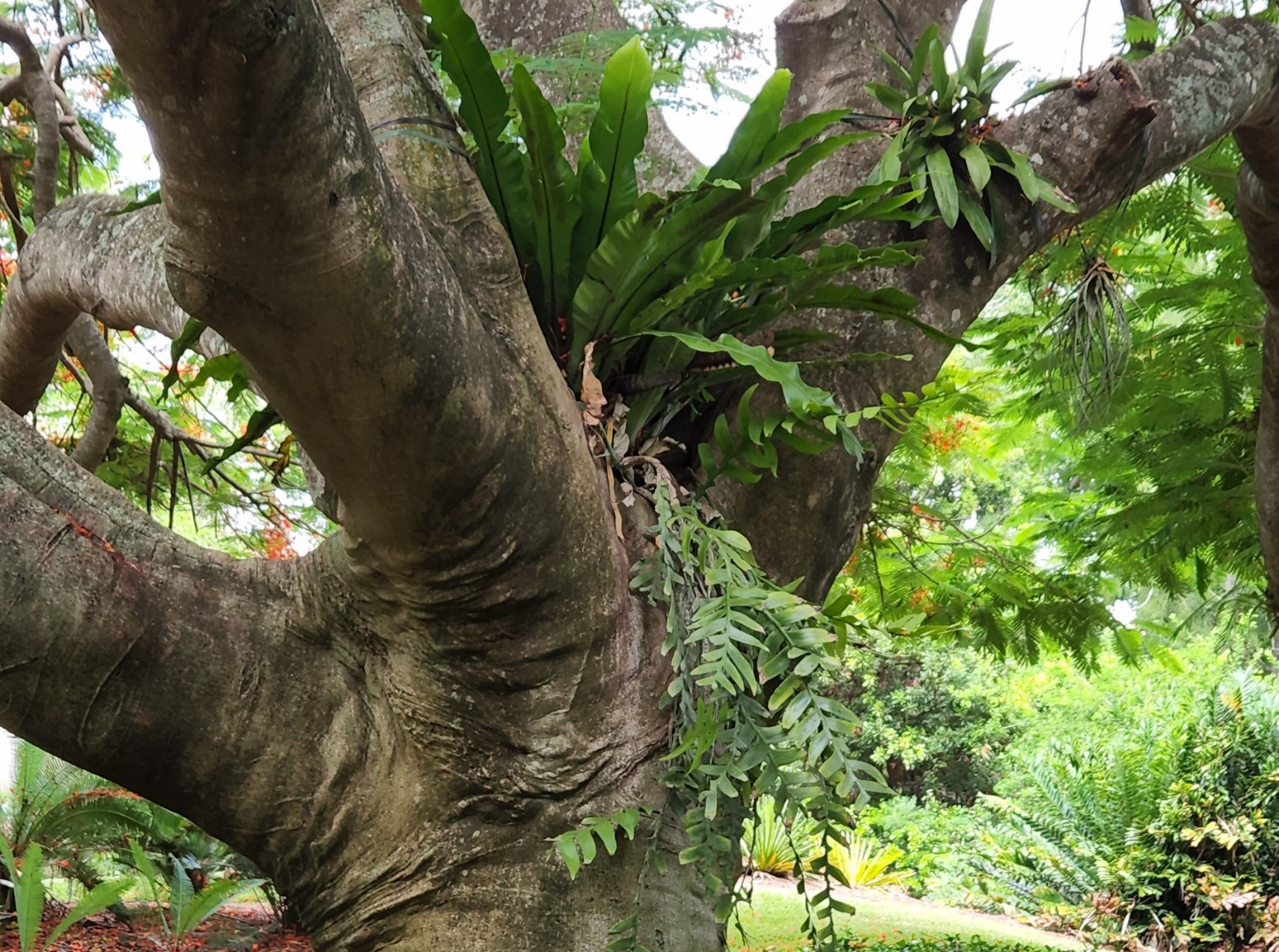
Bird’s Nest Fern (Asplenium nidus) is an epiphyte that grows on a host plant. Spanish moss, air plants, bromeliads, resurrection and staghorn ferns are also epiphytes.
Millie Davenport, ©HGIC 2022, Clemson Extension
Native Range of Bird’s Nest Fern
The bird’s nest fern is native to Hawaii and parts of Southeast Asia, including Malaysia and Indonesia. It is also native to Australia and New Guinea.
Typical Size of Bird’s Nest Fern
Bird’s Nest Fern Size (indoors): When grown indoors as a houseplant, the fronds typically grow 18 to 24 inches long.
Bird’s Nest Fern Size (outdoors in its native habitat): The ferns can grow fronds 4 to 5 feet tall.
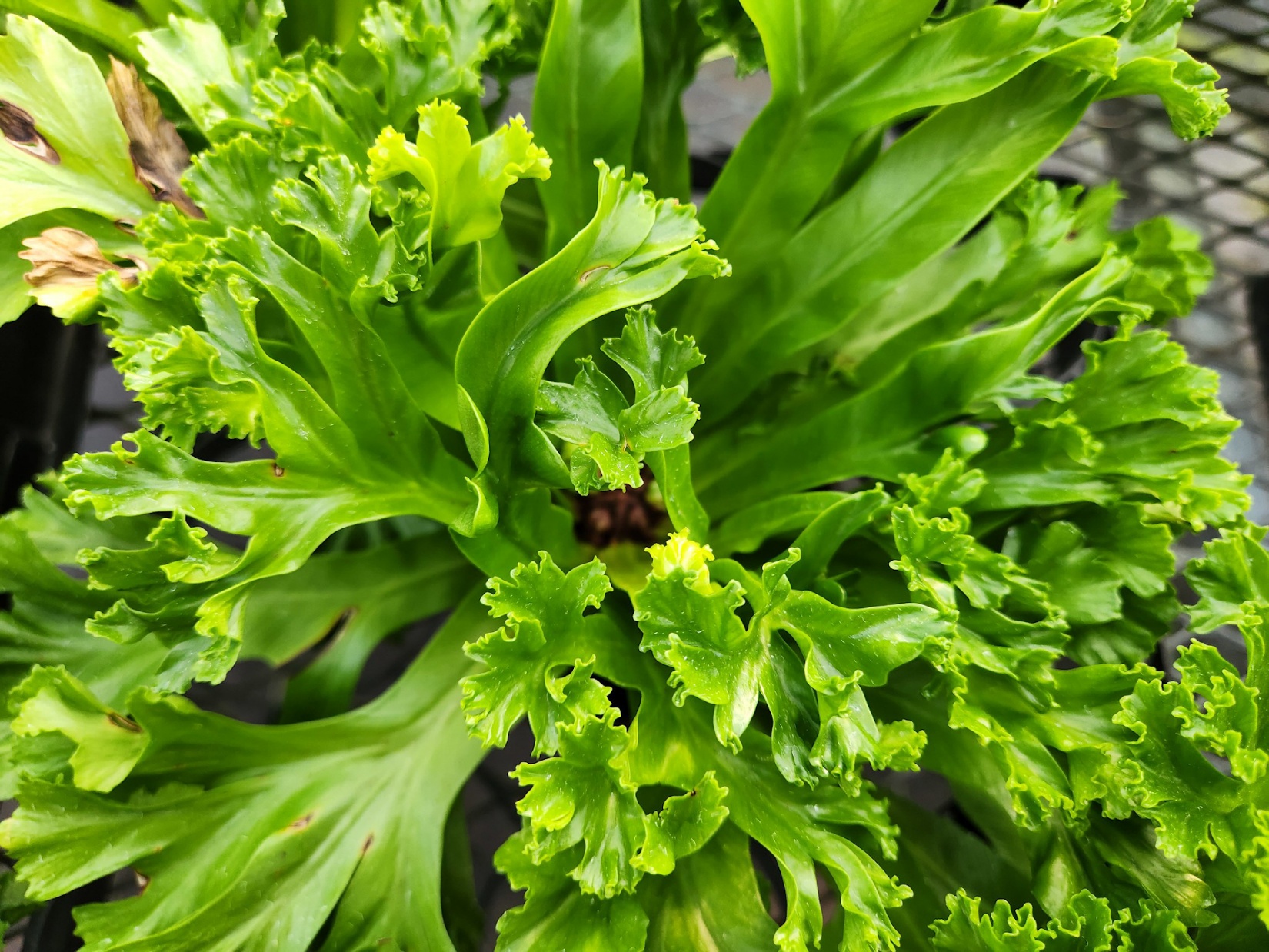
Bird’s nest ferns (Asplenium antiquum ‘Leslie’) have fronds that are forked on the ends.
Barbara H. Smith, ©HGIC 2024, Clemson Extension
How to Grow Bird’s Nest Fern Successfully
USDA Hardiness Zones
- Bird’s nest fern is hardy in zones 11 to 12.
Indoor Care Best Practices
Light & Location (Bird’s Nest Fern Care Indoors)
- Place ferns in a room with bright, indirect light, such as those facing east or north.
- Avoid placing near a heat vent or fireplace.
Soil Needs (Bird’s Nest Fern Care Indoors)
- Prefers rich, well-drained soil high in organic matter.
- Use a potting soil labeled for indoor or tropical plants.
Watering Bird’s Nest Fern
- Water when the top inch of soil feels dry
- Water the fern carefully so as not to get water on the leaves.
- Water along the outer edge of the pot to prevent water from entering the center of the plant.
- Do not allow the soil in the pot to dry out completely between waterings.
- Do not let the pot sit in a saucer of water as this can cause root rot.
Fertilizing Bird’s Nest Fern for Healthy Growth
- Fertilize monthly during the growing season, from late spring through summer
- Use a fertilizer specifically designed for houseplants. For ferns, use half the recommended rate on the label.
Humidity Tips for Bird’s Nest Fern in Winter
- Use a humidifier nearby in winter.
- Or set pot on a tray of pebbles with water. Set the pot on top of the pebbles, but don’t allow the water to touch the bottom of the pot.
Repotting Bird’s Nest Fern
- These ferns grow slowly
- Can be repotted every few years in the spring when new growth appears.
Common Pests on Bird’s Nest Fern Indoors
Pests include: nematodes, scale, slugs and snails.
Outdoor Care After Frost Passes
Like most houseplants, the bird’s nest fern can be placed outdoors in a shady area after the danger of frost has passed in late spring.
It must be brought back indoors before nighttime temperatures drop below 50 degrees.
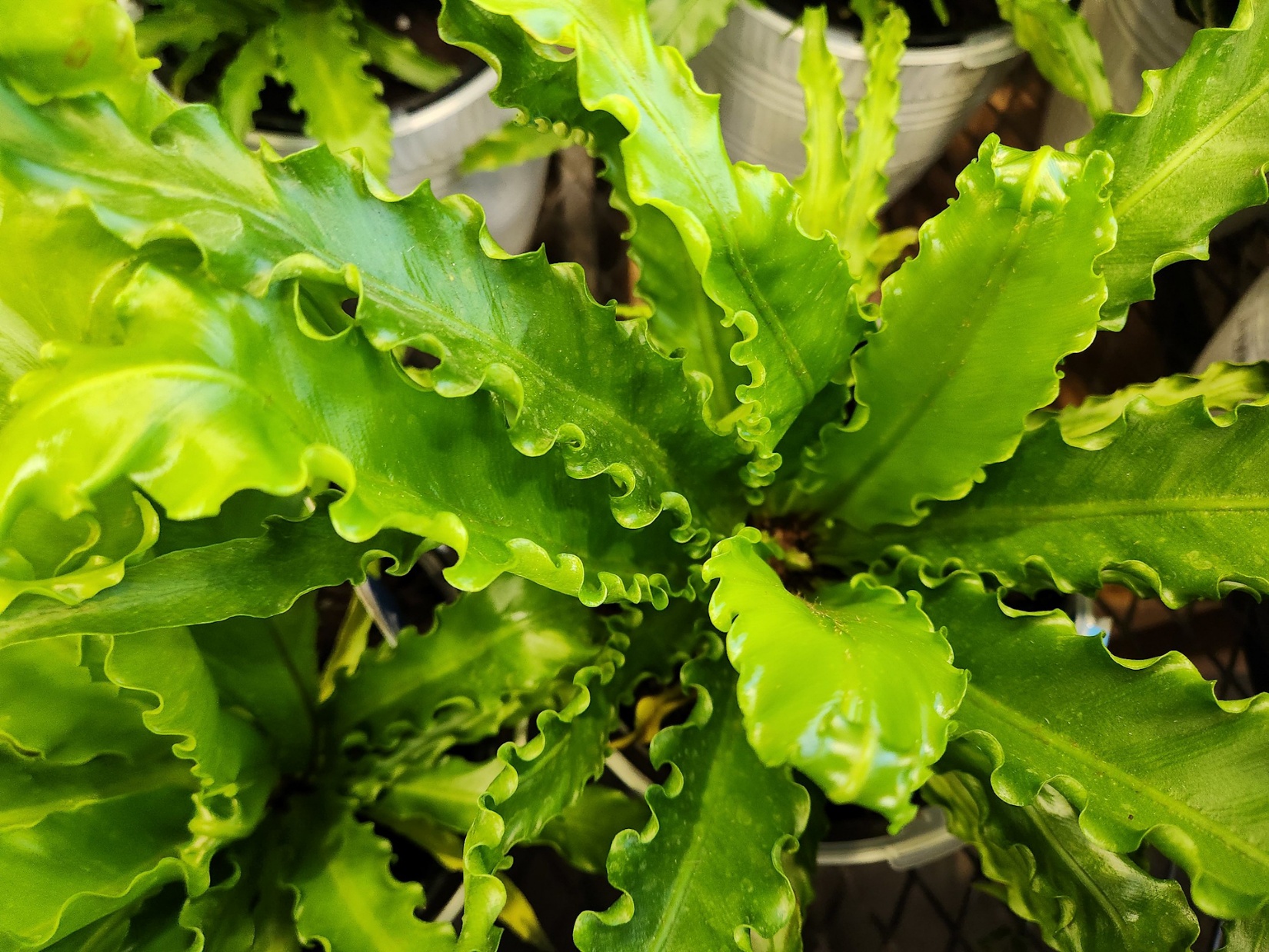
Osaka Bird’s Nest Fern (Asplenium nidus ‘Osaka’) has frilly-edged fronds.
Barbara H. Smith, ©HGIC 2025, Clemson Extension
Pet Safety & Toxicity
Ferns are considered non-toxic to pets.