What Is a Candy Corn Plant?
Candy corn plant (Cuphea micropetala), also known as Mexican giant cigar plant, is a fall-blooming perennial with orange and yellow tubular flowers. The youngest blooms are pale yellow. As the blooms age, they become bicolor with bright orange on the inner half and pale yellow on the outer half. Then, the blooms turn solid orangey-red as they mature.
The flowers attract hummingbirds, butterflies, and other pollinators. The plant starts blooming in September, when many summer-flowering perennials have fizzled out.

The flowers of the candy corn plant are vibrant in shades of yellow and orange.
Ginger E. Long, © 2024 HGIC, Clemson Extension
Candy Corn Plant Size and Foliage
The candy corn plant grows 3 to 4 feet tall and wide. Clumps widen over time. It has reddish stems with lanceolate leaves 3 to 6 inches long. Flowers form at the top third of the stems.
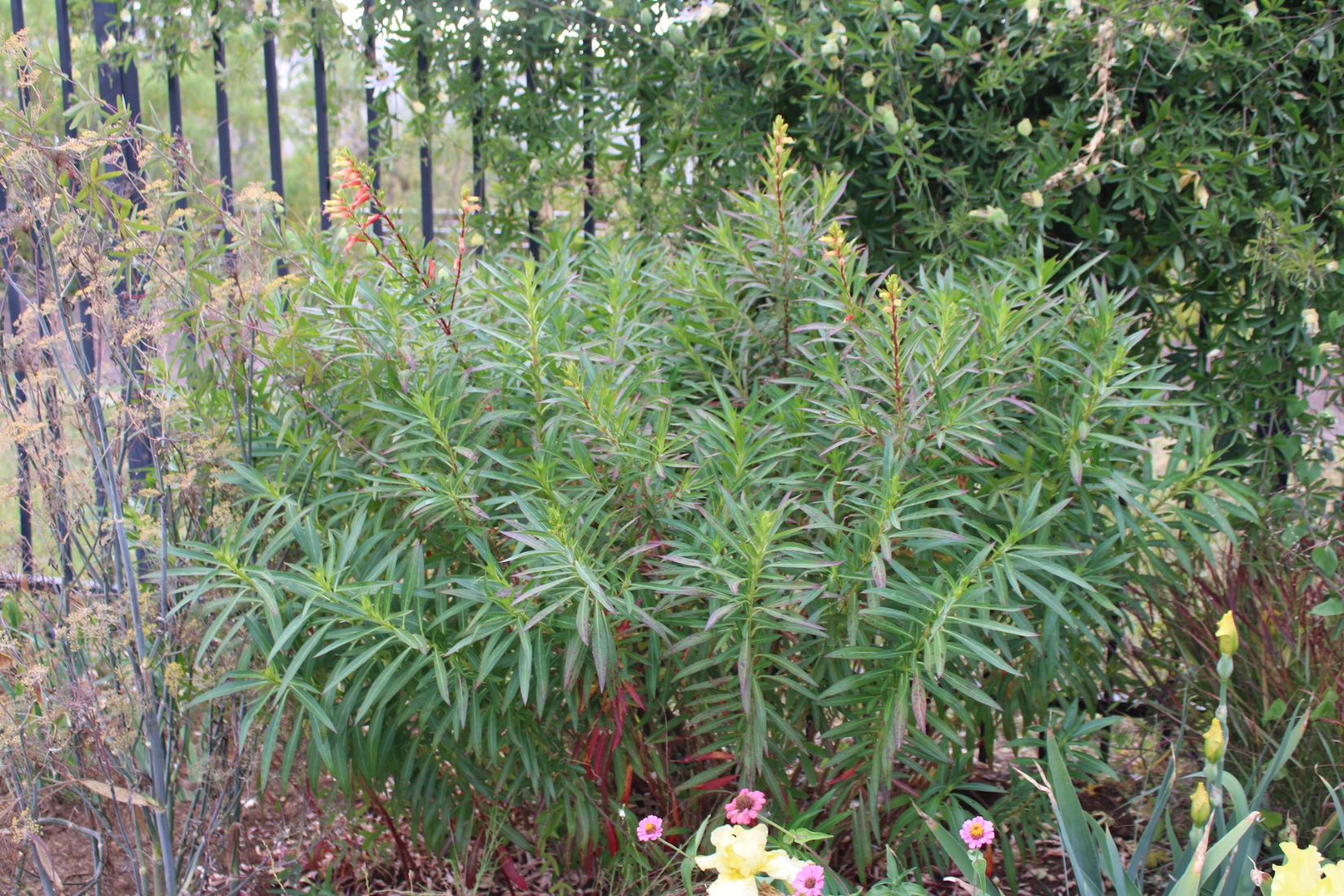
Candy corn plants have a lush, bushy habit.
Ginger E. Long, © 2025 HGIC, Clemson Extension
Native Range of Candy Corn Plant
It is native to southwestern Mexico.
How to Grow Candy Corn Plant Successfully
USDA Hardiness Zones
- Perennial in Zones 8 to 11.
Sunlight Requirements
- Needs six or more hours of direct sun daily for best blooms.
- Tolerates partial shade but will produce fewer flowers.
Soil Preparation
- Plant in well-drained soil.
- Avoid waterlogged soil, especially in winter, to prevent plant loss.
Watering Tips
- Water regularly until plants are established.
- Once established, they are drought-tolerant.
Fertilizing Candy Corn Plant
- Use a slow-release, low-nitrogen fertilizer in spring, like Espoma Flower-Tone® with a 3-4-5 formulation.
Pruning and Maintenance
- Wait to cut back the foliage until late winter. Cut it down to the ground.
Propagation by Division
- Divide clumps in spring or fall.
Pest and Disease Management
- Prevent root rot by avoiding soggy soil.
Wildlife Resistance
- Somewhat resistant to deer.

Candy corn plants start blooming in September
Ginger E. Long, © 2025 HGIC, Clemson Extension
Seasonal Interest and Pollinator Value
Candy corn plants start blooming in September as Ruby-throated hummingbirds begin flying south for the winter. It provides a much-needed nectar source for their journey.
Related HGIC Resources
Additional Resources
NC State Extension Plant Toolbox: Cuphea micropetala
UF IFAS Blog Plant Cupheas for Summer Flowers, Hummingbirds, and More