Quick Grow Guide: Mexican Sunflower (Tithonia rotundifolia)
Warm-Season Annual
Best Soil: Poor to moderately fertile, well-drained
Sunlight: Full sun (≥6 hours)
Watering: Drought-tolerant once established
Bloom Time: Late summer–first frost
Note: Attracts butterflies, bees, hummingbirds; seeds feed goldfinches
Why Grow Mexican Sunflowers in Your Garden
When you are poring through seed catalogs this winter, dreaming of next year’s garden, consider adding Mexican sunflower (Tithonia rotundifolia) seeds to your list. These vibrant, heat-loving plants are not only a beautiful addition to the late summer to fall garden, but they’re also pollinator magnets and incredibly easy to grow, even in poor soil.
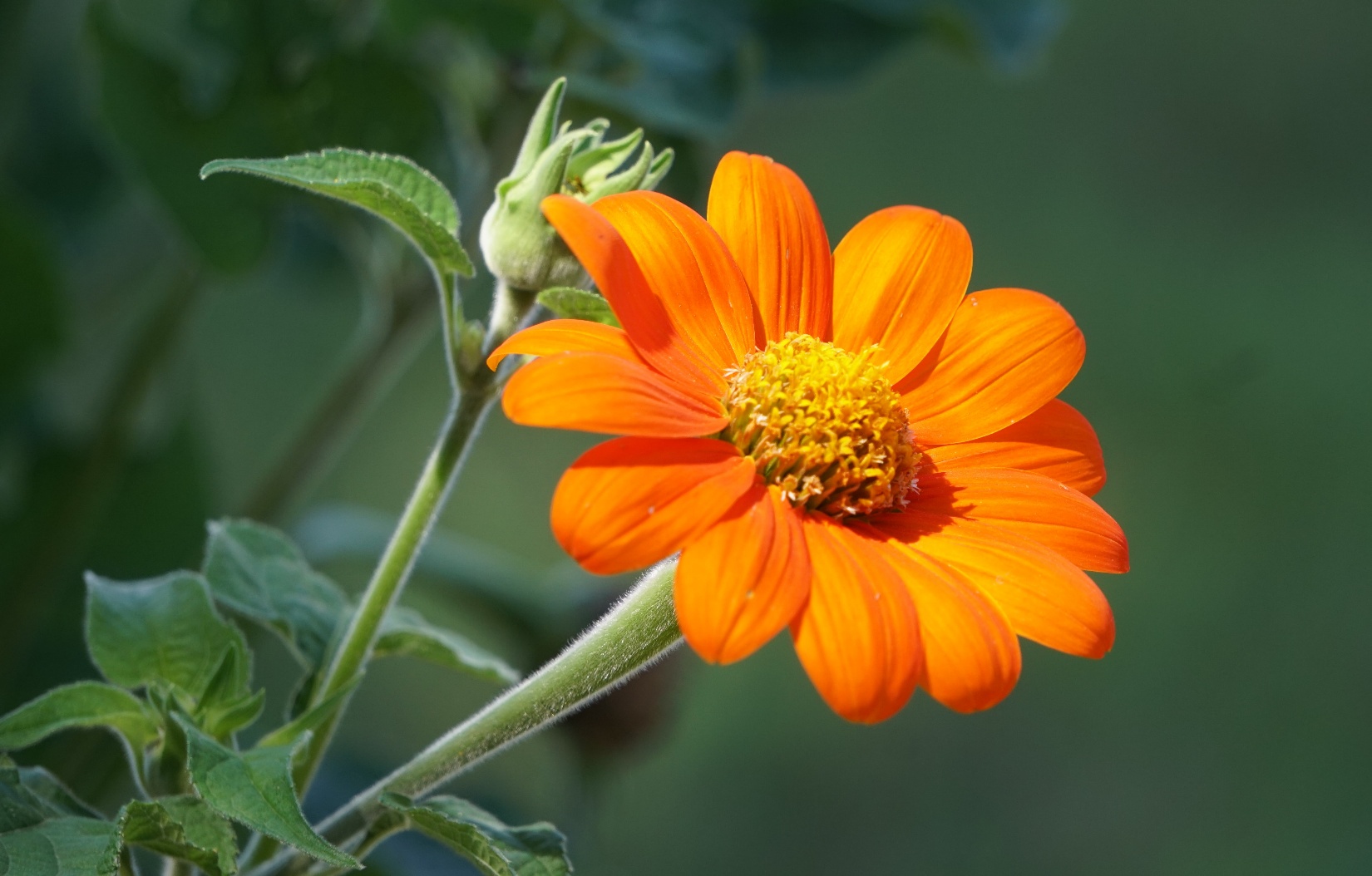
Mexican sunflower (Tithonia rotundifolia) is a heat-loving summer annual.
Barbara H. Smith, ©2025 HGIC, Clemson Extension
What Is a Mexican Sunflower?
It’s a warm-season annual in the aster (Asteraceae) family and native to Central America and Mexico.
The 3-inch, bright orange to yellow flowers are a perfect addition to a cutting or pollinator garden. Blooming from late summer to the first frost, Mexican sunflowers provide an excellent source of pollen and nectar for a wide variety of pollinating insects, including butterflies, bees, and hummingbirds. Goldfinches love feeding on the seed.
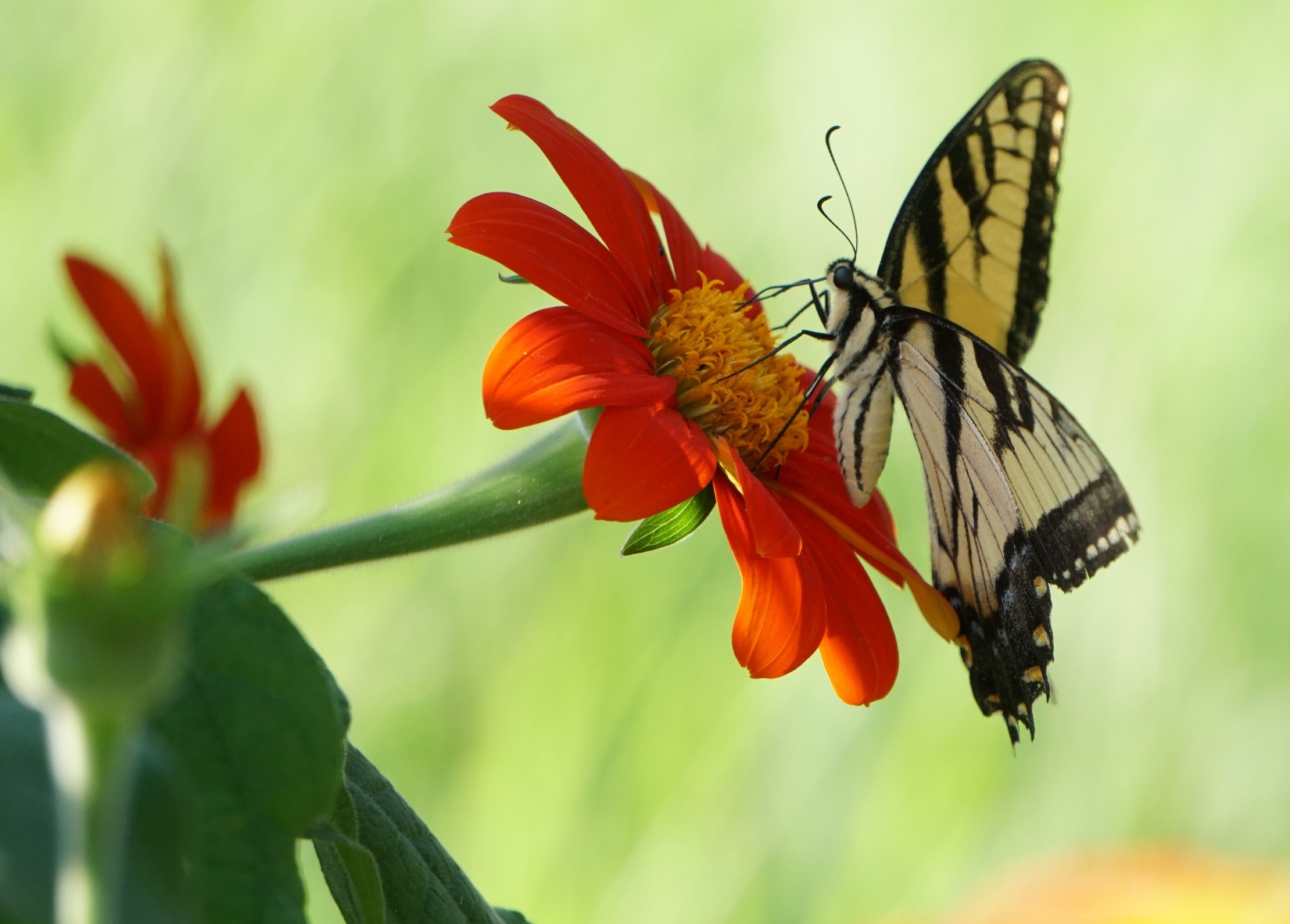
Eastern tiger swallowtail butterflies (Papilio glaucus) are frequent visitors to Mexican sunflowers.
Barbara H. Smith, ©2025 HGIC, Clemson Extension
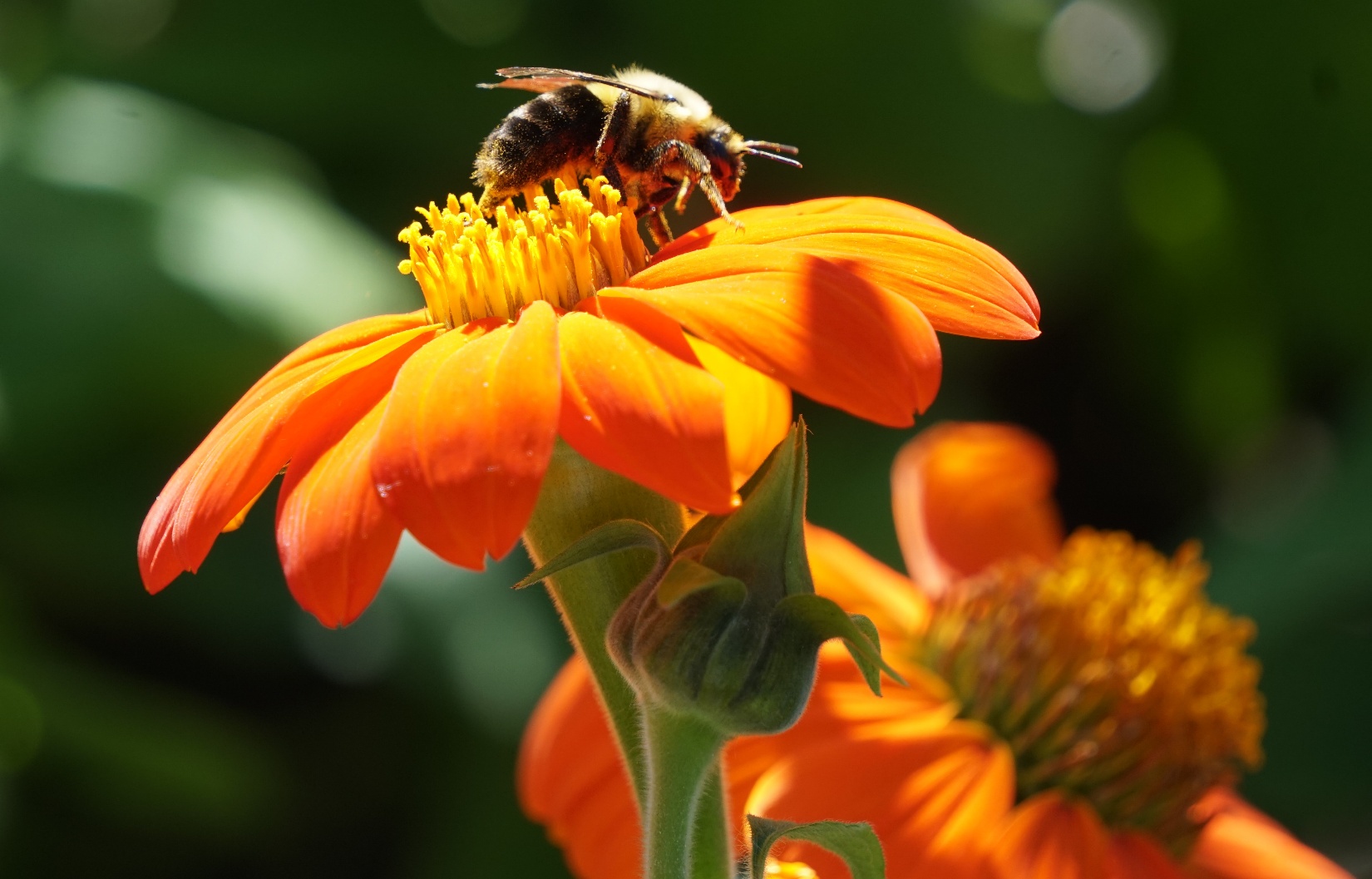
Mexican sunflowers serve as a source of pollen for a diverse range of bee species.
Barbara H. Smith, ©2025 HGIC, Clemson Extension
How to Grow and Care for Mexican Sunflowers
It grows best in poorer soils and requires full sun (at least 6 hours or more of direct sunlight); it will also tolerate moderate drought conditions. Avoid planting in soil that is too rich in organic matter or applying heavy nitrogen applications. Both will cause the plants to produce more foliage than flowers and weaker stems, leading to the plants falling over.
It’s also a great addition to a coastal garden, as it tolerates moderate salt exposure.
Mexican sunflowers are fast-growing and can mature to heights of 2 to 6 feet and widths of 2 to 3 feet. The stems can be brittle, so staking in high wind areas may be necessary.
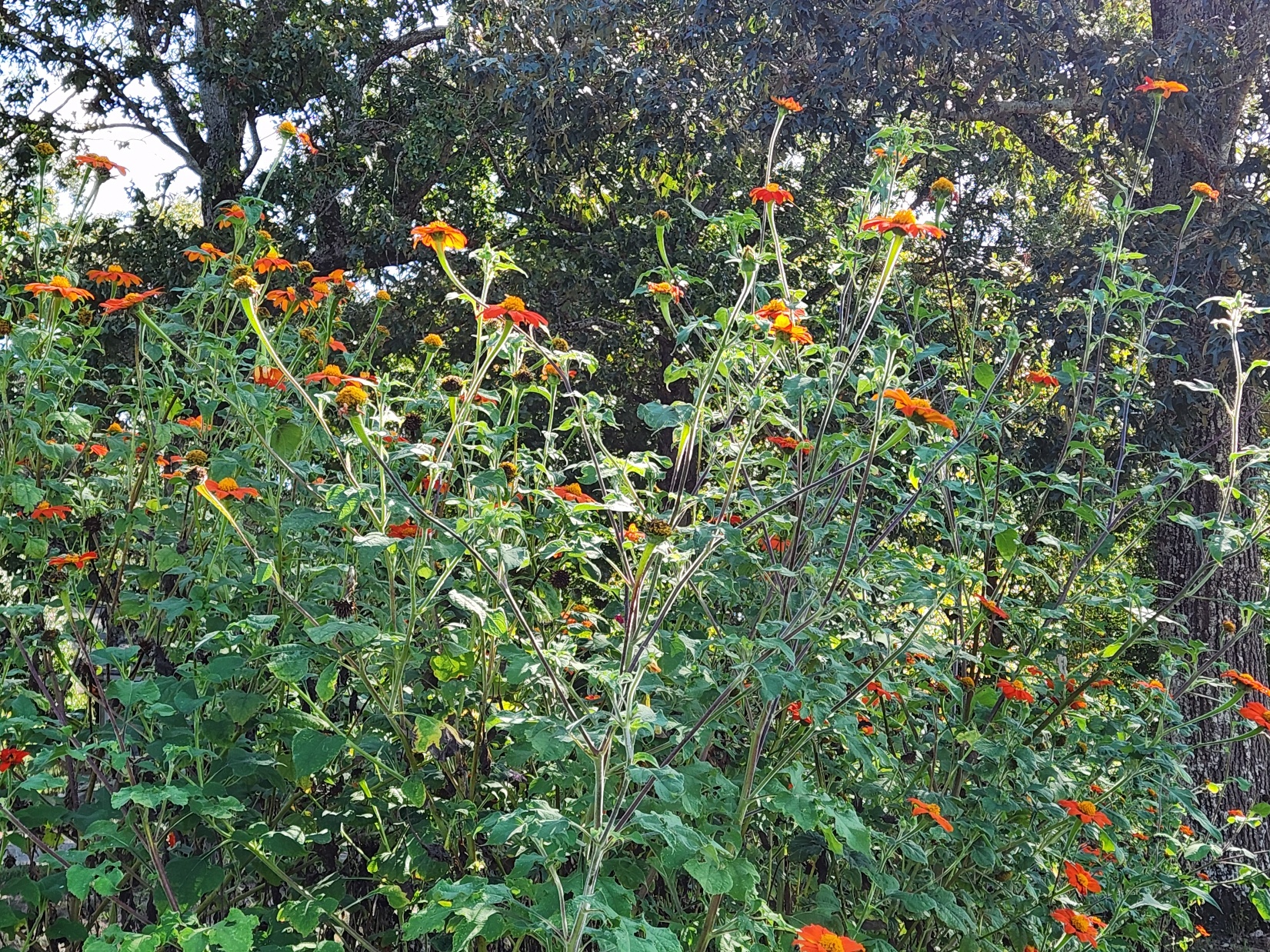
Mexican sunflowers are fast-growing and can mature to heights of 2 to 6 feet.
Barbara H. Smith, ©2025 HGIC, Clemson Extension
Recommended Mexican Sunflower Cultivars
- ‘Fiesta del Sol’ is a compact grower and will mature at about 3 feet tall, making it an excellent choice for smaller gardens. The flowers are bright orange with yellow centers. It was named a 2000 All-American Selection winner.
- ‘Goldfinger’ features orange-gold flowers and matures to 2 to 2.5 feet tall, making it another good choice for small spaces.
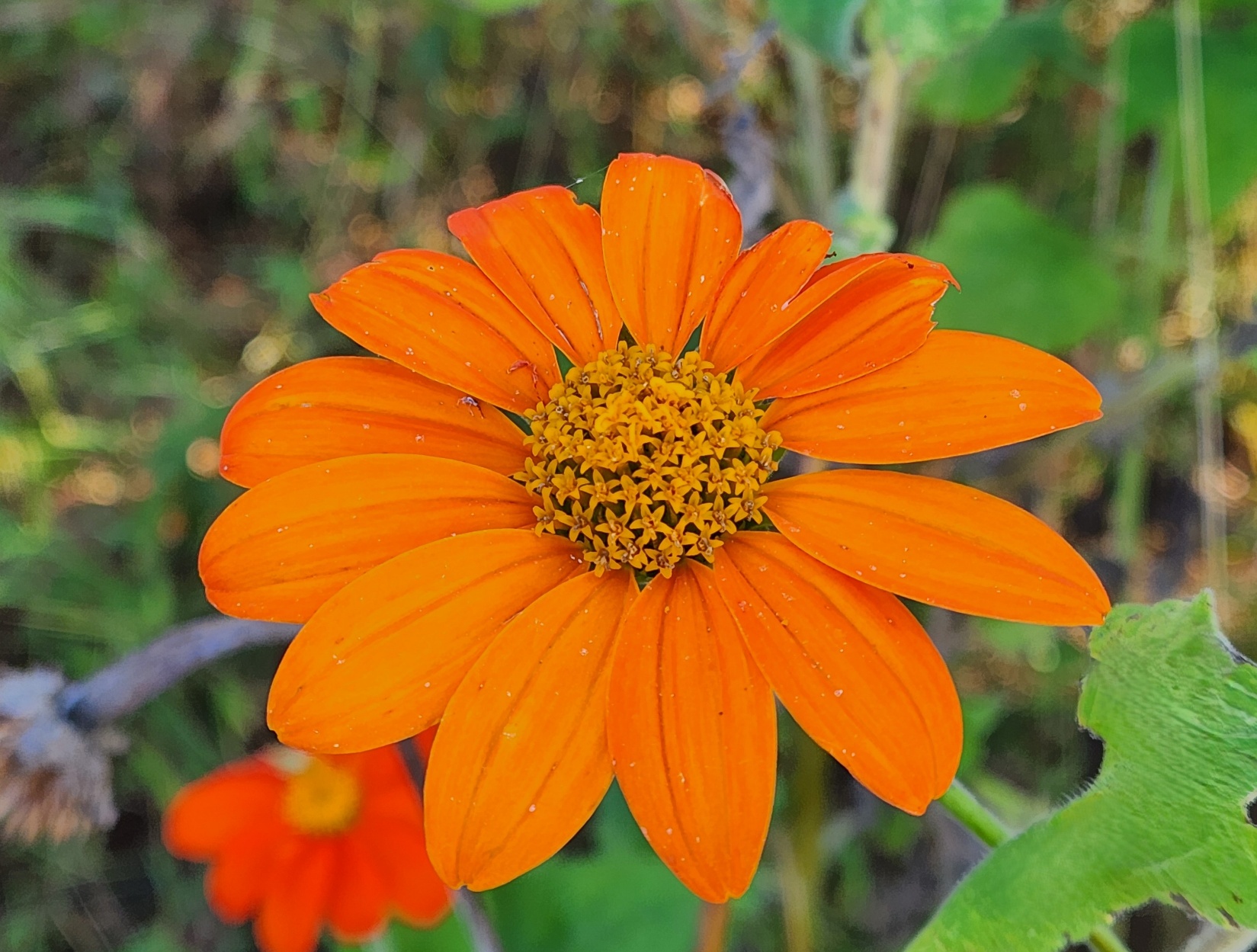
Goldfinger Mexican Sunflower has orange-gold flowers and is a good choice for smaller gardens.
Barbara H. Smith, ©2025 HGIC, Clemson Extension
- ‘Torch’ is the most common cultivar. It has bright orange flowers and was named an All-American Selection winner in 1951.

The Torch Mexican sunflower is the most common cultivar.
Barbara H. Smith, ©2025 HGIC, Clemson Extension
- ‘Yellow Torch’ has yellow-orange flowers and grows to a height of 4 to 6 feet.
Foliage Description and Wildlife Resistance
The rough, oval to triangular leaves can range in size from 3 to 12 inches and are arranged alternately down the stem. Some leaves may have 3 lobes with serrated margins. The rough, fuzzy leaves and hairy stems help deter deer from eating the plants.
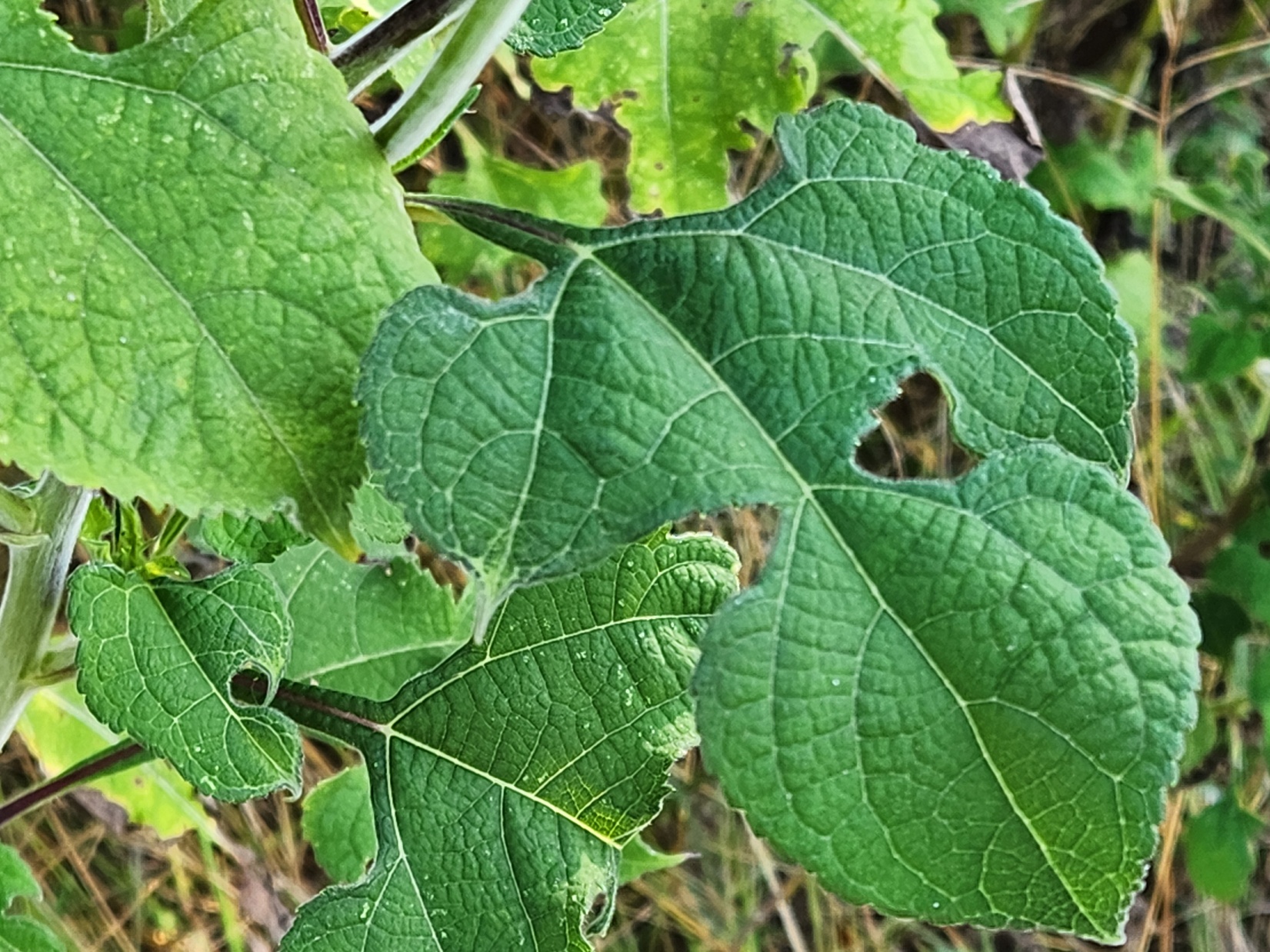
The rough, fuzzy leaves and hairy stems help deter deer from eating the plants.
Barbara H. Smith, ©2025 HGIC, Clemson Extension
How to Collect and Save Mexican Sunflower Seeds
The seeds are brown-to-black achenes (a small, dry one-seeded fruit) that form in a spiky mass mimicking the shape of the small, disc-shaped flowers at the center of the bloom. The spent flowers may be deadheaded for continual flowering but leave most of them to form seed as a food source for small songbirds.
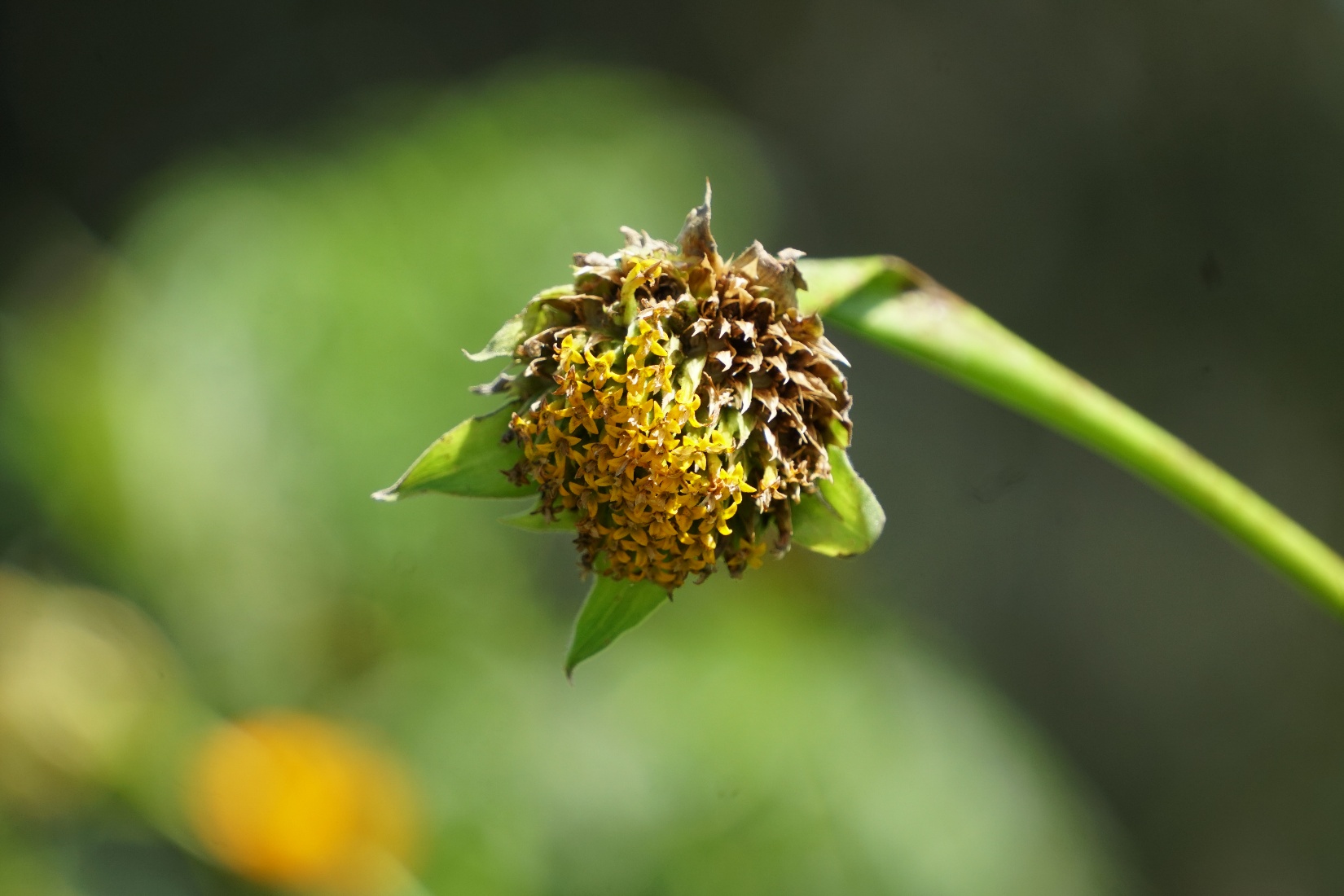
The seeds form in a spiky mass that mimics the shape of the small disc flowers in the center of the flower.
Barbara H. Smith, ©2025 HGIC, Clemson Extension
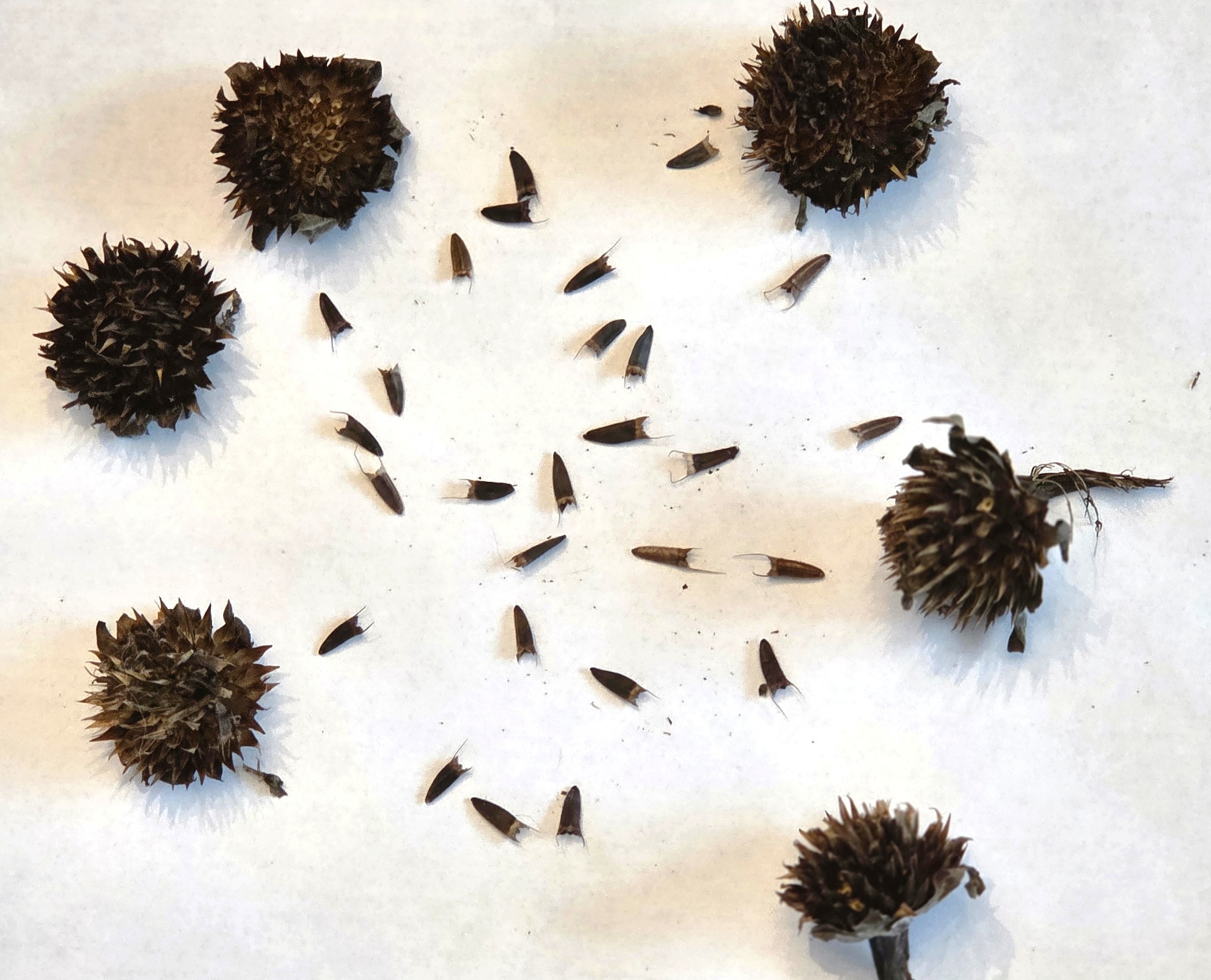
The spiky seed heads contain brown-to-black achenes, which can be saved for planting the next season.
Barbara H. Smith, ©2025 HGIC, Clemson Extension
When collecting the seed, wait until the stem has turned brown to cut off the spiky mass. Store them in a brown paper bag until it’s time to plant them next spring. Directly sow the seeds in the garden after the last frost date in the spring. The seeds need sunlight to germinate, so they should be barely covered with soil. When the seedlings are several inches tall, thin them so that the plants will be at least 2 feet apart.
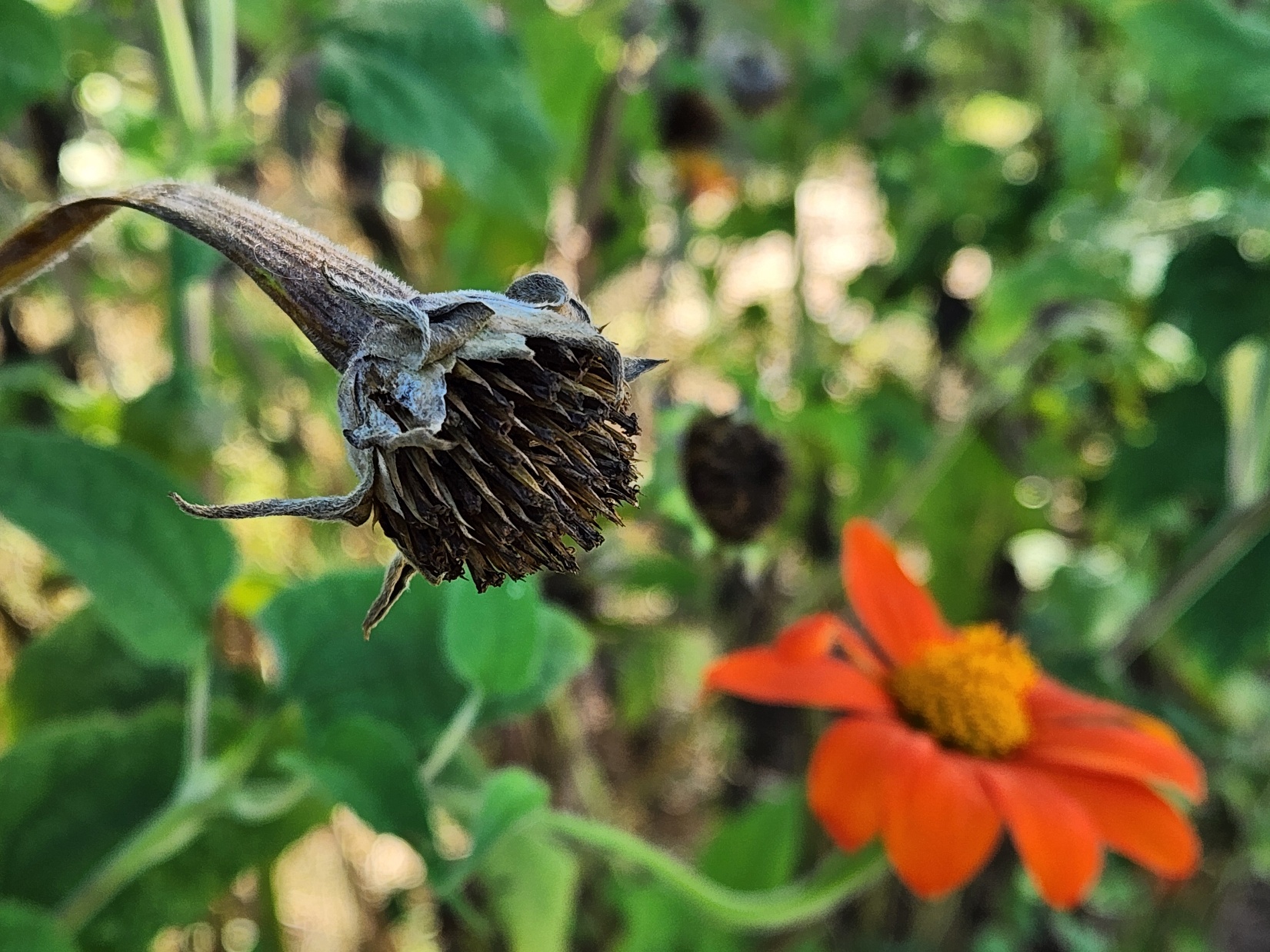
When collecting the seed, wait until the stem has turned brown to cut off the spiky mass.
Barbara H. Smith, ©2025 HGIC, Clemson Extension
Common Problems and Garden Benefits
Mexican sunflowers don’t have any serious disease or insect problems. Slugs and snails may feed on the foliage and flowers, so keep an eye out for damage. For more information on slug and snail control, see HGIC 2357 Snails & Slugs in the Home Garden.
Feed the Bees, Butterflies, and Birds—Plant Mexican Sunflowers
If you’re looking for an easy-to-grow summer annual, consider planting Mexican sunflowers in your pollinator, cutting, or drought-resistant garden next summer. You will be amazed by the variety of butterflies and bees that continually visit the brightly colored flowers, while the seeds provide a valuable food source for goldfinches. This plant delivers in both adding beauty to the garden and benefiting wildlife.