How to Identify Kudzu, Understand Its Spread, and Control This Invasive Vine
What Is Kudzu?
If you’ve ever driven down a rural road and noticed large areas covered by dense green vines, sprawling across the ground, climbing trees, or even engulfing abandoned buildings, you’ve likely seen kudzu (Pueraria montana).
This non-native, invasive vine is a deciduous, perennial, woody member of the legume family that originated in Asia. Since its introduction to the United States in 1876, kudzu has spread extensively throughout the Southeast.
Ironically, during the 1930s, it was widely promoted and planted as a tool to control soil erosion before its invasive nature became fully understood.

Kudzu (Pueraria montana) is an invasive woody vine capable of rapidly covering trees, shrubs, fences, and abandoned structures throughout the southeastern United States.
Brandon Green,©2026, Clemson Extension
Key Takeaway: Kudzu was originally introduced for erosion control but is now considered one of the most aggressive invasive vines in the southeastern United States.
Why Is Kudzu an Invasive Plant?
The problem—and the reason kudzu is now considered an invasive species—is its extremely aggressive growth habit.
Under ideal conditions, kudzu can grow as much as a foot per day. It thrives in the climate of the Southeastern United States, where mild winters, hot summers, and ample annual rainfall create favorable growing conditions.
Kudzu is also highly adaptable, tolerating a wide range of soil types and drought conditions thanks to its extensive root system.
How Kudzu Spreads Across the Landscape
Speaking of its root system, kudzu develops massive taproots and spreads through underground stems known as rhizomes.
It can also reproduce vegetatively when vine nodes encounter the soil and form new roots, creating entirely new plants. This ability allows kudzu to expand rapidly across a landscape.
As it spreads, it forms a dense mat of vegetation over the ground, shrubs, and trees. These thick layers block sunlight from reaching other plants, eventually killing them through shading and competition for resources.
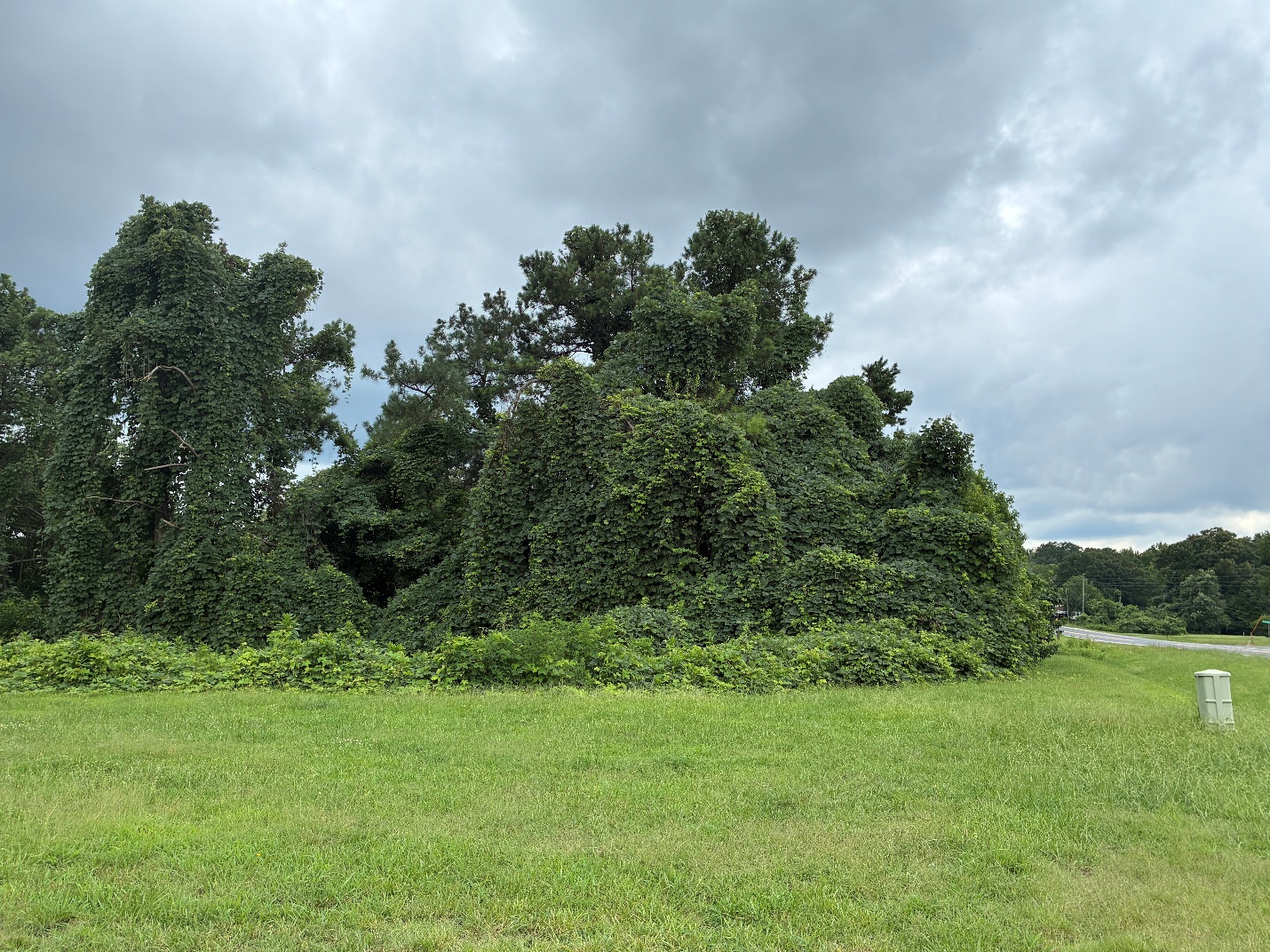
As kudzu spreads, it forms dense mats of vegetation that block sunlight, smother native plants, and eventually kill trees and shrubs through shading and competition.
Brandon Green,©2026, Clemson Extension
How to Control Small Kudzu Infestations
Because of kudzu’s invasive nature, several effective control methods have been developed. However, the best approach depends largely on the size and age of the infestation.
Small, newly established patches can often be managed through:
- Hand-pulling
- Digging
- Repeated mowing or cutting
- Prescribed burning
- Targeted grazing by livestock
When these methods are applied consistently over several years, they may successfully eradicate young infestations.
The challenge, however, is that kudzu can regenerate from any viable portion of its extensive root system. If roots are not completely removed or destroyed, the plant can quickly reestablish and continue spreading.
Chemical Control for Large Kudzu Infestations
For large, well-established stands of kudzu with extensive root systems, chemical control is often the most effective management option.
Several herbicides are available that can provide effective control, but selecting the right product depends on several factors.
Consider Nearby Desirable Plants
One important consideration is whether desirable plants are growing near the infestation, as this will help determine whether a selective or non-selective herbicide is the better choice.
Compare Cost and Long-Term Effectiveness
Cost is another factor to consider. Some herbicides can be very expensive but may require fewer applications, while less costly options often require repeated treatments over a longer period to achieve the same level of control.
Because every site is different, I recommend consulting your local Extension Agent for guidance on herbicides that are available in your area and best suited to your specific situation.

Large, established kudzu infestations often require several years of repeated mechanical or chemical control to exhaust the plant’s extensive root system.
Brandon Green,©2026, Clemson Extension
Monitor Kudzu After Treatment to Prevent Regrowth
The final important step in managing kudzu is continued monitoring after control measures have been implemented.
Regardless of the control method used, it is essential to watch for signs of regrowth. Kudzu is an extremely vigorous plant, and new shoots can quickly emerge from surviving roots or rhizomes.
If left unchecked, these young plants can rapidly reestablish an infestation. Regularly inspect treated areas and promptly remove any new growth to prevent kudzu from regaining a foothold on your property.
Additional Resources
- North Carolina State Extension – On the Lookout for Non-native Invasive Plants: Kudzu
- Missouri Department of Conservation – Kudzu Control
- Alabama Cooperative Extension System – The History and Use of Kudzu in the Southeastern United States
- USDA Forest Service – A Management Guide for Invasive Plants in Southern Forests