How to Identify Palmetto Tortoise Beetles on Palms
Palmetto tortoise beetles are a beautiful, metallic, dark blue-green beetle found on our native palms.
These include the saw palmetto (Serenoa repens), Sabal/cabbage palmetto (Sabal palmetto), which is South Carolina’s state tree, and the dwarf palmetto (Sabal minor).
The adults get their names due to their resemblance to turtle/tortoise shells and are about a quarter inch in size.
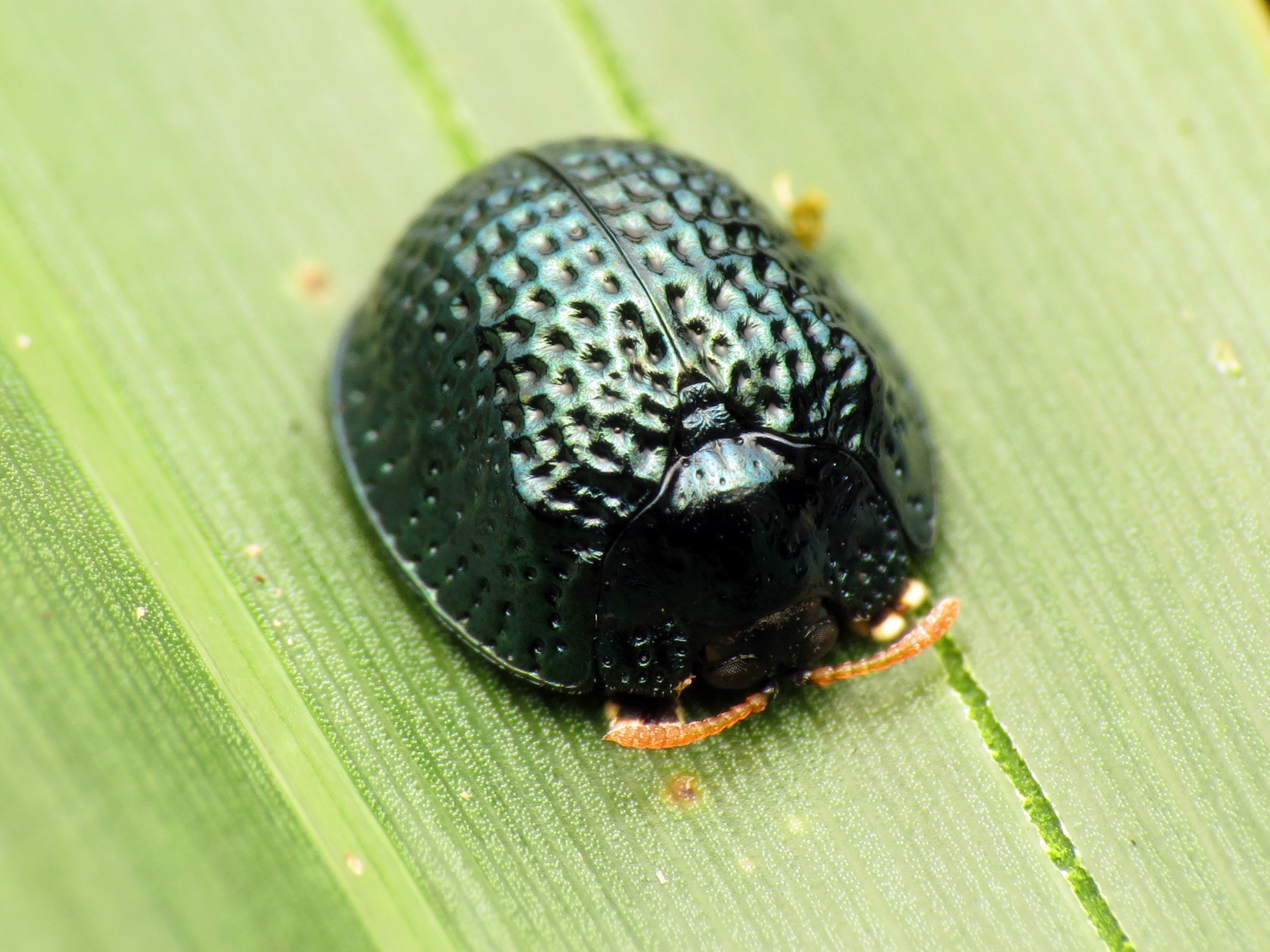
Adult Palmetto Tortoise Beetle
Palmetto Tortoise Beetle by Katja Schulz Flickr CC BY 2.0 November 1, 2016
What Do Palmetto Tortoise Beetles Feed On?
Palmetto tortoise beetles feed on palms.
Occasionally, they cause damage, but most of the time, they live on the plant unnoticed.
How Adult Palmetto Tortoise Beetles Defend Themselves
The tarsi, or final part of an insect’s multi-segmented leg, are greatly enlarged and specially adapted to act as a defensive mechanism against predators or to latch on to its host plant during high winds.

Palmetto tortoise beetle larvae on hand.
Mallory Maher, ©2026, Clemson Extension
If attacked or subjected to high winds, the tortoise beetle will release oil from the pads of its tarsi, which helps form a suction to hold on to the frond and wait out the attack.
Why Palmetto Tortoise Beetle Larvae Are Masters of Camouflage
While the adults have a wonderful defense strategy, the larvae are what prompted me to highlight this amazing insect.
The larvae are masters of camouflage and truly one of nature’s wonders.
How Palmetto Tortoise Beetle Larvae Use Camouflage on Palm Fronds

Palmetto-tortoise-beetle-larvae-on-palm-fronds
Mallory Maher, ©2026, Clemson Extension
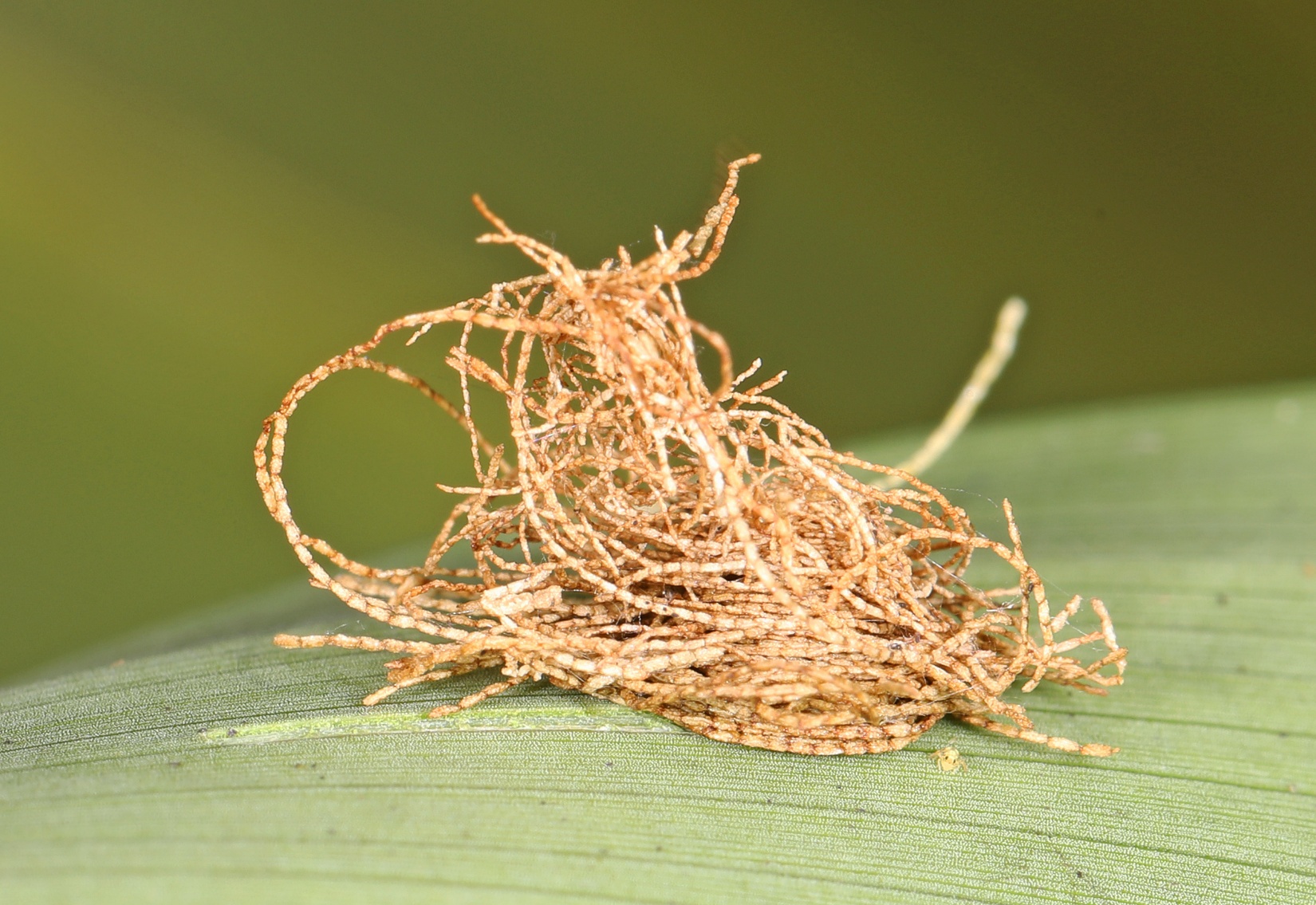
Another look at the palmetto tortoise bettle larvae on a palm.
Palmetto Tortoise Beetle larvae – Hemisphaerota cyanea by Judy Gallagher Flickr CC BY 2.0 January 14, 2020
If you have seen palm fronds up close, you have probably noticed the fibers or threads that hang down from them.
Next time you are near a palm, take a closer look at those “threads,” and see if they are as they appear.
They may actually be tortoise beetle larvae covered by their fecal shield.
Yes, you read that correctly.
Once the larvae hatch, they excrete strands of dry feces that curl up over their backs, mimicking the threads or fibers that appear naturally on palms.
This shield, or thatch, helps hide the larva from predators and protects them from the elements.
Where Palmetto Tortoise Beetles Are Found in the Southeast
Whether in adult or larval form, these small insects definitely deserve your attention next time you near the coast or coastal plains of the southeast.