It has been hot and humid around the state. Several thunderstorms have come through the state, bringing some much-needed rain. Plenty of diseases are present, including gummy stem blight, anthracnose, and downy mildew. Piercing/sucking insects are causing damage as well. See details below.
Keep an eye on the Upcoming Events tab periodically so you don’t miss any of our winter/spring meetings. Also, check out the latest episode of the SC Grower Exchange Podcast.
Don’t forget to look at our Resources tab for links to crop handbooks, helpful websites, and related blogs.
Coastal Region
Zack Snipes
- It was a hot and humid week in the Lowcountry. Crops like watermelon, melons, tomato, and pepper are still coming in in heavy volumes, but I expect that to slow down in the next several weeks.
- The recent rains have helped to foster some diseases, such as bacterial spot, on tomato and pepper. Watermelons are slowing down and showing lots of anthracnose and gummy stem blight.
- I am seeing lots of feeding damage on tomato as a result of stink bugs and leaffooted bugs. This late in the season, a group 3 or 4 insecticide will help, but earlier applications would have prevented the issue.
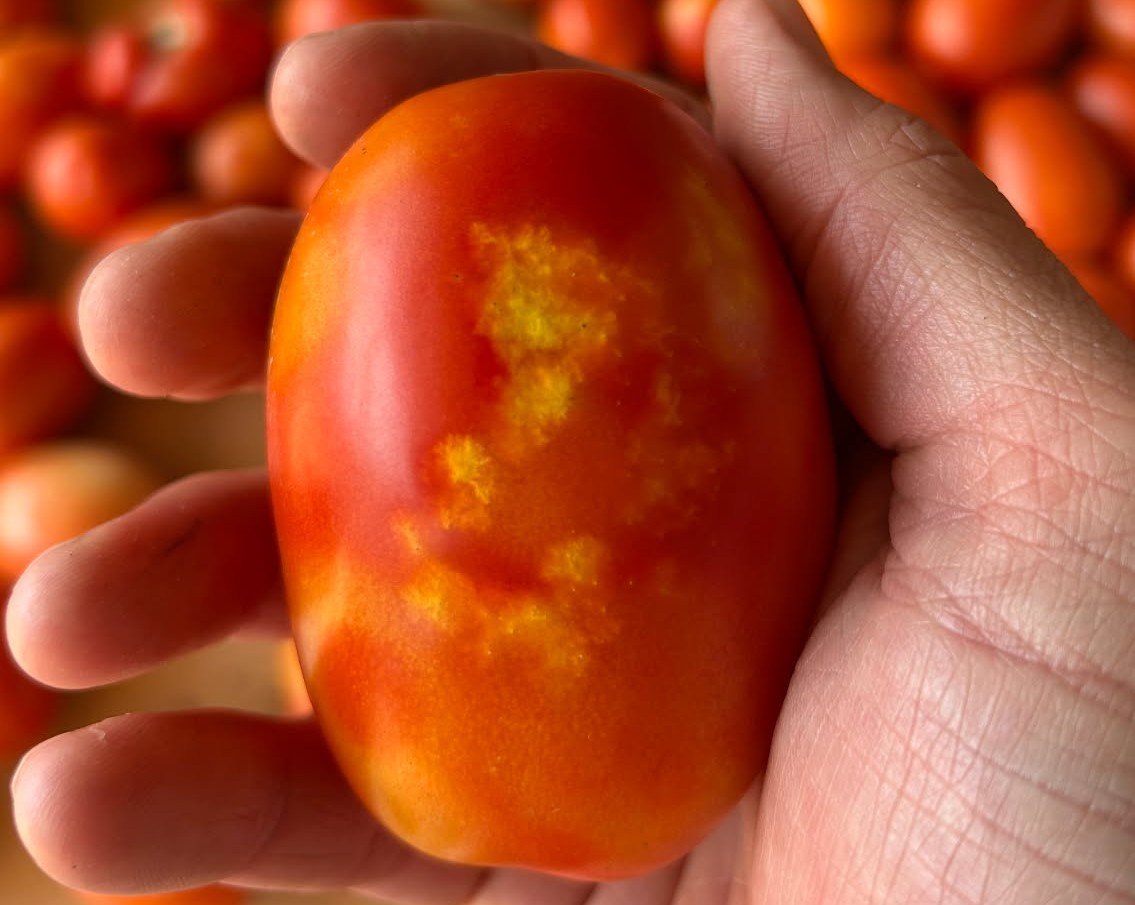
Stink bug and leaffooted bug feeding damage on tomato. Look for distinct yellow spots and patches.
Zack Snipes, ©2025, Clemson Extension
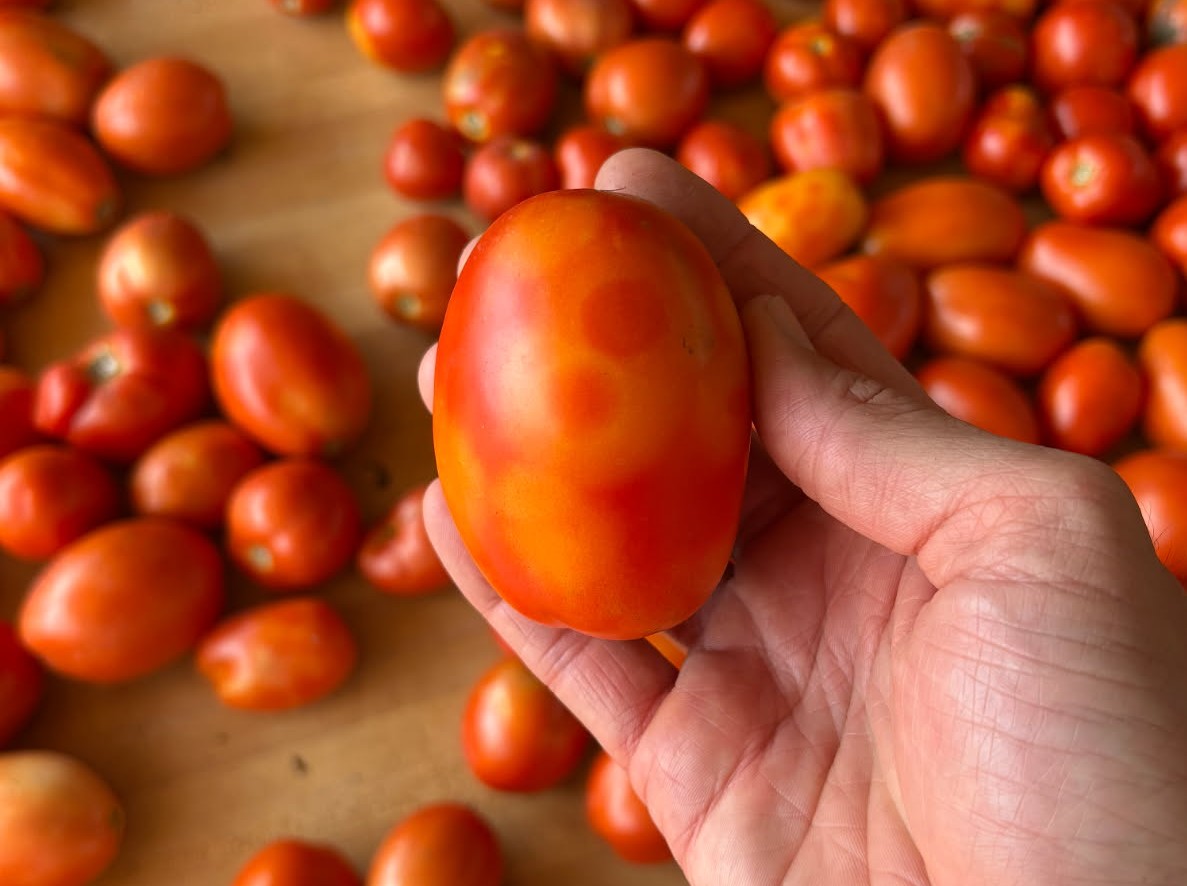
Symptoms of Tomato Spotted Wilt Virus may be confused with stink bug damage. This issue can be prevented by growing TSWV-resistant plants and by using silver reflective mulch.
Zack Snipes, ©2025, Clemson Extension
Midlands Region
Rob Last
- It has been a hot and humid week in the Midlands with frequent, heavy afternoon storms that look set to continue into this week.
- Tomatoes, peppers, watermelons, cantaloupe, okra, and eggplant are all coming to harvest with good volumes and quality.
- The storms have led to bruising and physical damage to crops, providing an entry point for pathogens. Maintaining fungicide applications can be critical to managing diseases.
- Pickleworms are active in several cucurbit crops in the area. Clorantraniliprole can be a good option for conventional growers, or the spinosads and Bt products can help organic growers.
- Anthracnose and sunscald are visible in many crops. Sun scald can be reduced through the application of Kaolin clay-based products.
- Consult with your local agent or the vegetable crop handbook for anthracnose management recommendations.
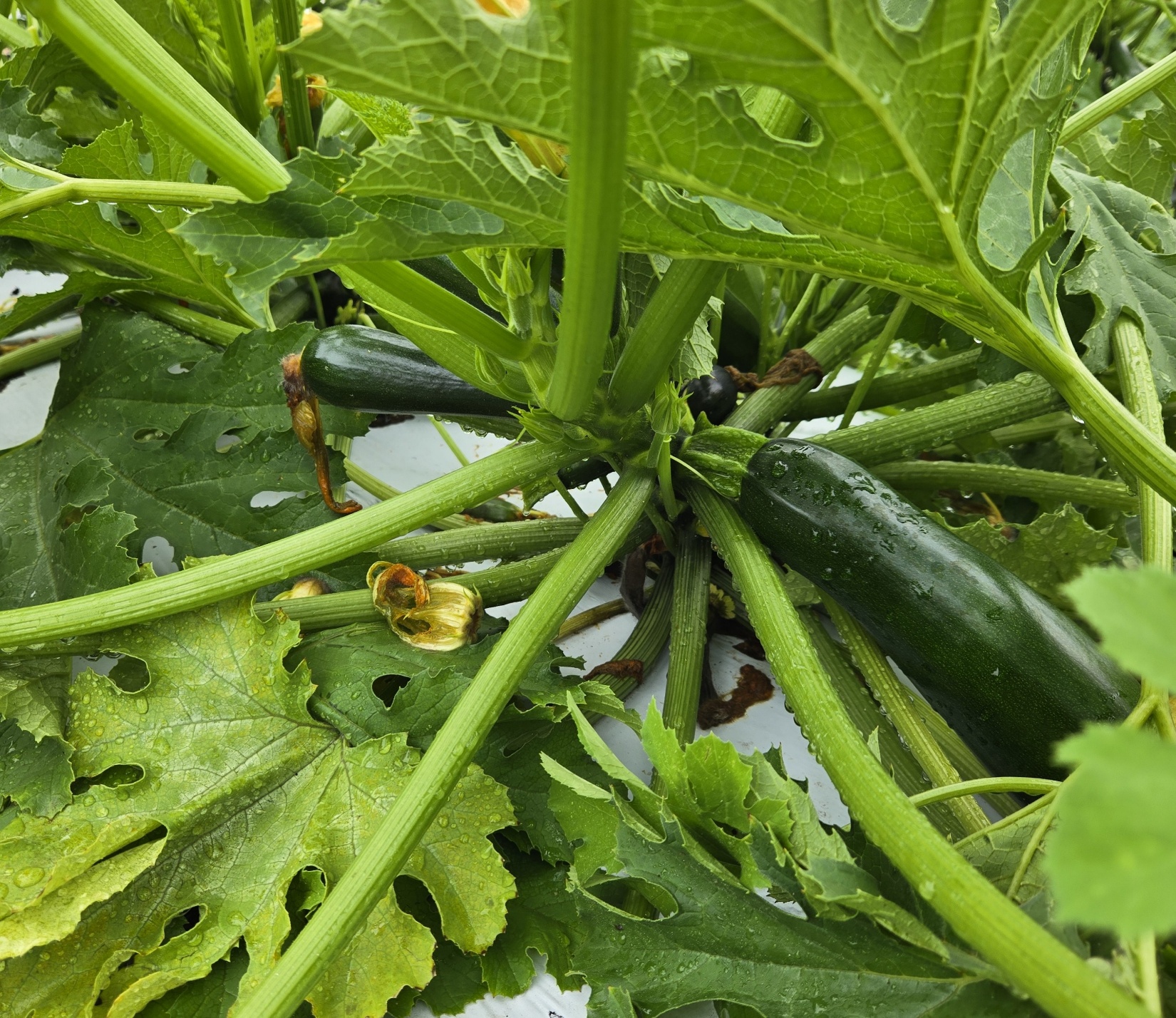
Zucchini growing in a field in Lexington county.
Rob Last, ©2025, Clemson Extension
Upstate Region
Andy Rollins
- We are seeing multiple grape issues this past week that growers should be aware of. I found downy mildew on Red Flame seedless bunch grapes. Group 11 fungicides containing one of the “strobin” type chemistries will be effective and/or Ranman group 21 fungicides. These are systemic, so I recommend using Captan with one of the systemic chemistry above for best control. We are picking Red Flame now, so we need to watch the PHI for harvest timing. Note the yellow symptom on top of the leaf and spores on the bottom of the leaf, hence the “downy” part of the name. We have some unusual viral-type symptoms on Fry that I have never seen. Site-wise, only one row is affected, with approximately 85% of the plants on that row showing symptoms. This is leading me to believe it could be related to a herbicide accident.
- We are still harvesting Julyprince peaches in the Upstate. It is an excellent peach cultivar, although the size is not as large as we are used to seeing with it. Excessive heat is thought to be the culprit, as well as some early-season cold damage.
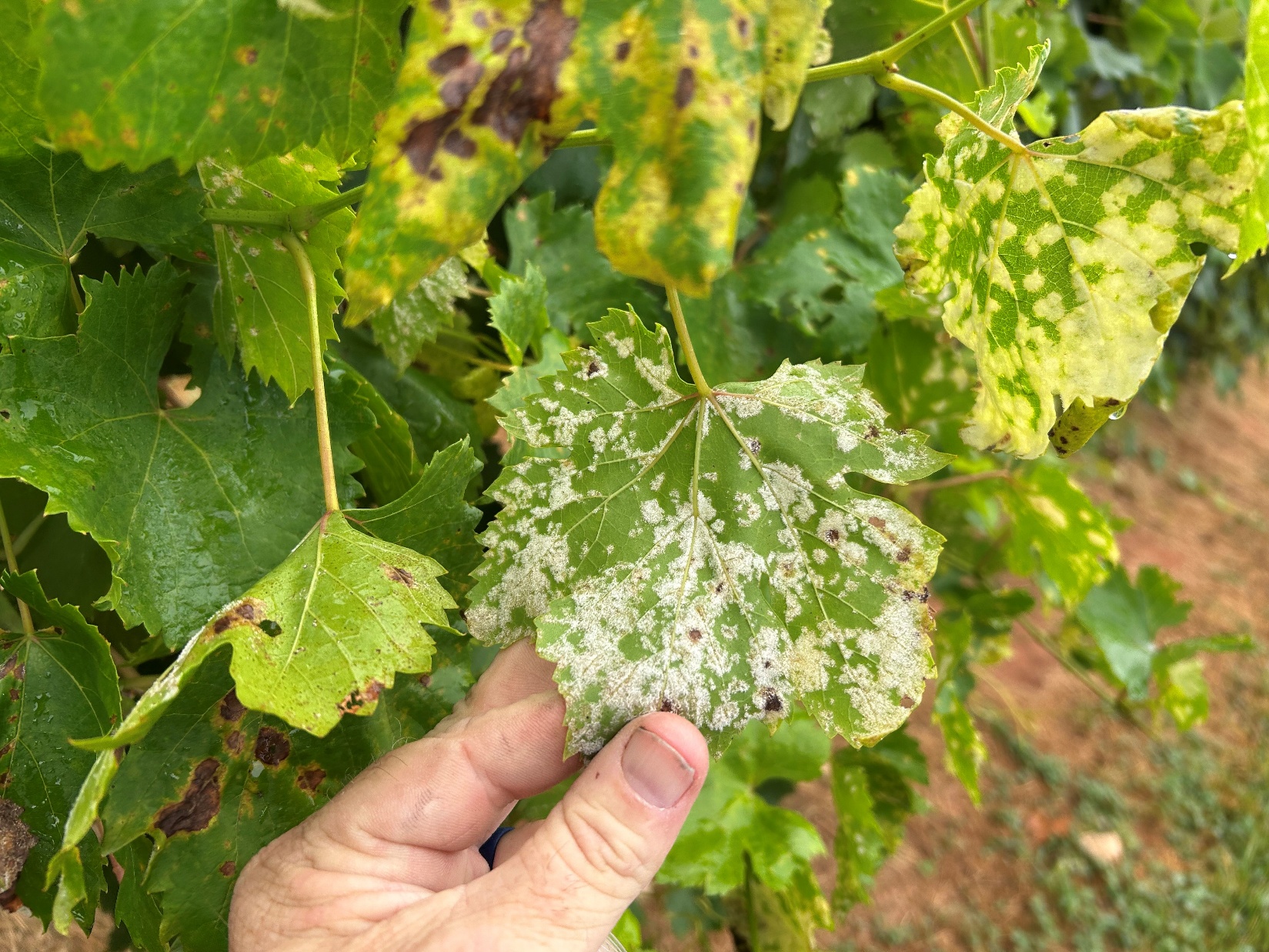
Downy mildew symptoms on the underside of a muscadine leaf.
Andy Rollins, ©2025, Clemson Extension