Though we didn’t receive as much rain as we expected over the weekend, the cooler weather has been a treat. Fall harvests of pumpkins, sweetpotatoes, squash, brassicas, and peppers are looking good. Diseases have been picking up in places on brassicas and cucurbits. New training resources for strawberry planting crews were published last week, including English and Spanish-language planting videos.
Key Takeaways for Growers This Week
- New strawberry planting training resources available – view here
- Fall harvest is going strong – yield and quality look great
- Whiteflies showing up in places – scout cucurbits and brassicas carefully
- Strawberry planting will begin soon – some day-neutrals have already been planted
Lowcountry Report
Anna Sara Hill
- The weather has turned a little cooler, the days are shortening, and rain is in the forecast.
- Fall harvest time is here, and vegetables such as squash, pumpkins, sweetpotatoes, bell peppers, brassicas and leafy green vegetables are ripening and appear to be right on schedule to hit the holiday markets.
- In other fields, the ground is plowed and prepped for strawberry planting.
- As noted previously, insect pressure has been high this year with the hot, dry weather. Whitefly populations have been high in areas where they were previously undetected.
- Some diseases have shown up, such as downy mildew in brassicas and powdery mildew in squash and pumpkins, but on farms with a regular spray schedule, these diseases have been kept in check and should have minimal impact on harvest. On other farms where a spray schedule was not followed, the disease got out of hand, ending harvest early. It is important to plow these fields and deeply bury diseased plant material quickly to prevent the spread of inoculum.
- This week, some deformed brassica leaves were observed on one farm, and they seemed to be mysteriously stuck together. On further investigation, some of the leaves were almost fused to other leaves. The leaf deformities are consistent with the feeding of insects with piercing-sucking mouthparts. The causes of the symptoms are currently undetermined, but it is suspected that whitefly feeding on very young leaves in the crown caused the deformities, which in turn caused the leaves to grow together abnormally. This theory has not been confirmed, so the investigation is ongoing.
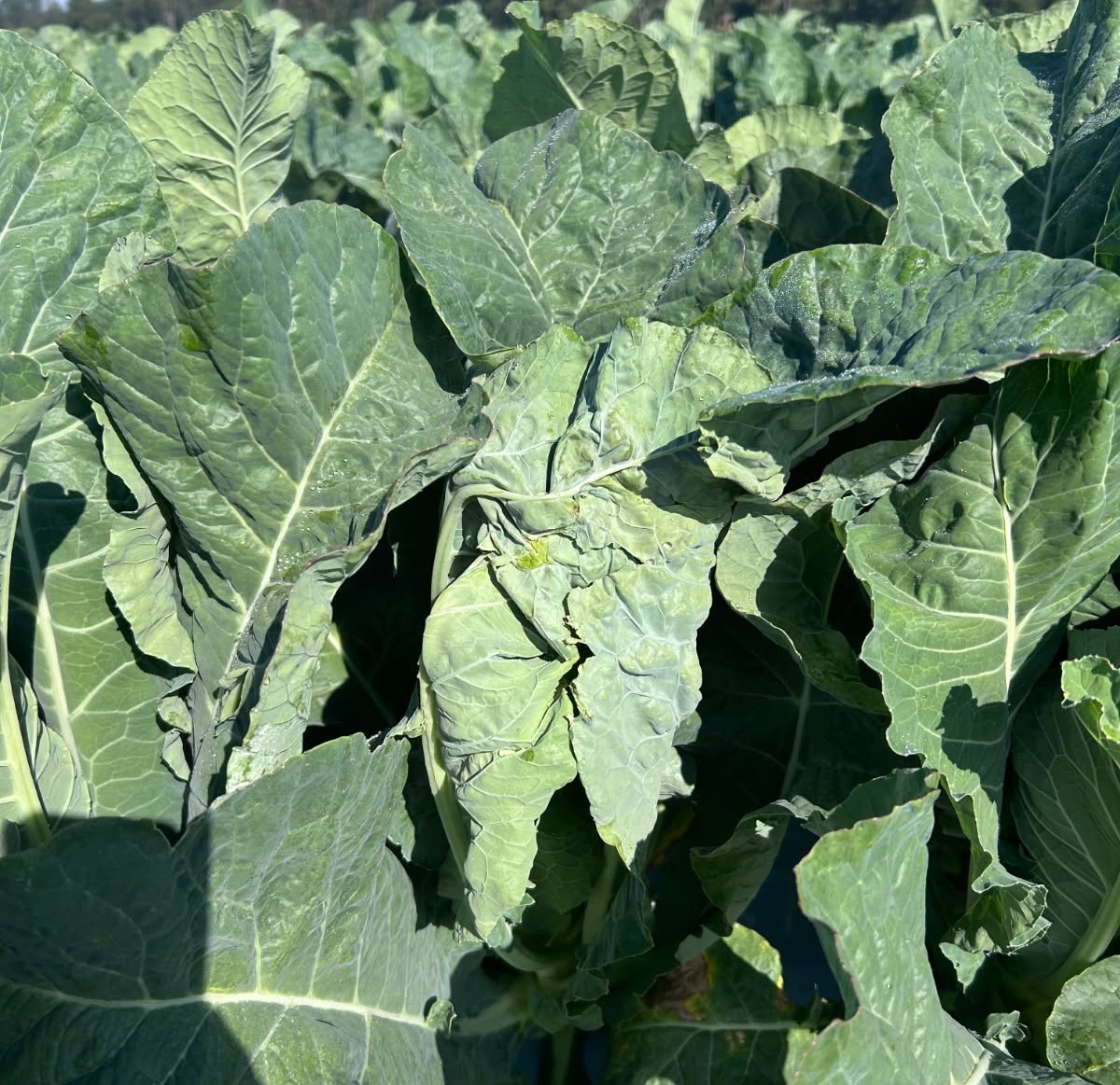
Leaf deformation causing multiple leaves to stick together.
A.S. Hill, ©2026, Clemson

The exact cause of this deformation is being investigated.
A.S. Hill, ©2026, Clemson Extension
Midlands Report
Rob Last
- After some welcome rainfall over the weekend, we are expecting a drier week with cooler nights ahead.
- Crops, on the whole, look great in the area.
- A wide range of cool and warm season crops are coming to market with good quality.
- Pests are active including aphids, whiteflies, and leafhoppers.
- Pathogen activity is low, but I am seeing Southern blight as indicated by tomato plants wilting under fruit loading. Upon inspection of the stem base white mycelia and brown sclerotia can often be found.
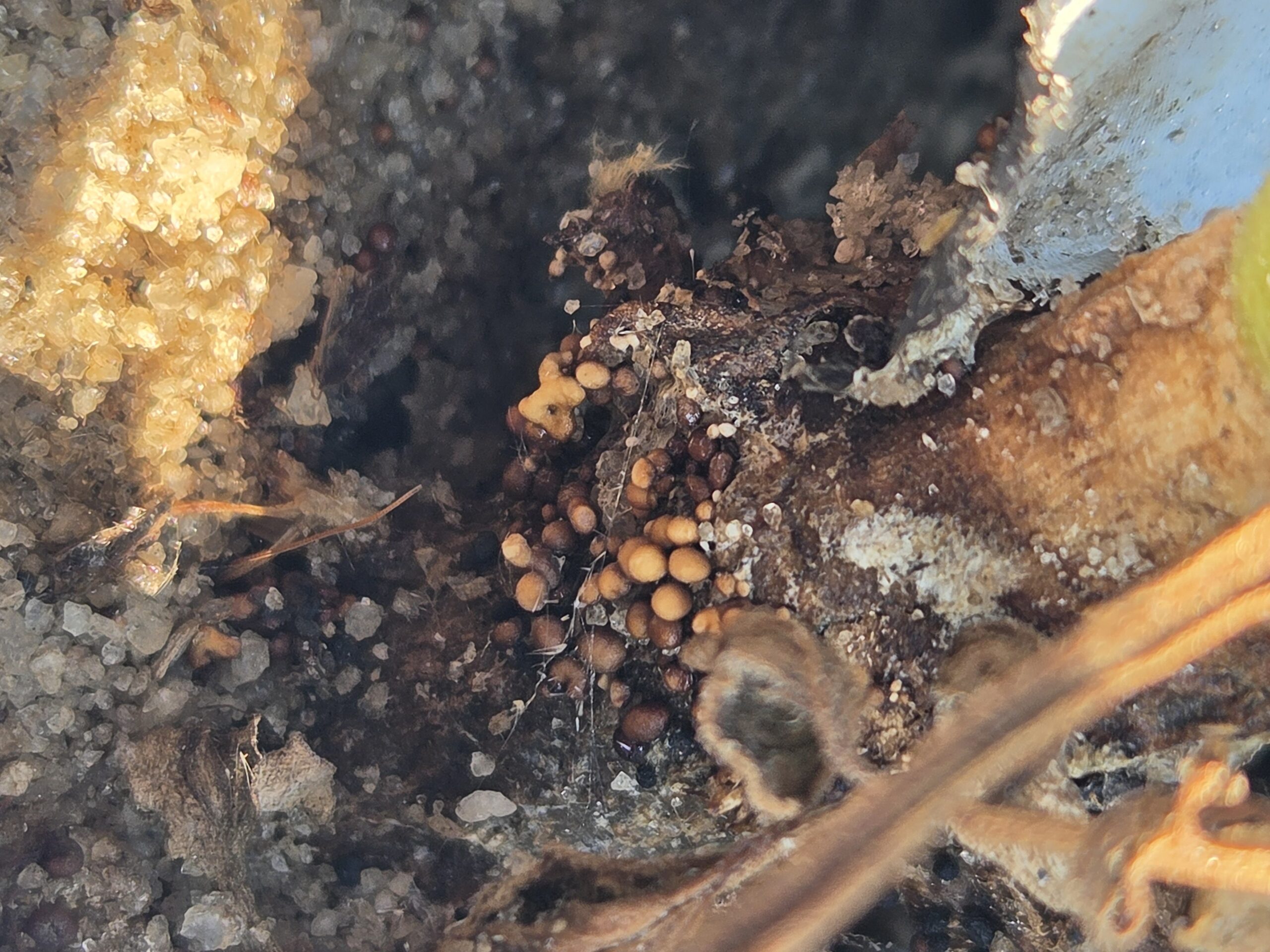
Round tan and brown sclerotia from Southern Blight found on tomato crowns.
R. Last ©2026, Clemson Extension
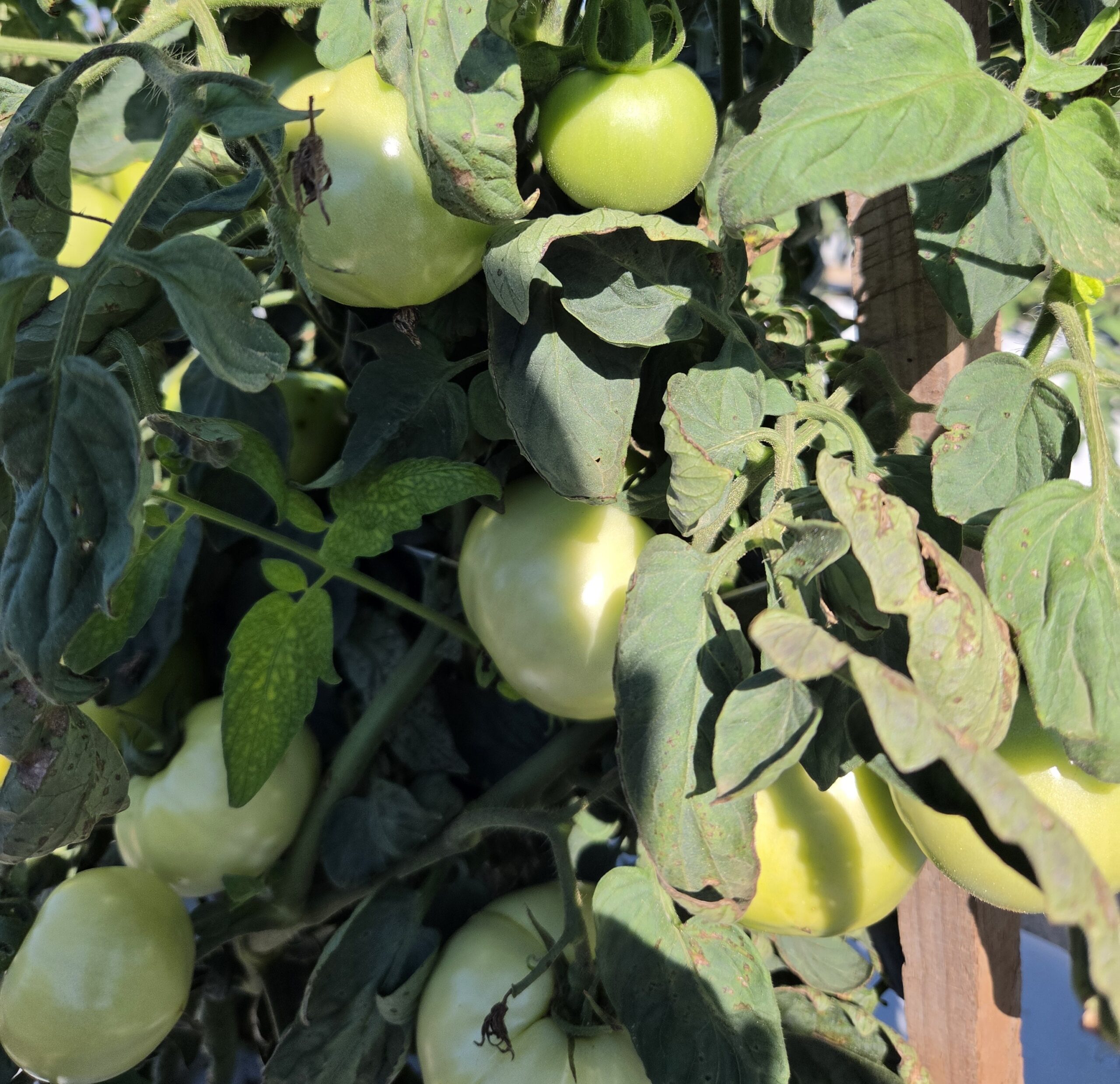
Fall tomatoes are sizing up well.
R. Last, ©2026, Clemson Extension
Pee Dee Report
Bruce McLean
- Well, we got some rain this weekend. For most of the Pee Dee, it fell well short of the forecast. But, every little bit helps. Looks like we have another good chance of rain next weekend. Until then, we should see some mild temperatures and a few peeks of sunshine.
- October is here, and it is pumpkin harvest season. There are some phenomenal-looking pumpkins growing around the Pee Dee. This is the one benefit from having a drier than usual summer: lower fungal disease pressure. Fungal diseases tend to be a limiting factor for large scale pumpkin production in the eastern portion of the state. It can be done, but you must have a really good fungicide spray program. Our typical hot and humid summers create an excellent environment for disease. Add to that a good insecticide spray program because we always have moderate to heavy insect pressure, especially late in the summer. Good varietal selection helps to (potentially) lessen the plant’s susceptibility to certain pests/diseases.
- Brassicas are looking good. So far, I haven’t seen any major issues with insects or disease other than some limited bacterial leaf spot on turnips. Unfortunately, fungicides/bactericides are likely to have only limited efficacy in controlling the disease. Field rotation and clean seed/transplants are your best options.
- Strawberry growers are getting prepared for the upcoming planting season. Winter harvest strawberry plants have already been planted; spring harvest plants should be arriving and getting planted in the next 10 days or so.
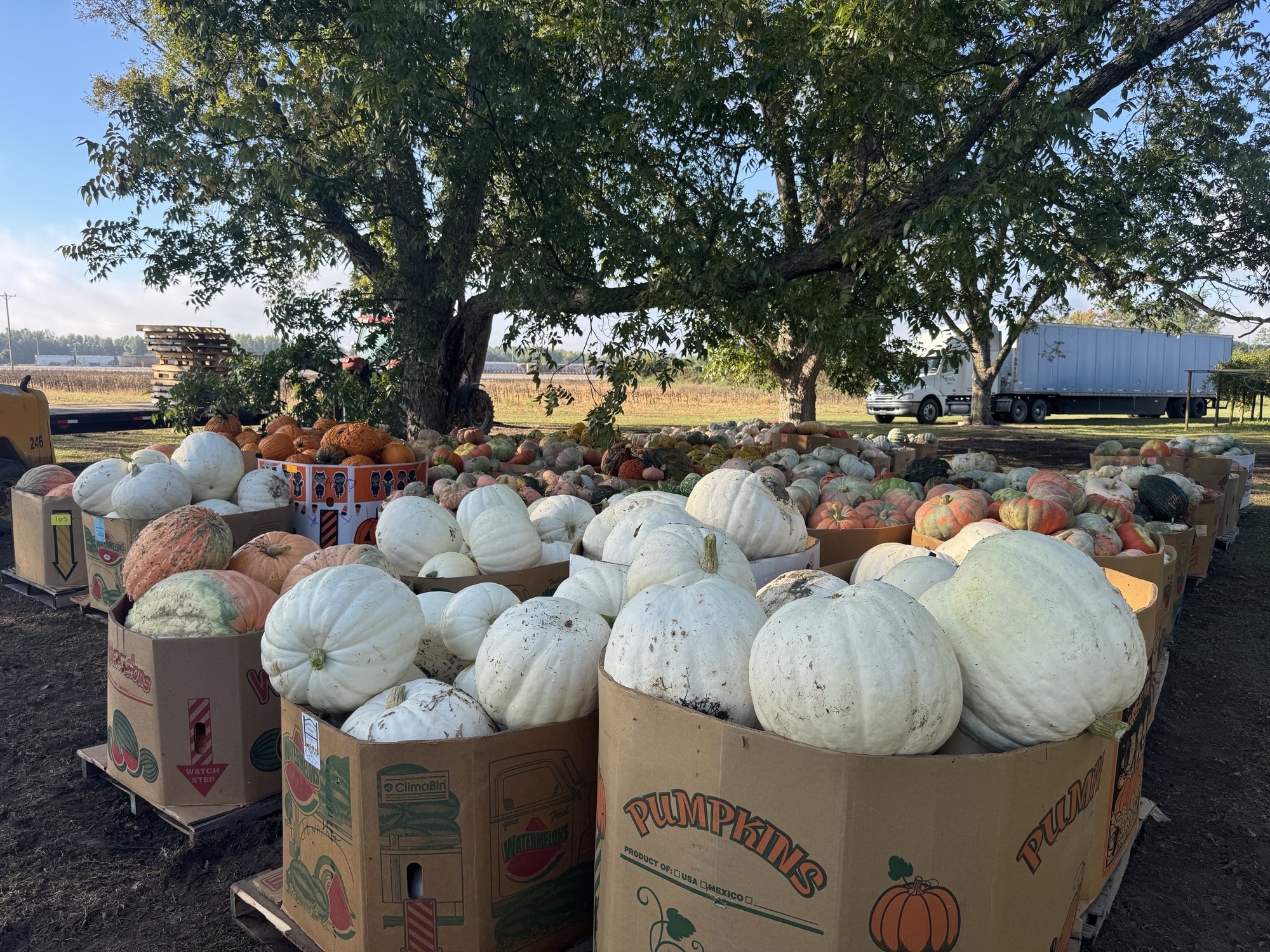
Bins with a variety of pumpkins are just coming out of the fields and are ready for the market.
Bruce McLean, ©2026, Clemson Extension
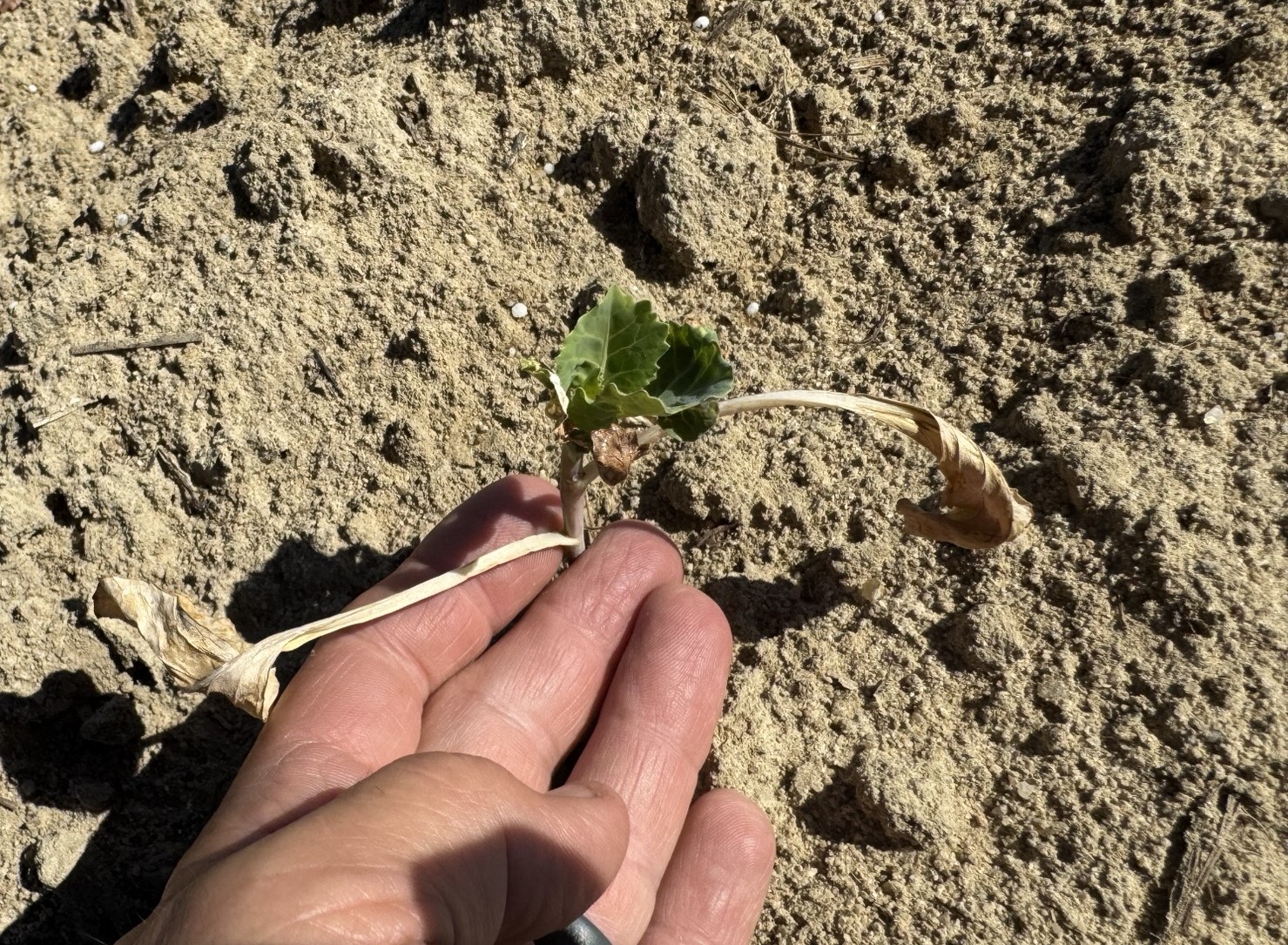
Flumioxazin carryover (from spring-treated sweetpotato field that was not planted), affecting cabbage transplants. The damage looks pretty severe, but the plants are growing out of it.
B. McLean, ©2026, Clemson Extension