How to Identify the Southern Flannel Caterpillar
Look, but never, ever touch!
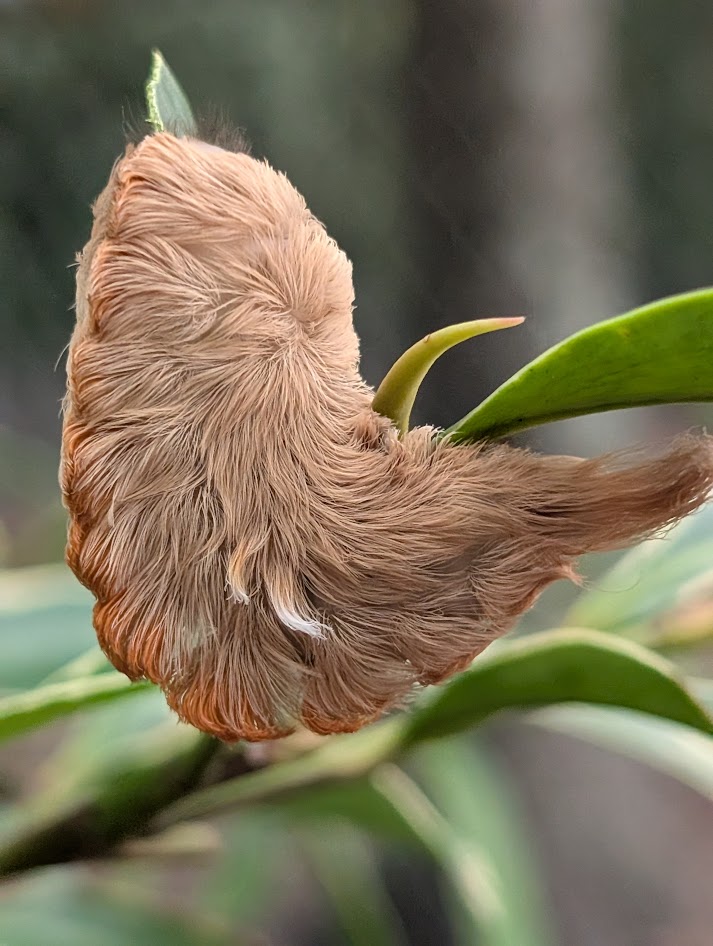
Back of a flannel caterpillar.
Sue Watts, ©2025, SC Botanical Garden, Clemson University
The luxurious “fur” on this tiny creature gives it the common name puss caterpillar, but do not be tempted to pet these luxurious locks (which are hair-like setae).
Hidden within them are numerous hollow spines each with a poison sac at the base.
If you should brush up against this furry fellow, or pick it up inadvertently, the impact is immediate and terrible. When touched, the hollow spines break off and the poison is pumped into your body.
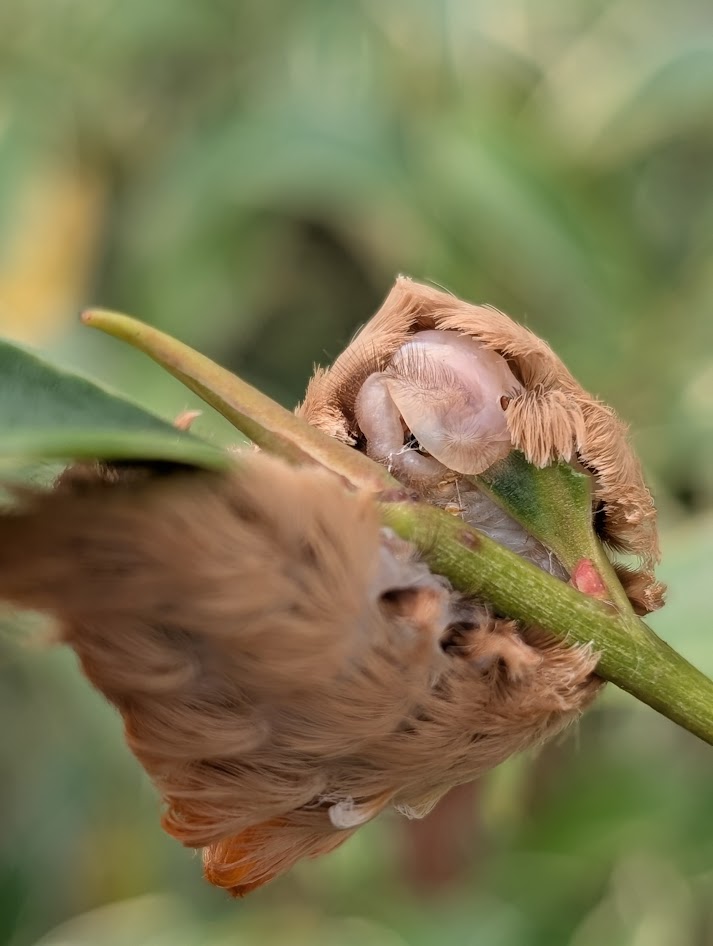
Flannel caterpillar feeding.
Sue Watts, ©2025, SC Botanical Garden, Clemson University
Exposure to this venom can land you in the emergency room since it is the most venomous caterpillar in the United States.
Symptoms include swelling, blisters, a burning sensation and a rash at the contact site which then can spread up the arm.
In rare cases contact can cause anaphylaxis and chest pains, however, most commonly people experience the very unpleasant symptoms of stomachache, nausea, vomiting, headaches and irritation of the lymph nodes.
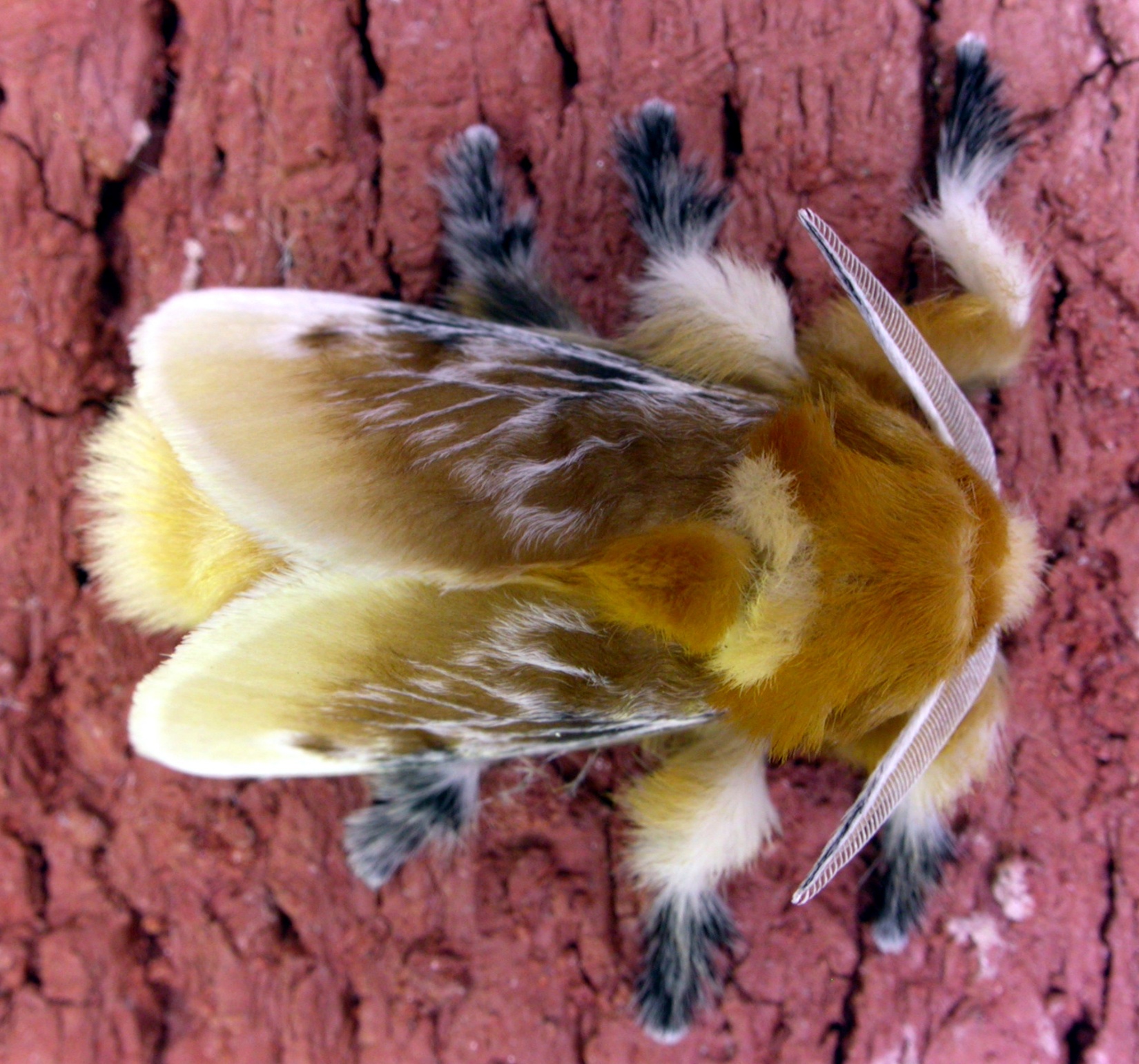
Southern flannel moth (Megalopyge opercularis), male specimen.
Photo credit: cc-by-sa-2.5 Patrick Coin
Habitat and Host Plants of the Southern Flannel Caterpillar
We watched this little one from afar for a while, watching it munch on Cleyera japonica.
Typically, the host plants for the Southern Flannel Caterpillar are deciduous shrubs and trees including, but not limited to, oak, elm, hackberry, and maple.
There are two broods a year, in July and then in early October, like this one, but these are typically not numerous caterpillars.
What to Do If You Touch a Southern Flannel Caterpillar
If you should touch one, take immediate action!
The National Capital Poison Center’s advice is to remove the spines with tape as soon as possible and then to wash the area gently with soap and water.
Hydrocortisone cream, baking soda and water paste, or cold compress will relieve the itch and swelling and you might need to take a pain reliever.
If you have worse symptoms — nausea or shortness of breath — seek medical attention as soon as possible.