Quick Guide for Growing Strawberry-Bush
USDA Hardiness Zones: 6a to 9b
Best Soil: Moist, well-drained, organically rich soil; tolerates sandy to clay soils.
Sunlight: Part shade or morning sun
Watering: Regular watering after planting. A moderately drought-tolerant plant after establishment; occasional deep watering during drought periods.
Bloom Time: May to June; inconspicuous greenish-yellow flowers
Fruit: Fall; showy crimson-red warty capsules (known as arils) with reddish-orange seeds
Native: Eastern United States
Wildlife Benefit: Songbirds, wild turkeys, and small mammals
Note: Deer eat the foliage and new twig growth
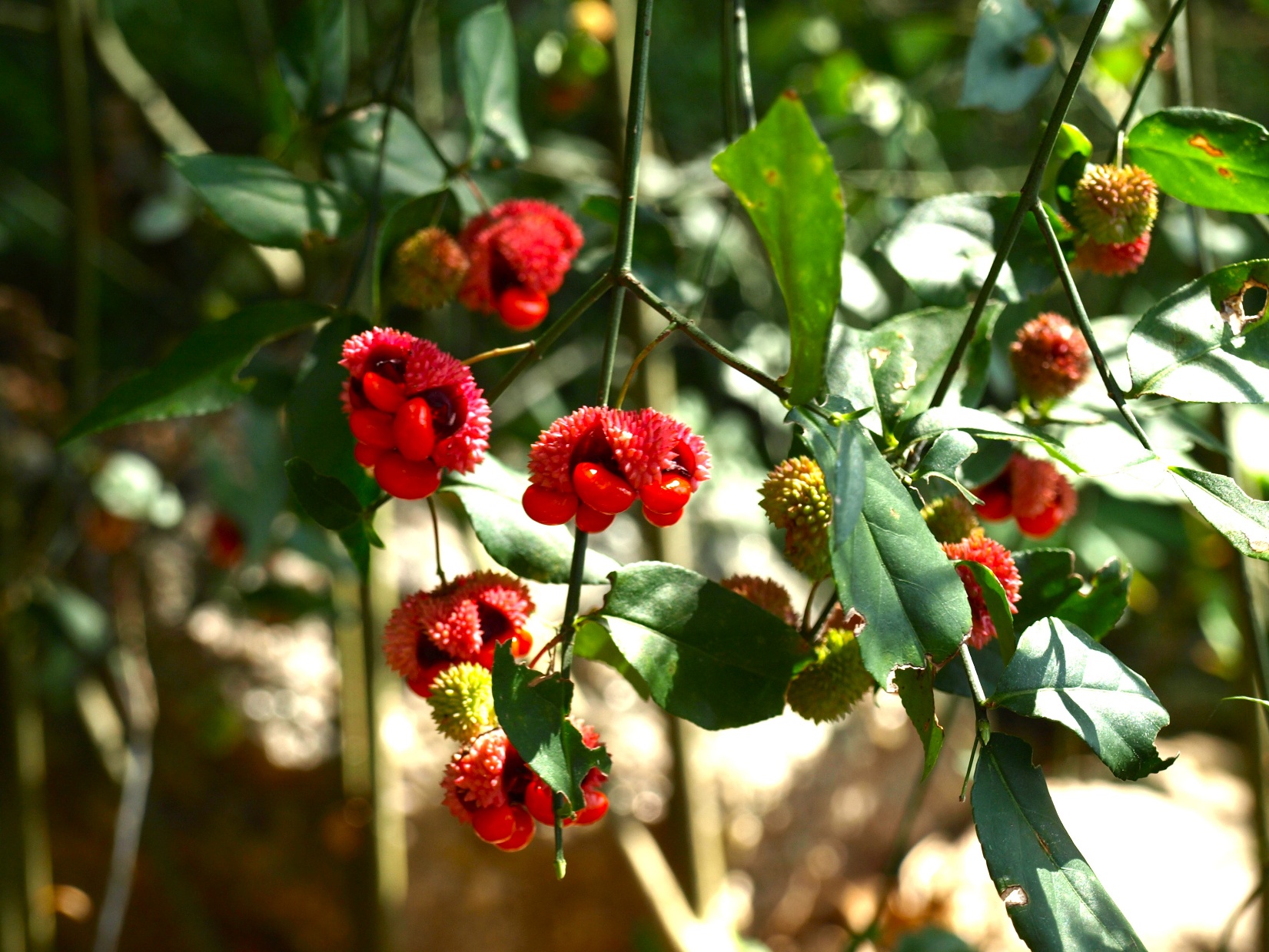
Strawberry-bush (Euonymus americanus) is a deciduous shrub native to the Eastern US.
Barbara H. Smith, ©2025 HGIC, Clemson Extension
What is Strawberry-Bush?
Strawberry-bush (Euonymus americanus) is a native deciduous (loses its leaves in the fall) shrub that grows 4 to 6 feet tall and wide with a multi-stemmed suckering growth habit.
How to Grow Strawberry-Bush in the Landscape
Best Light for Strawberry-Bush
It grows best in partial shade or morning sun; the strawberry-bush requires protection from the hot afternoon sun.
How to Prune Strawberry-Bush (If Needed)
This interesting native plant seldom needs pruning. Only prune to remove dead, damaged or crossing branches. The best time is in late winter or early spring, before the new growth emerges, as it blooms and forms seed pods on new growth.
Best Soil and Natural Habitat
It is native to the Southeast and can be found growing in moist, wooded areas near creeks or rivers. Strawberry-bush grows best in organically rich soils but will tolerate sandy or clay soils.
Watering Strawberry-Bush
Water regularly after planting to help establish the strawberry bush.
Once established, it is moderately drought-tolerant. Occasional deep watering may be necessary during periods of drought.
Strawberry-Bush Foliage, Flowering, and Seed Capsule
Growth Habit and Stems
When young, the plant tends to have a sprawling growth habit, but it will be more upright as it matures. The slender, square stems remain green throughout the year.
Leaves and Fall Color
The 1-inch leaves are small and simple arranged oppositely on the branches. They have a toothed margin and will turn red in the fall.
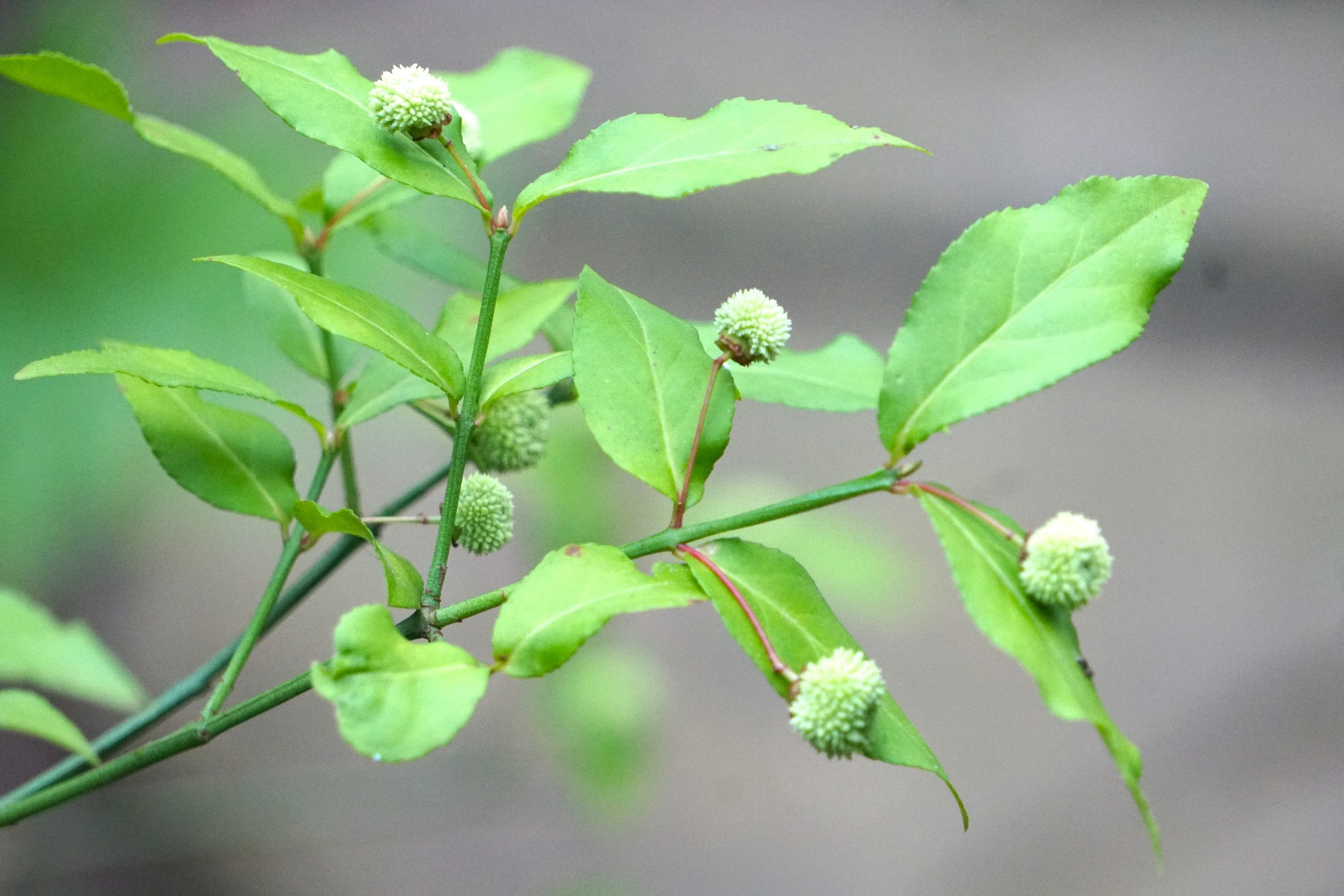
The slender, square stems of strawberry-bush are green with small, simple 1-inch leaves that have a toothed leaf margin.
Barbara H. Smith, ©2025 HGIC, Clemson Extension
Flowers
Small, inconspicuous flowers will bloom on new wood from May to June. They will have 5 yellowish-green petals featuring purple stamens.
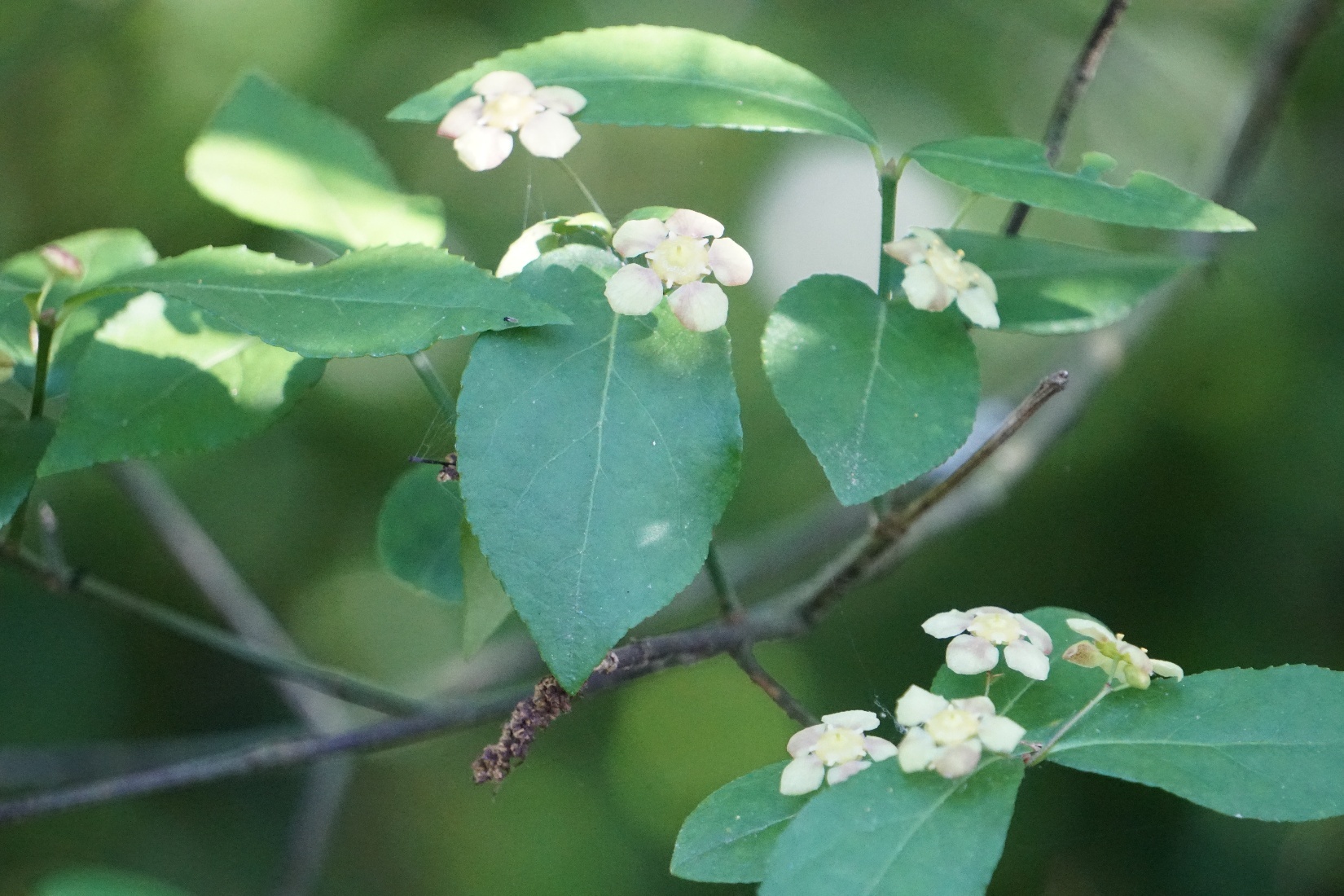
Small, inconspicuous, yellowish-green flowers bloom on new growth from May to June.
Barbara H. Smith, ©2025 HGIC, Clemson Extension
Seed Capsules and Safety
It is also commonly called hearts-a-bursting or cat’s paw because the crimson-red, warty seed capsules, called arils, split open to expose the reddish-orange seeds that resemble a heart bursting open or the soft pads of a cat’s paw. Even though berries are a food source for songbirds and small mammals, don’t be tempted to eat them, as they are toxic to humans and pets and will cause major stomach issues.
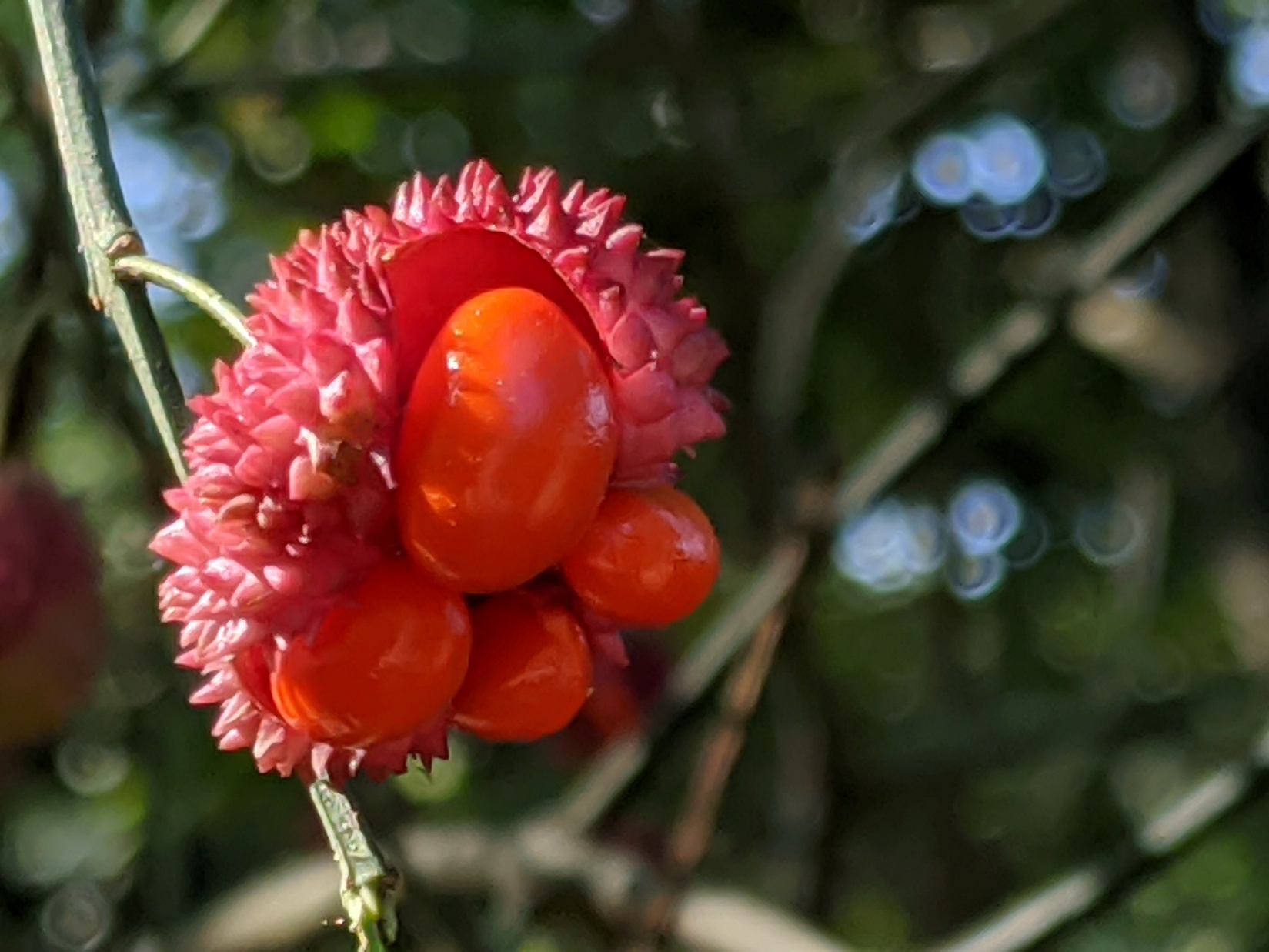
Heart’s-a-bursting or cat’s paw because the seed capsules burst open to reveal reddish-orange seeds that resemble heart chambers or the soft pads of a cat’s paw.
Barbara H. Smith, ©2025 HGIC, Clemson Extension
Strawberry-Bush Insects and Diseases
Strawberry bushes are relatively resistant to insects and diseases. As they are in the Euonymus genus, they may be susceptible to:
- euonymus scale insects
- powdery mildew.
For more information, see HGIC 2054, Euonymus Diseases & Insect Pests.
Best Landscape Uses for Strawberry-Bush
This distinctive native plant is an excellent addition to:
- woodland plantings
- shaded borders
- used in masses
- as an accent or specimen.