Why Wedding Flowers Became a Tradition
The tradition of a bride carrying a wedding bouquet dates back centuries, with roots in ancient Egyptian, Greek, and Roman civilizations.
During those times, a bouquet typically included rosemary, thyme, spices, and garlic, all thought to ward off evil spirits and bad luck.
In the Middle Ages, fragrant flowers were added to strong-smelling herbs to mask odors, as people didn’t bathe frequently.
How Bridal Flowers Became a Modern Wedding Custom
The modern tradition of bridal flowers began when Queen Victoria married Prince Albert on Feb. 10, 1840.
She carried a “tussie-mussie” (a small bouquet in a small decorative holder that was carried by hand) that contained lily-of-the-valley(Convallaria majalis), which was Prince Albert’s favorite flower, and myrtle (Myrtus communis) sprigs.
Orange blossoms (Citrus sinensis) were worn in her hair and on her dress.
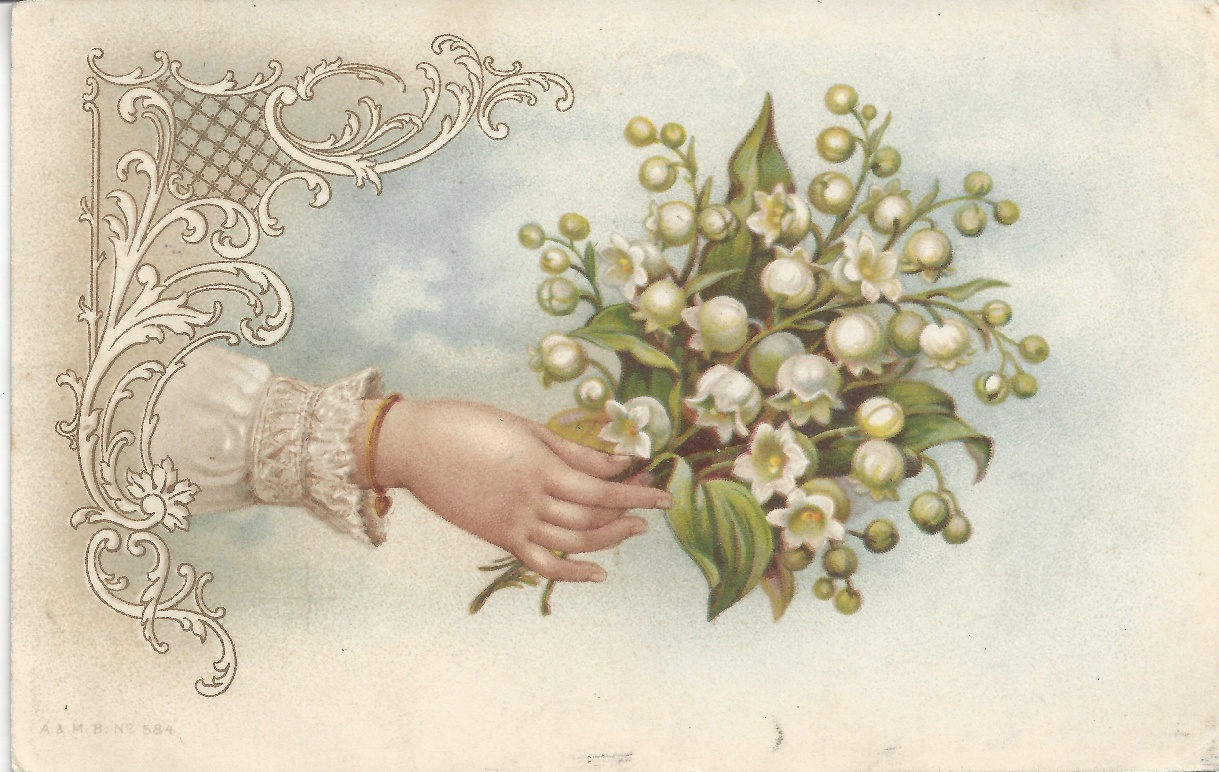
Queen Victoria of England carried a small tussie-mussie of lily-of-the-valley (Convallaria majalis) and myrtle (Myrtus communis) at her wedding to Prince Albert on Feb. 10, 1840.
Antique postcard owned by Barbara H. Smith

A tussie-mussie bouquet holder is a small, decorative cone-shaped holder with a handle and a chain for easy carrying.
Barbara H. Smith, ©2026 HGIC, Clemson Extension
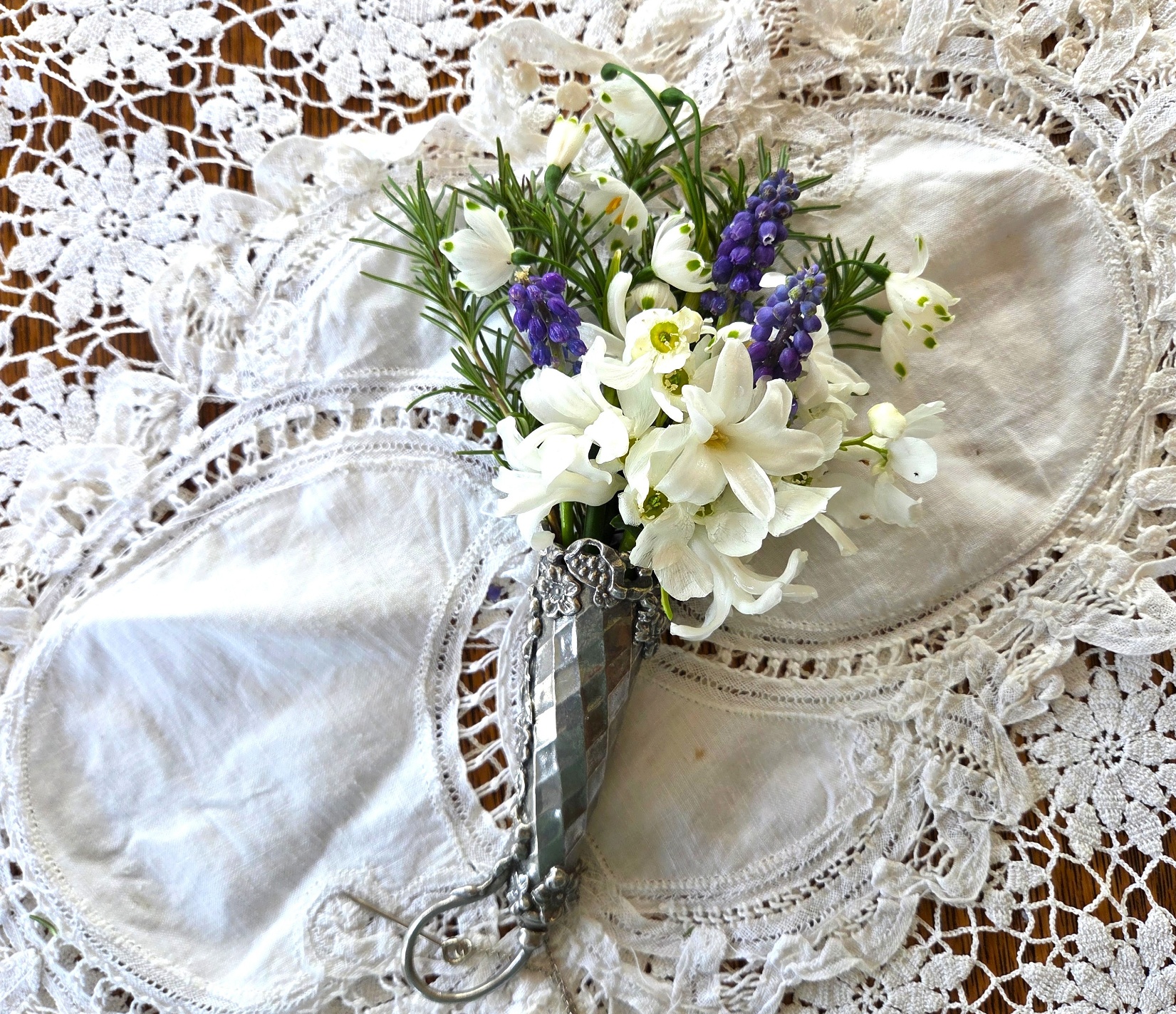
An antique tussie-mussie holder displays a small, fragrant bouquet of flowers and herbs.
Barbara H. Smith, ©2026 HGIC, Clemson Extension
How Boutonnieres Became a Wedding Tradition
The tradition of boutonnieres for the groom and groomsmen began in the early 1800s, when men’s coats began to have lapel buttonholes.
When Queen Victoria married Prince Albert, it’s rumored that she gave him a small bouquet, which he wore by cutting a hole in his coat lapel.
The Meaning of Popular Wedding Flowers
In modern times, flowers are typically chosen more for aesthetic reasons to complement the bride’s style and the wedding décor.
Through floriography, wedding flowers can be given deeper meaning, reflecting sentiments such as love, hope, and new beginnings.
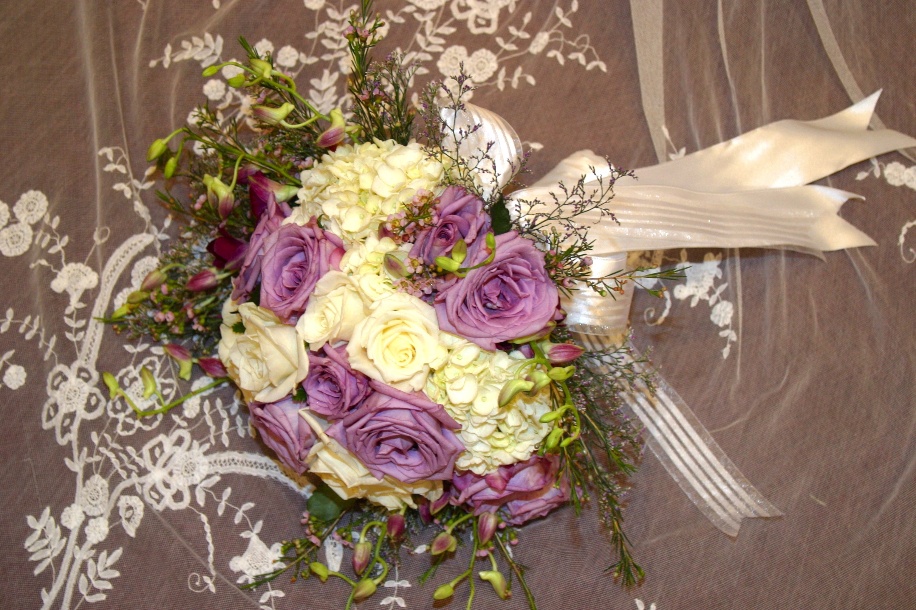
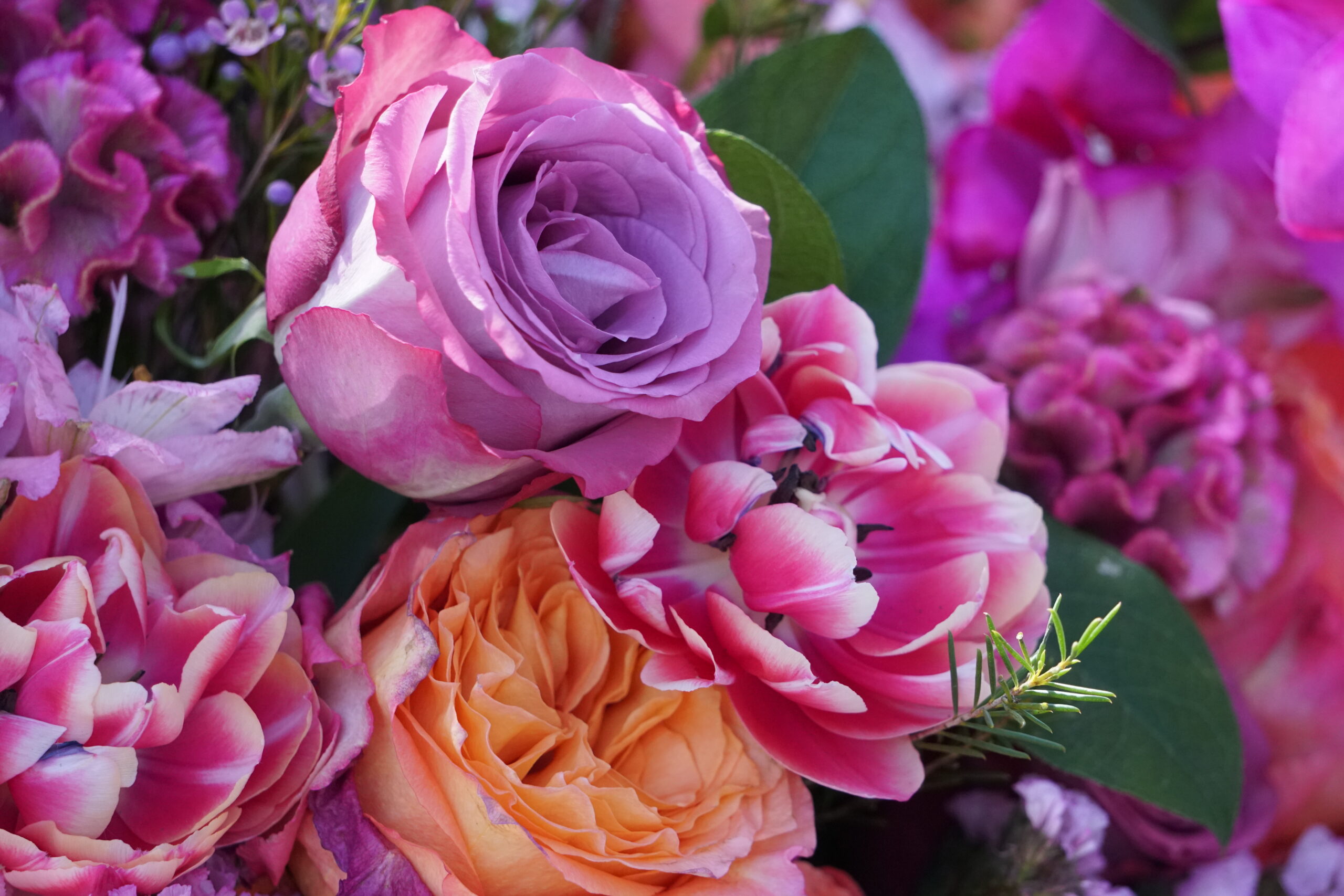
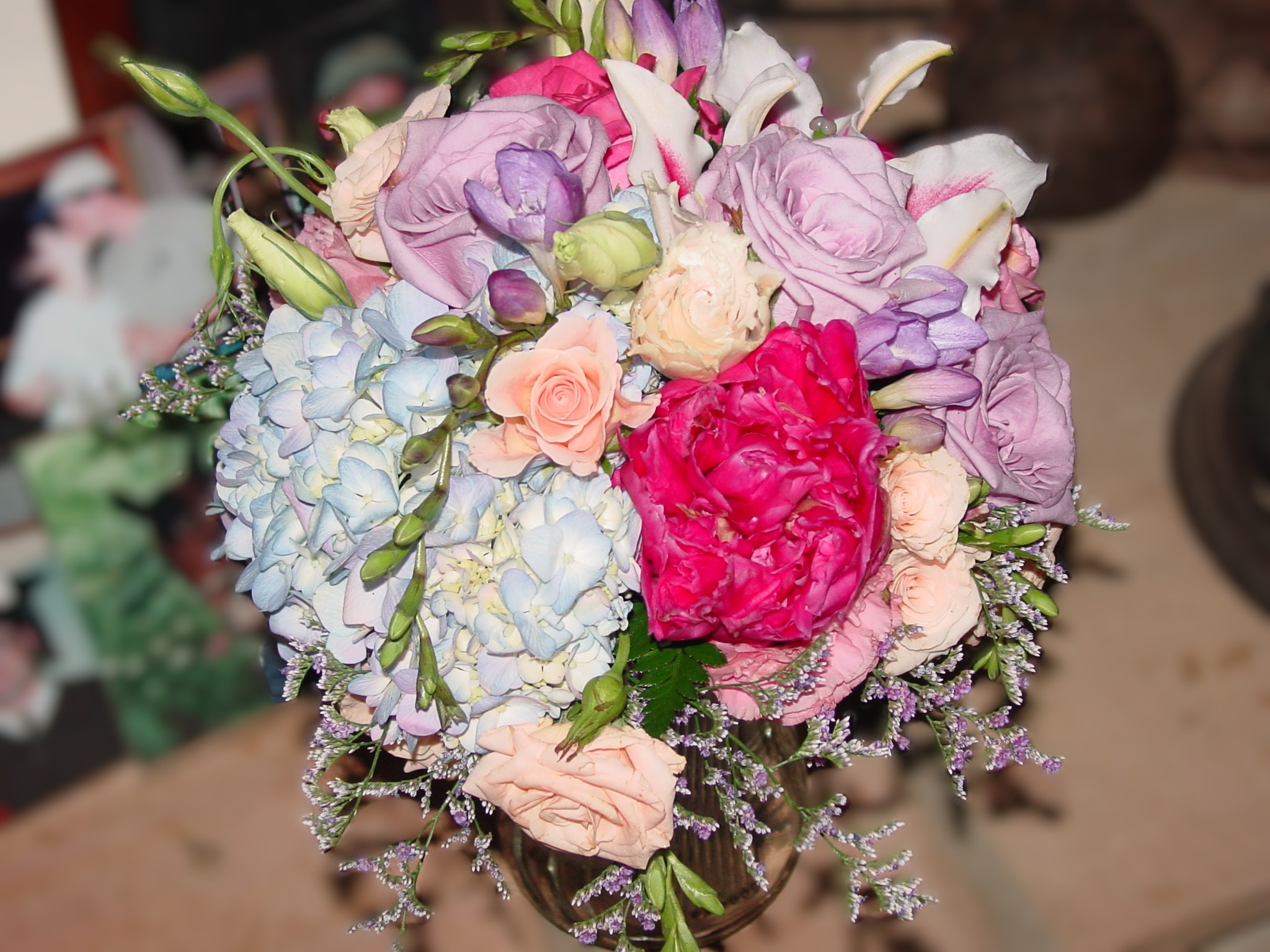
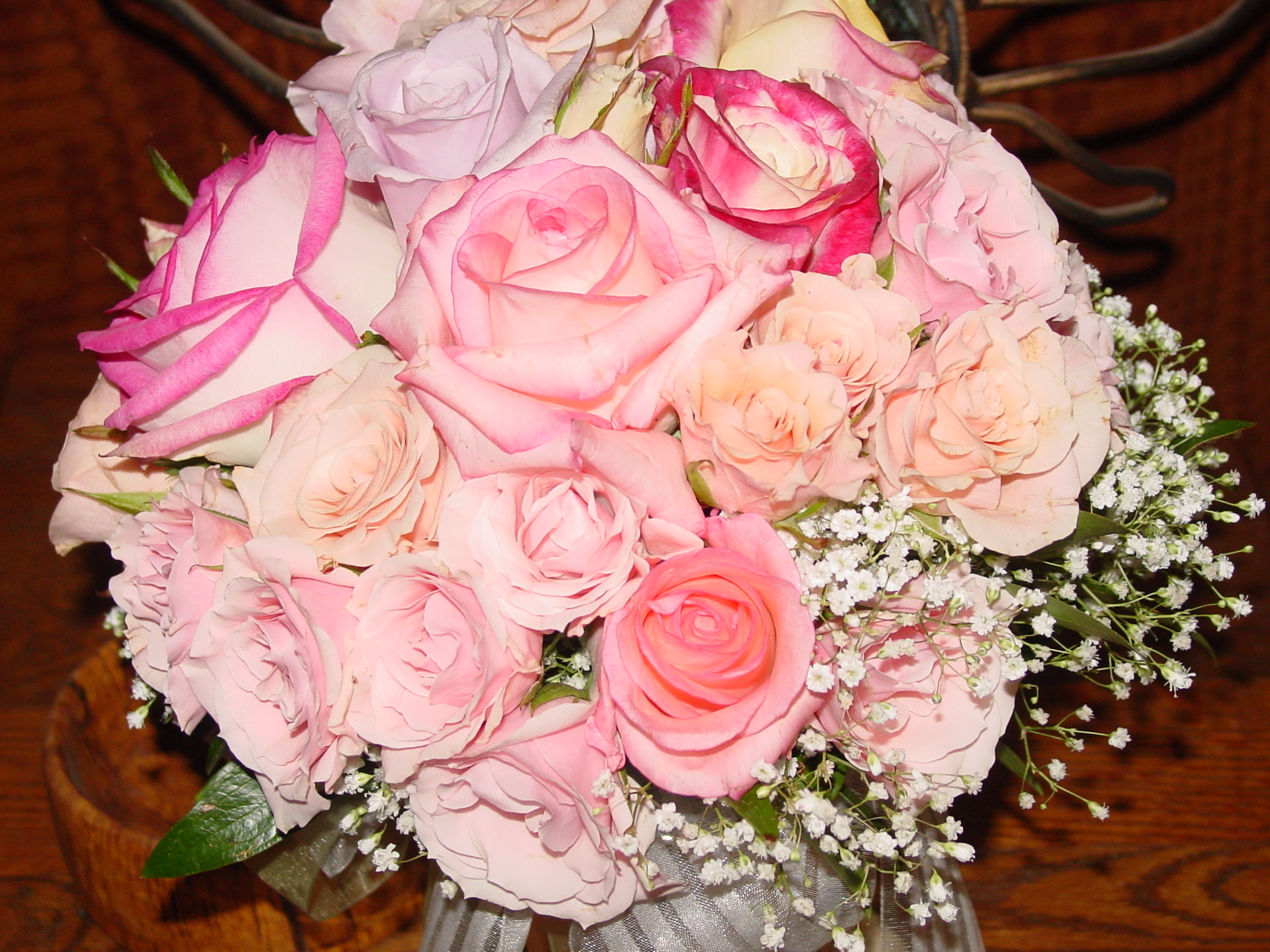
A bride’s wedding bouquet reflects the wedding theme colors along with traditional flower meanings.
Photo© Courtesy of Jon Holloway
Boutonnieres worn by the groom and groomsmen and bridesmaids’ bouquets usually reflect the color scheme of the wedding, along with complementing the bride’s bouquet.
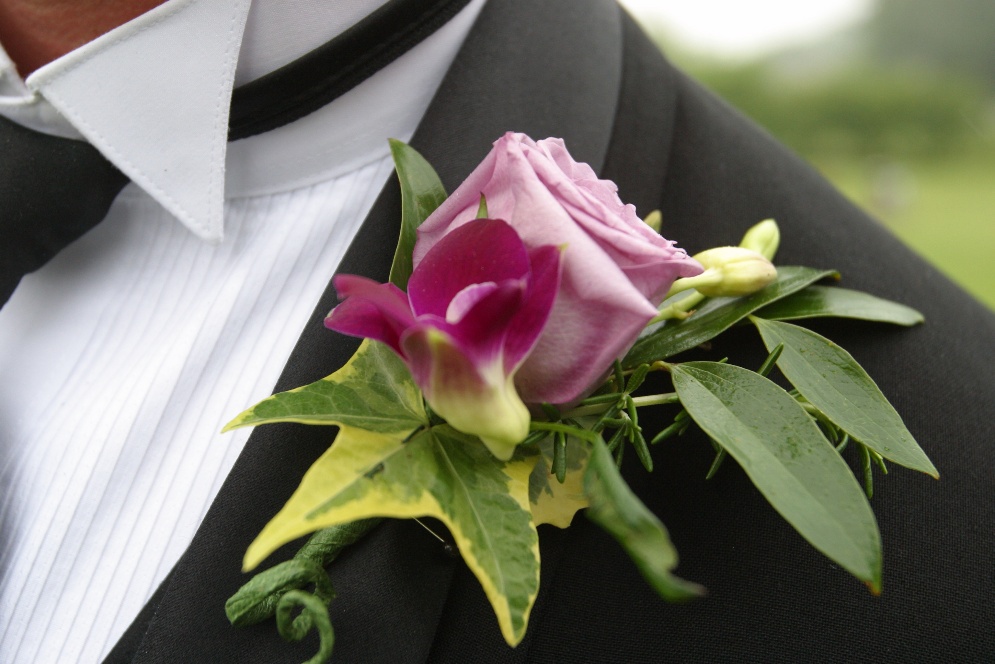
The groom’s and groomsmen’s boutonnieres usually complement the bride’s bouquet.
Photo© Courtesy of Jon Holloway

Bridesmaid’s bouquets use similar flowers as the bride’s bouquet but include added color to reflect the wedding theme.
Photo© Courtesy of Jon Holloway
What Wedding Flowers Symbolize in Floriography
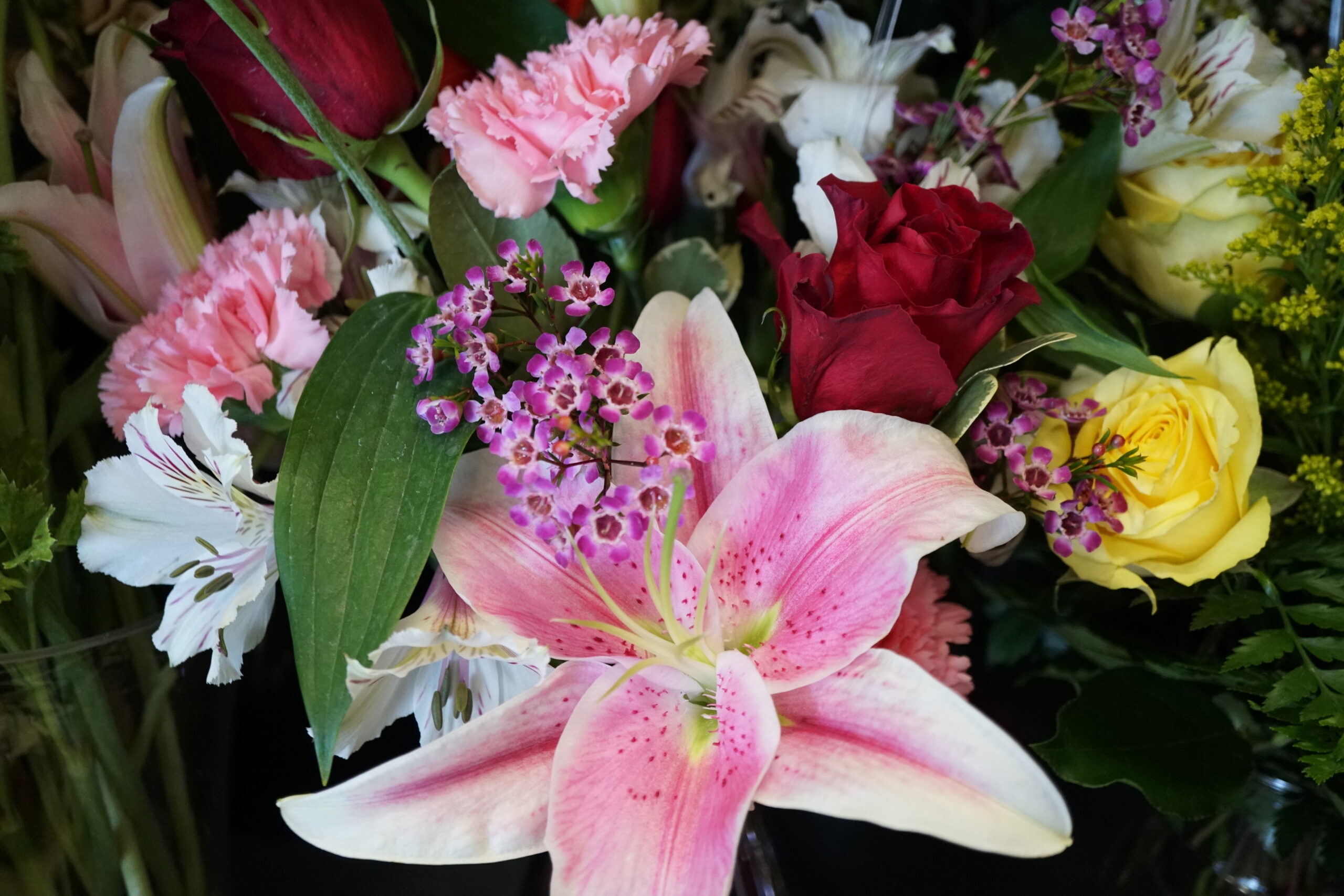
- Baby’s Breath (Gypsophila paniculata): everlasting love
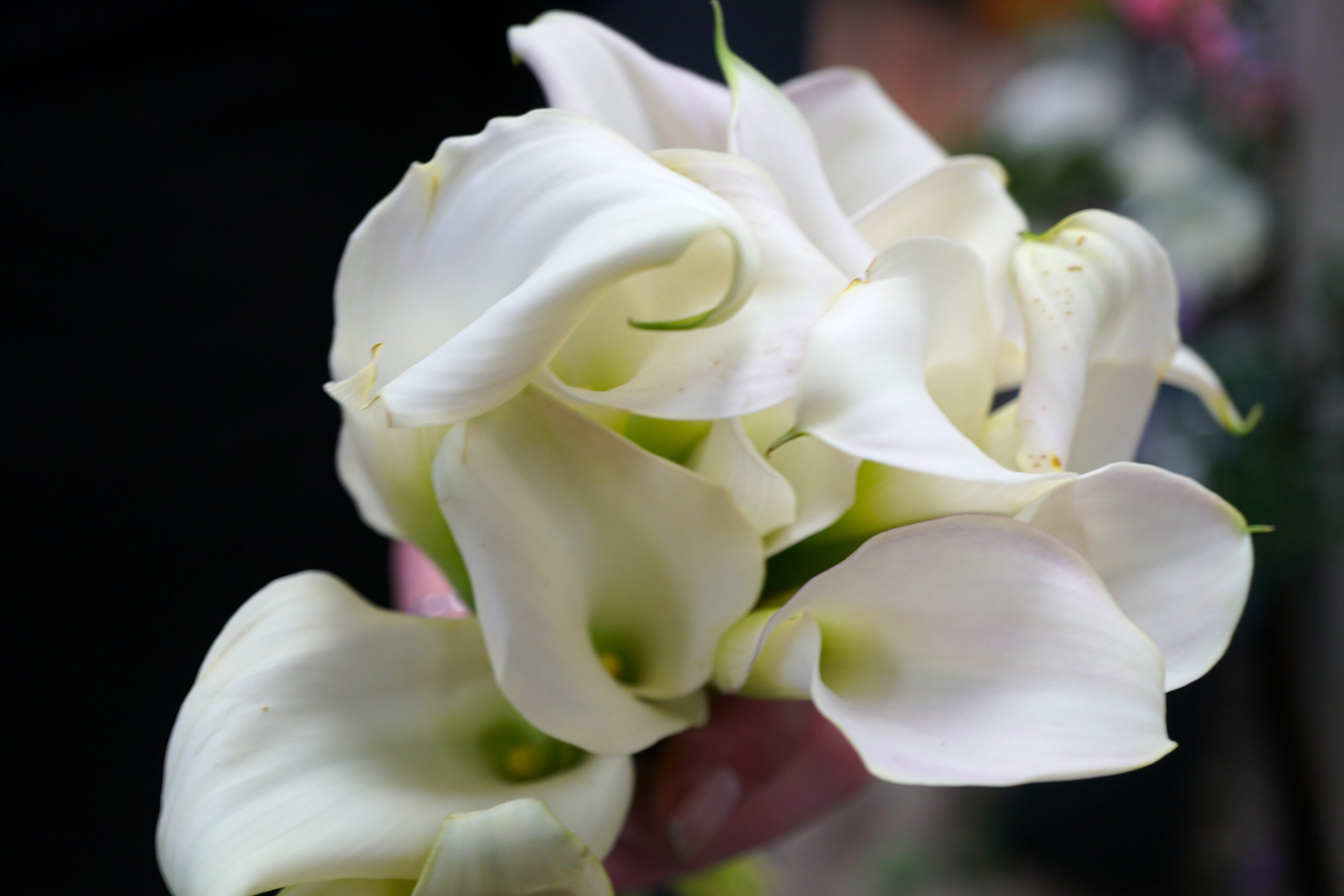
- Calla Lilies (Zantedeschia aethiopica): beauty, marital bliss, faithfulness, love, peace
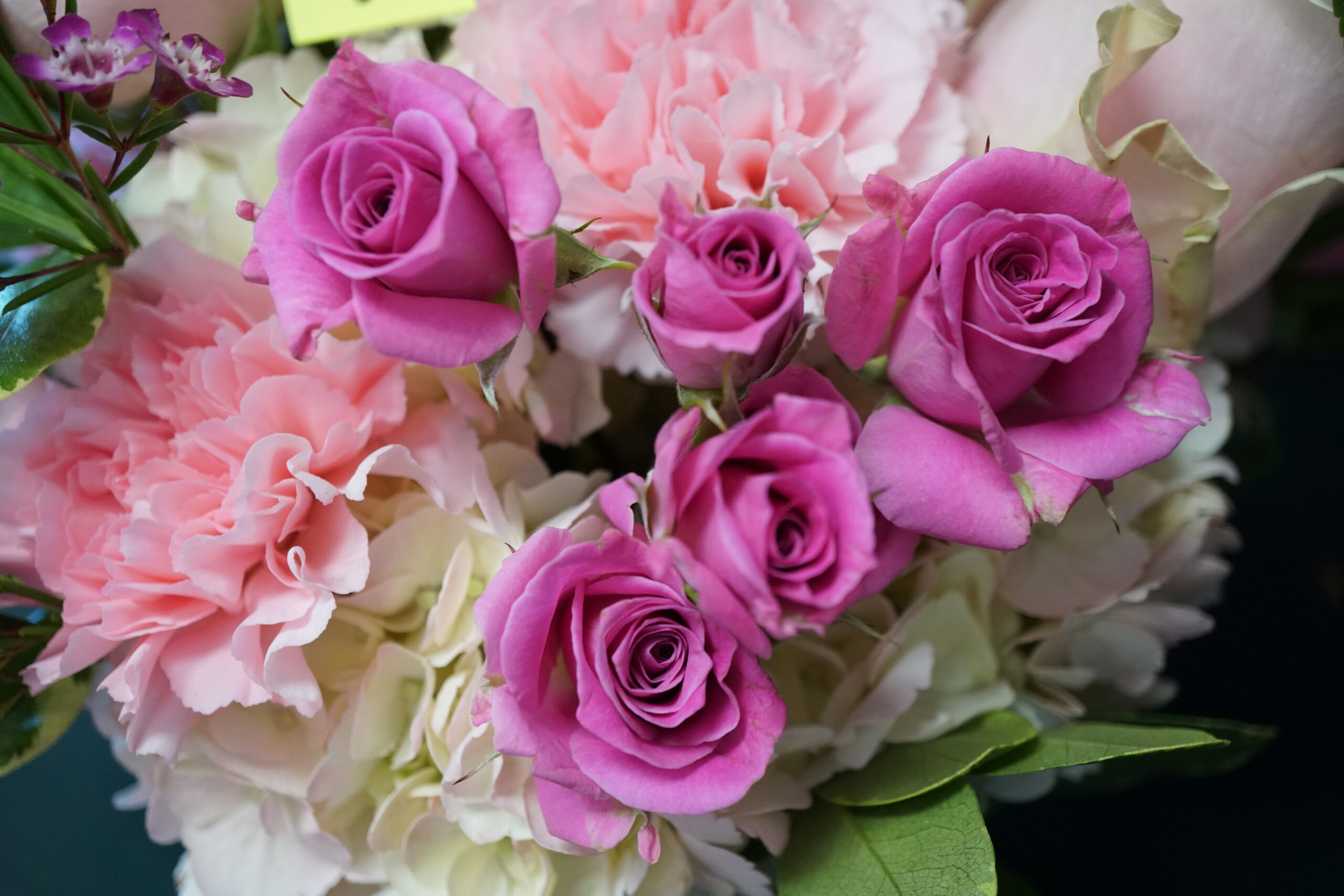
- Carnations (Dianthus caryophyllus): devotion, fascination, love
- Daisies (Leucanthemum sp.): purity of love, start of a new life
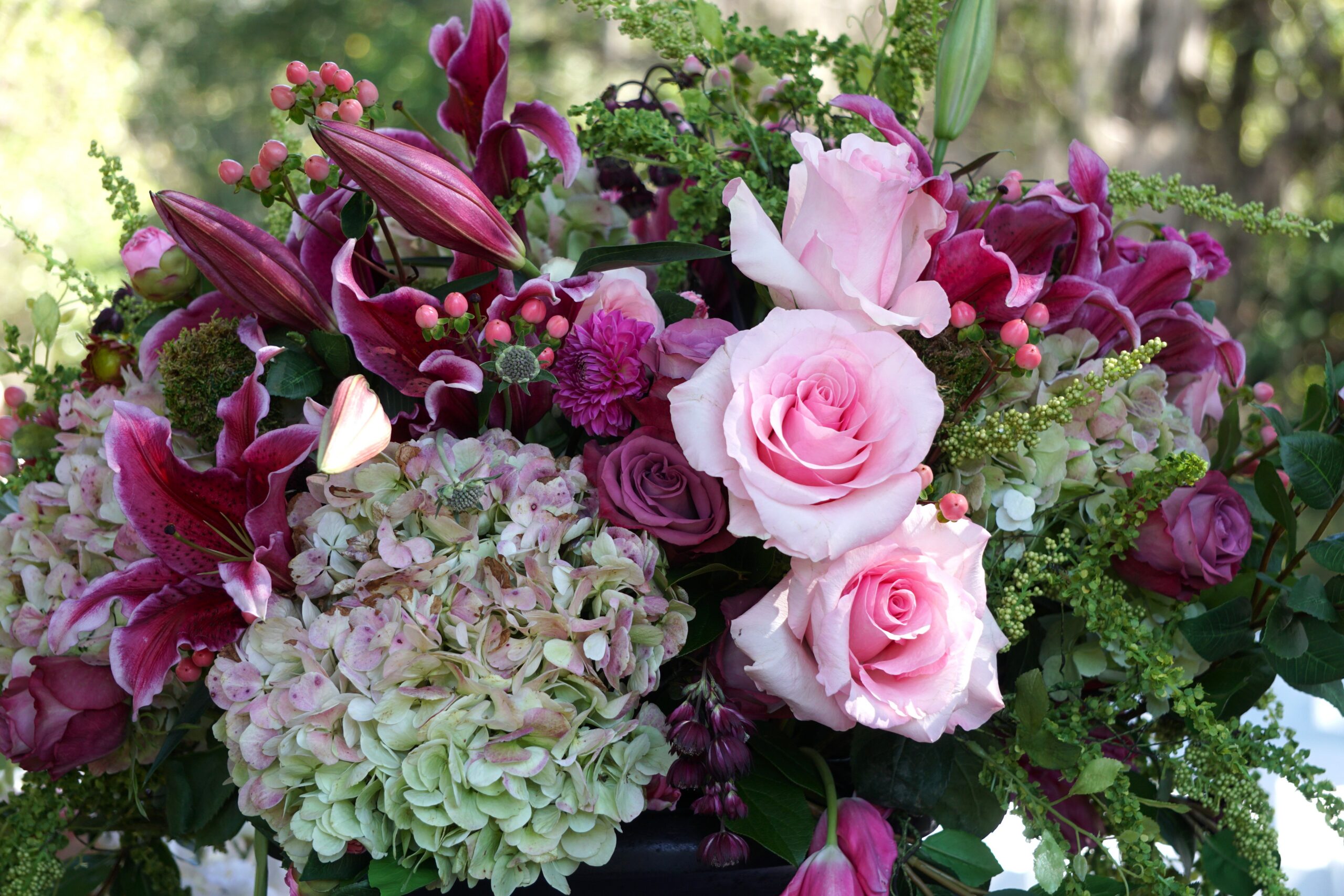
- Hydrangeas (Hydrangea sp.): heartfelt gratitude, honor, emotions
- Lavender (Lavandula sp.): calmness, devotion, grace
- Lilies (Lilium sp.): devotion, fresh start, holiness, purity
- Lily of the Valley (Convallaria majalis): good fortune, purity, return of happiness, sincerity
- Orchids (Orchidaceae Family): beauty, joy, trust
- Peonies (Paeonia sp.): good fortune, prosperity
- Ranunculus (Ranunculus asiaticus): charm
- Sunflowers (Helianthus annuus): happiness, longevity, loyalty
- Tulips (Tulipa sp.): deep, perfect love, passion
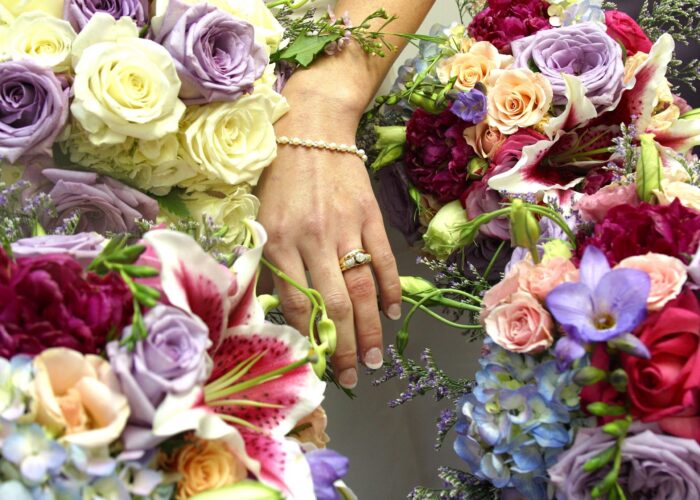 Bridesmaids’ bouquets complement the bride’s bouquet, reflecting the wedding’s color palette and style. Photo© Courtesy of Jon Holloway



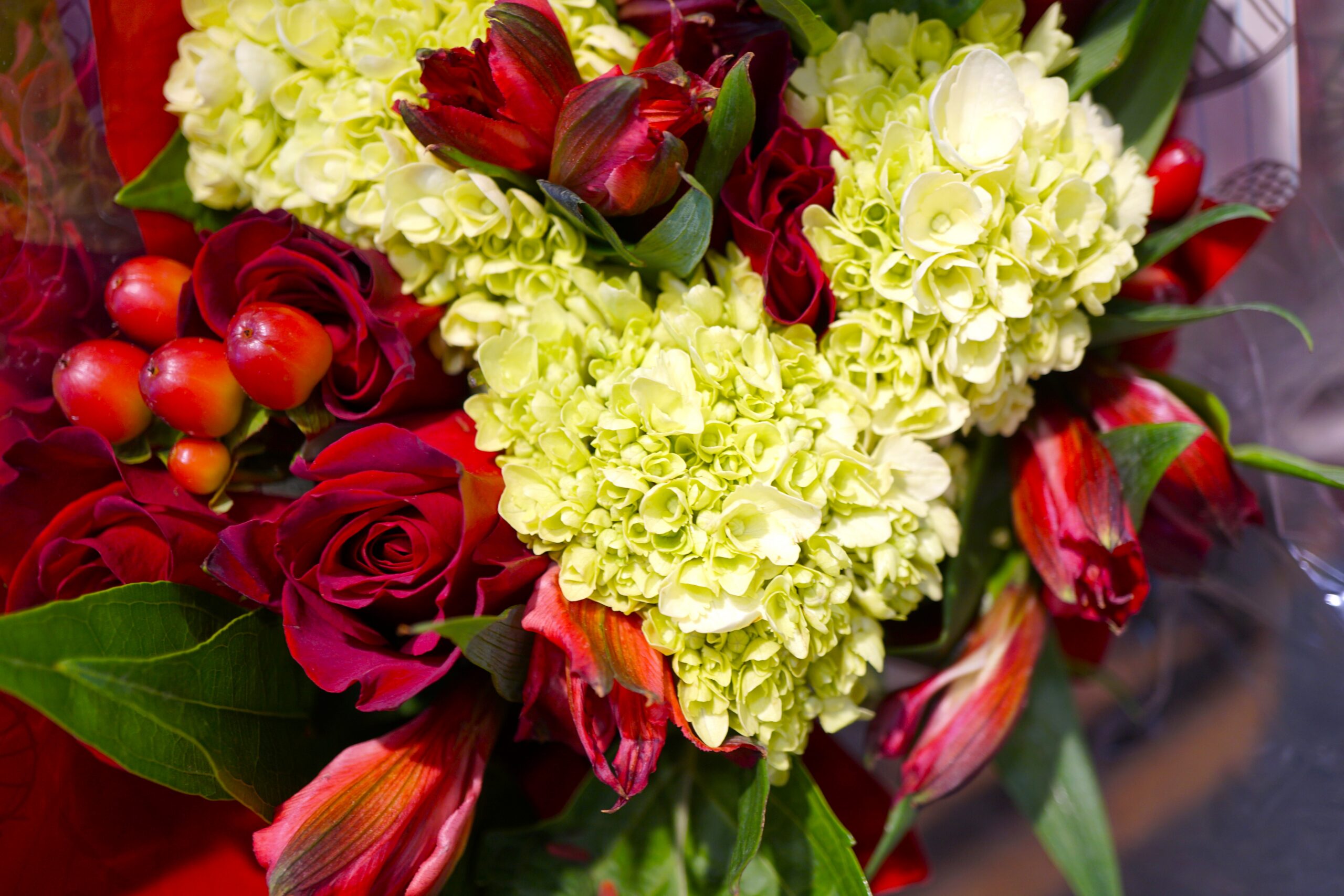
What Colors in Wedding Flowers Symbolize
- Blue: peace, tranquility
- Green: fertility, growth, harmony
- Lavender/Purple: charm, deep passion, enchantment
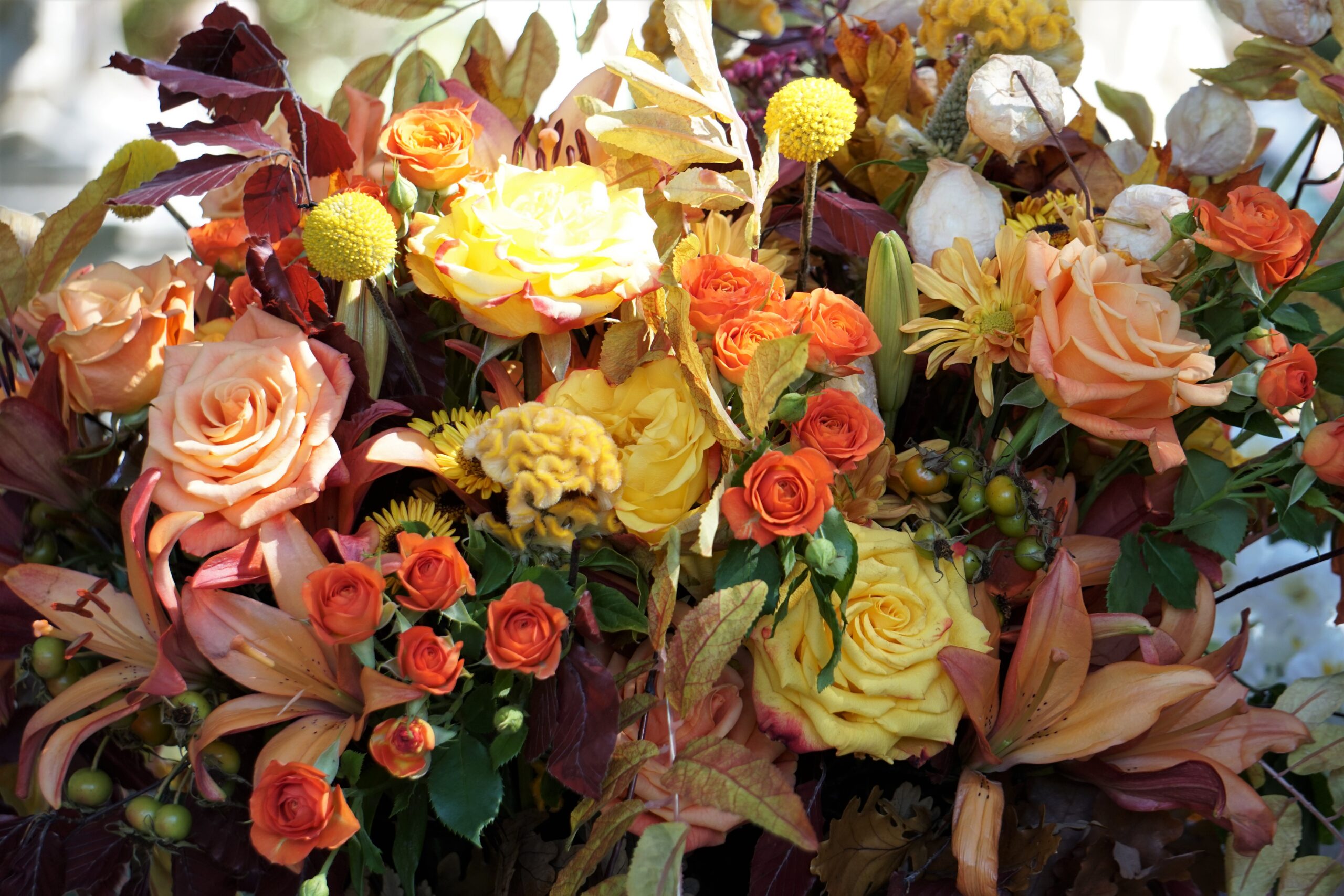
- Orange: energy, enthusiasm, passion, warmth
- Peach: gratitude, modesty, sincerity
- Pink: admiration, affection, appreciation
- Red: courage, love, passion
- White: holiness, innocence, marital bliss, purity
- Yellow: friendship, gratitude, joy, new beginnings
How to Choose Wedding Flowers with Meaning and Seasonality
Roses, orchids, peonies, hydrangeas, tulips, calla lilies, Asiatic or Oriental lilies, sunflowers, and ranunculus are popular choices to use in wedding arrangements.
When choosing flowers, choose those in season and readily available.
Out-of-season flowers tend to be more expensive.
Thoughtful flower selection will transform a wedding into an elegant and meaningful celebration.
Additional Resources
Floral Fashions: From Bouquets to Buttonholes, Smithsonian Gardens
Language of Flowers, Smithsonian Gardens
Flowers are a Forgotten Love Language, University of Illinois Urbana – Champaign