Why Use Mass Planting in Landscape Design?
In certain situations, a traditional mixed planting is exciting and dramatic, but it can also appear disjointed, busy or spotty. Successfully combining a wide range of plant varieties into a unified and attractive design requires significant skill, knowledge, and experience. Creating a mixed planting that maintains visual interest and performs well from spring through fall is even more challenging. Mass planting can be part of the solution to these problems.
Planting en masse or in drifts of the same plant is an easy but highly effective landscape design technique that simplifies the design and creates cohesiveness, and, as a bonus, offers reduced maintenance. A win-win scenario!
This type of planting involves using swaths of the same vibrant color, texture or species to create a bold visual impact or to unify or harmonize a garden subtly. This may take the form of large drifts of plants in expansive borders or simpler groupings in a small garden, such as five pots in a tight cluster.
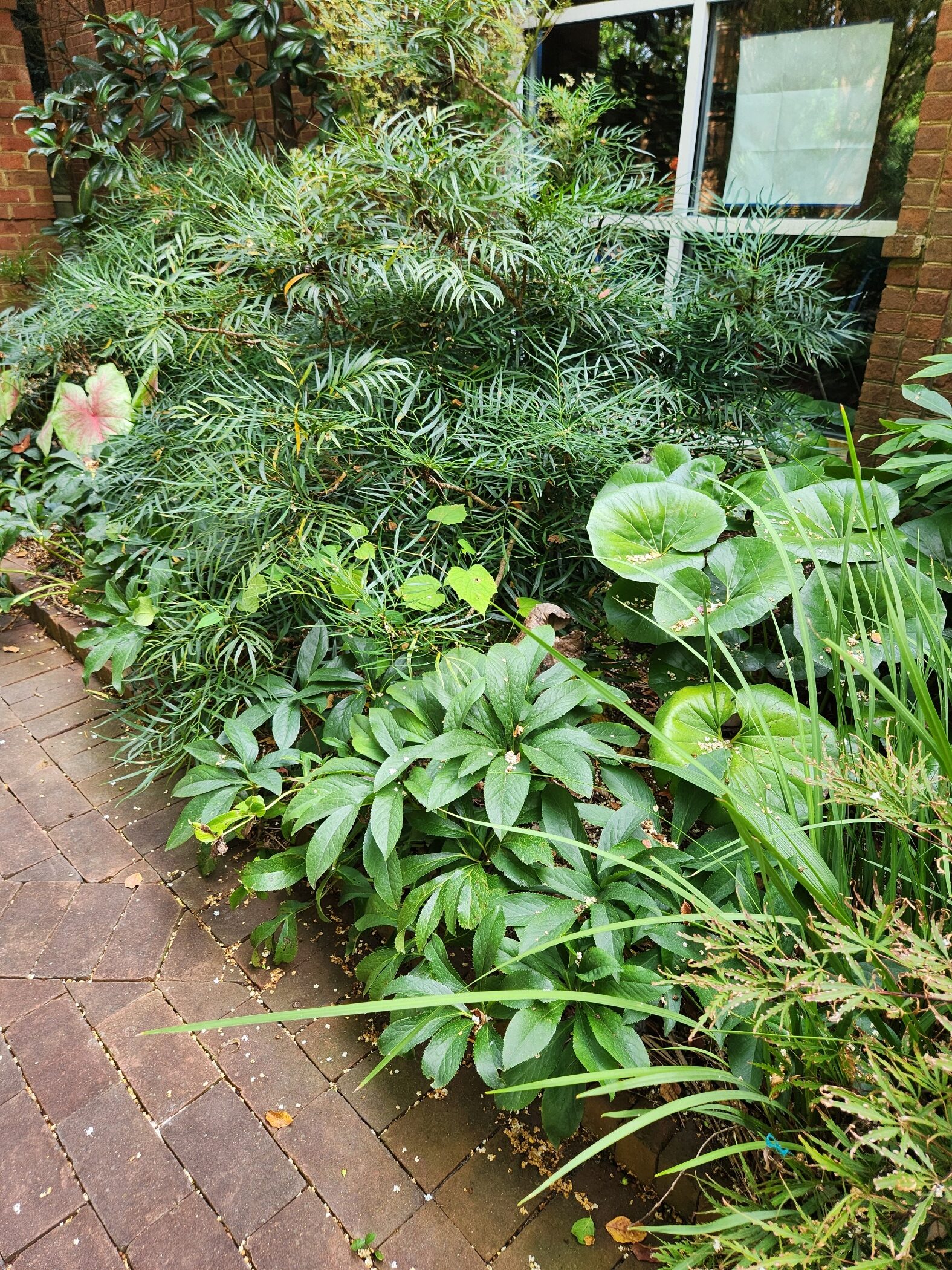
Boost lackluster plantings by combining bold and fine textures together in the landscape.
Jennifer Weaver, ©2025, Clemson Extension

A well-designed container grouping can provide the same impact as drifts and sweeps of plants in the landscape.
Jennifer Weaver, ©2025, Clemson Extension
The goal is to see broad sweeps of color and texture in a naturalistic, flowing style rather than patches. These drifts must be developed in relation to existing elements such as hedges, lawns and architectural structures. Observe surroundings when determining the scale of your project.
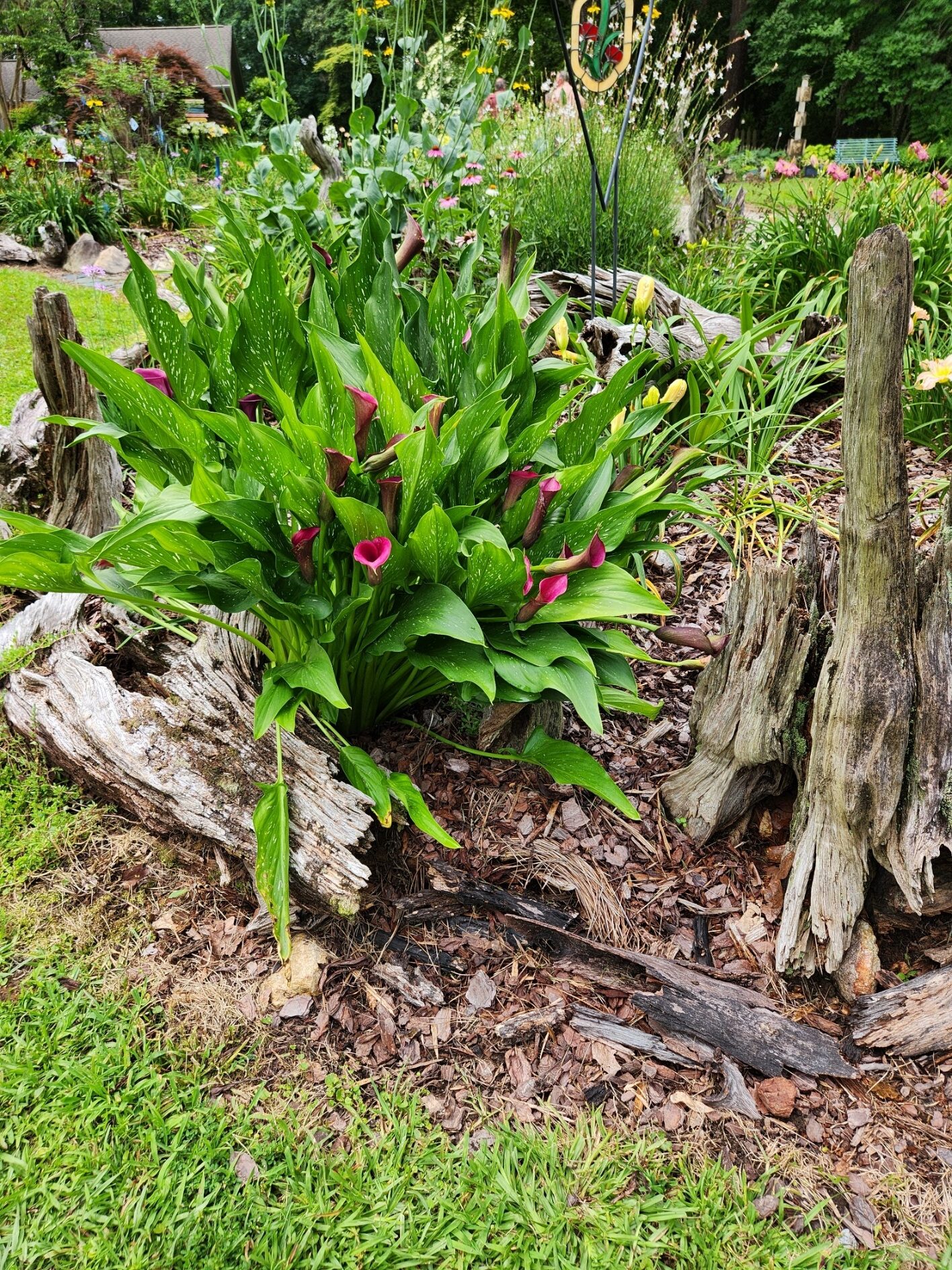
Bold splashes of color are tucked into a grouping of existing driftwood in the garden bed.
Jennifer Weaver, ©2026, Clemson Extension
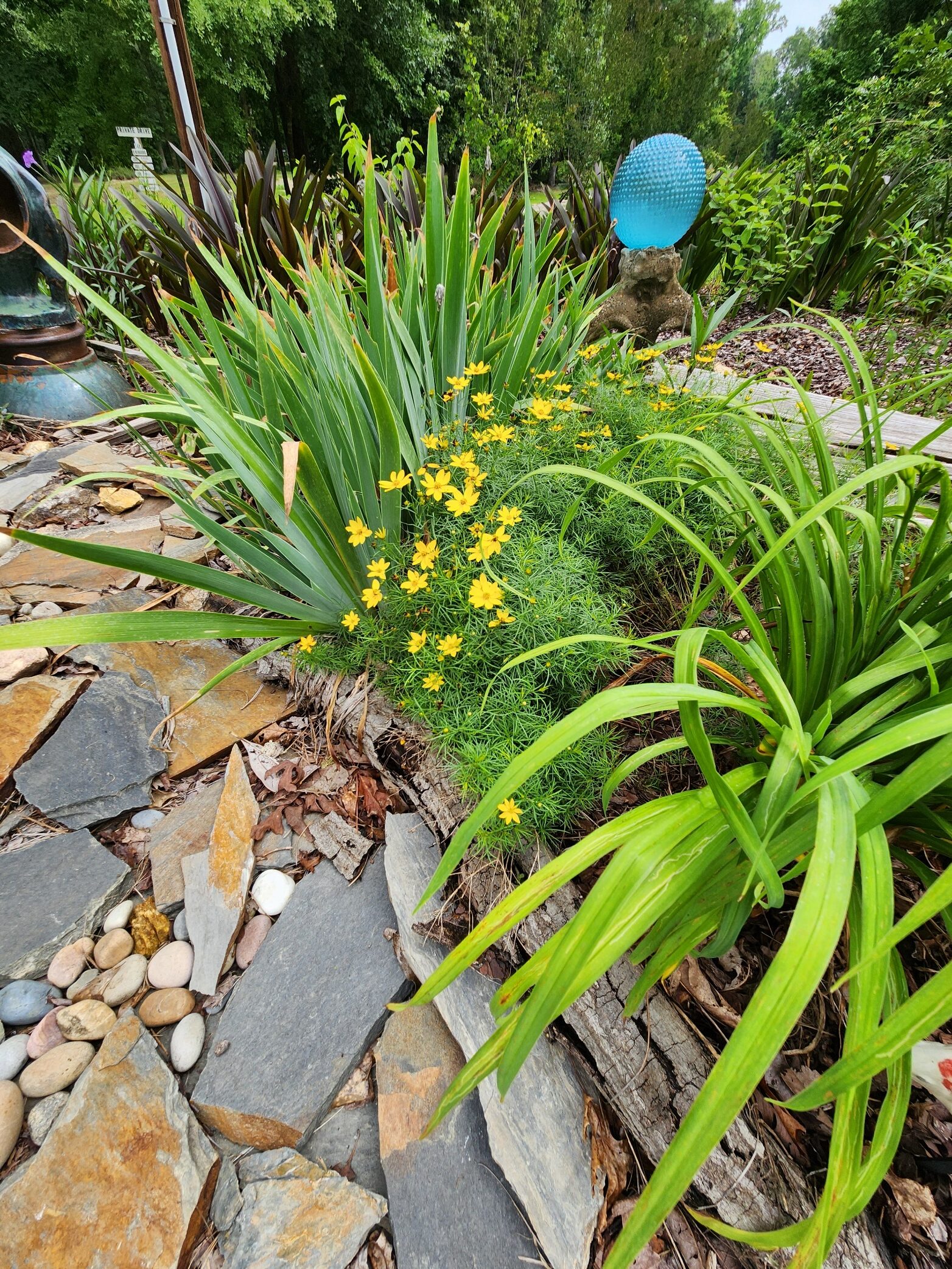
This drift of feathery, yellow coreopsis is a nice contrast with the coarse textured stone pathway. The yellow compliments the blue and gold colors.
Jennifer Weaver, ©2026, Clemson Extension
Benefits of Mass Planting in Landscape Design
How Mass Planting Creates a Cohesive Garden
- Eliminates the worry of matching plants with similar cultural requirements or making sure the bloom colors of different plants look good together.
- Streamlines your work by reducing the individual needs of a wider range of plants. You can perform the same task repeatedly for a single plant variety.
- Reduces the amount of bare space where weeds can grow.
- Reduces “one-of-each itis”. We all love plants, and they are hard to resist, so plant what you enjoy in multiples (instead of singles) for a spectacular show.
How to Achieve Mass Planting Success
- Group plants by similar cultural requirements such as sun, soil, and water needs.
- Employ proper plant spacing to avoid overcrowding. Plants should be planted “on center” to allow for mature spread.
- Make a more unexpected choice rather than the usual one.
- Add swaths of plants with contrasting heights.
- Avoid rows of plants with linear placement. Instead, select a designated area and plant groups irregularly, blending the edges, creating large swaths of the same color combination or texture that meld different parts of your landscape together.
- Use masses that bloom at different times for year-round interest.
- For a more varied, en masse look, replace an area of turf with a landscape bed featuring a mix of native grasses, pollinator-friendly perennials, and self-seeding wildflowers. This can reduce mowing, pesticide and water use.
- Avoid creating visual overload if you have a smaller space. Choose one massed planting, and it will look stunning!
- No need to feel like you must implement the mass planting in one day. You can gradually expand your mass planting over time.

Beautiful drifts of perennials heightened by the repetition of yellows and whites.
Jennifer Weaver, ©2024, Clemson Extension
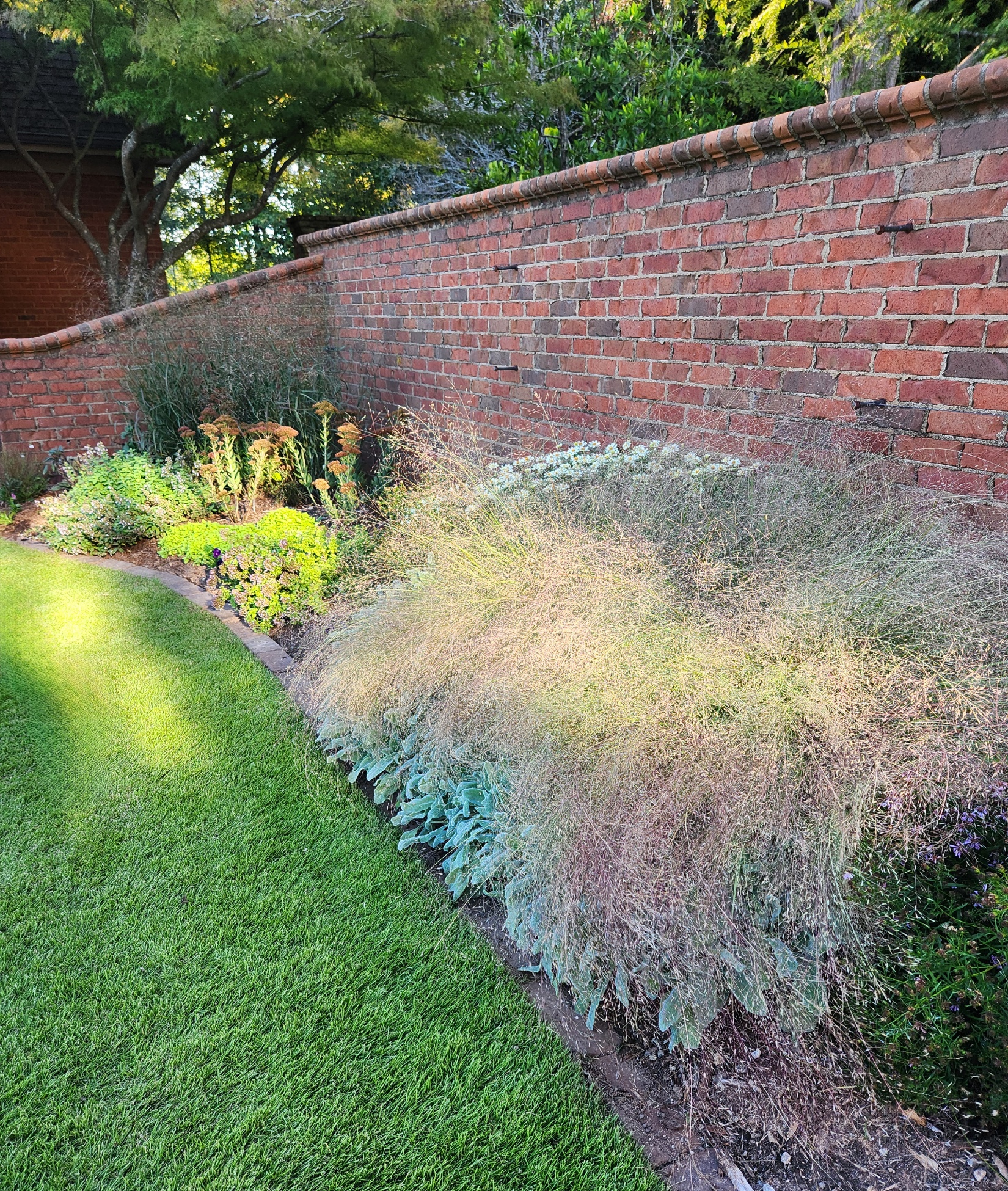
This mass planting combines upright, spiky forms and coarse textured brick with softer companions such as velvety lamb’s ear and airy, cloudlike muhly grass.
Jennifer Weaver, ©2026, Clemson Extension
Using Mass Planting in Small and Large Garden Landscapes
Whether you have a large or small garden, focus on grouping plants en masse to create visual impact and reduce maintenance.